
How home batteries boost solar savings
Storing excess solar for the evening rush is changing how Australians manage rising electricity prices. Here's how to get the best bang for your buck.
Australia's home battery boom is accelerating rapidly.
Around 200,000 home batteries were installed in the final six months of 2025 including 65,084 across NSW.
That's as many as in the previous five years combined.
Across Australia, almost half a million batteries now sit alongside homes and businesses, storing energy from rooftop solar for when it's needed most.
This surge has been driven, in part, by government incentives that can cut the upfront cost by up to 30 per cent and increasing awareness that a battery can skyrocket your solar savings.
Projections show that households in NSW could see around $50-80 in savings this month with solar alone.
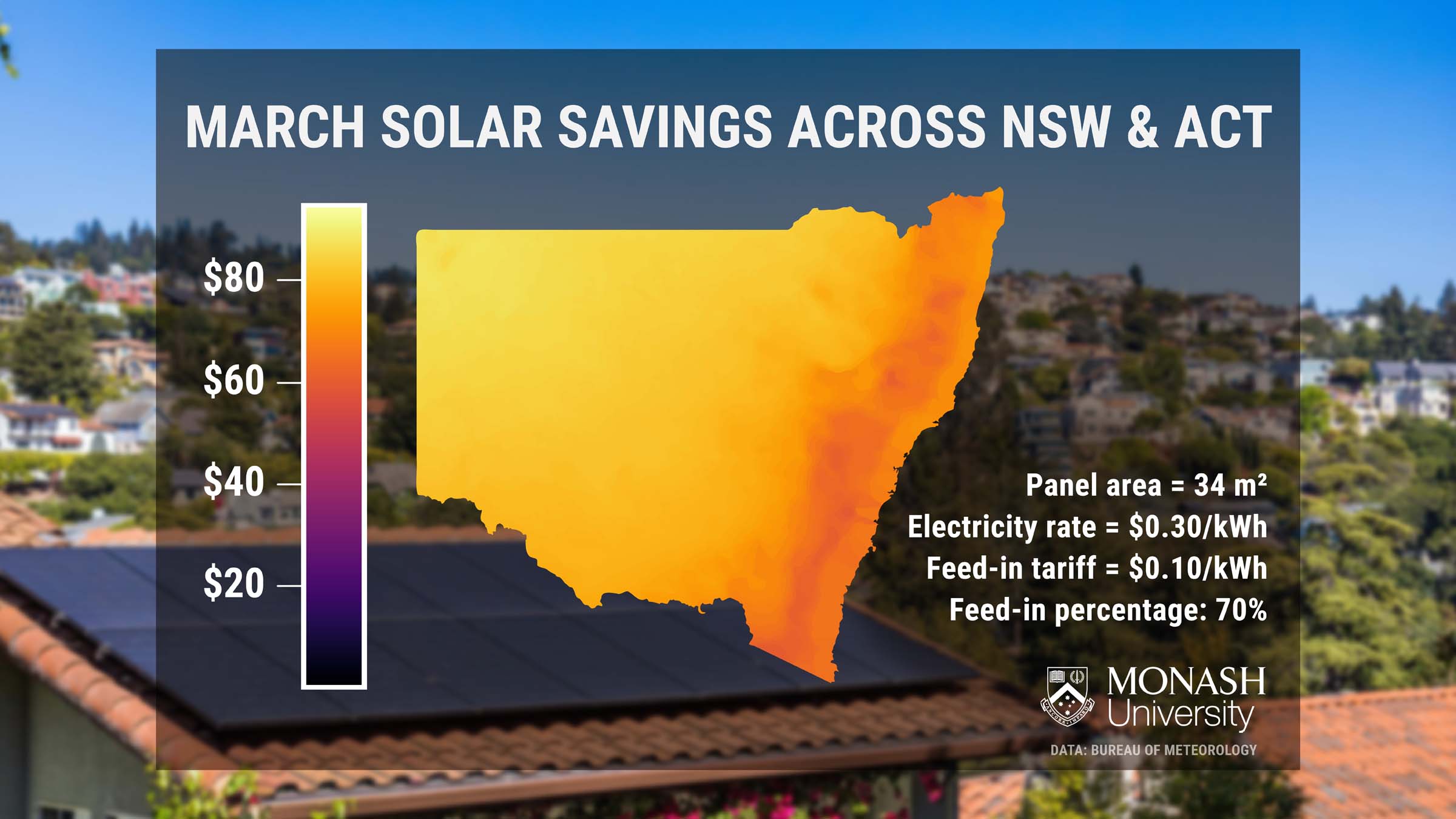
So how can batteries boost that further?
Think of a solar panel like a tap: when the sun is shining, energy pours out.
The problem is timing.
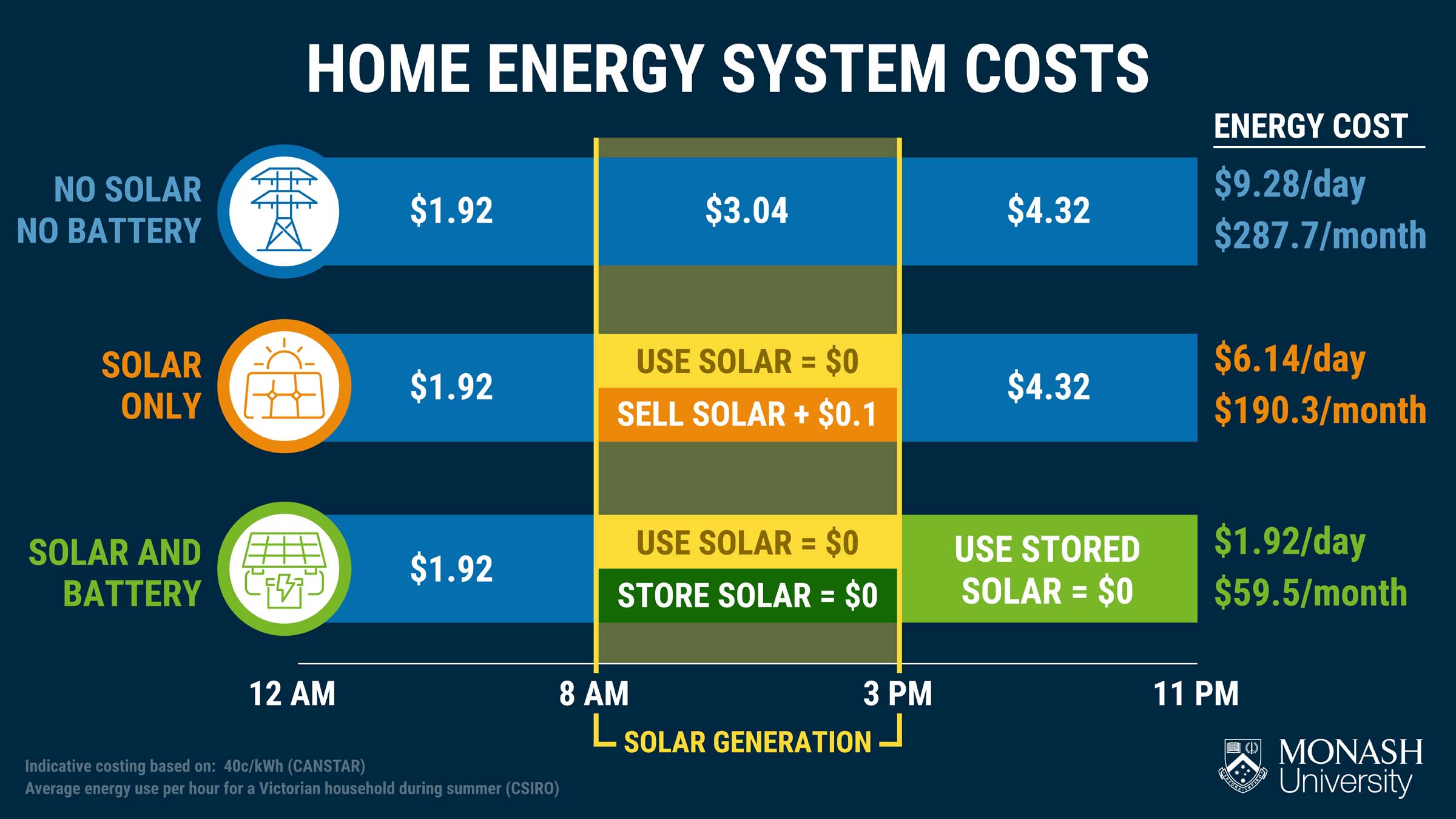
Solar panels generate most of their power in the middle of the day when many households are empty.
With no one home to use it, much of that electricity is sold back to the grid for just a few cents per kilowatt-hour.
Then evening arrives – lights go on, ovens heat up and the aircon kicks in.
And as demand surges, households are forced to buy electricity back from the grid at a high retail rate.
For homes in NSW, this ranges from around 27-28c/kWh for a flat tariff which always stays the same, to around 45-55c/kWh for a Time-of-Use tariff which shifts throughout the day.
A battery changes that equation.
Instead of letting that midday energy spill away, a battery stores it.
It effectively puts a tank under the tap, capturing the excess and saving it for later.
When prices rise and demand peaks, households can draw on their own stored solar instead of buying energy back at a premium.
Choosing the right battery for your home
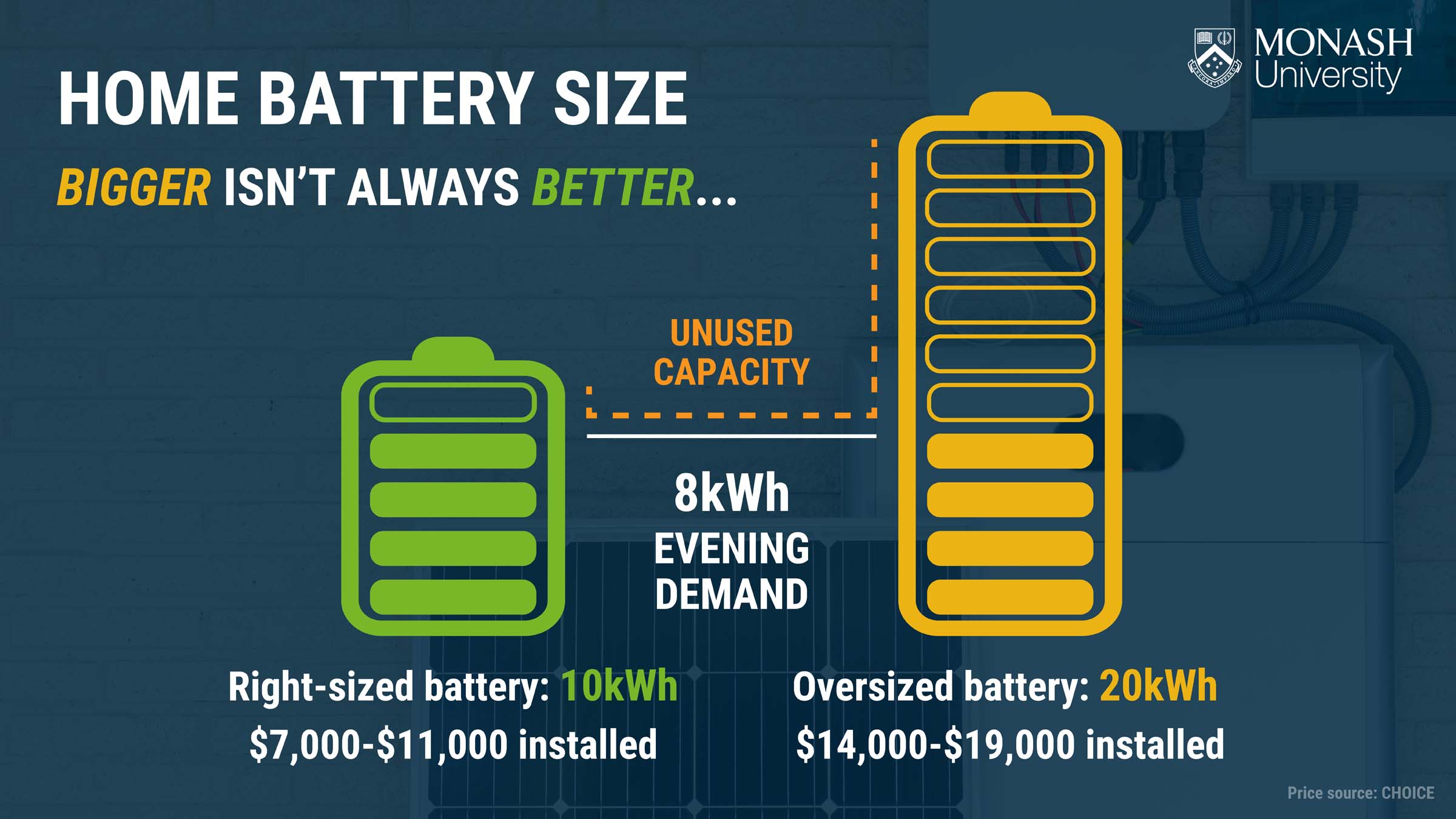
Bigger isn't always better.
If your battery is larger than your typical evening energy demand, some of that capacity will sit unused.
And idle capacity doesn't earn you any money.
So, to get the best bang for buck, the battery size should roughly match evening energy use with around 2 kilowatt-hours of buffer room.
Getting one that is the right size also means you won't be paying the upfront cost for a massive battery that you don't need.
There are several online calculators that can help estimate the ideal size, including tools that draw on smart meter data from your solar panels to model your usage patterns.
As a guide:
- A 10kWh system will cost $7000-10,000 to buy and install
- A 30kWH system will cost $18,000-22,000 to buy and install
For most homes, a 10-15kWh system will be sufficient and the Cheaper Home Batteries Program can help shave a big chunk off the upfront cost.
What if I already have a battery?
You can maximise savings through:
- Joining a virtual power plant: a network of home batteries that operate like a single power station, releasing stored energy into the grid during peak demand in return for bill credits or higher feed-in tariffs.
- Two-way energy plans: Offer similar rewards for sharing your generated and stored energy.
Savings vary depending on the program and how often your battery is shared, so it's worth comparing the terms carefully before signing up.
But with the right setup, a home battery can turn your rooftop solar into reliable, round-the-clock returns.