
Lab members
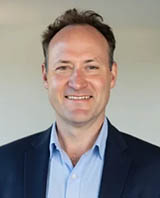 | Professor Mark Bellgrove Professor Mark Bellgrove leads the lab and is an internationally recognised researcher in cognitive and systems neuroscience. His work focuses on attention, cognitive control and decision-making, including studies of genetics and pharmacology, in typical development as well as neurodevelopmental conditions such as ADHD and autism. Using behavioural paradigms, EEG, and neuroimaging, his research aims to uncover the neural mechanisms underlying cognitive variability and translate these insights into clinical practice. Email: mark.bellgrove@monash.edu ORCID: https://orcid.org/0000-0003-0186-8349 |
 | Dr Ziarih Hawi Dr Ziarih Hawi's research focuses on the genetics and neurobiology of neurodevelopmental disorders, particularly ADHD and autism, integrating psychiatric genetics, functional genomics, and translational neuroscience. ORCID: https://orcid.org/0000-0002-0814-9112 |
 | Dr Mana Biabani Dr Mana Biabani's research investigates how brain circuit dynamics give rise to cognition. She combines non-invasive brain stimulation (TMS, Focused Ultrasound), neuroimaging (EEG, fMRI), pharmacological manipulation, and computational modelling to move beyond correlational inference and establish mechanistic accounts of brain function. Her research spans basic and translational domains, including ADHD, with the goal of informing targeted, circuit-based interventions. ORCID: https://orcid.org/0000-0002-0242-0266 |
 | Dr Aurina Arnatkevičiūtė Dr. Aurina Arnatkevičiūtė's research combines neuroimaging, quantitative genetics, cognitive neuroscience, bioinformatics, and network science to investigate how genetic and molecular factors shape brain organisation, cognition, and vulnerability to mental disorders. ORCID: https://orcid.org/0000-0001-9350-6155 |
 | Dr Tracey Chau Dr Tracey Chau's work focuses on the intersection between neurodevelopment and mental health, with an emerging expansion into their overlap with chronic illness. Her work spans both quantitative and qualitative research approaches and seeks to advance knowledge on caregiver wellbeing among caregivers of neurodivergent children, the neurodevelopmental profiles of adolescents with myalgic encephalomyelitis/chronic fatigue syndrome (ME/CFS), and neurocognitive functioning among autistic and/or ADHD children. Tracey is also an Adjunct Research Fellow within Paediatrics Monash Health (Monash University) and an Adjunct Research Officer at the Murdoch Children’s Research Institute. ORCID: https://orcid.org/0000-0001-6867-3533 |
 | Dr Mehdi Adibi Dr Mehdi Adibi leads an interdisciplinary research program on sensory systems and perceptual decision-making, with a focus on tactile processing across species and measurement scales. Adibi’s lab, Neurodigit, has recently merged into the Bellgrove Lab, expanding its cross-species and systems neuroscience capabilities. Dr Adibi is a former ARC DECRA and NHMRC CJ Martin Research Fellow, and a recipient of the A.W. Campbell Award (ANS, 2022) and the Mark Rowe Award (ANS, 2015). ORCID: https://orcid.org/0000-0001-8874-3586 |
 | Dr Kevin Walsh Dr Kevin Walsh is studying the neural basis of perceptual decision-making. His work combines EEG, psychophysics, and computational modelling to understand how sensory information is used to guide behaviour. He is interested in expectation, cognitive flexibility, neuropharmacology, and decision-making in neurodivergent populations. ORCID: https://orcid.org/0000-0002-3745-2073 |
 | Dr Rebecca Kerestes Dr Rebecca Kerestes' work focuses on emotion dysregulation in neurodevelopmental disorders including Autism Spectrum Disorder (ASD) and Attention Deficit Hyperactivity Disorder (ADHD) from mechanistic investigation using neuroimaging technique’s, through to translational application across community and public health contexts. She is a CI and advisory group lead on a national MRFF project that will reconceptualise youth neurodevelopment and mental health care. ORCID: https://orcid.org/0000-0003-1298-9904 |
 | Dr Elaine Pinggal Dr Elaine Pinggal is investigating the relationship between sleep-like slow waves during wakefulness and attentional lapses in neurotypical and ADHD populations using EEG. Her research examines both subjective manifestations of attentional lapses, including mind wandering and mind blanking, and objective measures. Broadly, her work seeks to identify the neurophysiological underpinnings of sustained attention difficulties in ADHD. ORCID: https://orcid.org/0000-0002-0833-6305 |
 | Dr Toby Constable Dr Toby Constable is working with Growing Minds Australia (GMA), an MRFF Million Minds funded initiative investigating dimensional models of neurodevelopment. His work brings together statistical modelling of high-dimensional data in the context of neuroimaging and precision phenotyping with the goal of better characterising the continuous variation and risk factors underlying mental health. |
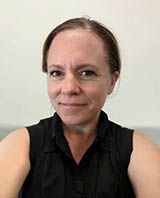 | Dr Beth Johnson Dr Beth Johnson is working on autism, ADHD, and neurodevelopment, with a focus on cognitive development, mental health, and improving outcomes for neurodivergent individuals and families. ORCID: http://orcid.org/0000-0002-6336-0092 |
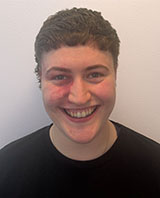 | Jade Duffy Jade Duffy is a visiting researcher from the O’Connell lab, Trinity College Dublin whose work investigates individual differences in perceptual decision-making. Through a combination of psychophysics, EEG, pupillometry, and computational modelling, she endeavours to understand the origins of variability in decision-making and how this differs across individuals and populations. ORCID: https://orcid.org/0000-0001-6650-0022 |
 | Elizabeth McInerney Elizabeth McInerney is supporting clinical trials through study start‑up, participant recruitment and retention, eligibility screening, REDCap management, and ethics and governance reporting. She is committed to maintaining high‑quality and compliant research practices. Elizabeth holds a Bachelor of Health Science (Honours) from La Trobe University, where she majored in Anatomy and Physiology and completed honours research on the BDNF Val66Met polymorphism and alcohol relapse. She has previous clinical research experience in cognitive health and has worked across clinical research, healthcare, and participant‑facing roles, including with individuals across all age ranges. ORCID: https://orcid.org/0009-0002-3318-3977 |
 | Mia Moses Mia Moses' doctoral research is focused on understanding parent and clinician perspectives on the appropriateness of ADHD medications for autistic children with co-occurring ADHD. Mia’s work spans both quantitative and qualitative research approaches. She values participatory research methods that centre the voices of the communities her research aims to serve. ORCID: https://orcid.org/0000-0001-5127-0447 |