
Judgement and Decision-Making in Virtual and Physical Worlds 2026
The Monash Business Behavioural Laboratory (MBBL) invites you to its eighth annual symposium, a full-day, in-person event exploring how context, attention, stress and emerging technologies shape human judgement and decision-making.
Bringing together researchers from Monash University, the National University of Singapore, UNSW Sydney, the University of Queensland and QIMR Berghofer, the program unfolds across three sessions.
The morning session will examine the often-invisible influence of context and internal states on what we think and do, and how virtual reality can provide a safe place to rehearse decisions with real-world consequences. It will draw on evidence from employment decisions for people with intellectual disability, human-AI judgement across the virtual reality lifecycle, and emerging avatar-based training for inclusive workplaces.
The second session turns to attention and emotion, showing how laboratory and webcam-based eye tracking and skin conductance reveal what captures people's attention, and how these insights can inform the design of choices and safety communication.
The afternoon will focus on cognition, stress and performance at work, linking cognitive assessment to real-world outcomes, tracking everyday stress with wearable sensors, and testing whether slow-paced breathing protects self-control under pressure.
This symposium is designed for researchers, practitioners and research students across business, economics, psychology and information technology. The day includes time for questions and networking throughout.
Registrations
Speakers
SESSION 1: Context and Rehearsal in Virtual Worlds
 Dr Benjamin Tag, Senior Lecturer in Human-Computer Interaction, UNSW Sydney
The Invisible Variables: How Context and Internal States Shape What We Think and Do
Dr Tag investigates how people perceive, experience, and behave in interactive and immersive environments, with a particular interest in the interplay between human cognition, emotion, physiology, and context. His work combines virtual and augmented reality, physiological sensing, and behavioural methods to study topics including cognitive load, emotion regulation, social interaction and presence, and the effects of physical and virtual environments on human experience and performance. More broadly, his research seeks to understand how emerging technologies can be used both as tools for studying human behaviour and as systems that actively shape it.
 Professor Charmine Härtel, Opportunity Tech Lab, Monash Business School
From Virtual Rehearsal to Real-World Choice: Virtual Reality Evidence, Human-AI Judgement and Avatars for Inclusive Employment
Prof Härtel is Associate Dean Research Impact and Director of the Opportunity Tech Lab at Monash Business School, Melbourne. A Fellow of the Academy of Social Sciences in Australia, she is an internationally-recognised scholar whose research advances social and economic inclusion, wellbeing, diversity, and inclusive leadership. Prof Härtel works with governments, corporations, philanthropic organisations, and marginalised communities to co-design evidence-based, technology-enabled solutions. Her work harnesses emerging digital technologies, including virtual reality (VR), avatars, and immersive platforms, to address exclusion, shift societal attitudes, and strengthen inclusive, sustainable ecosystems. She applies strengths-based, person-centred, lived-experience approaches that respect diverse worldviews and translate research into meaningful organisational, community, and policy impact.
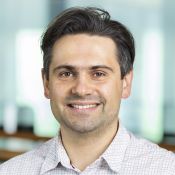 Professor Kristian Rotaru, Opportunity Tech Lab, Monash Business School
From Virtual Rehearsal to Real-World Choice: Virtual Reality Evidence, Human-AI Judgement and Avatars for Inclusive Employment
Prof Rotaru is a decision scientist and Professor of Accounting at Monash Business School, where he chairs the Monash Business Behavioural Laboratory Steering Committee, and is also Associate Director of Opportunity Tech Lab. A leading contributor to neuroaccounting, he integrates eye tracking, pupillometry, electrodermal and heart rate measures, and virtual reality to study judgement and decision-making under stress, uncertainty and cognitive load. His work informs inclusive assessment, public policy and organisational performance, including a DSS-funded consortium co-designing VR modules that support open employment for people with intellectual disability. He received the 2025 Dean's Commendation for Excellence in Research.
SESSION 2: Measuring Attention and Emotion, from the Laboratory to the Field
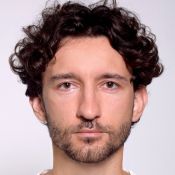 Dr Vladimir Maksimenko, Research Fellow, Behavioural Computational Science (BeCoS) Lab, National University of Singapore
The Attentional Mechanisms of Optimal Decoys: Evidence from Laboratory and Webcam Eye Tracking
Dr Maksimenko develops choice models that incorporate visual attention to explain and predict context-dependent consumer choice, combining discrete choice modelling, Bayesian estimation, and eye-tracking methods. His current research uses large language models to construct informative priors for segment-level choice models and investigates webcam-based eye tracking as a scalable alternative to laboratory measurement. His experience includes industry collaborations with P&G and Nestlé. He holds a PhD in Physics, with training in complex systems modelling.
 Professor Brent W. Ritchie, UQ Business School, The University of Queensland
Effective Visitor Safety Messaging: The Role of Physiological Measurement Tools
Prof Ritchie’s research interests are related to risk management in service industries. This includes tourism crisis and disaster planning, response and recovery at an organisational and destination level. His recent work also seeks to understand the protective behaviour of visitors (inbound and outbound) and the psychological factors that influence their protective behaviour. He is on the editorial board of several journals including the Journal of Travel Research and the Journal of Hospitality and Tourism Management.
SESSION 3: Cognition, Stress and Performance at Work
 Dr Chang Liu, Postdoctoral Researcher, QIMR Berghofer
Decoding Individual Performance: From Cognition to Real-World Outcomes
In addition to his QIMR role, Dr Liu is also a visiting scholar at the University of Southampton. Her research examines how cognition shapes behaviour and performance in everyday and high-stakes contexts, using digital assessment, intensive longitudinal methods and network analytics to study cognitive and behavioural processes across individuals and groups. Her current work focuses on improving the ecological relevance of cognitive measurement and linking these data to real-world performance. She is also exploring how large language models can support the interpretation of complex behavioural data and translate research findings into more personalised approaches to training, performance and decision-making.
 Mr Stuart Hayes, PhD Candidate, Opportunity Tech Lab, Monash Business School
Within-Person Stress Dynamics at Work: Reactivity, Recovery and Pile-up Across Self-Report and Wearable Channels
Mr Hayes studies how stressors and the ordinary experiences of a working day shape outcomes such as engagement and burnout. He runs field studies that integrate continuous wearable data collection with ecological momentary assessment and validated survey measures, capturing responses as they happen and how these vary with traits and underlying states. His first-authored paper, under review, disaggregates daily stress responses and finds that reactivity, not the density of stressors, is what tracks burnout symptoms.
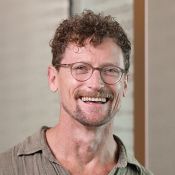 Mr Shawn Ashkanasy, PhD Candidate, Department of Management, Monash Business School
Staying Sharp Under Pressure: Slow-Paced Breathing and Inhibitory Control During Repeated Stress
Mr Ashkanasy is a specialist in organisational wellbeing with over ten years of experience as a facilitator, coach, and researcher, and has developed and led workshops and programs for various organisations. He is currently pursuing a PhD in the Department of Management at Monash University and is involved with the Monash Business Behavioural Laboratory. His research investigates how breath-based relaxation techniques affect mental fatigue and cognitive performance under pressure, with the aim of helping individuals and organisations sustain high performance and wellbeing. Beyond his academic and professional work, Mr Ashkanasy enjoys gymnastics and freediving.

Event Details
- Date:
- 27 October 2026 at 9:00 am – 4:30 pm
- Venue:
- The Pavilion, Level 8, Building H, Caulfield Campus, 900 Dandenong Road, Caulfield East 3145
- Categories:
- Alumni; General
Description
The Monash Business Behavioural Laboratory (MBBL) invites you to its eighth annual symposium, a full-day, in-person event exploring how context, attention, stress and emerging technologies shape human judgement and decision-making.
Bringing together researchers from Monash University, the National University of Singapore, UNSW Sydney, the University of Queensland and QIMR Berghofer, the program unfolds across three sessions.
The morning session will examine the often-invisible influence of context and internal states on what we think and do, and how virtual reality can provide a safe place to rehearse decisions with real-world consequences. It will draw on evidence from employment decisions for people with intellectual disability, human-AI judgement across the virtual reality lifecycle, and emerging avatar-based training for inclusive workplaces.
The second session turns to attention and emotion, showing how laboratory and webcam-based eye tracking and skin conductance reveal what captures people's attention, and how these insights can inform the design of choices and safety communication.
The afternoon will focus on cognition, stress and performance at work, linking cognitive assessment to real-world outcomes, tracking everyday stress with wearable sensors, and testing whether slow-paced breathing protects self-control under pressure.
This symposium is designed for researchers, practitioners and research students across business, economics, psychology and information technology. The day includes time for questions and networking throughout.
Registrations
Speakers
SESSION 1: Context and Rehearsal in Virtual Worlds
Dr Benjamin Tag, Senior Lecturer in Human-Computer Interaction, UNSW Sydney
The Invisible Variables: How Context and Internal States Shape What We Think and Do
Dr Tag investigates how people perceive, experience, and behave in interactive and immersive environments, with a particular interest in the interplay between human cognition, emotion, physiology, and context. His work combines virtual and augmented reality, physiological sensing, and behavioural methods to study topics including cognitive load, emotion regulation, social interaction and presence, and the effects of physical and virtual environments on human experience and performance. More broadly, his research seeks to understand how emerging technologies can be used both as tools for studying human behaviour and as systems that actively shape it.
Professor Charmine Härtel, Opportunity Tech Lab, Monash Business School
From Virtual Rehearsal to Real-World Choice: Virtual Reality Evidence, Human-AI Judgement and Avatars for Inclusive Employment
Prof Härtel is Associate Dean Research Impact and Director of the Opportunity Tech Lab at Monash Business School, Melbourne. A Fellow of the Academy of Social Sciences in Australia, she is an internationally-recognised scholar whose research advances social and economic inclusion, wellbeing, diversity, and inclusive leadership. Prof Härtel works with governments, corporations, philanthropic organisations, and marginalised communities to co-design evidence-based, technology-enabled solutions. Her work harnesses emerging digital technologies, including virtual reality (VR), avatars, and immersive platforms, to address exclusion, shift societal attitudes, and strengthen inclusive, sustainable ecosystems. She applies strengths-based, person-centred, lived-experience approaches that respect diverse worldviews and translate research into meaningful organisational, community, and policy impact.
Professor Kristian Rotaru, Opportunity Tech Lab, Monash Business School
From Virtual Rehearsal to Real-World Choice: Virtual Reality Evidence, Human-AI Judgement and Avatars for Inclusive Employment
Prof Rotaru is a decision scientist and Professor of Accounting at Monash Business School, where he chairs the Monash Business Behavioural Laboratory Steering Committee, and is also Associate Director of Opportunity Tech Lab. A leading contributor to neuroaccounting, he integrates eye tracking, pupillometry, electrodermal and heart rate measures, and virtual reality to study judgement and decision-making under stress, uncertainty and cognitive load. His work informs inclusive assessment, public policy and organisational performance, including a DSS-funded consortium co-designing VR modules that support open employment for people with intellectual disability. He received the 2025 Dean's Commendation for Excellence in Research.
SESSION 2: Measuring Attention and Emotion, from the Laboratory to the Field
Dr Vladimir Maksimenko, Research Fellow, Behavioural Computational Science (BeCoS) Lab, National University of Singapore
The Attentional Mechanisms of Optimal Decoys: Evidence from Laboratory and Webcam Eye Tracking
Dr Maksimenko develops choice models that incorporate visual attention to explain and predict context-dependent consumer choice, combining discrete choice modelling, Bayesian estimation, and eye-tracking methods. His current research uses large language models to construct informative priors for segment-level choice models and investigates webcam-based eye tracking as a scalable alternative to laboratory measurement. His experience includes industry collaborations with P&G and Nestlé. He holds a PhD in Physics, with training in complex systems modelling.
Professor Brent W. Ritchie, UQ Business School, The University of Queensland
Effective Visitor Safety Messaging: The Role of Physiological Measurement Tools
Prof Ritchie’s research interests are related to risk management in service industries. This includes tourism crisis and disaster planning, response and recovery at an organisational and destination level. His recent work also seeks to understand the protective behaviour of visitors (inbound and outbound) and the psychological factors that influence their protective behaviour. He is on the editorial board of several journals including the Journal of Travel Research and the Journal of Hospitality and Tourism Management.
SESSION 3: Cognition, Stress and Performance at Work
Dr Chang Liu, Postdoctoral Researcher, QIMR Berghofer
Decoding Individual Performance: From Cognition to Real-World Outcomes
In addition to his QIMR role, Dr Liu is also a visiting scholar at the University of Southampton. Her research examines how cognition shapes behaviour and performance in everyday and high-stakes contexts, using digital assessment, intensive longitudinal methods and network analytics to study cognitive and behavioural processes across individuals and groups. Her current work focuses on improving the ecological relevance of cognitive measurement and linking these data to real-world performance. She is also exploring how large language models can support the interpretation of complex behavioural data and translate research findings into more personalised approaches to training, performance and decision-making.
Mr Stuart Hayes, PhD Candidate, Opportunity Tech Lab, Monash Business School
Within-Person Stress Dynamics at Work: Reactivity, Recovery and Pile-up Across Self-Report and Wearable Channels
Mr Hayes studies how stressors and the ordinary experiences of a working day shape outcomes such as engagement and burnout. He runs field studies that integrate continuous wearable data collection with ecological momentary assessment and validated survey measures, capturing responses as they happen and how these vary with traits and underlying states. His first-authored paper, under review, disaggregates daily stress responses and finds that reactivity, not the density of stressors, is what tracks burnout symptoms.
Mr Shawn Ashkanasy, PhD Candidate, Department of Management, Monash Business School
Staying Sharp Under Pressure: Slow-Paced Breathing and Inhibitory Control During Repeated Stress
Mr Ashkanasy is a specialist in organisational wellbeing with over ten years of experience as a facilitator, coach, and researcher, and has developed and led workshops and programs for various organisations. He is currently pursuing a PhD in the Department of Management at Monash University and is involved with the Monash Business Behavioural Laboratory. His research investigates how breath-based relaxation techniques affect mental fatigue and cognitive performance under pressure, with the aim of helping individuals and organisations sustain high performance and wellbeing. Beyond his academic and professional work, Mr Ashkanasy enjoys gymnastics and freediving.