
Are the mentally ill rational? Evidence from health insurance behavior
Centre For Health Economics Seminar Series
The idea that consumers respond appropriately to economic incentives is a fundamental axiom that provides the foundation for a variety of applications in positive and normative economics. Whether this axiom holds for persons with mental illness, which in many cases involves impairment in the ability to process and respond to information, remains an open question with important implications for policy and economic theory. In the United States, the structure of most private insurance plans imposes non-linear pricing mechanisms that can be used to assess an individual’s response to economic incentives. In particular, many health insurance plans impose a deductible (e.g., $500) which must be met before any cost-sharing from the plan begins, so that the individual pays the full price of medical services until the deductible is reached, but only a fraction of the price (e.g., 20%) afterwards. Using a large dataset of health insurance claims for privately insured individuals between 2001 and 2013, I find that that the utilization of elective medical procedures (e.g., colonoscopy, knee replacement surgery) typically increases after an individual reaches the deductible. However, people with mental illness do not increase their utilization of elective services upon reaching the deductible. My empirical approach uses an instrumental variables method based on when an individual begins enrollment in the health plan. Since the deductible is based on spending during the calendar year, individuals who start enrollment later in the year are less likely to reach the deductible. Thus, this instrument provides a plausibly exogenous source of variation since underlying observables (e.g., health status) are unlikely to be associated with the timing of health plan enrollment. Moreover, in a placebo analysis, I find that, for all individuals, the use of emergency medical services (e.g., appendectomy) is not responsive to whether an individual has exceeded the deductible.
Presenter
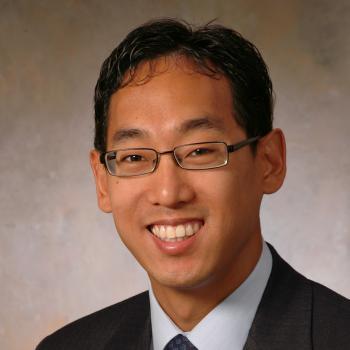
Dr Eric Sun
Dr. Eric Sun received a MD and and PhD in business economics at the University of Chicago and went on to receive additional clinical training in anesthesiology at Stanford University, where he is currently an assistant professor in the Department of Anesthesiology, Perioperative and Pain Medicine and (by courtesy) the Department of Health Research and Policy. His current research efforts, which are federally funded, focus on the evaluation of therapies and policies aimed at reducing opioid use among surgical patients and patients with chronic pain. He is also interested in researching how physicians respond to economic incentives. In addition to these research efforts, he is also an attending anesthesiologist at Stanford University, where he provides anesthetic care for surgical patients one day a week.
Visitors are most welcome.
Event Details
- Date:
- 6 March 2019 at 12:00 pm – 1:00 pm
- Venue:
- Monash University, 900 Dandenong Road, Building H, Level 9, Room 9.21, Caulfield East, Victoria 3145
- Cost:
- Free
- Categories:
- Global Business; Health Economics
Description
Centre For Health Economics Seminar Series
The idea that consumers respond appropriately to economic incentives is a fundamental axiom that provides the foundation for a variety of applications in positive and normative economics. Whether this axiom holds for persons with mental illness, which in many cases involves impairment in the ability to process and respond to information, remains an open question with important implications for policy and economic theory. In the United States, the structure of most private insurance plans imposes non-linear pricing mechanisms that can be used to assess an individual’s response to economic incentives. In particular, many health insurance plans impose a deductible (e.g., $500) which must be met before any cost-sharing from the plan begins, so that the individual pays the full price of medical services until the deductible is reached, but only a fraction of the price (e.g., 20%) afterwards. Using a large dataset of health insurance claims for privately insured individuals between 2001 and 2013, I find that that the utilization of elective medical procedures (e.g., colonoscopy, knee replacement surgery) typically increases after an individual reaches the deductible. However, people with mental illness do not increase their utilization of elective services upon reaching the deductible. My empirical approach uses an instrumental variables method based on when an individual begins enrollment in the health plan. Since the deductible is based on spending during the calendar year, individuals who start enrollment later in the year are less likely to reach the deductible. Thus, this instrument provides a plausibly exogenous source of variation since underlying observables (e.g., health status) are unlikely to be associated with the timing of health plan enrollment. Moreover, in a placebo analysis, I find that, for all individuals, the use of emergency medical services (e.g., appendectomy) is not responsive to whether an individual has exceeded the deductible.
Presenter
Dr Eric Sun
Dr. Eric Sun received a MD and and PhD in business economics at the University of Chicago and went on to receive additional clinical training in anesthesiology at Stanford University, where he is currently an assistant professor in the Department of Anesthesiology, Perioperative and Pain Medicine and (by courtesy) the Department of Health Research and Policy. His current research efforts, which are federally funded, focus on the evaluation of therapies and policies aimed at reducing opioid use among surgical patients and patients with chronic pain. He is also interested in researching how physicians respond to economic incentives. In addition to these research efforts, he is also an attending anesthesiologist at Stanford University, where he provides anesthetic care for surgical patients one day a week.
Visitors are most welcome.
Event Contact
- Name
- che-enquiries@monash.edu
- Phone
- 9905 0733
- Organisation