
How unexpected birth outcomes alter parents’ life? Uninsured life-long risk in a welfare state
Children with severe health problems and disabilities require continuing care from parents. Understanding how parents are affected by unexpected by care needs and what group of parents are most affected is an essential first step in designing policies to support impacted parents and reduce the substantive risk in the life of families. There is a large, long-standing literature on the effect of children's health on parental labour supply. Two major limitations of the literature are identified. First, whether this is a temporary adjustment or a catastrophic life-long event to families even in a contemporary developed country. Second, whether parental investment is maintained by reduced labour market activities or hampered by family breakdown. Using population data from Denmark we investigate the impact of severe child care needs on not only parental labour supply but also to family stability, future fertility decisions, and parental crime.
Presenter
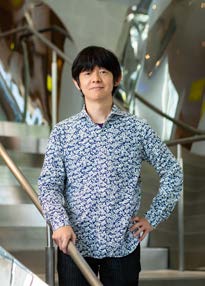 Shiko Maruyama is an Associate Professor in the Economics Discipline Group, at the University of Technology Sydney. Before joining UTS in December 2013, Dr Maruyama completed his PhD at Northwestern University in 2007 and worked at the University of New South Wales. His fields of specialisation are Health Economics, Family Economics, Microeconomics, Public Finance, Industrial Organisation, and Labour Economics. The topics of his research include health insurance, pay for performance, informal care, the long-term BMI trends, and the effect of birth outcomes. Dr Maruyama is currently an Associate Editor of Health Economics. He is also one of the main organisers of the annual Asian Workshop on Econometrics and Health Economics (AWEHE).
Event Details
- Date:
- 4 September 2019 at 12:00 pm – 12:00 pm
- Venue:
- Monash University Caulfield campus, Building H, Level 9, Seminar room H9.21
- Categories:
- Health Economics
Description
Children with severe health problems and disabilities require continuing care from parents. Understanding how parents are affected by unexpected by care needs and what group of parents are most affected is an essential first step in designing policies to support impacted parents and reduce the substantive risk in the life of families. There is a large, long-standing literature on the effect of children's health on parental labour supply. Two major limitations of the literature are identified. First, whether this is a temporary adjustment or a catastrophic life-long event to families even in a contemporary developed country. Second, whether parental investment is maintained by reduced labour market activities or hampered by family breakdown. Using population data from Denmark we investigate the impact of severe child care needs on not only parental labour supply but also to family stability, future fertility decisions, and parental crime.
Presenter
Shiko Maruyama is an Associate Professor in the Economics Discipline Group, at the University of Technology Sydney. Before joining UTS in December 2013, Dr Maruyama completed his PhD at Northwestern University in 2007 and worked at the University of New South Wales. His fields of specialisation are Health Economics, Family Economics, Microeconomics, Public Finance, Industrial Organisation, and Labour Economics. The topics of his research include health insurance, pay for performance, informal care, the long-term BMI trends, and the effect of birth outcomes. Dr Maruyama is currently an Associate Editor of Health Economics. He is also one of the main organisers of the annual Asian Workshop on Econometrics and Health Economics (AWEHE).
Event Contact
- Name
- che-enquiries@monash.edu
- Phone
- Organisation