
Patient safety measures in US nursing home ratings
A central feature of the US government’s strategy to monitor and improve nursing home care is public reporting of facility-level quality indicators and star ratings. However, these indicators are mostly based on unverified nursing home-reported data.
We assessed the accuracy of four key patient safety measures - the rates of major injury falls, pressure ulcers, urinary traction infections, and pneumonia - by comparing nursing home-reported data against hospitalizations. In all four measures, we found substantial underreporting, with variation by individual race and nursing home race mix.
We also investigated the distributions of reporting, correlations between hospital-based rates and publicly reported measures, and nursing home characteristics that may be predictive of underreporting.
Our findings indicate alternative approaches are needed to improve surveillance of nursing home quality. The US experience may be valuable for other countries considering public reporting as an approach to increasing competition and improving quality of care.
Speaker
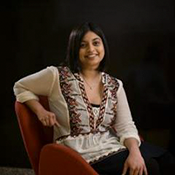
Dr Prachi Sanghavi (The University of Chicago, US)Prachi Sanghavi is a health policy researcher and assistant professor at the University of Chicago who uses empirical methods to study comparative effectiveness of health care services, quality of care measurement, and population health. Her current projects include assessment of:
Dr. Sanghavi received her PhD in Health Policy from Harvard University and previously studied electrical and computer engineering at Cornell University. |
|
CHE weekly seminar series
As part of the Centre for Health Economics’ vibrant research culture, we host a weekly seminar series. Visiting and invited researchers present current research relating to the economics of health and wellbeing, and the healthcare sector. Visitors are welcome to join these sessions where discussion and debate is encouraged. We aim to present all seminars in-person and also on Zoom.
Event Details
- Date:
- 28 November 2022 at 12:00 pm – 1:00 pm
- Venue:
- Caulfield campus, Building H, Level 9, Room H921
- Categories:
- CHE Seminar; General; Health Economics
Description
A central feature of the US government’s strategy to monitor and improve nursing home care is public reporting of facility-level quality indicators and star ratings. However, these indicators are mostly based on unverified nursing home-reported data.
We assessed the accuracy of four key patient safety measures - the rates of major injury falls, pressure ulcers, urinary traction infections, and pneumonia - by comparing nursing home-reported data against hospitalizations. In all four measures, we found substantial underreporting, with variation by individual race and nursing home race mix.
We also investigated the distributions of reporting, correlations between hospital-based rates and publicly reported measures, and nursing home characteristics that may be predictive of underreporting.
Our findings indicate alternative approaches are needed to improve surveillance of nursing home quality. The US experience may be valuable for other countries considering public reporting as an approach to increasing competition and improving quality of care.
Speaker
Dr Prachi Sanghavi (The University of Chicago, US)Prachi Sanghavi is a health policy researcher and assistant professor at the University of Chicago who uses empirical methods to study comparative effectiveness of health care services, quality of care measurement, and population health. Her current projects include assessment of:
Dr. Sanghavi received her PhD in Health Policy from Harvard University and previously studied electrical and computer engineering at Cornell University. |
|
CHE weekly seminar series
As part of the Centre for Health Economics’ vibrant research culture, we host a weekly seminar series. Visiting and invited researchers present current research relating to the economics of health and wellbeing, and the healthcare sector. Visitors are welcome to join these sessions where discussion and debate is encouraged. We aim to present all seminars in-person and also on Zoom.