
Seminar: Maternal stress and birth outcomes
Evidence from an unexpected earthquake swarm
The Centre for Health Economics at Monash Business School invites you to the research webinar ‘Maternal stress and birth outcomes: Evidence from an unexpected earthquake swarm’, presented by Associate Professor Andrea Menclova from the University of Canterbury.
We examine the impact of a major earthquake that unexpectedly affected the Canterbury region of New Zealand on a wide-range of birth outcomes, including birth weight, gestational age and an indicator of general newborn health. We control for observed and unobserved differences between pregnant women in the area affected by the earthquake and other pregnant women by including mother fixed effects in all of our regression models. We extend the previous literature by comparing the impact of the initial unexpected earthquake to the impacts of thousands of aftershocks that occurred in the same region over the 18 months following the initial earthquake. We find that exposure to these earthquakes reduced gestational age, increased the likelihood of having a late birth and negatively affected newborn health - with the largest effects for earthquakes that occurred in the first and third trimesters of pregnancy. Our estimates are similar when we focus on just the impact of the initial earthquake or, in contrast, on all earthquakes controlling for endogenous location decisions using an instrumental variables approach. This suggests that the previous estimates in the literature that use this approach are likely unbiased and that treatment effects are homogenous in the population. We present supporting evidence that the likely channel for these adverse effects is maternal stress.
 Speaker
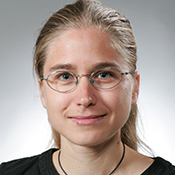
Andrea Menclova (nee Kutinova) is an Associate Professor of Economics at the University of Canterbury in New Zealand. She is originally from the Czech Republic and holds a BA degree from Charles University in Prague and an MA and a PhD from the University of New Hampshire in the U.S. In 2017, she was a Visiting Fellow at Princeton University’s Center for Health and Wellbeing. Andrea’s research is in applied microeconomics, mostly Health Economics (and infant health specifically). Having lived through the Canterbury earthquake as an expectant mother herself, she has a personal connection to the current study.
CHE seminar series
At the Centre for Health Economics, we are working on running as many of our seminars as possible online while COVID-19 remains an obstacle to getting together. As we will be working with experts and colleagues in other parts of the world there will be some movement in the times and days that seminars run to take into account different time zones and availabilities. If you would like to be on our seminar email list, please be directly in contact by email to shannon.stanwell@monash.edu.
Hope to see you there!
Event Details
- Date:
- 21 October 2020 at 12:00 pm – 1:00 pm
- Venue:
- This seminar will take place via Zoom - please email shannon.stanwell@monash.edu to register
- Categories:
- Health Economics
Description
Evidence from an unexpected earthquake swarm
The Centre for Health Economics at Monash Business School invites you to the research webinar ‘Maternal stress and birth outcomes: Evidence from an unexpected earthquake swarm’, presented by Associate Professor Andrea Menclova from the University of Canterbury.
We examine the impact of a major earthquake that unexpectedly affected the Canterbury region of New Zealand on a wide-range of birth outcomes, including birth weight, gestational age and an indicator of general newborn health. We control for observed and unobserved differences between pregnant women in the area affected by the earthquake and other pregnant women by including mother fixed effects in all of our regression models. We extend the previous literature by comparing the impact of the initial unexpected earthquake to the impacts of thousands of aftershocks that occurred in the same region over the 18 months following the initial earthquake. We find that exposure to these earthquakes reduced gestational age, increased the likelihood of having a late birth and negatively affected newborn health - with the largest effects for earthquakes that occurred in the first and third trimesters of pregnancy. Our estimates are similar when we focus on just the impact of the initial earthquake or, in contrast, on all earthquakes controlling for endogenous location decisions using an instrumental variables approach. This suggests that the previous estimates in the literature that use this approach are likely unbiased and that treatment effects are homogenous in the population. We present supporting evidence that the likely channel for these adverse effects is maternal stress.
Speaker
Andrea Menclova (nee Kutinova) is an Associate Professor of Economics at the University of Canterbury in New Zealand. She is originally from the Czech Republic and holds a BA degree from Charles University in Prague and an MA and a PhD from the University of New Hampshire in the U.S. In 2017, she was a Visiting Fellow at Princeton University’s Center for Health and Wellbeing. Andrea’s research is in applied microeconomics, mostly Health Economics (and infant health specifically). Having lived through the Canterbury earthquake as an expectant mother herself, she has a personal connection to the current study.
CHE seminar series
At the Centre for Health Economics, we are working on running as many of our seminars as possible online while COVID-19 remains an obstacle to getting together. As we will be working with experts and colleagues in other parts of the world there will be some movement in the times and days that seminars run to take into account different time zones and availabilities. If you would like to be on our seminar email list, please be directly in contact by email to shannon.stanwell@monash.edu.
Hope to see you there!