
What happens when everyone knows behavioural economics?
Interventions based on behavioural science are designed to leverage cognitive biases in human decision-making.
As behavioural science-based interventions have become popular policy tools, the public has become more aware of cognitive biases.
That awareness may either increase intervention effectiveness by increasing the public’s acceptance of the intervention (or its goals) or decrease effectiveness by letting potential participants avoid common cognitive biases.
We build a conceptual framework to understand whether awareness of cognitive biases reduces the effectiveness of behavioural science–based interventions.
We offer empirical evidence from two randomised experiments that increased awareness does not reduce the effectiveness of behavioural science-based interventions and may even increase their effectiveness.
Speaker Profile
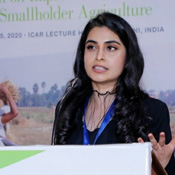
Dr Pallavi Shukla, Lecturer, Economics, Faculty of Business and Law, Deakin Business School
Dr Shukla holds a PhD from the University of Illinois at Urbana-Champaign, USA. She also has Masters degrees in Economics and Public Policy from the University of Michigan-Ann Arbor, USA.
Before coming to Deakin, Dr Shukla was a Postdoctoral Research Fellow at Johns Hopkins University, USA. Her research in development, behavioural, and agricultural economics studies technology adoption, food security, health, and the impact of economic growth on the environment. She has published in some of the top economics journals including the Review of Economics and Statistics and Journal of Development Economics.
Weekly seminar series
As part of our centre's vibrant research culture, we host a weekly seminar series. Visiting and invited researchers present current research relating to the economics of health and wellbeing, and the healthcare sector. Visitors are welcome to join these sessions where discussion and debate is encouraged.
For further information on our seminar series, please contact shannon.stanwell@monash.edu
Event Details
- Date:
- 15 March 2023 at 12:00 pm – 1:00 pm
- Venue:
- In-person at Caulfield campus, Building H, Level 9, Room H9.21
- Categories:
- CHE Seminar; Health Economics
Description
Interventions based on behavioural science are designed to leverage cognitive biases in human decision-making.
As behavioural science-based interventions have become popular policy tools, the public has become more aware of cognitive biases.
That awareness may either increase intervention effectiveness by increasing the public’s acceptance of the intervention (or its goals) or decrease effectiveness by letting potential participants avoid common cognitive biases.
We build a conceptual framework to understand whether awareness of cognitive biases reduces the effectiveness of behavioural science–based interventions.
We offer empirical evidence from two randomised experiments that increased awareness does not reduce the effectiveness of behavioural science-based interventions and may even increase their effectiveness.
Speaker Profile
Dr Pallavi Shukla, Lecturer, Economics, Faculty of Business and Law, Deakin Business School
Dr Shukla holds a PhD from the University of Illinois at Urbana-Champaign, USA. She also has Masters degrees in Economics and Public Policy from the University of Michigan-Ann Arbor, USA.
Before coming to Deakin, Dr Shukla was a Postdoctoral Research Fellow at Johns Hopkins University, USA. Her research in development, behavioural, and agricultural economics studies technology adoption, food security, health, and the impact of economic growth on the environment. She has published in some of the top economics journals including the Review of Economics and Statistics and Journal of Development Economics.
Weekly seminar series
As part of our centre's vibrant research culture, we host a weekly seminar series. Visiting and invited researchers present current research relating to the economics of health and wellbeing, and the healthcare sector. Visitors are welcome to join these sessions where discussion and debate is encouraged.
For further information on our seminar series, please contact shannon.stanwell@monash.edu