
Monash Business School climate workshop: Navigating the energy transition
For fossil fuel-rich economies, navigating the transition to net-zero emissions is a complex challenge.
Hosted in the lead-up to COP28 in Dubai, this workshop will bring together international energy experts, Monash Business School researchers and Australian policy-makers and practitioners to explore economic, regulatory and policy angles of the net-zero transition.
The workshop will feature keynote speaker, Professor Hilde Bjornland, from the Norwegian Business School, who will draw on Norwegian experiences to reflect on how fossil fuel rich economies like Australia can navigate the net-zero transition.
The workshop will be hosted by the Department of Econometrics and Business Statistics and Green Lab, Monash Business School. It contributes to Monash University’s Impact 2030 strategy, which seeks to tackle global challenges such as climate change.
Expert panel
The workshop will feature a panel discussion on navigating the energy transition moderated by Monash Business School Head Professor Simon Wilkie. The panel includes Prof Hilde Bjørnland, Katie Brown (Department of Energy, Environment and Climate Action, Victoria) Dr Glen Currie (Climateworks Centre) and Jeremy Lawson (Reserve Bank of Australia).
Speakers
Professor Hilde Bjørnland
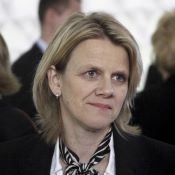
Prof Bjørnland is Professor of Economics at the BI Norwegian Business School. Her primary research interests are in the areas of applied macroeconomics and time series. She has published in leading journals such as the American Economic Journal: Macroeconomics, Economic Journal, Journal of International Economics, Journal of Monetary Economics and the Review of Economics and Statistics. She also co-authored the book: Applied Time Series For Macroeconomics.
Her work has been widely disseminated in international media, including the BBC, the Financial Times, Bloomberg, The Wall Street Journal and Le Monde. Prof Bjørnland has previously held positions as Provost for Research and Academic Resources at BI Norwegian Business School, staff economist at the International Monetary Fund, Project Leader at Norges Bank, Associate Professor at the University of Oslo and Researcher at Statistics Norway.
She has been a member of the corporate assembly of Norsk Hydro ASA, and a board member of the Swedish Fiscal Policy Council, the Financial Supervisory Authority of Norway, the Petroleum Price Board and the Abel Prize Board. She was recently a member of the Norwegian government commission appointed to assess the Financial Supervisory Act and activities, the Norwegian government-appointed expert group assessing the economic consequences of COVID-19, and the Climate Change Commission (Klimaomstillingsutvalget).
Anita Foerster

Anita Foerster is an Associate Professor in the Department of Business, Law and Taxation at the Monash University. She specialises in environmental and climate change law, regulation and governance. She works on issues of current and pressing public policy importance including: the roles and responsibilities of the private sector in addressing climate change; the implementation of legal frameworks for climate mitigation and adaptation at different jurisdictional scales; disaster risk reduction and climate change adaptation in Australian settlements; and the allocation of scarce natural resources (such as water) between competing users.
Anita's research is socio-legal (law-in-context) and interdisciplinary. She uses empirical and qualitative research techniques to track and assess the impact and effectiveness of environmental law and regulation. Her work is often targeted to end-users in policy and practice and has included reports prepared for the Australian Conservation Foundation, ClientEarth and the Victorian Dept. of Environment, Land, Water and Planning.
Anita is the Director of the Monash Business School Green Lab - Monash Business School’s hub for inter-disciplinary and applied research on climate change and sustainability.
Lata Gangadharan

Lata Gangadharan is a Professor of Economics and Joe Isaac Chair of Business and Economics at Monash University. She is an experimental and behavioural economist. A key focus of her research has been on developing novel experimental methods to study economic and social institutions. Her recent research focuses on incentives and preferences and addresses the following topics: peer sanctioning to mitigate the effect of social and environmental dilemmas, propensity for prosocial and antisocial behaviour, incentives for compliance and auditing, and gender and social identity.
Her research has been published in several general interest and field journals, such as, Science, Nature Communications, American Economic Review, Economic Journal, European Economic Review, Journal of Public Economics, Journal of Environmental Economics and Management, Experimental Economics and Journal of Economic Behavior and Organization.
She currently serves as a Co-Editor at the Journal of Economic Behavior and Organization, an Associate Editor at Management Science and the Journal of Economic Psychology, is a Fellow of the Academy of the Social Sciences in Australia and is President-Elect of the Economic Science Association.
Anke Leroux

Anke Leroux is an Associate Professor at the Department of Economics at Monash University. She is an environmental and natural resource economist and is particularly interested in economic behaviour and problems of optimal natural resource use and conservation under conditions of risk, uncertainty and irreversibility. She uses theoretical and experimental approaches and has applied her research on climate change adaptation to inform policy in the areas of optimal land use, biodiversity and habitat conservation, biosecurity and water management.
Anke obtained her PhD from the University of Cambridge. She is an Editorial Council member of the Journal of Environmental Economics and Management and Co-Editor of Environmental and Resource Economics.
Prof Francesco Ravazzolo

Prof Ravazzolo is a Professor of Econometrics in the Faculty of Economics and Management at Free University of Bozen-Bolzano, Head of the Department of Data Science and Analytics at BI Norwegian Business School and visiting professor at Centre for Applied Macroeconomics and Commodity Prices at BI Norwegian Business School.
His research focuses on commodity markets, econometrics, energy economics, financial econometrics and macroeconometrics. He has published in several leading academic journals.
Prof Ravazzalo serves academia in several roles. He is on the editorial board of Annals of Applied Statistics; International Journal of Forecasting; Journal of Applied Econometrics; and Studies in Nonlinear Dynamics and Econometrics. He is also member of the executive committee of the Society of Nonlinear Dynamics and Econometrics and of the steering committee of the Italian Econometric Association. His activities have been reviewed in several newspapers and magazines, such as Wall Street Journal, The Telegraph and Corriere della Sera.
Event Hosts
Anita Foerster, Farshid Vahid, Wei Wei, Benjamin Wong.
Program
Organised by
Department of Econometrics and Business Statistics and Green Lab, Monash Business School.
Event Details
- Date:
- 13 November 2023 at 9:00 am – 5:30 pm
- Venue:
- Room H813 - Level 8, Bldg H, Monash University Caulfield campus, 900 Dandenong Rd, Caulfield, VIC, 3145
- Categories:
- Alumni; Econometrics and Business Statistics; General; Green Lab
Description
For fossil fuel-rich economies, navigating the transition to net-zero emissions is a complex challenge.
Hosted in the lead-up to COP28 in Dubai, this workshop will bring together international energy experts, Monash Business School researchers and Australian policy-makers and practitioners to explore economic, regulatory and policy angles of the net-zero transition.
The workshop will feature keynote speaker, Professor Hilde Bjornland, from the Norwegian Business School, who will draw on Norwegian experiences to reflect on how fossil fuel rich economies like Australia can navigate the net-zero transition.
The workshop will be hosted by the Department of Econometrics and Business Statistics and Green Lab, Monash Business School. It contributes to Monash University’s Impact 2030 strategy, which seeks to tackle global challenges such as climate change.
Expert panel
The workshop will feature a panel discussion on navigating the energy transition moderated by Monash Business School Head Professor Simon Wilkie. The panel includes Prof Hilde Bjørnland, Katie Brown (Department of Energy, Environment and Climate Action, Victoria) Dr Glen Currie (Climateworks Centre) and Jeremy Lawson (Reserve Bank of Australia).
Speakers
Professor Hilde Bjørnland
Prof Bjørnland is Professor of Economics at the BI Norwegian Business School. Her primary research interests are in the areas of applied macroeconomics and time series. She has published in leading journals such as the American Economic Journal: Macroeconomics, Economic Journal, Journal of International Economics, Journal of Monetary Economics and the Review of Economics and Statistics. She also co-authored the book: Applied Time Series For Macroeconomics.
Her work has been widely disseminated in international media, including the BBC, the Financial Times, Bloomberg, The Wall Street Journal and Le Monde. Prof Bjørnland has previously held positions as Provost for Research and Academic Resources at BI Norwegian Business School, staff economist at the International Monetary Fund, Project Leader at Norges Bank, Associate Professor at the University of Oslo and Researcher at Statistics Norway.
She has been a member of the corporate assembly of Norsk Hydro ASA, and a board member of the Swedish Fiscal Policy Council, the Financial Supervisory Authority of Norway, the Petroleum Price Board and the Abel Prize Board. She was recently a member of the Norwegian government commission appointed to assess the Financial Supervisory Act and activities, the Norwegian government-appointed expert group assessing the economic consequences of COVID-19, and the Climate Change Commission (Klimaomstillingsutvalget).
Anita Foerster
Anita Foerster is an Associate Professor in the Department of Business, Law and Taxation at the Monash University. She specialises in environmental and climate change law, regulation and governance. She works on issues of current and pressing public policy importance including: the roles and responsibilities of the private sector in addressing climate change; the implementation of legal frameworks for climate mitigation and adaptation at different jurisdictional scales; disaster risk reduction and climate change adaptation in Australian settlements; and the allocation of scarce natural resources (such as water) between competing users.
Anita's research is socio-legal (law-in-context) and interdisciplinary. She uses empirical and qualitative research techniques to track and assess the impact and effectiveness of environmental law and regulation. Her work is often targeted to end-users in policy and practice and has included reports prepared for the Australian Conservation Foundation, ClientEarth and the Victorian Dept. of Environment, Land, Water and Planning.
Anita is the Director of the Monash Business School Green Lab - Monash Business School’s hub for inter-disciplinary and applied research on climate change and sustainability.
Lata Gangadharan
Lata Gangadharan is a Professor of Economics and Joe Isaac Chair of Business and Economics at Monash University. She is an experimental and behavioural economist. A key focus of her research has been on developing novel experimental methods to study economic and social institutions. Her recent research focuses on incentives and preferences and addresses the following topics: peer sanctioning to mitigate the effect of social and environmental dilemmas, propensity for prosocial and antisocial behaviour, incentives for compliance and auditing, and gender and social identity.
Her research has been published in several general interest and field journals, such as, Science, Nature Communications, American Economic Review, Economic Journal, European Economic Review, Journal of Public Economics, Journal of Environmental Economics and Management, Experimental Economics and Journal of Economic Behavior and Organization.
She currently serves as a Co-Editor at the Journal of Economic Behavior and Organization, an Associate Editor at Management Science and the Journal of Economic Psychology, is a Fellow of the Academy of the Social Sciences in Australia and is President-Elect of the Economic Science Association.
Anke Leroux
Anke Leroux is an Associate Professor at the Department of Economics at Monash University. She is an environmental and natural resource economist and is particularly interested in economic behaviour and problems of optimal natural resource use and conservation under conditions of risk, uncertainty and irreversibility. She uses theoretical and experimental approaches and has applied her research on climate change adaptation to inform policy in the areas of optimal land use, biodiversity and habitat conservation, biosecurity and water management.
Anke obtained her PhD from the University of Cambridge. She is an Editorial Council member of the Journal of Environmental Economics and Management and Co-Editor of Environmental and Resource Economics.
Prof Francesco Ravazzolo
Prof Ravazzolo is a Professor of Econometrics in the Faculty of Economics and Management at Free University of Bozen-Bolzano, Head of the Department of Data Science and Analytics at BI Norwegian Business School and visiting professor at Centre for Applied Macroeconomics and Commodity Prices at BI Norwegian Business School.
His research focuses on commodity markets, econometrics, energy economics, financial econometrics and macroeconometrics. He has published in several leading academic journals.
Prof Ravazzalo serves academia in several roles. He is on the editorial board of Annals of Applied Statistics; International Journal of Forecasting; Journal of Applied Econometrics; and Studies in Nonlinear Dynamics and Econometrics. He is also member of the executive committee of the Society of Nonlinear Dynamics and Econometrics and of the steering committee of the Italian Econometric Association. His activities have been reviewed in several newspapers and magazines, such as Wall Street Journal, The Telegraph and Corriere della Sera.
Event Hosts
Anita Foerster, Farshid Vahid, Wei Wei, Benjamin Wong.
Program
Organised by
Department of Econometrics and Business Statistics and Green Lab, Monash Business School.