
Green Lab roundtables to confront urgent climate adaptation challenges
12 November 2024
Monash Business School’s Green Lab has announced a series of high-stakes roundtables to confront the challenges posed by rising global temperatures.
The sessions, to be held in cooperation with the US National Academy of Public Administration (NAPA), will bring together leading Australian and international academics and adaptation practitioners to explore solutions for managing the escalating impacts of a warming world.

Green Lab Director
A/Prof Anita Foerster.
“Investing in adapting to these impacts and managing the associated loss and damage in a manner that is fair and equitable is just as critical as investing in the clean energy transition and reducing greenhouse gas emissions,” said Associate Professor Anita Foerster, Director of the Monash Business School Green Lab.
“Meeting these challenges demands collaboration across sectors and disciplines.”
Dr Michael Spencer, Adjunct Senior Research Fellow at Green Lab, said the roundtable series, Living with 2°C Plus – the climate change adaptation challenge, had been designed to foster collaborative problem-solving.
Registration is now open for the first roundtable on 28 November.
“Our goal is to reignite a focus on adaptation and adaptation strategies, and connect that into the broader community of policy-makers and business,” Dr Spencer said.
“You can’t look at adaptation in a silo, it is a systemic problem that requires a whole-system approach, which is why discussions such as these are so important.”
Understanding institutional blockers to progress
The first roundtable, Where Are We, Why Are We Here, and Where Do We Want to Go? on 28 November will examine global adaptation progress and updates from the latest COP29 discussions.

Dr Michael Spencer.
Dr Spencer said understanding the current state of adaptation efforts was crucial for charting a viable path forward. As well as local experts, co-chairs of the NAPA standing committees on intergovernmental systems and international affairs will add their experience.
“Among the biggest obstacles we face are the institutional constraints,” he said. “We will explore these challenges from various perspectives and discuss the strategies being implemented to overcome them.”
Climate risks and insurance costs
In early 2025, the second session, Measuring Risk and Value to Incentivise Adaptation, will assess climate risks and how this translates to insurance costs, and prioritise adaptation measures that drive government and private sector engagement.
“This roundtable will examine how we can understand and mitigate risk on a national scale,” Dr Spencer said. “It is a huge challenge, but an area where we can have an enormous impact.”
Water security and equity
The third roundtable, Water: Too Much, Too Little, and Water Vulnerability, will focus on water security and equity in the face of increasing climate stress.
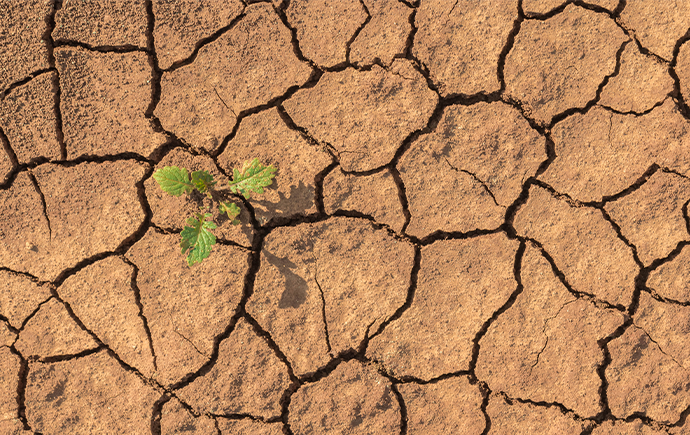
Rising temperatures have a devastating
impact on our planet.
“Water plays a crucial role in many aspects of climate impacts, whether it’s too much - such as floods and extreme weather events - or scarcity, as seen in droughts and shifting weather patterns,” he said.
“Looking ahead, we are already planning subsequent roundtables that will tackle other important climate adaptation issues, such as health.”
Dr Spencer said the timing of the roundtables was critical, with the Australian Government set to release its first national climate risk assessment and adaptation plan next year. The United Nations is also increasing its focus on adaptation.
“Much of the work of these roundtables will dovetail into the national focus on adaptation that will flow from those two pieces of work,” he said.