
Celebrating three decades at the forefront of health economics research
15 June 2023
Past and current staff, associates and alumni gathered at Monash University’s Caulfield campus yesterday for the Centre for Health Economics’ 30th anniversary celebrations, showcasing three decades of ground-breaking research.

The CHE team, including staff and PhD students.
For Founding Director Emeritus Professor Jeff Richardson, the milestone was a chance to reflect on how far the centre has come over the past 30 years, with health economics a largely neglected field of research in Australia in the early 1990s.
“The discipline was just beginning to gain some recognition, but we didn’t even have a national research facility,” Prof Richardson said. “The National Health and Medical Research Council (NHMRC) saw there was a real need for a health program evaluation centre, so it decided to hold a competition for five years of funding.”
The announcement sparked fierce rivalry as top universities across the country, including the Australian National University and the University of Sydney, vied for the opportunity. “You could say it was a very competitive process,” he said.
“In the end, it was our joint submission with the University of Melbourne that won – although not without some controversy – and after five years, an international review unanimously agreed the funding should continue.”
However, the centre’s future was still far from assured.
“The funding really didn’t stretch very far,” Prof Richardson said. “I remember those first years were dominated by the search for good people – and for more funding and grants.”

Current CHE director Prof Anthony Harris and founding Director Emeritus
Prof Jeff Richardson.
Prof Richardson said data collection in the early days had been a very hands-on business - if you wanted it, you had to go out and find it. “The only national health database of any breadth was Medibank, so most of our work was carried out by sending out questionnaires and surveys,” he said.
“These days the availability of data, together with improvements in computing power and the sophistication of econometrics, has transformed the field of health economics.”
Current Director Professor Anthony Harris has witnessed that transformation over his 12 years at the helm, saying the centre had expanded substantially in size and scope alongside a steady rise in the quality and reach of its research.
“This has been the result of the work of many individuals and teams in the CHE, supported by the Monash Business School,” Prof Harris said.
CHE research:
How rising temperatures impact our economic preferences
Feeling the heat: how out workplaces will become more dangerous
HIV treatment, testing undermined by opposition to same-sex marriage
How CHE's PhD program went from one student to a 'thriving hub'
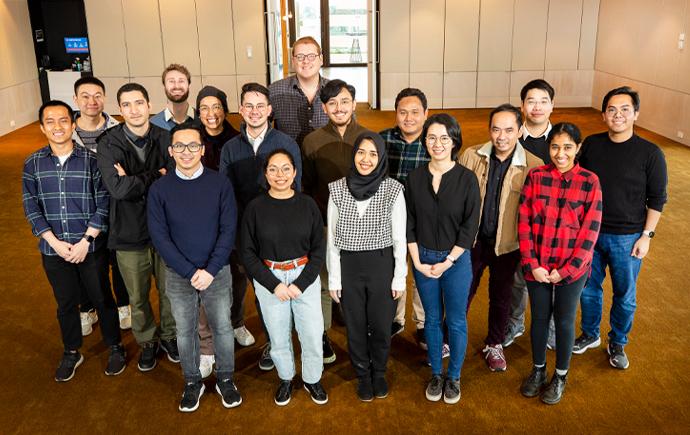
The CHE has a thriving PhD cohort.
An increase in international academic collaboration and an expansion of the centre’s PhD program from a handful of students to more than 20 this year, had been other hallmarks of the past decade.
The CHE’s first PhD student, Associate Professor Nicole Black, said when she joined in 2008, there was no official program - or even a dedicated room for students. “We all had to sit in the Director’s office, which was the largest office of the centre,” A/Prof Black said.
CHE PhD student Jessica Arnup: The economics of aspirations
These days, the PhD room is “a hive of activity”. “There are so many talented researchers coming through the program, with a real willingness to share ideas, learn and work together on meaningful and ambitious projects,” she said.
“And there’s such a strong commitment to undertaking high quality and meaningful health economics research to support better outcomes for the wider population.”
More CHE research:
Why “we need a Reserve Bank for health”
Making the most of global health aid
Too close to home: The closer the pokies venue, the greater the loss
Defining economic factors that help change lives
Interested in hearing the latest from the Centre for Health Economics?