
Introducing CDL-Melbourne’s first graduates
May 29 2024
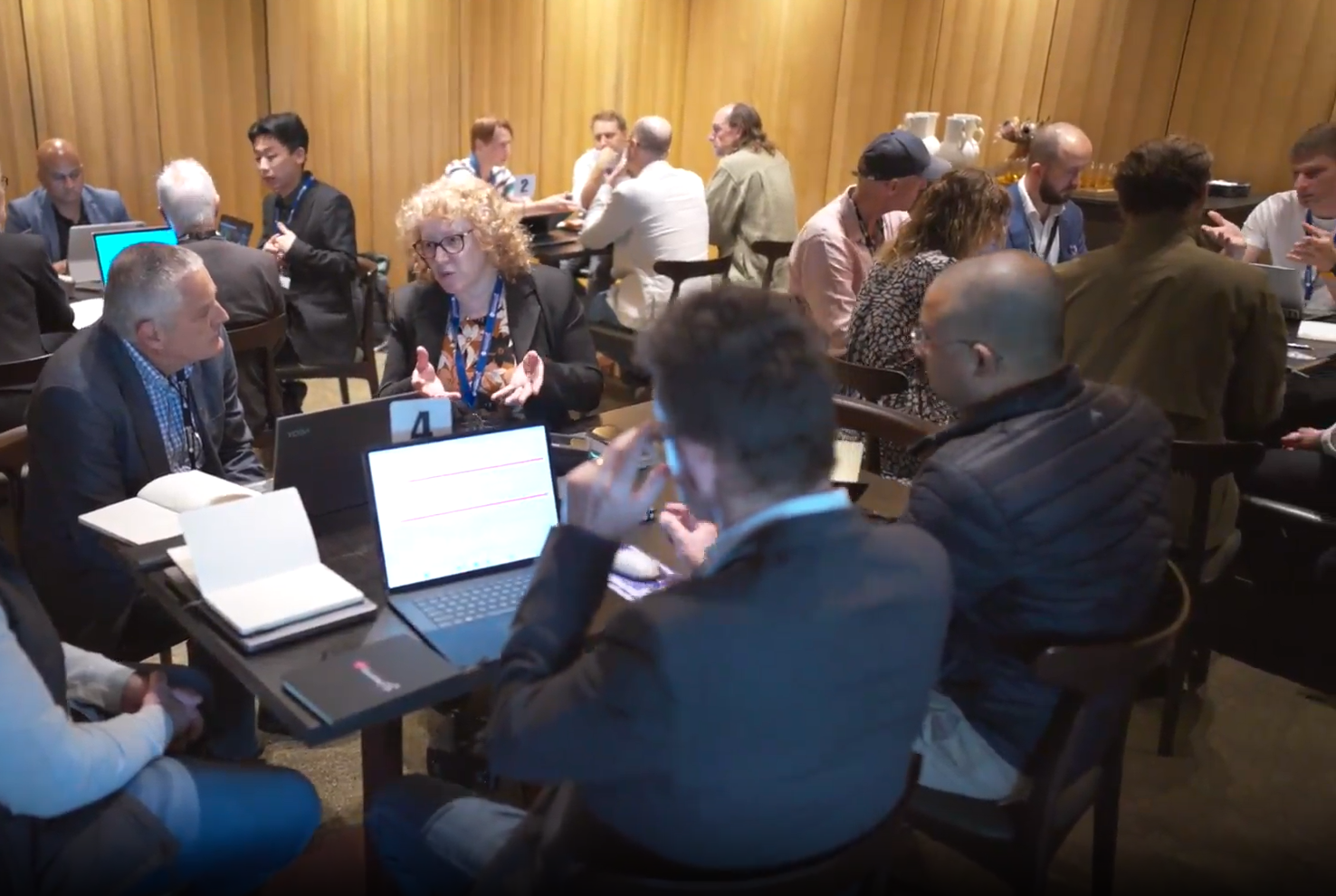
Hackhunter CEO Tracie Thompson during a CDL-Melbourne session.
Eight phenomenal ventures seeking to step onto the world stage have emerged as the inaugural cohort of Creative Destruction Lab Melbourne (CDL-Melbourne) at Monash Business School.
The technology varies widely, from energy solutions to electrochemical technology breakthroughs and wearable assistive devices.
But the one thing all eight ventures have in common is a thirst to scale up quickly with the help of industry-leading entrepreneurs, scientists, executives and investors, to further develop their business models and seek out global expansion.
The graduates took part in three intensive in-person sessions over six months with a handpicked group of mentors gleaned from business, science and finance.
CDL-Melbourne 2023/24 graduates
- PlanBlue: Combines hyperspectral imaging, precise underwater navigation and AI-based automated data processing to ground-truth satellite, aerial and hydrographic imagery to scale nature-based solutions.
- Solstice AI: Developer of a platform that uses satellite data and AI for precise solar panel identification and accurate solar generation forecasts.
- Conry Tech: Developer of an ultra-efficient micro heat-pump chiller, called a BullAnt, offering a decentralised approach to heating and cooling systems.
- HackHunter: Provides a detailed, real-time picture of all WiFi devices in a given environment, including devices outside of their authorised WiFi network.
- Aquila: Creating a long-range wireless energy-transmission system using lasers, computer vision and specialised solar panels to transmit energy from one place to another.
- Jupiter Ionics: Has produced a breakthrough electrochemical technology, the MacFarlane Simonov Ammonia Cell, to produce green ammonia.
- KASPR Datahaus: Provides continuous, real-time monitoring of global internet infrastructure and quality at very fine spatial granularity.
- Vidi Labs: Seekr, the company's flagship product, is a wearable assistive device designed to be a lifelong visual companion for the elderly and visually impaired.
The next step
Whittled down from a field of 16 through the rigorous mentorship process that CDL is known for, the eight ventures can now attend the CDL-Global Super Session in Toronto.
There, they join their global peers from the 12 other CDL locations around the world, to mingle with more than 500 of the world’s leading investors and corporations.
This is considered a huge opportunity to network and explore opportunities for investment, trials and partnerships.
Last year, Monash Business School announced it had partnered with Creative Destruction Lab (CDL), an objectives-based, equity-free program for massively scalable science and tech-based companies, to offer the program in the Asia-Pacific region.
It joined 12 other locations worldwide, including the Foster School of Business at the University of Washington, Saïd School of Business at Oxford University, Scheller College of Business at Georgia Tech, and HEC Paris.
CDL has five sites in Canada, three in the United States and four in Europe.
“It’s been hugely rewarding to see the growth of these companies through the program, where there’s been very direct, but valuable feedback and input throughout,” said CDL-Melbourne Director, A/Prof Charlie Nave.
“Mentors who've done this before”
For HackHunter CEO and co-founder Tracie Thompson, whose company protects organisations from malicious WiFi activity including hacking and drones, the goal has been to chart a course for desired rapid growth.
The company has a short-term goal of offering a seed funding round by September, with a long-term aim of setting up operations in the UK, EU, and the US, she said.
“CDL has really helped me with meeting that challenge over the three sessions with the experience from the mentors who've done this before, giving me different viewpoints so that I can evaluate and decide what's the best way forward for me and for the company.
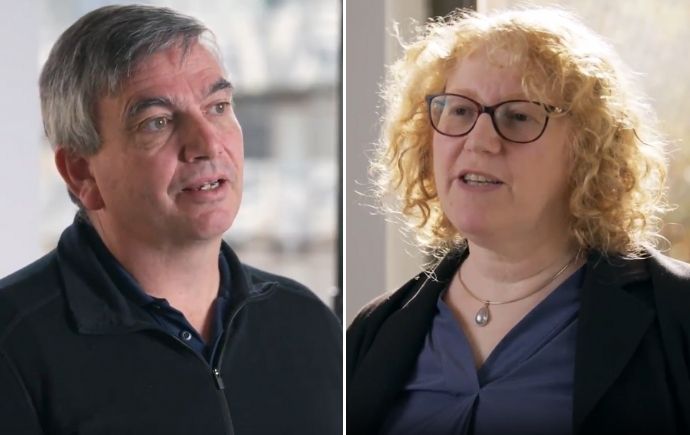
CDL-Melbourne graduate venture CEOs Charlie Day and Tracie Thompson.
Jupiter Ionics CEO Dr Charlie Day said that being able to access mentors outside of his usual domain has been the most valuable aspect of the program.
Built on the foundation of research conducted at Monash University in the laboratory of Prof Doug Macfarlane, the company’s technology uses an electrochemical pathway to produce ammonia which, when powered by renewable energy, is carbon-free “Green Ammonia”.
“The divergence of views, the difference of perspectives that the mentors are bringing to your business is incredibly valuable,” he said.
“Right now we're very focused on solving some deep technological challenges that we think will unlock a really attractive and substantial global market.
“But in the longer term, for us it's about how we build a capital stack that can support the growth into those large markets.
“And the sort of thinking we've done through CDL is really setting us up well to tackle those challenges in the future,” he said.
CDL: Global success story
As a general measure of success for the global program, graduates include companies such as Tenstorrent (deep learning processors), North (augmented reality, acquired by Google), Atomwise (deep learning drug discovery), Xanadu (quantum computing) and Eavor (geothermal energy).
Up to 2023, more than 1,700 companies had gone through the program, creating more than A$32 billion in equity value across twenty streams including AI, climate, fintech, energy, biotech, health, quantum and space.
A/Prof Nave hopes to see Australian companies graduating through the program go on to achieve similar success.
“We're looking forward to seeing the growth of these incredible companies, and founders, over the coming years,” he said.
Applications now open
The next group of deep tech ventures are now being sought: applications are now open for the 2024/25 cohort of CDL Melbourne, via CDL-Global.
CDL-Melbourne is open to early-stage science and technology-based companies from across the Asia-Pacific that exhibit differentiated, novel, and scalable solutions.
“Companies must be founder-led, with founders seeking mentorship from a network of credible advisors,” explained A/Prof Nave.
“Our team looks for ventures with novel, defensible and scalable technology with exciting potential, and a team that is well-positioned to drive the success of that technology.
CDL-Melbourne’s advisory group consists of Victoria’s Lead Scientist Amanda Caples; former Monash University Vice-Chancellor Richard Larkins; QuintessenceLabs founder, Vikran Sharma; University of Melbourne Enterprise Professor, Rosemary Addis; and Andreas Fouras, founder of 4DMedical.
Interested but need more information on the CDL-Melbourne and the streams it offers? Try the CDL-Melbourne website, or contact the team to find out more.
Or are you ready to apply? Go to the CDL Global page and start your application.