
Report calls for systemic reform to unlock climate capital
22 June 2026
A new research brief by PACT Adjunct Professor Henry Gonzalez, in conjunction with the global network for blended finance Convergence, reveals blended finance needs to address systemic issues to scale fast enough and meet rising investment needs.
Blended finance, which uses public or philanthropic capital to reduce risk and attract private-sector funding into sustainable development, has grown in prominence over the past decade.
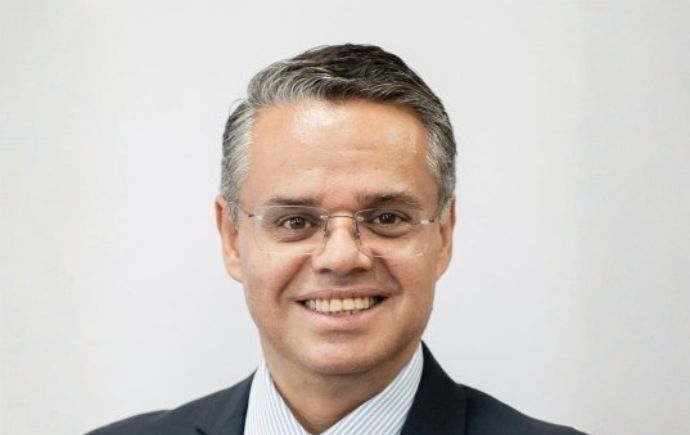
Adjunt Prof Henry Gonzalez.
However, the report, Blended Finance in a Volatile World: Practitioner Insights and Diagnoses, argues it is being held back by structural weaknesses that limit its scalability.
Co-authored with Joan Larrea, chief executive officer of blended finance global network Convergence, and Market Insights and Capacity Building Director Andrew Wainer, the report draws on interviews with more than 30 practitioners across development finance institutions, climate funds, donor agencies, foundations and private investors.
Key challenges identified include fragmentation, slow execution, weak data, and incentive structures that reward caution over catalytic action.
The report also highlights the need for greater mobilisation of domestic capital in emerging markets, and expanded use of guarantees to unlock private investment.
Prof Gonzalez – a former Chief Investment Officer of the Green Climate Fund and a Resident Fellow at the Rockefeller Foundation Bellagio Center – said the report responded to a growing disconnect between aspiration and delivery in global climate finance.
“After years of ambition around mobilising private capital for climate and development, the gap between headline commitments and actual investable flow had become too large to ignore,” Professor Gonzalez said.
“The objective was not to produce another broad endorsement of blended finance, but to offer an honest diagnosis of what is holding the field back, and what has to change if it is to deliver at scale.”
He said that while blended finance was one of the few practical tools that could deploy finite public and philanthropic capital more strategically, it had yet to live up to its promise.
“This is especially important in climate finance, where the need is no longer just to fund isolated projects, but to build pipelines, institutions, and markets that can support transition at scale,” he said.
“The field is being forced to mature, become more disciplined, and prove where concessional capital can genuinely be catalytic rather than merely compensatory.”
PACT Director, Professor Paul Dargusch, said the findings are highly relevant to the climate finance challenges facing the Pacific and the wider Asia-Pacific region.
“The report provides valuable insights into how blended finance mechanisms can be designed to reduce investment risk, mobilise private sector participation and improve the effectiveness of climate finance,” Prof Dargusch said.
He said Mr Gonzalez’s recent appointment as an Adjunct Professor reinforced PACT’s capacity to engage with global climate finance systems and apply them in regional contexts.
“Henry brings a unique combination of global leadership experience in climate finance and investment management,” Professor Dargusch said.
“His involvement strengthens our work across climate finance readiness, project development and natural capital investment.”