
Bringing biopharma treatments to the patients in need
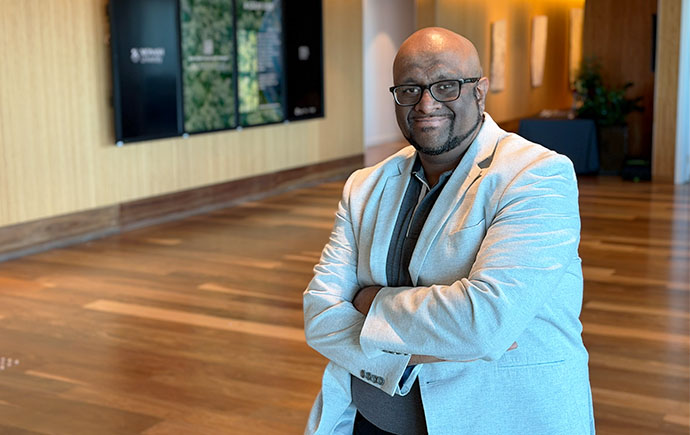
Monash Business School PhD candidate Shah Riyad.
15 December 2025
A friend’s battle with a debilitating disease inspired Shah Ali Riyad to uncover ways to close the gap between scientific discovery and patient access through bio-pharmacy.
Watching a close friend go from one experimental treatment to another, hoping for a breakthrough that never came, Shah Ali Riyad was struck by a fundamental problem in Australian healthcare.
Bio-pharmacy, a promising sector of drugs manufactured from biological sources, rather than through chemical synthesis, offers hope of recovery to patients in conditions that traditional medicine cannot treat.
But due to the sector lacking the scale, funding, and infrastructure of multinational pharmaceutical companies, that hope often doesn’t turn into reality.
The Monash Business School PhD candidate decided there had to be a better way. His research examines why Australian biopharma innovations often fail to make it from the laboratory to market.
“My thesis aims to understand why Australia’s biopharma sector struggles to turn medical discoveries into successful drugs or treatments, and to propose faster, more resource-efficient, and more effective ways to bring these discoveries to the patients who need them,” he said.
Mapping the path to success
While Mr Riyad’s research centres on the bio-pharmacy sector, it revealed a universal truth: when a sector’s commercialisation is dependent on large industrialised operators, shareholders and investors become more important than customers and the community.
“A big pharmaceutical company will care more about mass-market drugs that promise significant return on investment rather than small treatments that can help patient-groups in critical conditions,” he said.
Powered by this truth, Mr Riyad collected 280 cases of commercialisation initiatives with a simple question: ‘How do successful commercialisations differ from unsuccessful ones?’.
His findings reveal that small discoveries with high societal and technological potential have a better chance of success than mass-market drugs with high commercialisation costs.
Commercialising these smaller treatments through small to medium-sized enterprises (SMEs) will make Australian bio-pharmacy more resource-efficient, successful and socially impactful.
Associate Professor Paul Kalfadellis, who is also Monash Business School’s Associate Dean International Partnerships, and Mr Riyad’s PhD supervisor, said the thesis addresses a structural gap affecting innovation in the sector.
“The sector has the potential to provide treatments to patients dealing with critical and debilitating conditions like cancer, Alzheimer's disease, multiple sclerosis, rheumatoid arthritis, diabetes and more,” A/Prof Kalfadellis said.
“Shah's research focuses on resolving the commercial challenges this sector faces in Australia in terms of bringing new treatments to market, so that these patients can hope for a better outcome for their health and well-being.”
Beyond academic publication, Mr Riyad hopes his research will influence policy and support the growth of Australia’s bio-pharmacy sector.
“In the future, I would love to see the policy recommendations of my thesis reflected in the Australian healthcare sector,” he said.
Real-world application at MYOB
Mr Riyad said the support and learning received at the business school would stay with him for the rest of my life.
So too would the opportunity to put his research skills to the test during a PhD Research Internship at MYOB.
As part of the internship, he was tasked with developing an Enterprise Resource Planning (ERP) package for mid-market clients with 200-1,000 employees.
The project required him to research market price points, compare features across existing ERPs, and determine the components of an ideal solution for this client segment.
“The internship was a good change of pace from my PhD that allowed me to apply my research capacity and knowledge of commercialisation in a real commercial environment,” he said.
“It gave me the confidence that my research has the capacity for real-life impact. It also broadened my perspective on career developments.”
Looking ahead, Mr Riyad said he hoped to continue trying to better understand the human condition.
“I got into research because it has the capacity to bring truth to power with evidence, and we really need more of it in our society,” he said. “The opportunity to make a difference in this discourse is what excites me.”
Learn more about our PhD research and how it’s making an impact