
The economics of aspirations
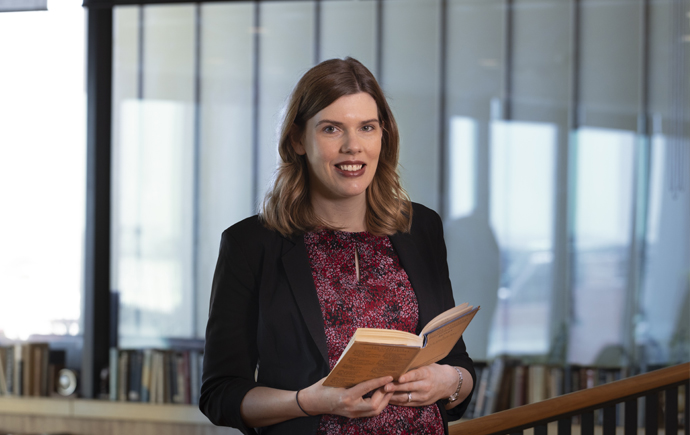
PhD candidate Jessica Arnup
January 1 2022
As a former teacher and school psychologist, Jessica Arnup knows education is one of the most effective means of improving outcomes for children and adolescents.
“I’m really motivated to help all children reach their potential, regardless of the family circumstances they were born into,” she says.
“Completing tertiary education is related to a number of positive outcomes, including better health and higher earnings.”
The third-year PhD student in the Centre for Health Economics is tackling one of the lesser understood barriers to higher education – the economy.
“I’m investigating whether signals from the economy impact secondary school students' expectations and aspirations to attend university,” she said.
Previous research is unclear as to whether students are more or less intent on going to university during an economic downturn such as recession, she said.
“For instance, there may be fewer job opportunities for young people during tough economic times, meaning that tertiary study becomes more appealing,” she said.
“On the other hand, families may struggle to afford the costs related to university, resulting in lowered aspirations.”
To answer these questions, Jessica is using two decades of Programme for International Student Assessment (PISA) data to measure how the educational expectations of 15-year-old students change in response to Gross Domestic Product (GDP).
“We find that students report a reduced expectation to attend university when GDP growth is poor,” she said.
“We also find that, during relatively poor economic times, students are more likely to do less homework and arrive late to school.”
Jessica said the research is timely given economic pressures in the wake of the COVID-19 pandemic.
“If students lower their aspirations to attend university due to such events, then this has big implications for the outcomes of a generation of students,” she said.
“Our research could also help inform policy decisions, for example investing more in subsidised university places or providing more scholarships for students impacted by economic events.”
Jessica’s supervisor, Associate Professor Nicole Black, said the research highlighted the importance of supporting high school students to raise their educational expectations during economic downturns.
“Jessica’s PhD thesis contributes new evidence on how the health and development of children and adolescents are influenced by economic factors, and this is important for policies that can reduce socioeconomic inequalities and help children thrive,” Associate Professor Black said.
Jessica said Monash Business School’s facilities and staff had been integral to her research.
“I’m also lucky to share an office space with some very supportive and knowledgeable PhD students at the centre,” she said.
After her PhD, Jessica said she hopes to continue to carry out further research that has the potential to improve the lives of children and families.
“One thing that particularly excites me about economics is that it has a strong focus on measuring causality - that is, showing that one factor actually causes or impacts an outcome,” she said.
“Research in this area can then be used to inform policy and improve the outcomes of many, in the most cost-effective way.”