
Uncovering the hidden bias in disaster relief
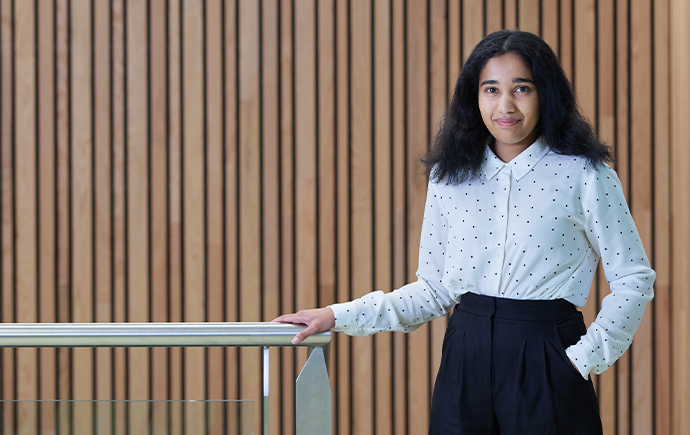
Monash Business School PhD candidate Lihini de Silva.
October 15 2024
When disaster strikes, it seems logical that the most vulnerable communities would receive the most financial support. But a new study of Australia’s Black Summer bushfires by Monash Business School PhD candidate Lihini de Silva shows this isn’t always the case.
Natural disasters may not discriminate, but new research from Monash Business School’s Centre for Health Economics suggests relief funding does.
The study by PhD candidate Lihini de Silva examines the competitive allocation of $670 million in federal government grants in the aftermath of the 2019/20 Black Summer Bushfires.
The findings reveal a troubling trend: vulnerable communities often receive less support than more affluent areas.
More natural disasters means this is a growing problem
“There is a lot of research available to show vulnerable communities are the most impacted by natural disasters,” Ms de Silva said.
“We also know that natural disasters are becoming more and more frequent and severe. So, examining if, and why, there might be inequities in how relief grants are allocated is really important.”
To investigate, Ms de Silva analysed data from all grants awarded under a few major funding schemes, identifying which organisations and towns received funding. She then compared this information against measures of social vulnerability, such as income, ethnicity, and age.
“Because the data was publicly available, at such a granular, geographic level, it allowed us to speak more accurately to how the vulnerability of a community might influence the amount of money they receive,” she said.
“While it was reassuring to find areas that suffered more physical damage had received more money, we were surprised to discover socially vulnerable suburbs, particularly in terms of demographics and ethnic minorities, received less support than more affluent areas.”
Reasons behind funding discrepancies
The results indicate possible implicit biases on the part of applicant organisations and funding agencies when working with vulnerable communities.
“There appear to be barriers to these communities getting organisations, such as councils, to apply for large funding grants on their behalf,” she said.
Professor David Johnston, Ms de Silva’s supervisor, highlighted the broader implications of the research.
“Socially and economically vulnerable communities often face more considerable challenges in the aftermath of disasters, leading to prolonged recovery times, increased economic hardship, and a higher likelihood of long-term displacement,” Prof Johnston said.
“Equitable disaster funding means all communities have the resources needed to effectively recover from disasters and adapt to the challenges posed by climate change.”
Ms de Silva said she hoped the research would influence how disaster support is distributed in the future.
Showing funding agencies new insights
“Ideally, we hope to provide agencies with some insight into how their current methods of distributing funds could be contributing to inequities,” she said.
“Our goal is to improve policy, making it fairer and more equitable, ensuring that policies designed to alleviate vulnerability do not end up exacerbating it.”
Ms de Silva said the supportive environment at the Centre for Health Economics had played a pivotal role in her success.
“I moved from Sydney to Melbourne for my PhD and it’s been such a welcoming environment,” she said.
“Anyone who is part of the Centre knows what a lovely place it is - the staff and the other PhD students are incredible.”