
Blog post #2: Capturing the energy of the people of the Pacific
Engagements have really gathered pace this month, we’ve had great conversations with a few Pacific and SDG experts (more below). We are extremely keen to talk to everyone and anyone to build an inclusive picture of Pacific priorities, so if you would like to chat to us please reach out at the email address below.
Who have we been talking to?
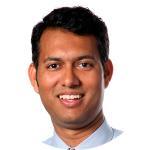 On Friday 29 April, we zoomed with Sudip Ranjan Basu, the Deputy Head & Senior Economist @UNESCAP Pacific Office #Fiji.
Sudip was full of great ideas. We could have talked to him for hours - days even (and actually we are thinking of doing just that later on this year, more to come later). Sudip had a depth of knowledge both about how we find ideas and what we should be doing with those ideas!
What we really loved is how Sudip described the Pacific, as having very strong traditions, and unique ways of thinking about their present and future paths. Sudip really highlighted that engaging with the Pacific is about listening to ideas and taking it forward together, an idea he described wonderfully as “capturing the energy of the people of the Pacific”. We discussed how our engagements are not about understanding power, but about ideas, imagination and sharing. Our project is focused on understanding the energy and the impetus for change across a range of Pacific communities, recognising that SDG implementation is locally led and driven.
From our conversation we had three key take home messages.
Takeaway message 1: We must focus on capturing the innovative implementation methods and approaches across the Pacific.
Sudip reminded us that the SDGs - while they outline a set of common aspirations - need to be localised in order to have the greatest impact. Localisation is a process of adapting the SDGs to suit the particular region, country, local area. In recognition of the fact that there is not - and there cannot be - a one size fits all approach - part of a researcher’s role is to capture and reflect the diverse SDG implementation approaches and in a way, creating a menu of ideas for countries to consider.
Keeping this in mind, we discussed how reports, like the Global Sustainable Development Report, can be of great help when the government officials responsible for SDG implementation can see clearly how the frameworks proposed by the authors can be directly applied to government action, (including in particular what policy reform is required). This is an on-going process - we need to seek out feedback in realtime on what is working and ensure that we adapt our advice based on challenges being faced with implementation.
Takeaway message 2: A successful report is one that recognises and addresses the science-policy interface
We all agreed that what is absolutely crucial for the success of this project (indeed for the success of any such project) is that we work to create the space for ideas to come forward. This is why we have designed our workshops to be participatory and we welcome everyone’s input to drive our conversations. Sudip also pointed to groups across the Pacific that we should talk to in order to capture as much expertise as possible. We will continue to make sure that this ethos of participation and inclusion drives all of our engagement going forward.
Takeaway message 3: Create the space for all voices to be heard and to be listened to
Our conversation with Sudip highlighted that this is an incredibly important approach if we are to really accelerate action on the SDGs. So we want to talke the opportunity to say please get in touch with us if you would like to chat about the SDGs and/or this project, further. We’re all ears!
We will report again shortly with more updates.
Keep energised.
Julie and Domi.
E: Julie.Boulton@monash.edu or Dominique.mccollumcoy@monash.edu
W: https://www.monash.edu/msdi/initiatives/projects/global-sustainable-development-report-2023