
Blog Post #5: SDG 11 – Supporting urbanisation in a culturally appropriate way
At the beginning of May, we had a conversation with Dr Alexei Trundle, Assistant Director (International) – Melbourne Centre for Cities & Melbourne Postdoctoral Fellow at the University Melbourne. Dr Trundle’s research focuses on the way that cities are contributing to the UN 2030 Agenda for Sustainable Development, as well as urban climate resilience and adaptation planning in Pacific Small Island Developing States. We have already published Part 1 of our chat with Alexei, where we talked at some length about what achieving SDG 17: Partnerships for the Goals, means in practice. This blog post reflects on another part of our conversation with Alexei, specifically SDG 11, resilience and data.
SDG 11
SDG 11 is the city focused SDG. Its objective is to “make cities and human settlements inclusive, safe, resilient and sustainable”.
Back in 2015, the introduction of urbanisation, and cities specifically, to the sustainable development agenda was seen as a radical shift as to what should be considered under the umbrella term “sustainable development”. Adopting SDG 11 highlighted that urbanisation is an integral part of any effort to address sustainable development. As Kristi Daniel wrote in 2015 (pre-adoption of the SDGs), cities are “both the source and solution of many global problems.”
It will be under the auspices of cities where we will succeed or fail in achieving our goals of poverty eradication, equality, climate change reduction, and ensuring healthy lives. It will be the cities that determine if we achieve inclusive economic growth or yield to greater inequality. It is in cities where people will seek opportunities for higher education and employment. And, it will be cities that determine if we will continue our steadily increasing usage of the world’s resources or if we can realise a more sustainable path.”
In the years since the SDGs were adopted, the issues that cities cause and the challenges that cities face have not gone away. In fact, if anything the issues have multiplied, especially in terms of population growth: the world continues to be on target to have more than two- thirds of the world’s population being urbanised by 2050 (already more than half of the world’s population live in urban areas).
SDG 11 comprises 10 targets and 14 indicators. The outcomes focused targets include:
- Adequate, safe, and affordable housing and basic services and upgrade slums
- Safe, affordable, accessible, and sustainable transport systems;
- Protect and safeguard the world’s cultural and natural heritage
- Reduce the number of deaths and the number of people affected by disasters and decrease the direct economic losses relative to global gross domestic product caused by disasters
- Reduce the adverse per capita environmental impact of cities, including by paying special attention to air quality and municipal and other waste management; and
- Provide universal access to safe, inclusive and accessible, green and public spaces"
Progress in the Pacific
More than twenty-five years ago, a regional report on Pacific Island countries, prepared by UNDP, noted that “urbanisation and the resulting change in the nature of human settlements in the Pacific represents one of the major challenges facing Pacific communities within the next decade.”
At that time, Pacific urbanisation issues included:
- Shortage of land and land tenure issues
- Falling standards in infrastructure
- Increase in squatter settlements and informal housing
- Poverty, vulnerability and environmental degradation
These issues are precisely the issues that SDG 11, and the whole SDG framework were set up to address.
Pacific urbanisation issues continue to be highlighted in a number of international and regional forums and reports, including the Pacific Urban Agenda regional meetings and the newly formed Pacific Partnership for the New Urban Agenda (see endnotes).
The Pacific Data Hub website, hosted by the Pacific Community, noted the following in relation to SDG 11:
In the last three years, the Pacific has faced a number of disaster events causing significant economic impacts, injury and loss of life. Post-disaster needs assessments indicated significant damages and losses, equivalent to 30% of national GDP in Fiji (2016), and 64% in Vanuatu (2015) for example.The quality of housing, the existence of urban slums, and waste management practices will also be addressed in Goal 11. The estimated waste generation for the region’s urban population is 1.16 million tonnes in 2013, a level projected to increase to over 1.59 million tonnes by 2025.”
Yet, despite an awareness of these issues - including well before SDG 11 was adopted, attention and progress on SDG 11 has been slow, (and not just in the Pacific).
The most recent UNESCAP SDG Progress report (2022) report tells us that progress across the Asia-Pacific region has stagnated.
There has been little or no progress in the areas of quality education (Goal 4), gender equality (Goal 5), water and sanitation (Goal 6), decent work and economic growth (Goal 8), sustainable cities and communities (Goal 11) and life below water (Goal 14).”
The report notes that more work needs to be done to reduce urban pollution and increase resilience against natural disasters, both also specific targets under SDG 11.
Snapshot of SDG progress in Asia and the Pacific, 2021

Progress against SDG 11 for Asia-Pacific countries

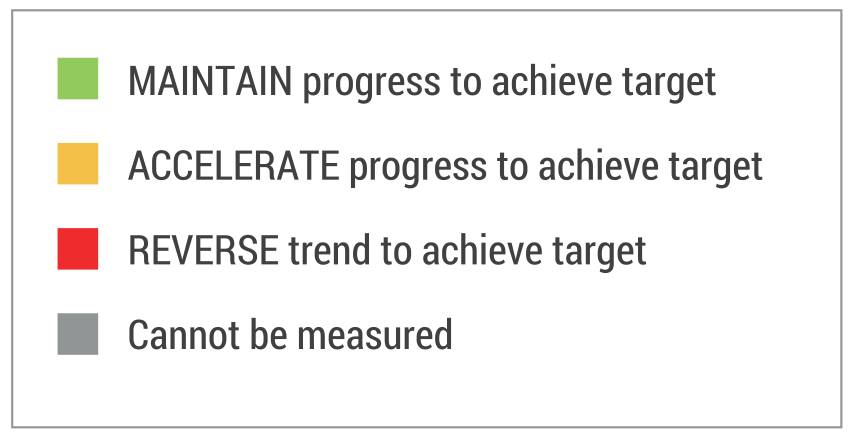
(Source: ESCAP report 2022)
More attention on SDG 11 is needed
Alexei would like to see a greater focus on SDG 11 across the Pacific, both from donors and from country governments. SDG 11.1 – adequate, safe, and affordable housing and basic services and upgrading slums – is particularly critical for Alexei.
The number of people that live in cities [in the Pacific] is underestimated. The flows of ODA are completely disproportionate on a per capita basis because cities are just totally not included within those frameworks…actors…see the Pacific as primarily rural…as opposed to the cash necessities and relative lower poverty of the cities in the informal settlements that are often not seen by people who even live in those cities.”
Applying the SDGs in the manner it was intended – as a holistic framework with an in-depth understanding of the interlinkages between the 17 SDGs - is exactly why Alexei is drawn to using the SDG framework and is also how he seeks to apply it, both within Australia and across the Pacific For example, urbanisation is not just an issue of housing, it is a multifaceted issue that needs other factors such as health (SDG 3), water (SDG 6), jobs (SDG 8) and energy (SDG 7) to be factored in to any sustainable solution.
Opening up a conversation
How can we shift the conversation so there is more of a focus on urbanisation across the Pacific? SDG 11 provides us with some instructions here.
Under SDG 11, the three “means of implementation” targets are:
- 11.a: Support positive economic, social and environmental links between urban, peri-urban and rural areas by strengthening national and regional development planning
- 11.b: Increase the number of cities and human settlements adopting and implementing integrated policies and plans towards inclusion, resource efficiency, mitigation and adaptation to climate change, resilience to disasters, and develop and implement, in line with the Sendai Framework for Disaster Risk Reduction 2015–2030, holistic disaster risk managements at all levels
- 11.c: Support least developed countries, including through financial and technical assistance, in building sustainable and resilient buildings utilising local materials
By using these targets as a guide for what to fund we will be working towards more sustainable, inclusive and equal cities.
Bring culture in
There is one target of SDG 11 that is perhaps the lynchpin of how and what we focus on when tackling urbanisation. This is Target 11.4, which calls for the protection and safeguarding of the world’s cultural and natural heritage. Target 11.4 is both an objective in and of itself but perhaps it is also the lens through which we should understand what sustainable development means. This is exactly how Alexei sees it operating. For him, acknowledging and incorporating cultural context must be at the heart of everything we do.
In this vein, it is the local cultural norms, principles and values that should drive the particular version of sustainable development that we are working towards. In relation to urbanisation, applying a cultural lens means asking, for example. what type of housing is suitable for the context. But it goes further than this: it can, and should, also encompass both a leapfrog mentality and true two way learning, as noted by Alexei.
I think there are really salient lessons in the Pacific for elsewhere about how urban sustainability can work. You know, whether it's looking at urban green space or food production systems or community cohesion, they're all attributes that are globally relevant, that the Pacific actually has lessons to give to the rest of the world that are very much there, but they're just not seen or valued or even attempted to be leveraged.”
The first quadrennial Pacific Sustainable Development Report, prepared by the Pacific Islands Forum Secretariat in 2018, also drew a clear link between sustainability and culture, commenting that “culture is an enabler and a driver for sustainable development particularly with regards to SDG 4, 8 and 11.”
Culture is integral to the lives of Pacific people and has huge potential to advance sustainable development and economic growth within the region. Despite the region’s rich culture and cultural diversity, the role played by culture in achieving sustainable development is not well understood…Through tangible and intangible heritage, creative industries and various forms of artistic expression, culture is a powerful contributor to sustainable development, social stability and environmental protection.”
We particularly like this line from the report: “A sustainable society depends on a sustainable culture.”
Conclusion
In 2019, at the close of the Fifth Pacific Urban Forum , Fiji’s Prime Minister, Josaia Voreqe Bainimarama, described sustainable urban development as a tool to tackle climate vulnerability and inequality and he stated:
"The boldness of our decisions and the strength of our cooperation” will determine whether urban centres become engines of sustainable development or “bastions of inequity and climate vulnerability”
The conversation with Alexei illustrates that the Prime Minister’s words holds true today - sustainable development cannot be achieved without significantly transforming the way we build and manage our urban spaces but that the way we build and manage must be done in a culturally specific and responsible way.
We will leave the last word to Alexei:
The understanding of resilience that he puts forward is that there's a very distinctive version of resilience in the Pacific, that stems from cultural strengths and from community strengths and from customary strengths. The forms of production being grounded around what are already effectively circular economies and closed loop production systems is viewed as a Pacific version of resilience.”
Endnotes
Monash University is a member of the Pacific Partnership for the New Urban Agenda (PP-NUA), a regional partnership formed following PUF5. The PP-NUA is responding to the commitments of Pacific Urban Forum delegates to build and strengthen regional partnerships, and to increase resources and action towards the implementation of the New Urban Agenda. Most recently, the PP-NUA hosted a Virtual Pacific Urban Forum event, providing a regional platform for discussion and knowledge sharing on the current state of progress and challenges towards sustainable urban development.
Monash University’s RISE program (Revitalising Informal Settlements and their Environments) is an example of a transformative approach to human, environmental and ecological health in informal settlements. Working with communities, governments, local leaders and partner institutions in Fiji and Indonesia , RISE aims to demonstrate that nature-based solutions – such as wetlands and bio-filtration gardens – can deliver sustainable, cost-effective health and environmental improvements to water and sanitation services for those living in informal settlements.
Learn more
https://www.monash.edu/msdi/initiatives/rise
https://www.unescap.org/events/fifth-pacific-urban-forum
https://fukuoka.unhabitat.org/en/related-publications/4157/
----------
Until next time.
Domi and Julie
E: Julie.Boulton@monash.edu or Dominique.mccollumcoy@monash.edu
W: https://www.monash.edu/msdi/initiatives/projects/global-sustainable-development-report-2023