
Webinar | Key IPCC report outcomes and responding to climate misinformation
This Monash Energy Institute webinar focused on the key IPCC report outcomes, climate misinformation, and approaches to counter misinformation.
Join A/Prof Shayne McGregor and Dr John Cook for the latest on climate science and climate communication, with a focus on this year’s IPCC report.
Shayne presented key findings from the IPCC’s Sixth Assessment Report (AR6). The report builds upon earlier assessment reports and will provide a high-level summary of the current state of the climate, including how it is changing, human impacts, possible climate futures, climate information relevant to regions and sectors, and limiting human-induced climate change. He will also provide an Australian perspective on the human-induced changes experienced to date and projected future changes.
John shared learnings from the 4D Project, developed to help combat climate misinformation. The 4D Project is organised around four themes: Detect, Deconstruct, Debunk, and Deploy. He will outline how the 4D framework has already been applied to climate science misinformation, how its methodologies can be applied to developing systematic and comprehensive strategies to counter climate misinformation and how the framework can be used to better communicate the findings in the recent IPCC report.
Ms Nancy Van Nieuwenhove, Senior Project and Communications Officer, Monash Energy Institute, hosted the event.
Go further
- Climate Change 2021 - The Physical Science Basis, Summary for Policymakers
- IPCC Sixth Assessment Report - Fact sheet. The current IPCC report includes 12 chapters with globally and regionally-relevant information and an interactive atlas allowing users to analyse and plot the data featured in the report.
- This August 2021 Report was written by 234 scientists, from more than 60 counties. It includes citations to more than 14,000 scientific publications, and was reviewed by climate experts and governments from around the globe for accuracy.
- Lens Article - IPCC report: A grim scientific assessment of how and why the planet is warming
- Science News Article - There’s still time to act but no time to delay
- 4D Project. Four themes in response to climate misinformation: Detect, Deconstruct, Debunk, and Deploy.
Watch the video
Meet the host
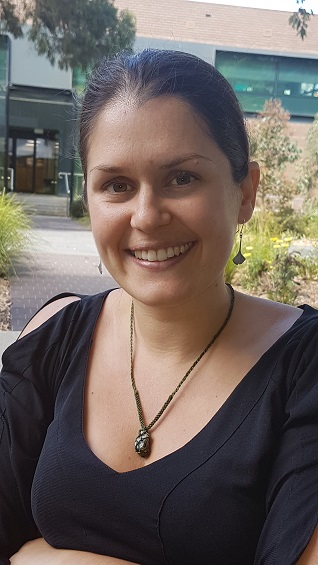
Ms Nancy Van Nieuwenhove
Senior Project and Communications Officer
Monash Energy Institute
Nancy holds a Master’s in Environmental Management (ULB, Belgium) and a Master’s in Applied Communications (IHECS, Belgium). For the last 10+ years, Nancy has worked on energy and conservation communication and education projects in Belgium, Germany, NZ and Australia. Since January 2019, she works for the Monash Energy Institute, focusing on promoting a clean energy transition through the Net Zero Initiative, the RACE for 2030 CRC, the Energy Research Institutes Council for Australia, etc. Her interests include the impact of energy resources and infrastructure on biodiversity, ecology and environmental management, sustainable development, communication and learning strategies.
Meet the speakers

A/ Prof Shayne McGregor
Associate Professor
Monash School of Earth Atmosphere and Environment
Shayne is a lead author on chapter 3, the human influence, on the current UN Intergovernmental Panel on Climate Change (IPCC) Report. His research straddles the boundary of theory, observations and modelling and seeks to understand climate variability and change, with a primary focus on the Australasian region. To date, his research has focused on El Nino-Southern Oscillation dynamics and predictability, Pacific Basin decadal variability, Paleo-climate reconstructions, Interbasin connectivity and sea level variability and rise.

Dr John Cook
Research Fellow
Monash Climate Change Communication Research Hub (MCCCRH)
John's research focus is on using critical thinking to build resilience against misinformation. In 2007, he founded Skeptical Science, a website that won the 2011 Australia Museum Eureka Prize for the Advancement of Climate Change Knowledge. In 2020, he published the book Cranky Uncle vs. Climate Change applying critical thinking, inoculation research, and cartoons to engage and educate readers about climate misinformation. He recently released the Cranky Uncle game, combining critical thinking, cartoons, and gamification to build players’ resilience against misinformation. He currently works with organizations like Facebook and NASA to develop evidence-based responses to climate misinformation.
Event Details
- Date:
- 30 September 2021 at 4:00 pm – 5:00 pm
Description
This Monash Energy Institute webinar focused on the key IPCC report outcomes, climate misinformation, and approaches to counter misinformation.
Join A/Prof Shayne McGregor and Dr John Cook for the latest on climate science and climate communication, with a focus on this year’s IPCC report.
Shayne presented key findings from the IPCC’s Sixth Assessment Report (AR6). The report builds upon earlier assessment reports and will provide a high-level summary of the current state of the climate, including how it is changing, human impacts, possible climate futures, climate information relevant to regions and sectors, and limiting human-induced climate change. He will also provide an Australian perspective on the human-induced changes experienced to date and projected future changes.
John shared learnings from the 4D Project, developed to help combat climate misinformation. The 4D Project is organised around four themes: Detect, Deconstruct, Debunk, and Deploy. He will outline how the 4D framework has already been applied to climate science misinformation, how its methodologies can be applied to developing systematic and comprehensive strategies to counter climate misinformation and how the framework can be used to better communicate the findings in the recent IPCC report.
Ms Nancy Van Nieuwenhove, Senior Project and Communications Officer, Monash Energy Institute, hosted the event.
Go further
- Climate Change 2021 - The Physical Science Basis, Summary for Policymakers
- IPCC Sixth Assessment Report - Fact sheet. The current IPCC report includes 12 chapters with globally and regionally-relevant information and an interactive atlas allowing users to analyse and plot the data featured in the report.
- This August 2021 Report was written by 234 scientists, from more than 60 counties. It includes citations to more than 14,000 scientific publications, and was reviewed by climate experts and governments from around the globe for accuracy.
- Lens Article - IPCC report: A grim scientific assessment of how and why the planet is warming
- Science News Article - There’s still time to act but no time to delay
- 4D Project. Four themes in response to climate misinformation: Detect, Deconstruct, Debunk, and Deploy.
Watch the video
Meet the host
Ms Nancy Van Nieuwenhove
Senior Project and Communications Officer
Monash Energy Institute
Nancy holds a Master’s in Environmental Management (ULB, Belgium) and a Master’s in Applied Communications (IHECS, Belgium). For the last 10+ years, Nancy has worked on energy and conservation communication and education projects in Belgium, Germany, NZ and Australia. Since January 2019, she works for the Monash Energy Institute, focusing on promoting a clean energy transition through the Net Zero Initiative, the RACE for 2030 CRC, the Energy Research Institutes Council for Australia, etc. Her interests include the impact of energy resources and infrastructure on biodiversity, ecology and environmental management, sustainable development, communication and learning strategies.
Meet the speakers
A/ Prof Shayne McGregor
Associate Professor
Monash School of Earth Atmosphere and Environment
Shayne is a lead author on chapter 3, the human influence, on the current UN Intergovernmental Panel on Climate Change (IPCC) Report. His research straddles the boundary of theory, observations and modelling and seeks to understand climate variability and change, with a primary focus on the Australasian region. To date, his research has focused on El Nino-Southern Oscillation dynamics and predictability, Pacific Basin decadal variability, Paleo-climate reconstructions, Interbasin connectivity and sea level variability and rise.
Dr John Cook
Research Fellow
Monash Climate Change Communication Research Hub (MCCCRH)
John's research focus is on using critical thinking to build resilience against misinformation. In 2007, he founded Skeptical Science, a website that won the 2011 Australia Museum Eureka Prize for the Advancement of Climate Change Knowledge. In 2020, he published the book Cranky Uncle vs. Climate Change applying critical thinking, inoculation research, and cartoons to engage and educate readers about climate misinformation. He recently released the Cranky Uncle game, combining critical thinking, cartoons, and gamification to build players’ resilience against misinformation. He currently works with organizations like Facebook and NASA to develop evidence-based responses to climate misinformation.