
Autonomous Robotics: Ethical Challenges and Legal Repercussions
Who is legally and ethically responsible for the actions and inactions of robots in a workplace?
This year Monash Law’s state of the art Moot Courtroom played host to some eminent international law, engineering and ethics experts who discussed the ethical challenges and legal repercussions of using robots in the workplace.
The workshop was a collaboration between Monash University’s Engineering and Law faculties and sponsored by the Australian Centre for Robotic Vision.
The workshop was streamed to over 200 global attendees and began with a fascinating ethical discussion about the introduction of robots into workplaces. This session featured four eminent international experts discussing the law and ethics of using robots in workplaces: Professor Rob Sparrow, Philosophy, Monash University, Professor Kimberlee Weatherall, Professor of Law, University of Sydney, Associate Professor Laurel Riek, Computer Science and Engineering, UC San Diego and Dr Rachel Thomas, Director, USF Center for applied Data Ethics & founder, fast.ai
The ethics discussion was followed by a reenactment of a litigation scenario; beginning with boardroom meetings, a mediation and culminating in a mock trial. The workshop was moderated by one of Australia’s pre-eminent medico legal lawyers, Michael Regos.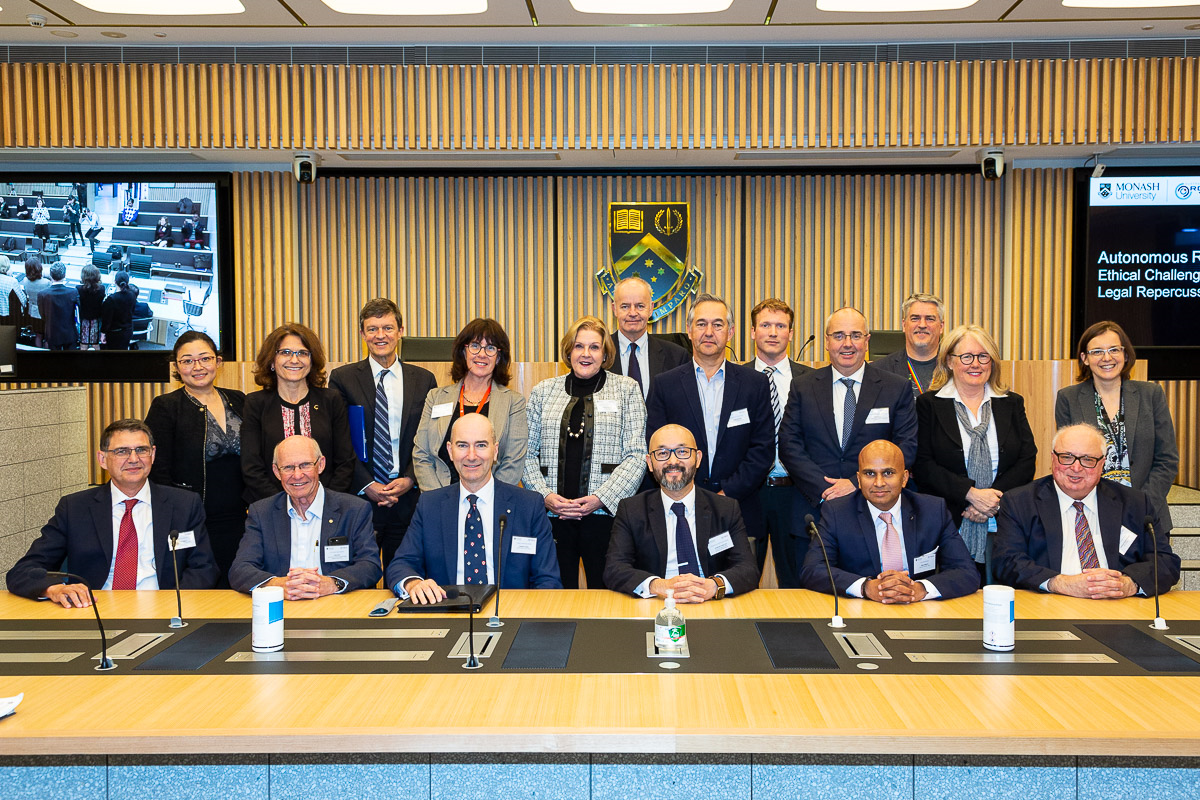
The Litigation Scenario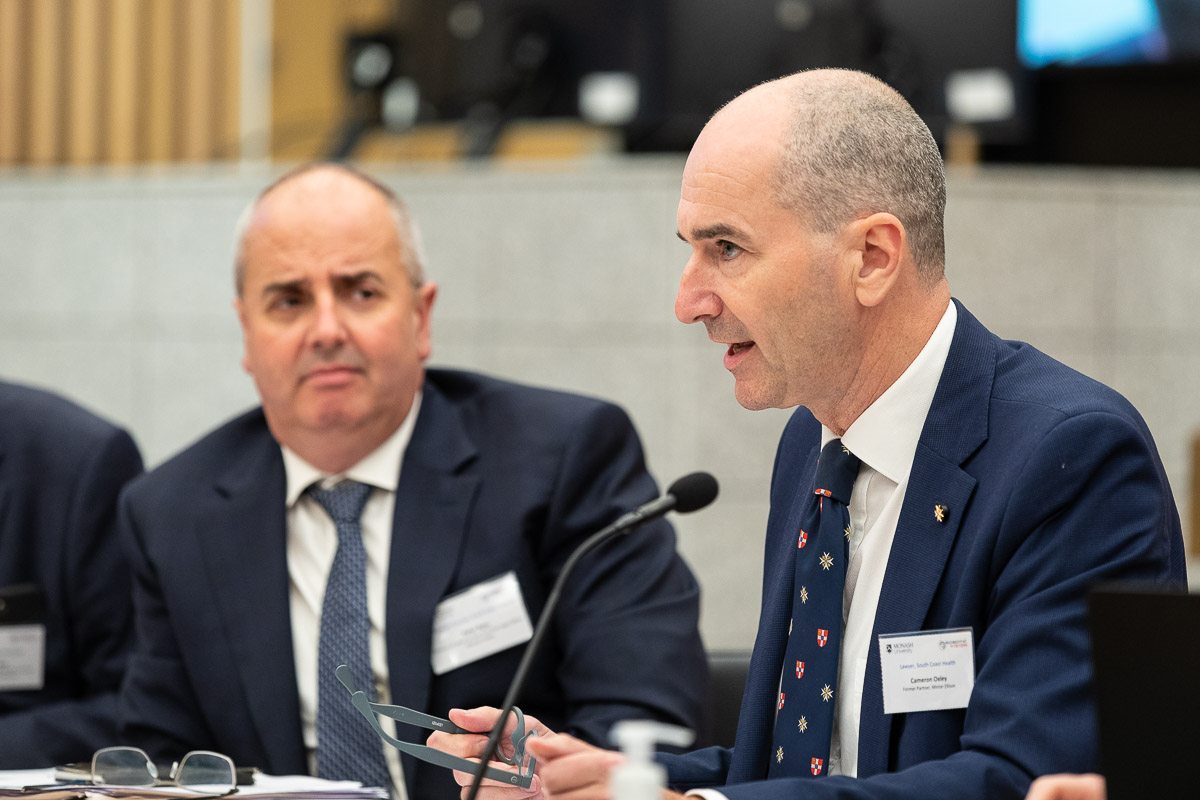
A robot with some basic surveillance and security functions was employed by the fictitious South Coast Hospital to deliver meals to patients. This robot could video record its movements and could also communicate with nurses. One day, the robot was delivering a meal to a patient, shortly after the patient had fallen. The patient called to the robot to get help. The robot left the room and failed to notify a nurse about the accident. The robot’s live video stream was not received by the security office, due to a technical glitch. It took a nurse 90 minutes to discover the patient, by which time the patient had suffered serious physical injury. The patient sued the hospital and robot company by issuing a Statement of Claim in the Supreme Court of Victoria. Workshop participants were provided with the Statement of Claim and the plaintiff’s expert report written by a robotics expert. The first steps in the mock litigation scenario were the boardroom discussions.
1) Hospital boardroom and robot company re-enactments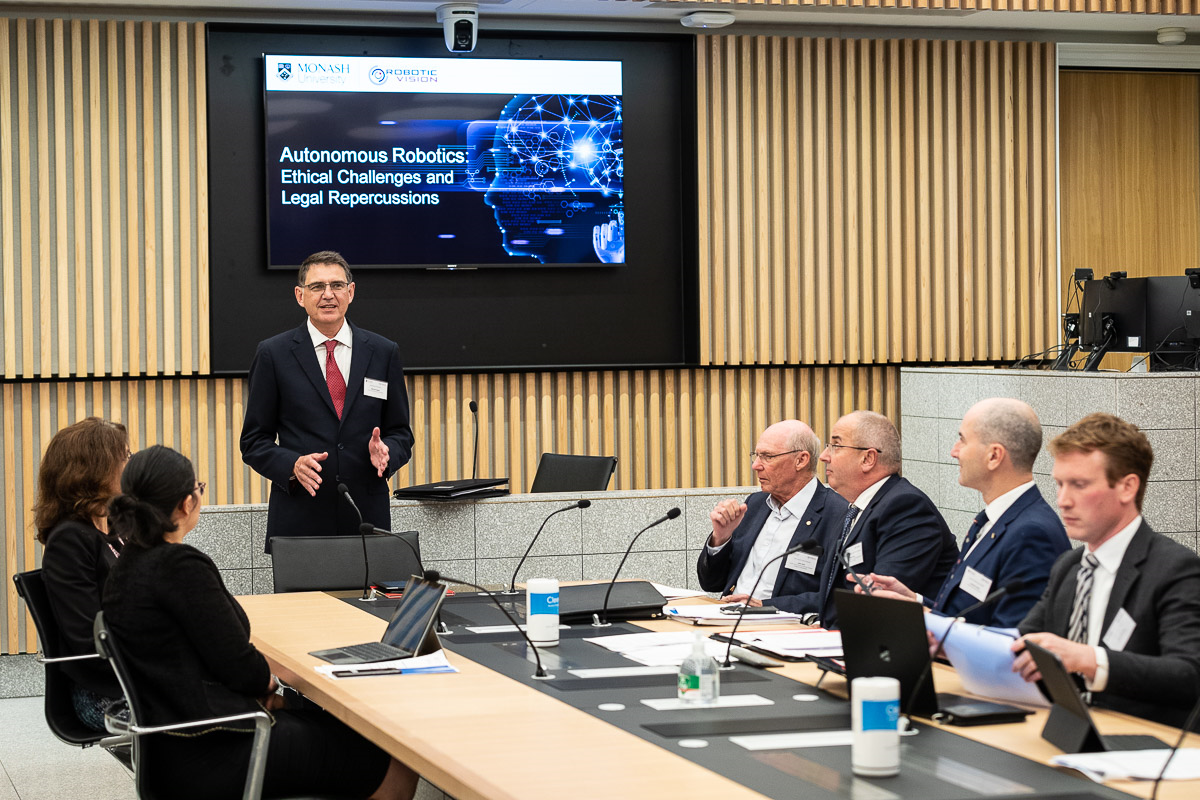
Those attending the workshop, observed what might occur inside a hospital and robotics company boardroom when they are faced with litigation. Some of Melbourne’s leading industry professionals, took on a range of roles for the re-enactments of the board meetings. The Chairman of the hospital board was played by Professor Erwin Loh (Chief Medical Officer, St Vincent’s Health Australia). Other hospital board members were played by Peter Ryan (Chief Legal Officer, Monash Health) and Elizabeth Kennedy (former General Counsel and Corporate Secretary, Peter MacCallum Cancer Centre). The chair of the Robotics company was played by Greg Richards (former Chairperson of JB HiFi). The Chief Legal Officer was played by the Dean of the Law Faculty, Bryan Horrigan.
2) Mediation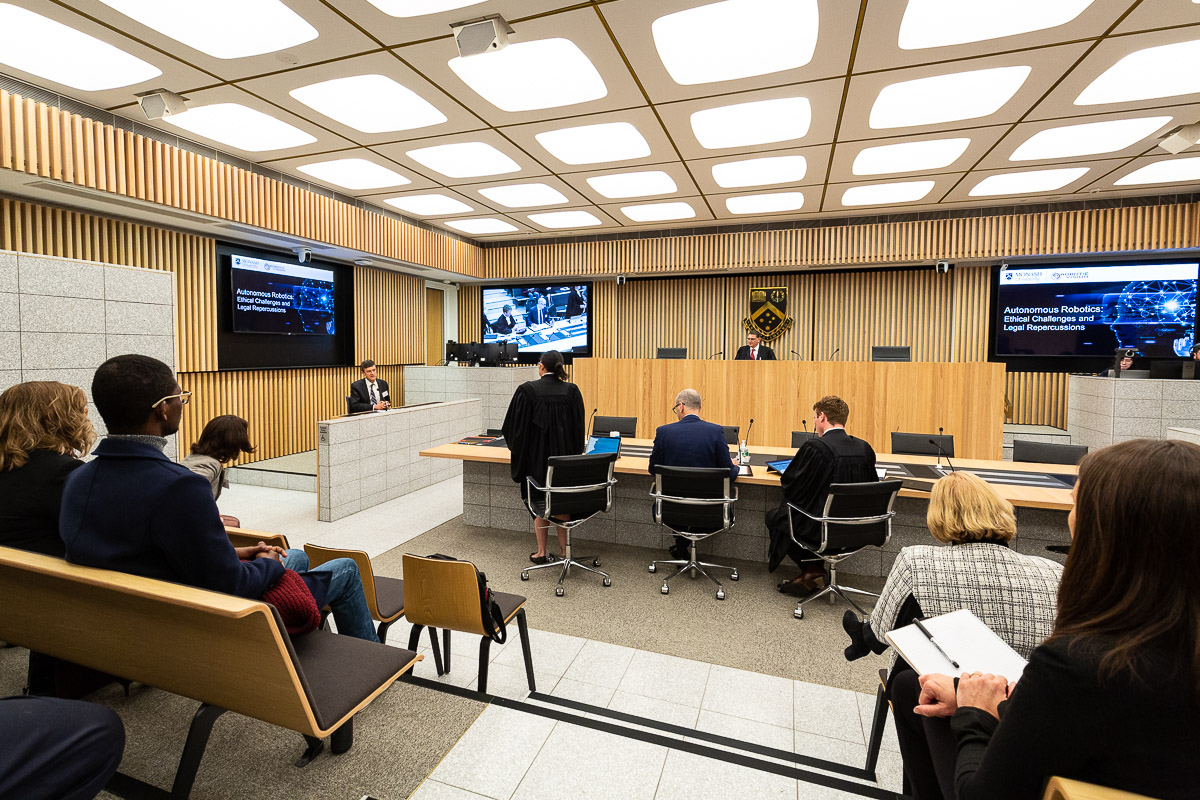
The parties attempted to negotiate a settlement by attending a formal mediation. Michael Regos mediated the dispute. The roles of the lawyers were played by lawyers highly experienced in running such litigation, including the former senior health law partner from Minters Ellison, Mr Cameron Oxley. The Dean of the Engineering Faculty, Elizabeth Kennedy, played the role of the plaintiff.
3) Trial
The case did not settle and went to trial. As part of the trial, the workshop showcased the evidence of the robotics experts in such a trial. Professor Marc Parlange (Provost and Senior Vice-President, Monash University) played the expert who was examined and then cross examined by barristers. Following the mini-trial, and for the benefit of the non-lawyers watching, the barristers explained the litigation process and trial strategy that they had just executed.
Participants and attendees alike provided exemplary feedback of the event, commenting it was fantastic to explore such issues through a realistic reenactment of the major steps taken in a legal action. Thank you to the many highly knowledgeable experts in the fields of law, ethics and engineering who contributed to this dynamic and fascinating learning experience.
Check out highlights from the Autonomous Robotics workshop:
---------
Written by Mr Nathan Kayser and Associate Professor Jacqui Horan
Header photo by Alex Knight on Unsplash