
Monash Law 2022 Research
By Professor Andrew Mitchell

2022 proved an extremely positive year for research activity in the Faculty of Law.
Major highlights included a strong result in academic scholarly output, strong funding success across all research categories and exceptional performance by our PhD cohort in both completions and commencements.
Prestigious fellowships
We congratulate Professor Daniel Fitzpatrick, Associate Professor Yee-Fui Ng and Dr Natalia Antolak-Saper on their successful and prestigious fellowships in 2022.
The fellowships have enabled the three recipients to carry out important research into automated government decision-making, access to justice for unrepresented accused persons, and climate mobility.
The relevant research projects are described below.
Associate Professor Yee-Fui Ng, Fulbright Scholar
Automated government decision-making
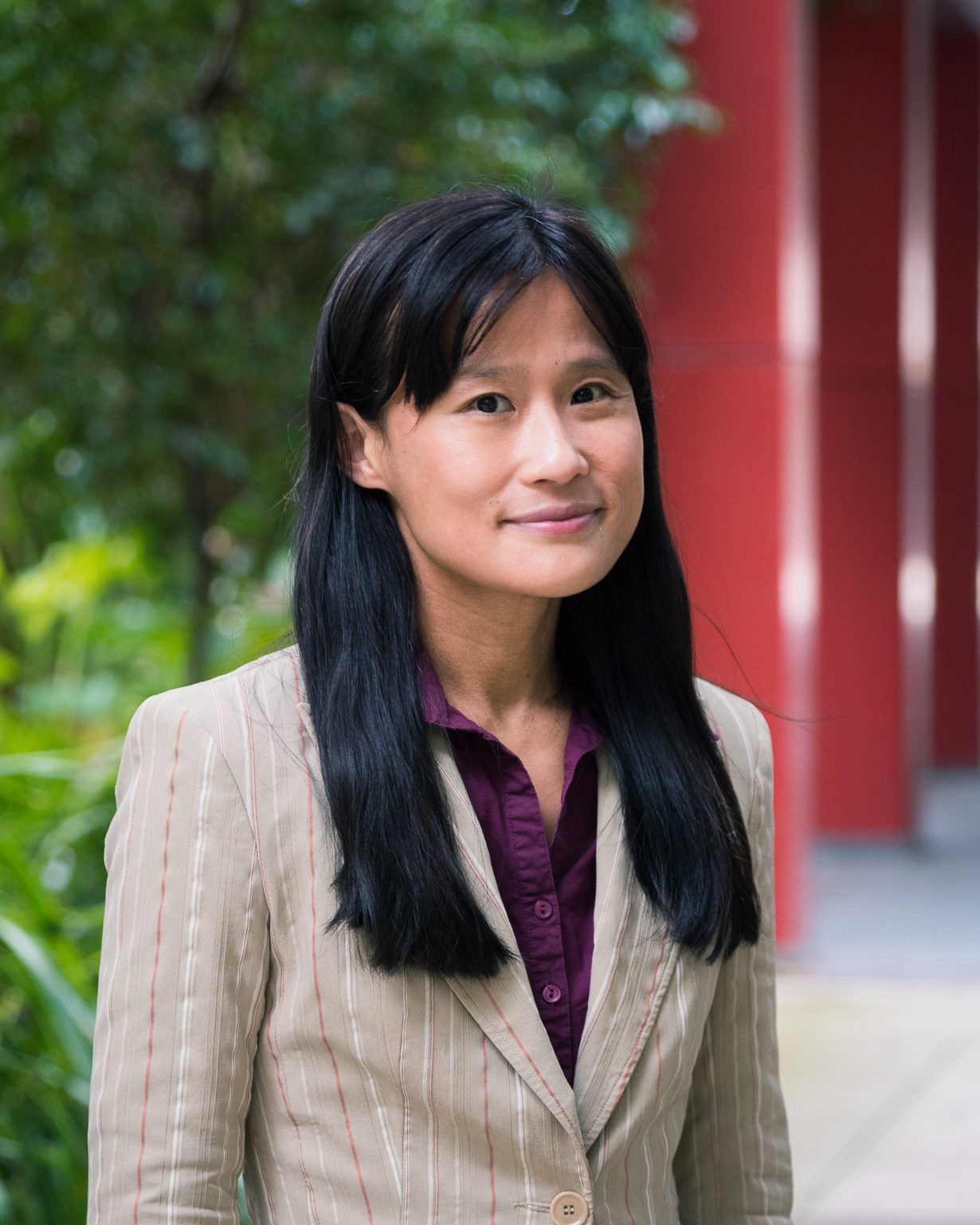
As a Fulbright Scholar in Law at New York University’s Center for Human Rights and Global Justice, Associate Professor Ng's research focuses on the Digital Welfare State and Human Rights Project.
She is investigating successful policies in the U.S. and identifying optimal and rights-protective strategies that would enhance the regulation of automated government decision-making in Australia.
In particular, her project aims to contribute significantly to the accountability, efficiency and robustness of automated government decision-making, which is integral to Australia’s system of administrative justice.
Dr Natalia Antolak-Saper, Winston Churchill Trust Fellow
Assisting unrepresented accused in summary criminal matters
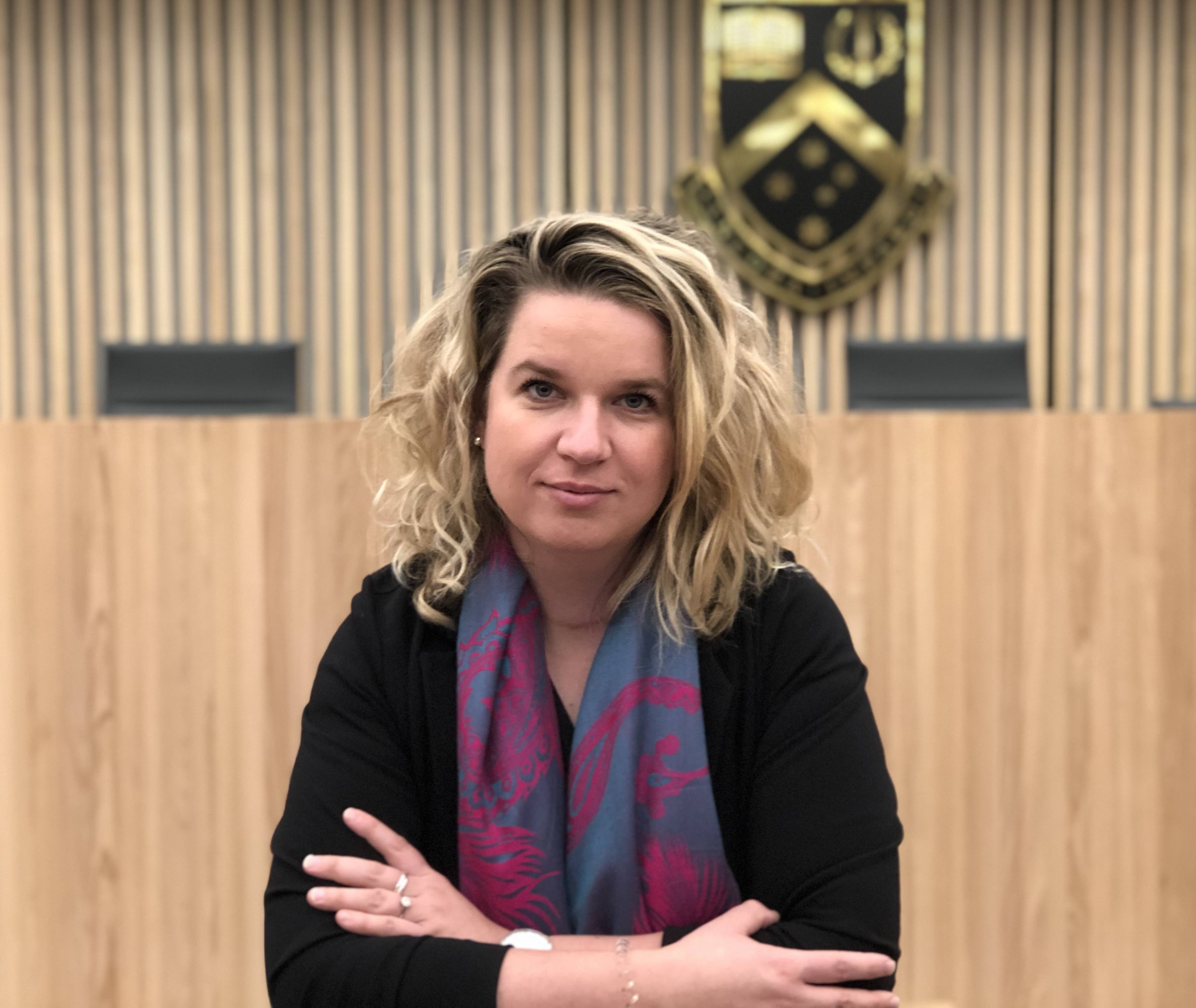 Dr Antolak-Saper was awarded the Churchill Fellowship to pursue research into innovative solutions to assist unrepresented accused in summary criminal matters.
Without legal representation, an individual is seriously inhibited from effectively participating in the criminal justice system, and their rights may not be adequately protected, or exercised.
Dr Antolak-Saper's Churchill Fellowship takes her to the United Kingdom, the United States and Canada to undertake extensive qualitative interviews and observational studies for this project.
She is particularly interested in measures that have been successfully adopted overseas including ‘legal triage’, dedicated integrated courts, court navigators, online portals and training courses.
Her project will not only benefit those directly affected, but the broader Australian community by providing increased confidence in the criminal justice system.
Professor Daniel Fitzpatrick, Scholar-in-Residence, Woodrow Wilson Center
Land tenure and climate mobility

As a Scholar-in-Residence at the Woodrow Wilson Center for International Scholars in Washington DC, Professor Fitzpatrick's project is entitled Tipping Points: Land Tenure and Climate Mobility in Situations of Fragility, Conflict and Violence.
Funded by Congressional Charter, and situated at 1300 Pennsylvania Avenue, the Woodrow Wilson Centre for International Scholars has been ranked as one of the Top 10 of global research and policy think tanks.
Professor Fitzpatrick’s work at the Wilson Center builds on his Future Fellowship scholarship on land tenure, climate change and disaster risk management in the Global South.
Research funding and publications
Law academics have led or been members of 38 research project grants and/or proposals this year, many with partners from industry, international institutions and government, our sister faculties at Monash and with other Australian universities. The value of these applications totals more than $17.2 million, an increase of some $6 million over 2021.
Successful projects, new for 2022, include:
- Andrew Mitchell’s NHMRC Ideas Grant, Safeguarding health in International Investment Agreements, a joint project with Assoc Professor Anne Marie Thow at the University of Sydney
- Genevieve Grant’s NHMRC Centres of Research Excellence Grant, Better Health Outcomes for Compensable Injury, as part of a team of researchers from the University of Queensland, University of Sydney, University of Melbourne and the School of Public Health and Preventive Medicine at Monash
- Chris Marsden’s Monash/Warwick Alliance grant, Interrogating the Brussels Effect: The European Union Artificial Intelligence Act
- Gerry Nagtzaam, Plastics and Human Health, a project in partnership with the Mindaroo Foundation
- Mai Sato’s Securing the abolition of the death penalty in Africa and in countries at risk, with the Capital Punishment Justice Project (CPJP)
- Paul Burgess for his Monash Interfaculty Seeding Fund grant, Teaching an AI to identify legal arguments: creating an annotation tool to create a training data set in order to facilitate an AI identifying legal arguments
- Eric Windholz and Yee-Fui Ng’s ePlannings and eApprovals, part of the Building 4.0 Cooperative Research Centre funded by the Commonwealth Department of Industry and Science
- Genevieve Grant and Jess Mant’s Victorian Legal Services Board 2022 grant
- Weiping He’s Algorand Centre of Excellence (ACE) on Sustainability Informatics for the Pacific
- Cate Banks’ Victorian Law Foundation project, entitled, Hearing our story, safeguarding our future.
Many of these grants will continue to provide much-valued and continued research income to the Law faculty in 2023 and 2024.
By the end of October 2022, our faculty’s academics had produced over 80 publications including 3 books, 17 chapters and 52 journal articles.
2022 also saw the return of the Monash Outside Study Program (OSP) which provides academics with the opportunity to further their research agenda and the University’s and the faculty’s strategic research objectives. Six Monash Law staff were granted OSP leave this year for 2023.
New Faculty members
We welcomed 5 new scholars to the Faculty, including:
- Professor Chris Marsden. Chris is Professor of Artificial Intelligence, Technology and the Law at Monash University and an expert on Internet and digital technology law, having researched and taught in the field since 1995.
- Associate Professor Brendan Gogarty. Brendan's research interests include international law, constitutional law, law reform, science, technology and the law.
- Dr Monique Cormier. Monique’s primary research interests include jurisdiction and immunities in international law and legal issues relating to nuclear non-proliferation. Recent publications include The Jurisdiction of the International Criminal Court over Nationals of Non-States Parties (Cambridge University Press, 2020) and ‘Can Australia Join the Nuclear Ban Treaty without Undermining ANZUS?’ (Melbourne University Law Review, 2020, co-authored with Anna Hood).
- Dr Jessica Mant. Jess is a socio-legal empirical researcher, specialising in issues of access to justice and family law. She is particularly interested in innovations that improve the accessibility of legal systems as well as the empowerment and capabilities of those experiencing legal need.
- Associate Professor Joel Townsend. Joel is Director of Monash Law Clinics. He has extensive experience in public interest litigation and in designing and managing programs of legal assistance, having worked for nearly 15 years at Victoria Legal Aid. He is an Accredited Specialist in Administrative Law, and is undertaking a PhD focussing on merits review in Australia.
Higher Degrees by Research (HDR) program
In 2022 has seen the number of prospective PhD students applying to study with Monash Law equal our 2021 record year, with 111 Expressions of Interest received. Of those, 12 new students commenced with Monash Law in 2022, 9 of whom were successful scholarship winners through the University’s annual scholarship rounds.
Of special note, Joshua Yuravaj is the recipient of the 2021 Mollie Holman Award for the best doctoral thesis completed in the Faculty of Law. His thesis entitled: Back to the Start: Re-Envisioning the Role of Copyright Reversion in Australia and Other Common Law Countries was supervised by Associate Professor Genevieve Grant.
Congratulations also to PhD candidate Eliza Venville who won the Australian Water Association Student Water Prize earlier this year. The VIC Water Awards recognise the contribution of the Association’s members for their inspiring leadership and innovative research, programs and infrastructure projects.
As of October, 13 PhD candidates successfully completed their degrees, including:
- Antony Colafella, PhD: The mixed philosophy of Australia's prohibition against monopolisation and the misuse of market power: a historical analysis of the development of section 46 of the Competition and Consumer Act 2010 and its predecessors. Supervisors: Assoc Prof Yee-Fui Ng, Prof Mark Davison and Dr Mel Marquis.
- Farinaz Zamani Ashni: Iranian Marital Traditions and Women's Rights in Australia: Unpacking the Tension Between Culture and Human Rights Law. Supervisors: Prof Paula Gerber and Prof Jacqui True.
- Dr. Linda Jean Kirk, SJD: Soft Law for Hard Decisions: Administrative Appeals Tribunal Guidance Decisions for Protection Visa Determination under the Migration Act. Supervisors: Assoc Prof Maria O’Sullivan and Prof Susan Kneebone.
- Dr. Michael Anthony Robson: The contemporary role of shareholder ratification and authorisation of breaches of director's duties. Supervisors: Dr Susan Barkehall-Thomas and Assoc Prof Normann Witzleb.
- Dr. Rehan Aindri Abeyratne: Beyond Public Interest Litigation: Constitutionalization and Its Effects on Judicial Performance in South Asia. Supervisors: Assoc Prof Julie Debeljak, Prof HP Lee and Prof Po Jen Yap.
- Dr. Sri Jayani Nadarajalingam: Rawls as a modernity theorist. Supervisors: Dr Richard Joyce and Prof Toby Handfield.
- Dr. Stephen Alwyn Jones, SJD: 'Sufficiently serious behaviour'? When should cyberbullying by children be subject to criminal law? Supervisors: Prof Jonathan Clough and Assoc Prof Normann Witzleb.
- Dr. Tamara Kate Wilkinson: Leading Practice in the Design of Government Venture Capital Incentives. Supervisors: Prof Stephen Barkoczy and Prof Bryan Horrigan.
- Dr. Alan Thomas Samuel Davis: Are we there yet? Do the Victorian, NSW and ACT youth conferencing programs comply with the United Nations Convention on the Rights of the Child? Supervisors: Prof Paula Gerber and Dr Stephen Gray.
- Dr. Gregory Dale: Crime, Confiscation and Emotion. Supervisors: Emeritus Prof Arie Freiberg and Dr Susan Barkehall-Thomas.
- Dr. Oladapo Omotola Fabusuyi: Rethinking International Investment Law for Sustainable Development: The Role of Stakeholders. Supervisors: Assoc Prof Emmanuel Laryea and Assoc Prof Gerry Nagtzaam.
- Cameron Ford: Towards a Transnational Standard for Security for Costs in International Commercial Arbitration. Supervisors: Prof Jeff Giddings, Prof Clyde Croft and Dr Benjamin Hayward.
- Warisa Ongsupankul: No Longer Just a Victim: Towards an Inclusive Model of Human Rights Education that Respects the Rights of Sexual and Gender Minority Children. Supervisors: Prof Paula Gerber and Dr Tania Penovic.
New and exciting initiatives were established for our HDR program for future years too, including confirming arrangements for our Faculty to participate in the University-wide HDR program partnership with South-East University China, and the development of a new Law Research Industry Internship Program for our HDR candidates.
Visiting researchers
We welcomed two visiting researchers into the Faculty in 2022.
- Professor Mohamed Arafa joined Eleos Justice as a Visiting Scholar. He is a Professor of Law at Alexandria University Faculty of Law in Egypt and an Adjunct Professor of Law and the Clark Initiative Visiting Scholar at Cornell Law School. Mohamed’s teaching and scholarship focuses on criminal law, white collar crimes, human rights law, Islamic law, comparative Middle Eastern law, and transitional justice.
- Our second visiting scholar was Lumina Jeong, hosted by Assoc Prof Heli Askola and Assoc Prof Maria O'Sullivan. Lumina is a judge in South Korea. She was granted the opportunity by the Supreme Court of Korea to conduct research at Monash University and has been engaged in comparative research of laws relating to migration and refugees.
We look forward with optimism to 2023 and further growing our activities in pursuit of the Faculty’s, and the University’s, strategic goals and objectives in research.