
International Recognition at the 2025 IBA ICC Moot Court Competition

L to R: Gabriella Lennon, Prudence Spencer, Haneen Ashmeel, Serena Malatesta, Adj. Prof. William Lye OAM KC at the Opening Ceremony. Photograph: Monique Shaw (official competition photographer).
Monash Law has once again distinguished itself on the international stage, with our team advancing to the Semi-Finals of the 2025 IBA ICC Moot Court Competition, recently held in The Hague at Leiden University. Competing against 88 teams from 45 countries, the Monash University team delivered an exceptional performance – earning numerous individual and team awards for their efforts across the week-long competition.
Formed from the 2024 cohort of LAW4805 and united by a common passion for international criminal law, the team spent several months immersing themselves in the complexities of the case and refining their advocacy across all aspects of the problem.
Unlike most moots, the ICC Moot requires teams to effectively argue from three distinct perspectives – Counsel for the Prosecution, Common Legal Representative of the Victims and Counsel for the Defence – roles undertaken by Gabriella Lennon, Prudence Spencer and Serena Malatesta respectively. Central to the team’s preparation and performance was Haneen Ashmeel, who served as both researcher and co-counsel, playing a vital role in shaping the team’s strategic approach across all submissions.
A Case of Increasing Relevance
This year’s moot problem presented a steep and rewarding learning curve to the team, requiring us to grapple with some of the most complex and pressing issues in international criminal law as we each wrote our 10,000 word long memorials by March.
Set within the context of the fictional totalitarian regime of Republic of Northeros, The Prosecutor v Arrix Vragar centred on an appeal before the International Criminal Court.
Competitors were asked to consider whether the Court had jurisdiction over the accused; whether “gender apartheid” could be novelly prosecuted as a crime against humanity under the residual category afforded by Article 7(k) of the Rome Statute; whether a private actor could be held liable for aiding and abetting through the design and sale of a lethal automated border system; and whether publishing confidential documents could amount to an offence against the Court’s administration of justice.

Michael Scharf (chief drafter of the ICC Moot case) addressing competitors during the opening ceremony at Leiden University. Photograph: Monique Shaw (official competition photographer).
The case brought together contemporary themes of evolving jurisdictional limits under international law, gender persecution and discrimination, and digital responsibility.
As an all-women team, engaging with a problem centred on systematic gender-based oppression added a deeper sense of purpose and relevance to what we were doing, especially as documented instances of gender apartheid across the world continue to challenge the competing pressures of precedent and policy in international law today.
From Preparation to The Hague
The Monash team’s success was the result of months of meticulous preparation, sustained by the incredible support of an extraordinary network of academics, practitioners, LAW4805 alumni, fellow students, and friends of the Law Faculty.
The team was coached by Adjunct Professor William Lye OAM KC, whose expertise, guidance and confidence were invaluable throughout every stage of the competition.
Following the submission of written memorials, the team spent several months conducting weekly practice moots in the Moot Court. These sessions were made possible by the time, insight and feedback generously provided by a range of people.
At the preliminary stage of preparation, Monash’s 2024 ICC Moot competitors Alec Miguel and Pimal Senanayaka played a pivotal role in helping the team prioritise arguments and transform their written submissions into condensed oral forms.
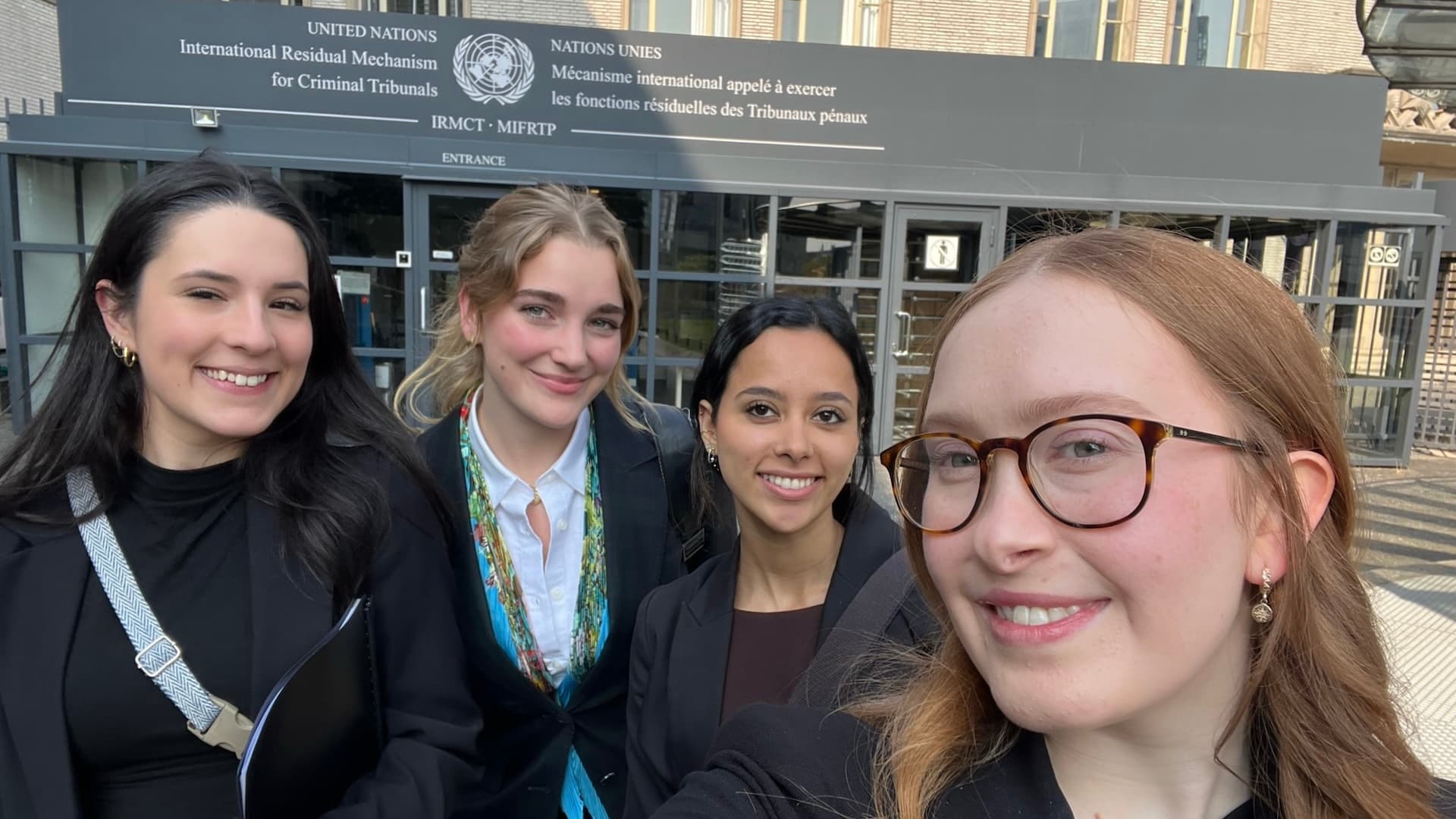
Monash University team at the United Nations International Residual Mechanism for Criminal Tribunals in The Hague.
Practice rounds with Monash academics and international law specialists, Elizabeth Sheargold, Jean Allain and Pizuar Hossain, were instrumental in testing the clarity and coherence of submissions on complex legal issues. Rigorous sessions with graduated LAW4805 alumni Jeremy Brown, William Liu and Nick D’Arcy offered the team critical insight into the structure, pace, and presentation expected in international competition.
The team is especially appreciative to Justice Chrissa Loukas-Karlsson of the ACT Supreme Court, who kindly judged our final practice moot in Australia via video link in the Court itself before our departure. Having met her earlier in the year during the 2025 Jessup International Law Moot national rounds, Serena and Haneen were particularly honoured and grateful to receive her thoughtful feedback and encouragement.
Finally, particular thanks also go to Senior Legal Officer Mathias Marcussen of the United Nations International Residual Mechanism for Criminal Tribunals, who hosted the team for their final practice moot once we arrived in The Hague. Mathias offered valuable feedback grounded in his professional experience. Walking through the halls of the building was inspiring as we prepared to represent Monash in the competition.
Advancing Through the Rounds
Over the week in The Hague, the Monash team progressed through multiple stages of competition, each increasing in intensity and complexity.
In the preliminary rounds held at Leiden University, all 88 teams appeared twice in each respective role (i.e. six times) before tripartite panels of international judges drawn from academia, practice, and international institutions. Monash ranked first overall at the conclusion of the preliminaries, demonstrating strong advocacy across all roles.
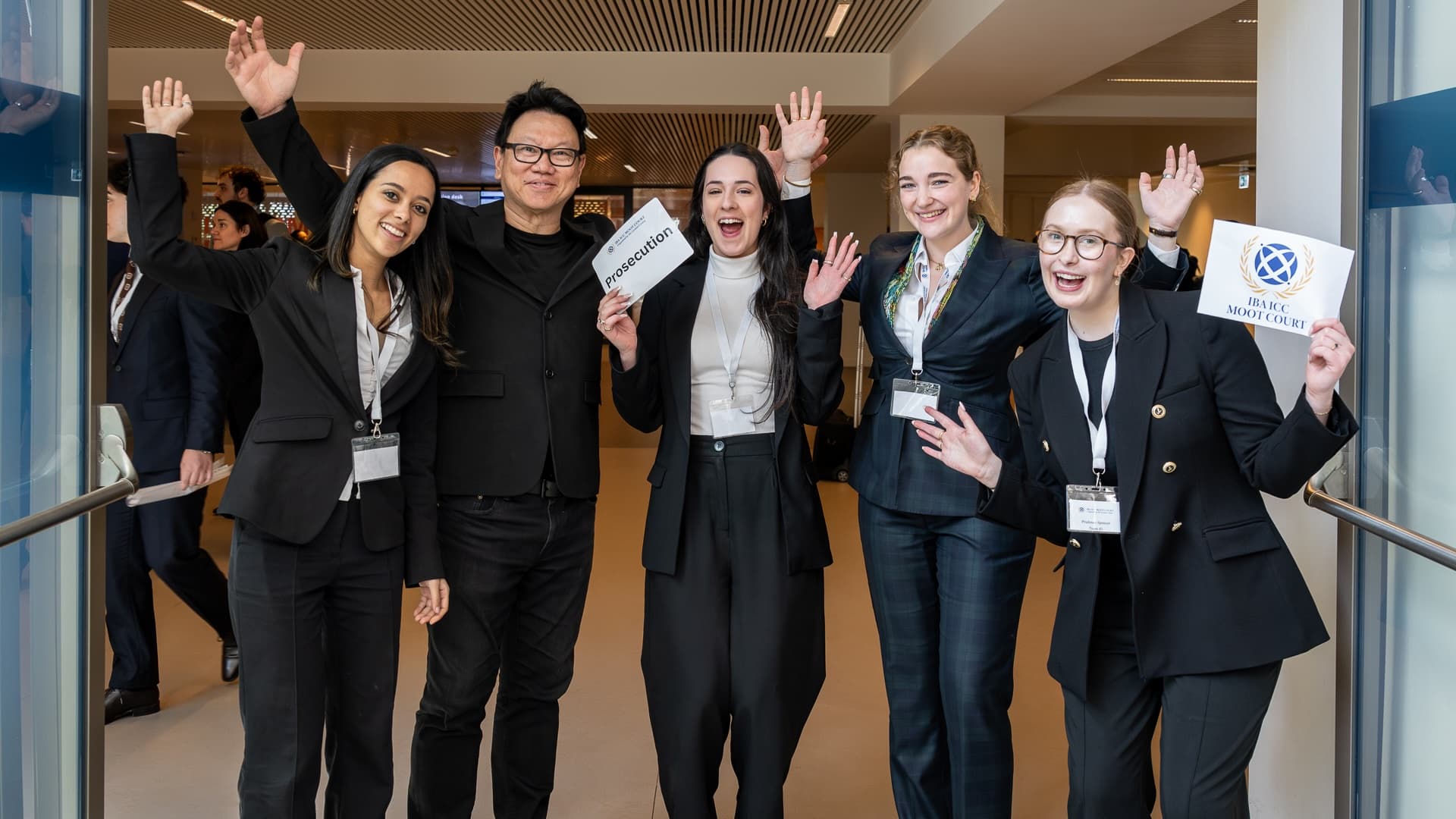
Monash University team at the semi-final announcement. Photograph: Monique Shaw (official competition photographer).
In the quarter-finals, the top 27 teams competed in an intense knockout round. Roles were randomly assigned from three nondescript envelopes before the entire student cohort. At the evening draw, Monash was selected to appear as Victims’ Counsel.
Prudence stepped into the role with composure, compassion and conviction, delivering an outstanding performance the next morning that once again earned Monash the highest score of the round. Advancing to the semi-finals, Gabriella skilfully appeared as Prosecution in a closely contested round that afternoon, before a distinguished bench comprising Graciela Gatti Santana (President), Carsten Stahn, and Michael Scharf.
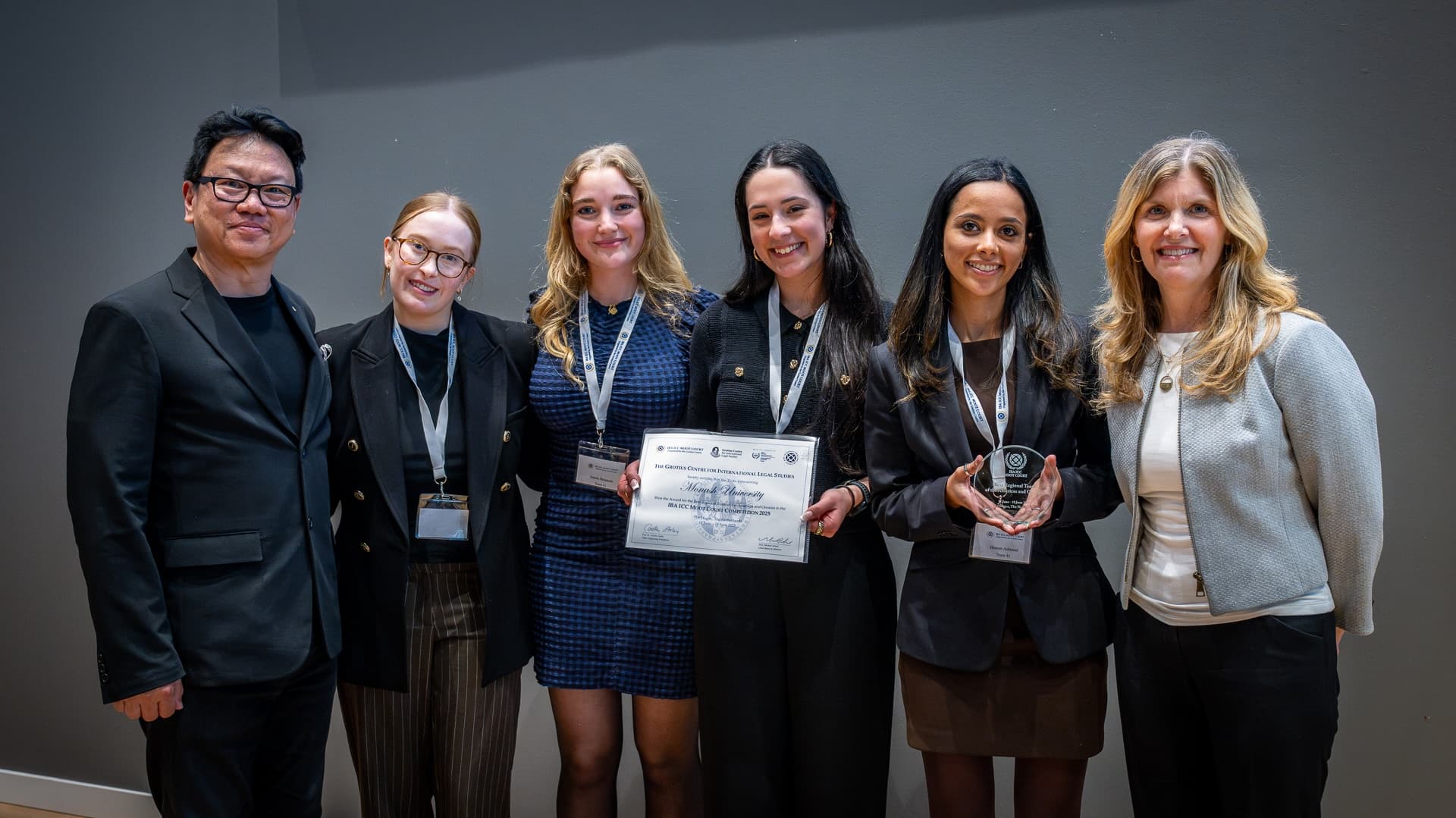
While Monash did not progress to the Grand Final, the team’s success was recognised with five major awards: Best Regional Team of the Americas and Oceania, Second Runner-Up for Best Victims’ Counsel Memorial, and Best Defence Counsel Memorial, as well as Best Victims’ Counsel Team and Best Speaker for the Victims’ Counsel, awarded to Prudence for the highest combined written and oral score in that role.
An Experience Beyond the Courtroom
The week in The Hague began with a morning tea hosted by Ambassador Dr Greg French at his Residence. Australian teams were warmly welcomed and offered insight into the close relationship between Australia and the Netherlands, as well as the development of international criminal law. The event set a fitting tone for the week ahead, reinforcing Australia’s role in shaping global justice and inspiring us to carry that legacy forward.

Students from the University of Sydney, Monash University, Bond University, and Western Sydney University. Pictured at back left: Dr Greg French, Australian Ambassador to the Netherlands.
While advocacy and rivalry remained the centrepiece of the competition itself, the overall experience extended well beyond the courtroom. The organisers curated a dynamic program that fostered intellectual engagement, community, and cross-cultural exchange, celebrating the shared pursuit of justice and international collaboration.
Leiden University hosted two academic panels on Arresting Suspects for International Crimes and Prosecuting Russian Environmental War Crimes, both offering participants valuable and relevant insights into the evolving challenges of international criminal law. Alongside these, social events such as the Kahoot trivia night, welcome reception, closing ceremony, and after-party created space for genuine connection with fellow students from around the globe. The Monash team also visited the Kosovo Specialist Chambers, gaining firsthand exposure to the workings of a hybrid international tribunal.
Thus, we must extend our sincere thanks to Maria Jaramillo Gomez and the entire organising committee, whose meticulous coordination of over 500 students and 200 judges resulted in a competition that was seamless, stimulating, and truly memorable.
Looking Ahead
As the team returns to Australia, excitement is already building for the 13th edition of the IBA ICC Moot. We look forward to supporting the next generation of international law mooters and will carry this experience with us always. Our achievements are a reflection of the excellence, dedication, collaboration, and professionalism of the entire team. We are deeply grateful to all who supported us throughout this journey.