
Honours Thesis Conference 2025: Showcasing Student Research Excellence
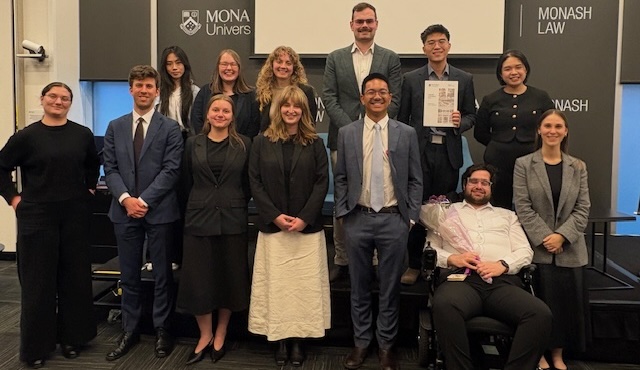
The Monash Law Honours Unit gives final-year students the chance to put their research skills into practice and explore an area of law they are passionate about.
On Friday 17 October, more than 25 Monash Law students shared the results of a year of rigorous enquiry at the Annual Honours Conference, held at the Monash University Law Chambers.
In the LAW4327 Honours Thesis Research Unit, students propose a premise, research it in depth, and write an 8,000–10,000 word thesis under the guidance of an academic supervisor. This capstone experience allows students to choose an area of law that fascinates them and analyse it with scholarly precision.
Find out more about the LAW4327 Honours Thesis Research Unit
Completing an Honours thesis can enhance students’ prospects for highly sought-after roles, such as judge’s associate positions, and demonstrates advanced research capability — a key criterion for graduate research degrees like an MPhil or PhD.
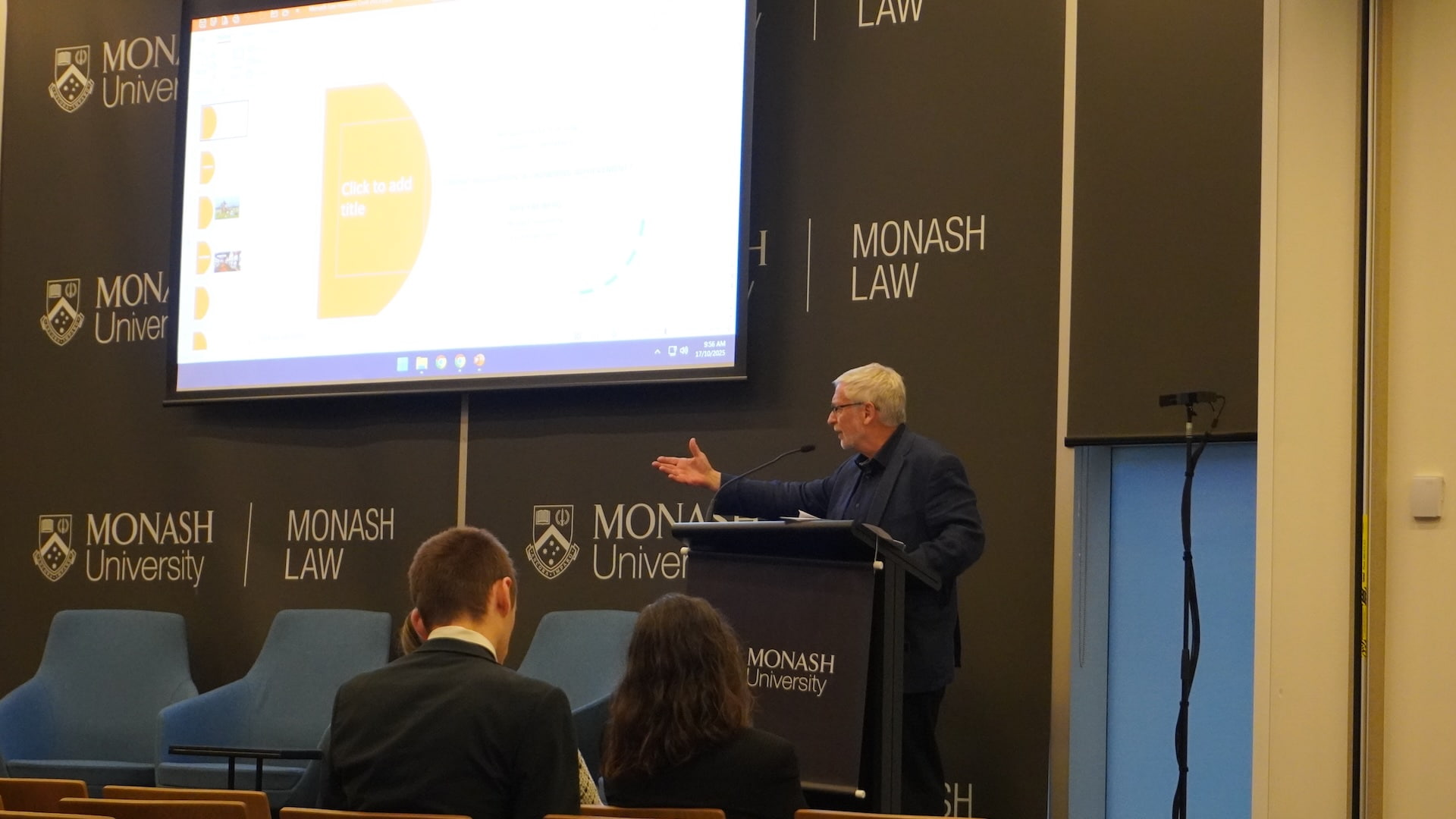
The pinnacle of the Honours Unit is the opportunity to present thesis findings to peers and invited guests at the Annual Honours Conference. This year’s event opened with a keynote address by Emeritus Professor Arie Freiberg, who welcomed attendees and celebrated the intellectual ambition of the Honours cohort.
Across four themed sessions, students tackled pressing issues in law and society — from AI and legal innovation, gender-based violence and legal protections, and corporate law and market regulation, to global perspectives on constitutional interpretation and international law. Topics ranged from the erosion of the presumption of innocence in Victorian bail laws, to liability for AI-facilitated harm, to veil piercing in corporate groups, and the intersection of masculinity and sexual misconduct in the Australian Defence Force.
The day concluded with lively discussion and questions from an engaged audience, giving students the chance to expand on their research and reflect on its broader implications.
In this article, you’ll meet Monash Law’s 2025 Honours Thesis students and read a sample of their work in the thesis abstracts.
Find out more about the LAW4327 Honours Thesis Research Unit
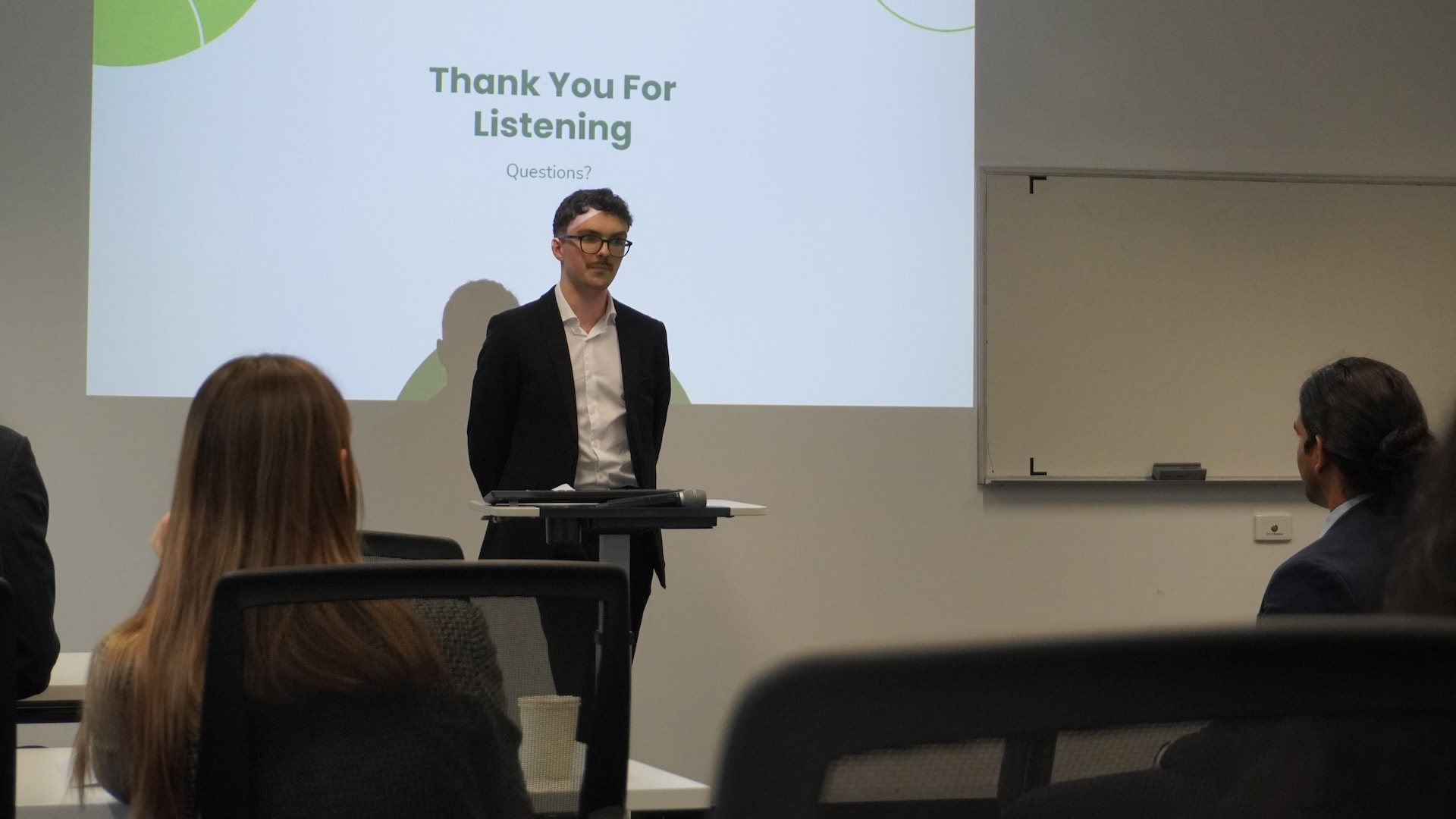
Aiden Morton presenting their research at the 2025 Honours Thesis Conference.
AIDEN MORTON
Aiden is a fourth year Bachelor of Laws (Honours)/Bachelor of Politics, Philosophy and
Economics student. He is currently a Research Officer at the Australian Law Reform Commission, where he interned through Monash’s Clinical Placement program. He intends to travel and continue working in legal research after graduating.
Supervisor: Mr Liam Elphick
AGAINST ALL ODDS: A NATIONAL PUBLIC INTEREST APPROACH TO THE REGULATION OF ONLINE GAMBLING IN AUSTRALIA
Online gambling has rapidly expanded in Australia. Government policy has facilitated its growth and sought to capture revenues from the industry. The taxation revenue that the government receives is only possible through excess spend on gambling, creating dependence on a harmful commodity that is also a form of regressive taxation.
Centrally, the thesis argues that the regulation of online gambling has remained captured by the private interests of wagering companies and the personal interests of policy makers and regulators. The present regulatory model has enabled advertising, inducements and product design that consciously causes harmful wagering to generate profit. Wagering companies have sought to control the perception of gambling as a legitimate business
and prevent reregulation that would reduce their profitability.
First, the thesis will explore the evolution of gambling in Australia and how its insufficient and fragmented regulation causes harm. Then public interest regulation is examined as a theory of regulation that can counterbalance private interest with the need to
serve the public good and reduce inequality. A series of policy proposals and methods of implementation will be outlined. The thesis concludes that without a harmonised approach to reregulation in the public interest, reducing gambling harm remains against all
odds.
ALEXANDER SACHS
Alexander Sachs is a final year Bachelor of Laws and Bachelor of Politics, Philosophy, and Economics student.
Supervisors: Emeritus Professor Jeffrey Goldsworthy and Dr Idan Dorshav Dershowitz
JEWISH LAW UNDER THE SOUTHERN CROSS: THE CASE FOR RABBINIC EXEGETICAL TOOLS IN CONSTITUTIONAL INTERPRETATION
The present era has been characterized as one of ‘cosmopolitan constitutionalism’, where apex courts and legal practitioners increasingly look to diverse sources of legal thought. Quantitative studies have demonstrated that the High Court disproportionately cites foreign, secondary, and non-legal sources in constitutional matters. Simultaneously, a rich body of interdisciplinary literature is turning to world’s ancient hermeneutic systems for comparative study. Prompted by these trends, this research collates the historical and scholarly precedent for invoking rabbinic literature as a source in comparative constitutional law.
This thesis then explores those areas where rabbinic exegetical methodologies can be instructive to Australia’s constitutional context. Key characteristics of the systems’ approaches to interpretation are compared. A particularly strong parallel emerges between the use of the ‘Convention Debates’ in Australia and tannaitic debate-material in the
rabbinic context. Rabbinic tools for leveraging this evidence of authorial intention for interpretation are identified as offering value for the Australian context. A concluding case study reimagines Australia’s Constitution in the mise-en-page of the Talmud. The exploration of rabbinic literature ultimately directs attention back to Australia’s own legal sources, suggesting that the Convention Debates and traditional principles of interpretation could be more effectively leveraged for constitutional interpretation in Australia.
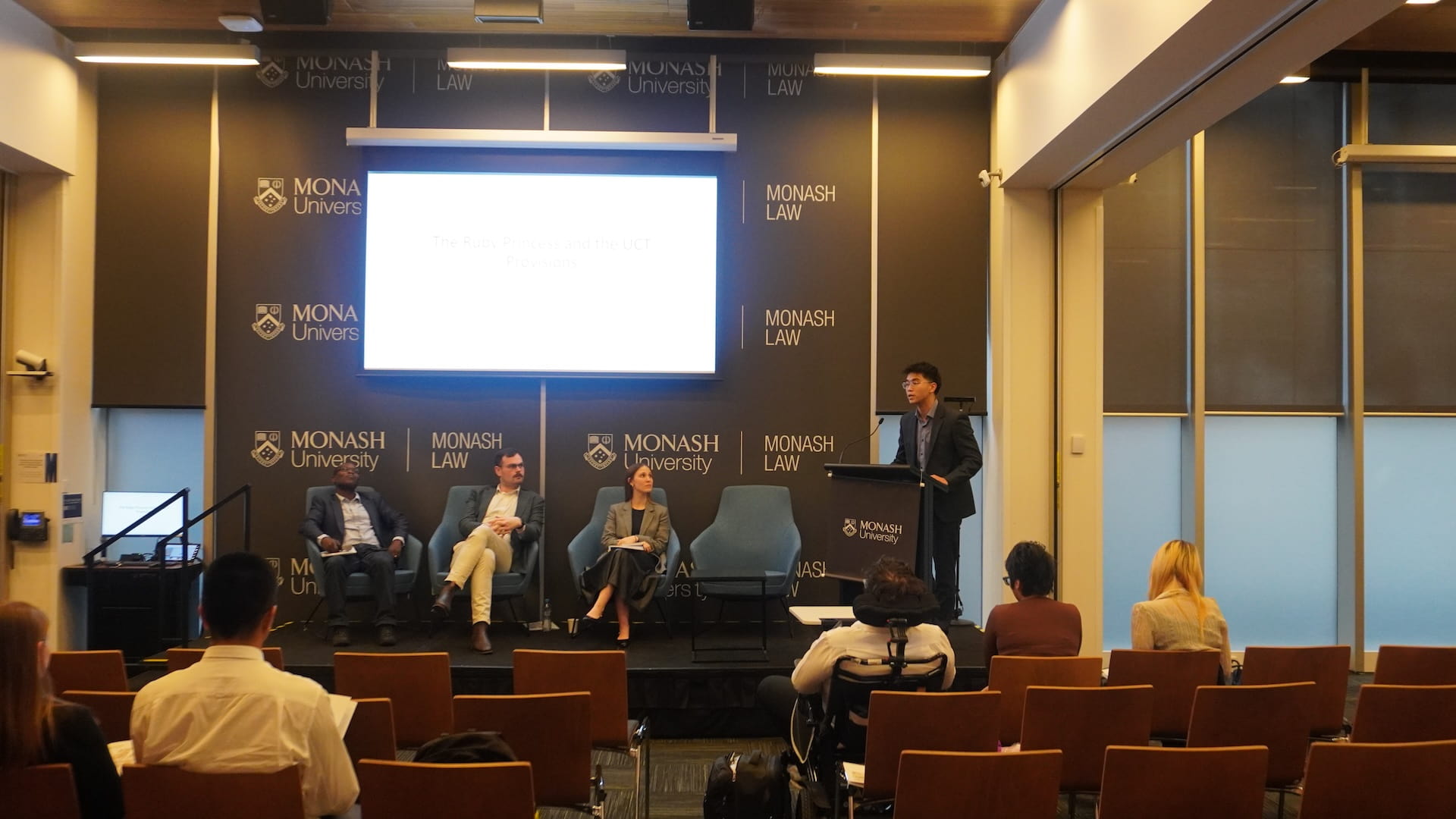
Daniel Lee presenting their research at the 2025 Honours Thesis Conference.
DANIEL LEE
Daniel Lee is an undergraduate Law (Honours) student at Monash University in his fourth year of study. Daniel enjoys learning about international commercial law and consumer protection. Having lived abroad in Singapore, he is particularly interested with how different jurisdictions handle complex commercial issues.
Supervisor: Associate Professor Emmanuel Laryea
THE EXTRATERRITORIAL APPLICATION OF AUSTRALIA’S UNFAIR CONTRACT TERMS: AN OVERREACH THAT NEEDS TO BE REIGNED IN
This thesis examines the extraterritorial application of Australia’s unfair contract terms (‘UCT’) regime under the Australian Consumer Law, in light of the High Court’s decision in Karpik v Carnival plc (2023) 98 ALJR 45 (‘Karpik’). The UCT provisions regulate standard form consumer or small business contracts by voiding unfair terms. In an age where transactions are increasingly cross-border, it is important to clearly delineate the territorial scope of the UCT provisions. The High Court’s decision in Karpik suggests that a tenuous territorial nexus with Australia is sufficient to enliven the UCT provisions in a contract made outside of Australia between non-Australian parties. This thesis examines the complex, yet uncertain interaction between the extraterritorial application provision enlivening the UCT regime and the UCT regime itself. It posits that the High Court’s application in Karpik was an overreach and contrary to international comity, and that the High Court’s suggested means of preventing overreach are impracticable. The thesis concludes that legislative amendments are needed to delineate appropriate extraterritorial application, and makes
proposals as to what those amendments could look like.
DEMITRI KAMINIS
Demitri is an undergraduate Law/Commerce student in his penultimate year of study. Demitri’s interest in fiduciary law was sparked in Monash’s equity and trusts courses. His interest has been furthered in roles as a Monash University Council member, and
director of the MCC Glen Iris Valley Tennis Club.
Supervisor: Dr Nick Sinanis
A CRITIQUE OF THE ANALOGICAL APPROACH TO DETERMINING AD HOC FIDUCIARY RELATIONSHIPS
The approach which should be taken to determine whether an ad hoc fiduciary relationship exists in a particular factual circumstance is a question subject to significant debate. Two competing approaches have emerged to answer this question, the
analogical approach, and the indicia approach. There is notable support in Australia and England for the analogical approach, but this has not been universal. Since the High Court’s decision of Hospital Products v United States Surgical Corporation in 1984, Australian courts have preferred the indicia approach with emphasis on ascertaining whether a
fiduciary undertaking exists.
Despite the prevalence of the indicia approach in Australia as well as England, New Zealand, and Canada, the High Court majority recently endorsed the analogical approach in Naaman v Jaken Properties Australia Pty Ltd without thorough examination of its basis. This thesis offers a systematic critique of the analogical approach and its application in preference to the indicia approach. This thesis argues that it is not sufficient to rely upon the analogical approach to assess whether a relationship is fiduciary outside accepted categories. In arriving at this conclusion, this thesis will examine the normative challenges which the analogical approach faces and the corresponding benefits of the indicia approach.
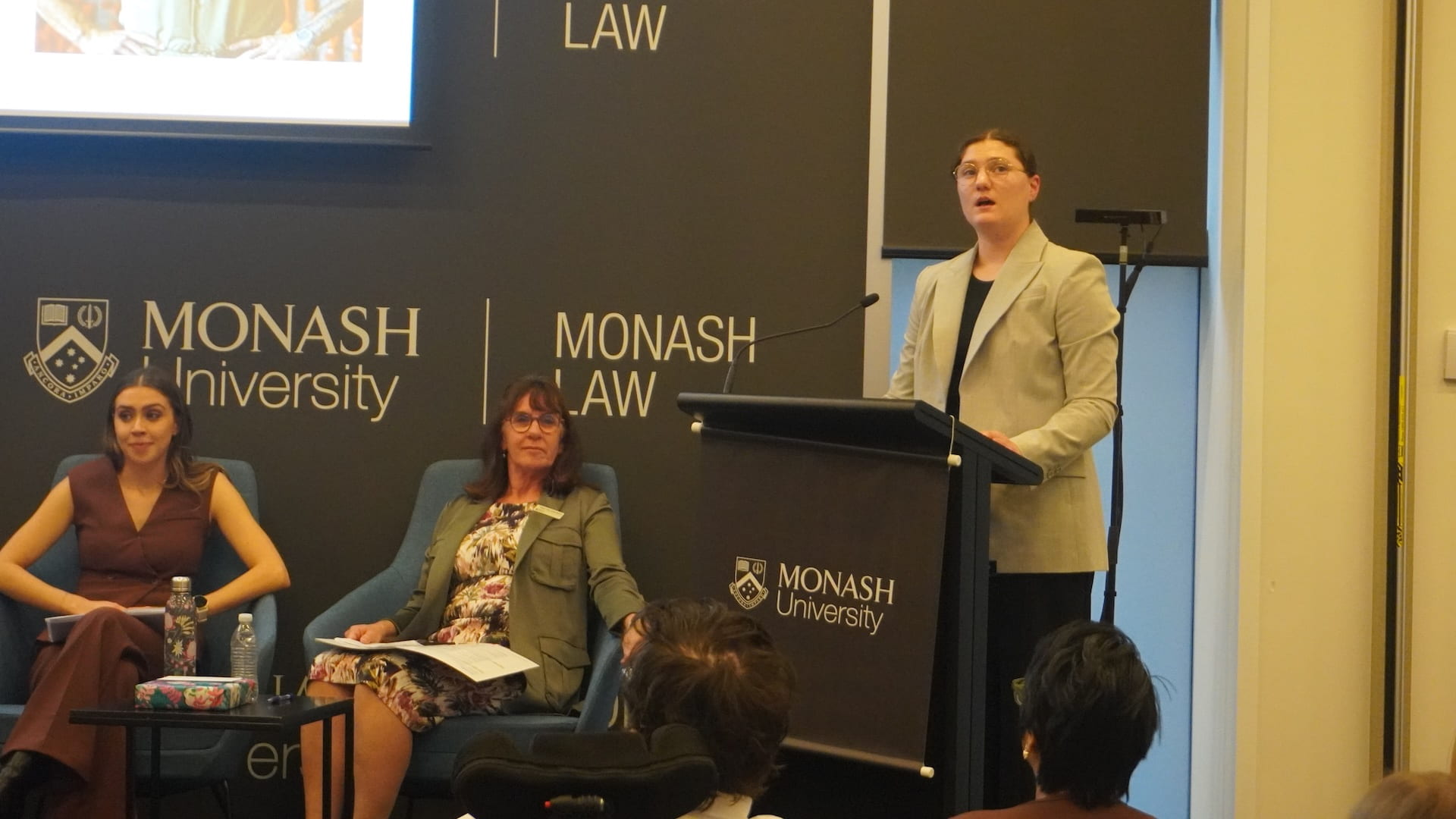
Emma Jelavic presenting their research at the 2025 Honours Thesis Conference.
EMMA JELAVIC
Emma Jelavic is a final year Law/Arts student, majoring in Literary Studies. She is currently
employed as a paralegal at a family law firm. She has an interest in gender and the law.
Supervisor: Professor Jacqui Horan
TIME TO PUT DOWN THE SWORD: EXAMINING THE MISUSE OF DEFAMATION PROCEEDINGS BY PERPETRATORS OF GENDER-BASED VIOLENCE
Although initially intended as a shield to protect a person’s reputation, it is more apt to describe modern day defamation law as a sword for the plaintiff. This thesis examines the use of defamation proceedings by powerful men to perpetuate gender-based violence, including psychological and emotional violence. The past five years have seen several defamation cases in which Australian courts have determined whether a woman’s allegations of gender-based violence, as published by a media organisation, are defamatory. Two such cases are the high-profile trials of Lehrmann v Network Ten Pty
Limited (Trial Judgment) [2024] FCA 369 (‘Lehrmann proceedings’) and Roberts-Smith v Fairfax Media Publications Pty Limited (No 41) [2023] FCA 555
(‘Robert-Smith proceedings’).
This thesis will highlight the harm caused by allowing
alleged perpetrators of gender-based violence to bring, and threaten to bring, defamation proceedings. I contend that it is time to force perpetrators to put down the sword. Current Australian defamation law is unequipped to force this change. Therefore, the
thesis will evaluate three proposed mechanisms for enacting this change: (1) the enactment of protection of public participation legislation; (2) the adoption of a US influenced actual malice requirement; and (3) the development of the existing public interest defence.
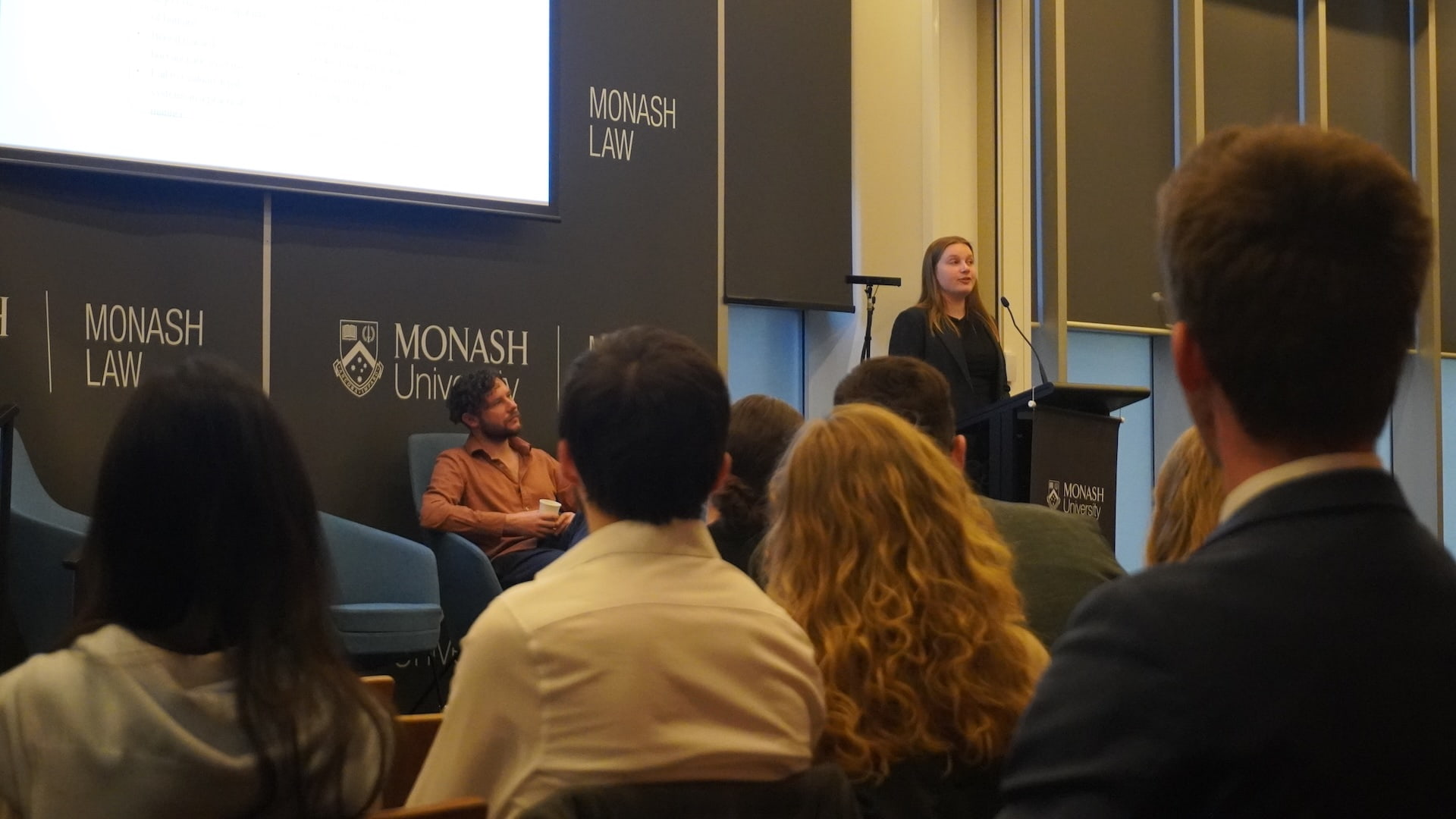
Hannah Bailey presenting their research at the 2025 Honours Thesis Conference.
HANNAH BAILEY
Hannah Bailey is in her final year of a Bachelor of Laws (Honours) and Bachelor of Commerce (majoring in Economics). From October 2025, she will be working as an Associate at the Federal Court of Australia. In 2027, Hannah will commence as a
graduate at Ashurst.
Supervisor: Dr Duncan Wallace
AGAINST THE GRAIN: AN INNATE-BASED CONSEQUENTIALIST CRITIQUE OF NATURAL LAW AND LEGAL POSITIVISM
This thesis argues that Legal Positivism and Natural Law, the two dominant prevailing theories in conceptual jurisprudence, have ignored the innate morality and law of humans. The dominant theories, in being prescriptive of initial requirements of a legal system to fit their posture towards the role of morality in law, create incompatible theories with reality and fail to adequately capture non-bureaucratic legal systems. This thesis resolves these issues by presenting an Innate-Based Consequentialist Framework for conceptual jurisprudence that better captures non-bureaucratic systems and the role of morality in the law. By examining the outputs of a legal system, instead of its sources, legal validity of the system can more accurately be determined. This thesis concludes there is a conceptual relation between law and morality through the innate capabilities humans possess.
Find out more about the LAW4327 Honours Thesis Research Unit
HOPE VAN ROSSEN
Hope is a final year Law / Information Technology student. She is passionate about the intersection of law and technology, particularly examining how emerging technologies challenge and demand change from traditional legal frameworks. She looks forward to joining Norton Rose Fulbright as a graduate in 2026.
Supervisor: Professor Chris Marsden
ERROR 404 — LIABILITY NOT FOUND: A GAP ANALYSIS OF VICTORIA’S CIVIL LIABILITY FRAMEWORKS FOR AI-FACILITATED HARM
Within the last few years, artificial intelligence (‘AI’) has reached a transformative stage, with the capacity to fundamentally alter the way society exists and operates. Accordingly, it is necessary to consider the potential impacts that AI will have and to take the initiative to consider the reforms that should be made to enable society to utilise such innovative technologies to their full potential, without impinging on fundamental human rights.
With Australia’s proposed risk-based approach to AI regulation, the author theorises that this approach will fail to provide consequences. Accordingly, the availability of redress will depend on Australia’s underlying civil liability frameworks. However, in applying defamation and discrimination laws to real-world scenarios through a Victorian lens, the
shortcomings highlight the inadequacy of these causes of action in navigating the nuances of AI-facilitated harm. To this end, this thesis explores two innovative options for law reform that could be used in building Australia’s liability framework: agency and legal personhood. Regardless of Australia’s ultimate approach, it is clear that significant reform will be necessary to ensure liability can be attributed for AI-facilitated harm.
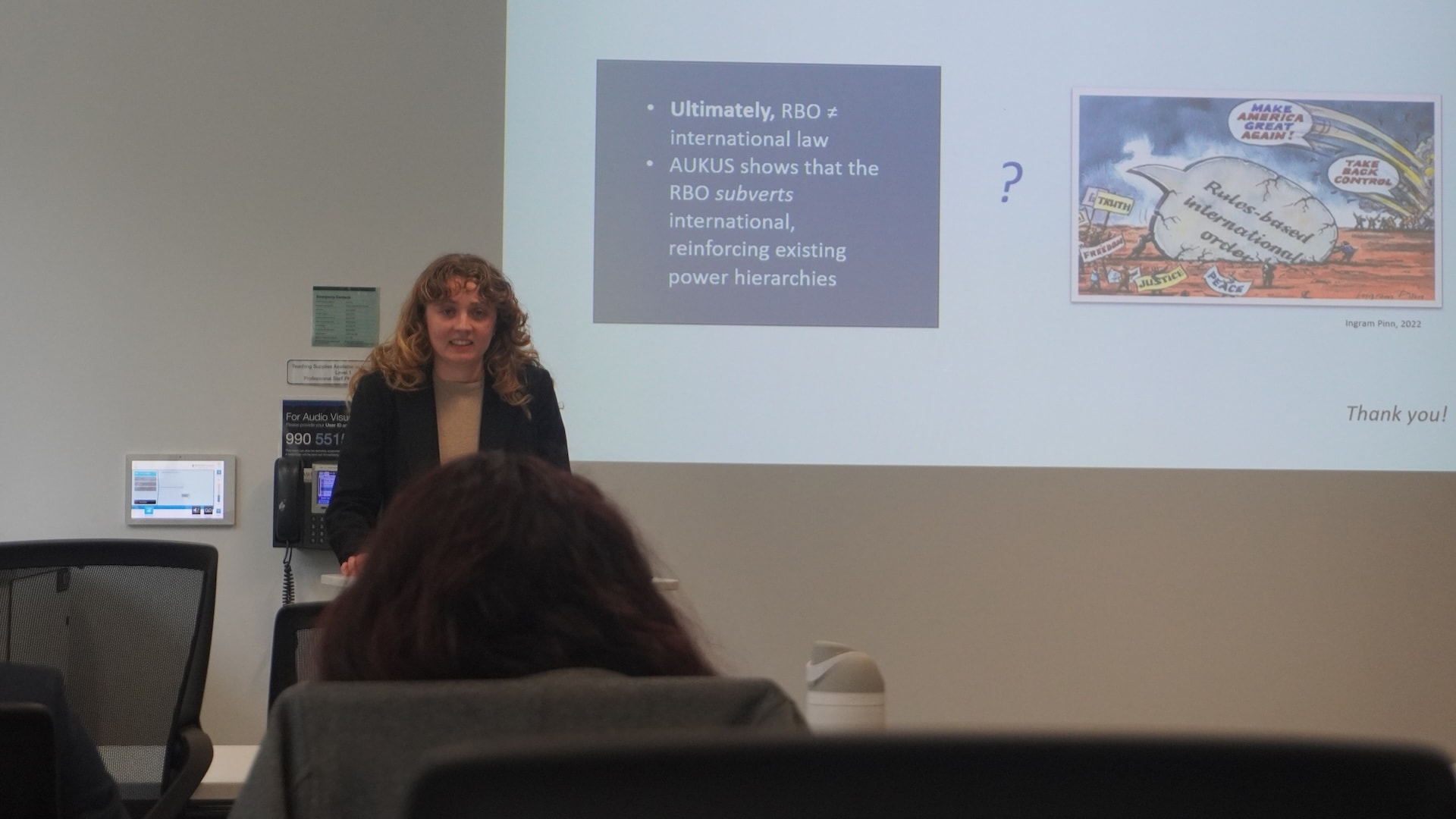
Jane Nicholls presenting their research at the 2025 Honours Thesis Conference.
JANE NICHOLLS
Jane is a final-year Law and Global Studies student. She is passionate about international relations and has developed a keen interest in the relationship between law and power. Jane looks forward to travelling to the Philippines and Thailand after graduating, and making a difference wherever the wind takes her.
Supervisor: Associate Professor Monique Cormier
AUKUS, NON-BINDING NORMS AND THE “RULES-BASED INTERNATIONAL ORDER”: SUBVERTING INTERNATIONAL LAW
AUKUS — the defence treaty between Australia, the UK, and the US facilitating Australia’s acquisition of nuclear-powered submarines — offers a revealing case study for examining the relationship between international law and geopolitical power. While AUKUS does not violate specific provisions of non-proliferation treaties, its exploitation of legal ambiguities appears to sideline international law. Furthermore, it is argued that AUKUS undermines
non-binding norms in relation to nuclear free zones, the regulation of naval nuclear propulsion technology, and the broader prevention of nuclear proliferation. Yet, AUKUS has simultaneously been applauded by its architects for advancing the rules-based international order (‘RBO’) that ostensibly promotes these norms. This apparent contradiction provides a lens through which to examine the relationship between the RBO and international law. Through critical analysis of Australia’s invocation of the RBO in relation to AUKUS, this thesis challenges representations of the RBO as aligned with international law, exploring how the RBO functions to subvert international law with the effect of reinforcing existing global power hierarchies.
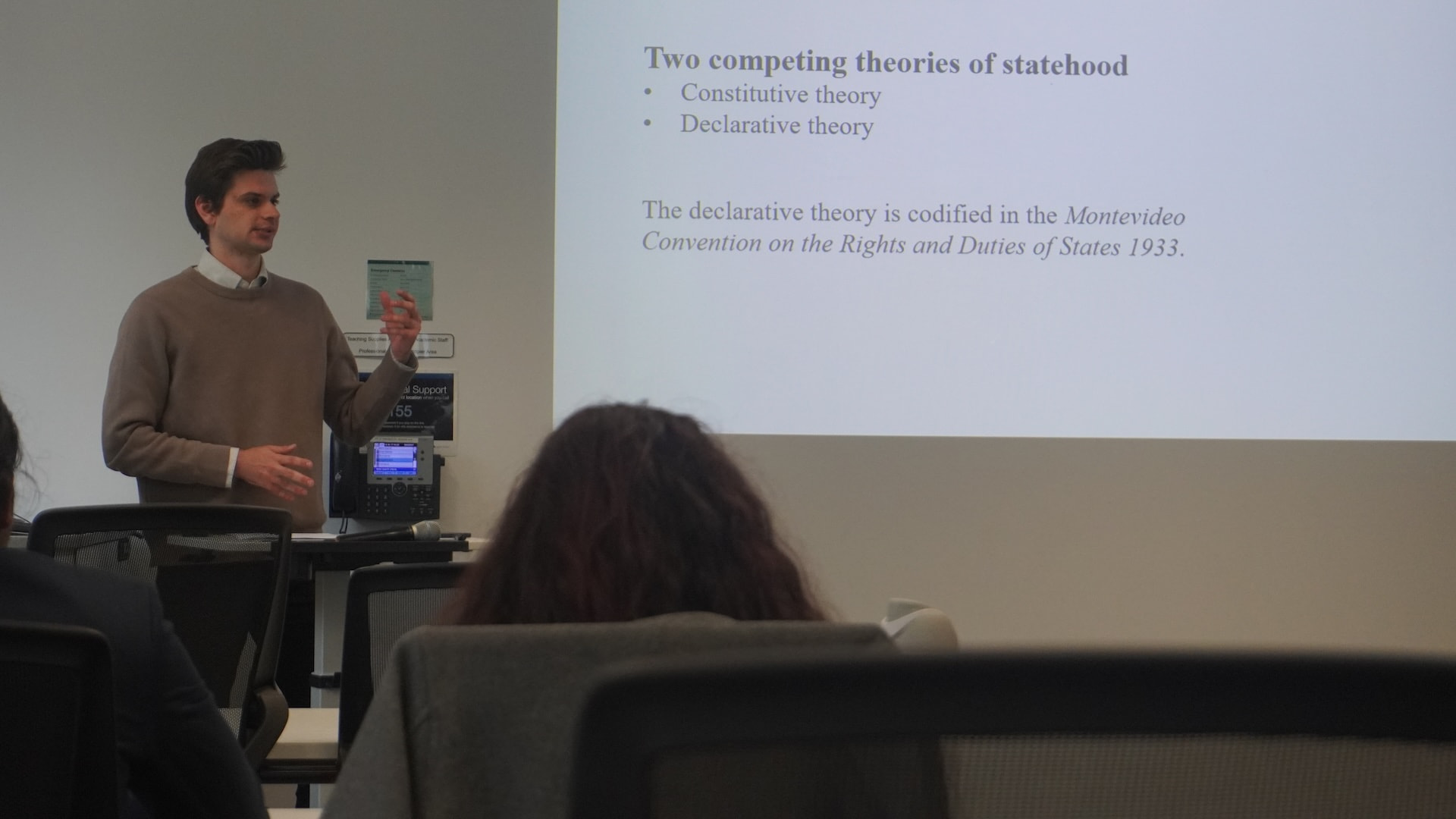
Joshua Pelach presenting their research at the 2025 Honours Thesis Conference.
JOSHUA PELACH
Joshua Pelach is a final year student at Monash University studying a Bachelor of Law and a Bachelor of Arts majoring in Politics, with a minor in Communications and Media Studies. Josh’s thesis reflects his strong interest in public international and human rights law, and its intersection with foreign policy.
Supervisor: Associate Professor Monique Cormier
REDEFINING STATEHOOD: A NOVEL APPLICATION OF SOCIAL CONTRACT THEORY
The definition of statehood has been the subject of extensive legal discourse throughout the course of the last century. Under the declarative theory of statehood, prospective States must meet four criteria: a permanent population, a defined territory, an effective government and the capacity to enter relations with other States. Conversely, under the
‘constitutive’ theory, a State only attains its legal character through recognition by other States. This thesis argues that neither approach is fit for purpose.
Accordingly, it proposes an alternative formulation of statehood grounded entirely in social contract theory. It examines the origins of social contract theory, the elements which constitute a social contract and the
circumstances in which a social contract may be entered, amended or terminated. It defines ‘the State’ as a subset of social contract distinguished by its supremacy over all other social contracts in respect of the same territory. Finally, it explores the broader implications of social contract theory in international law, including with respect to international conflict,
self-determination and discrimination.
This thesis concludes by recommending that the
International Court of Justice be vested with the judicial authority to conclusively determine questions of statehood in accordance with a social contractual
framework.
JULIAN FARRAR
Julian is a Law and Commerce (Finance) student in his penultimate year. He enjoys navigating tax law and explaining it with clarity. He loves books. He has completed a Diploma of Liberal Arts (Literary Studies) and thrives on his part-time role as a VCE
literature tutor.
Supervisor: Professor Stephen Barkoczy
THE STRUCTURE AND TAXATION OF EXCHANGE TRADED FUNDS
Since their obscure launch more than 30 years ago, exchange traded funds (ETFs) have become a major financial product, providing millions of Australians access to low-cost, diversified investments. They are now the most widely traded investment vehicle in
Australia. Despite the popularity of ETFs, very little academic material has been published in Australia about their regulatory or taxation structure.
ETFs are taxed under a complex regime called the attribution managed investment trust (AMIT) regime. The AMIT regime applies to a variety of other managed investment trusts, including managed funds, listed investment trusts, and real estate investment trusts. The purpose of this thesis is to demonstrate how an ETF is taxed under the AMIT regime as a distinct investment vehicle.
The thesis describes what ETFs are, their history, and how they are structured. By analysing the AMIT regime, as well as the law prior to the regime, the thesis then discusses how investors and issuers are taxed. The thesis concludes by evaluating the significance of the regime for investors: the certainty of the attribution mechanism is characterised as a
major safeguard against double taxation. Separately, the attribution of amounts to investors for periods unrelated to membership periods is scrutinised.
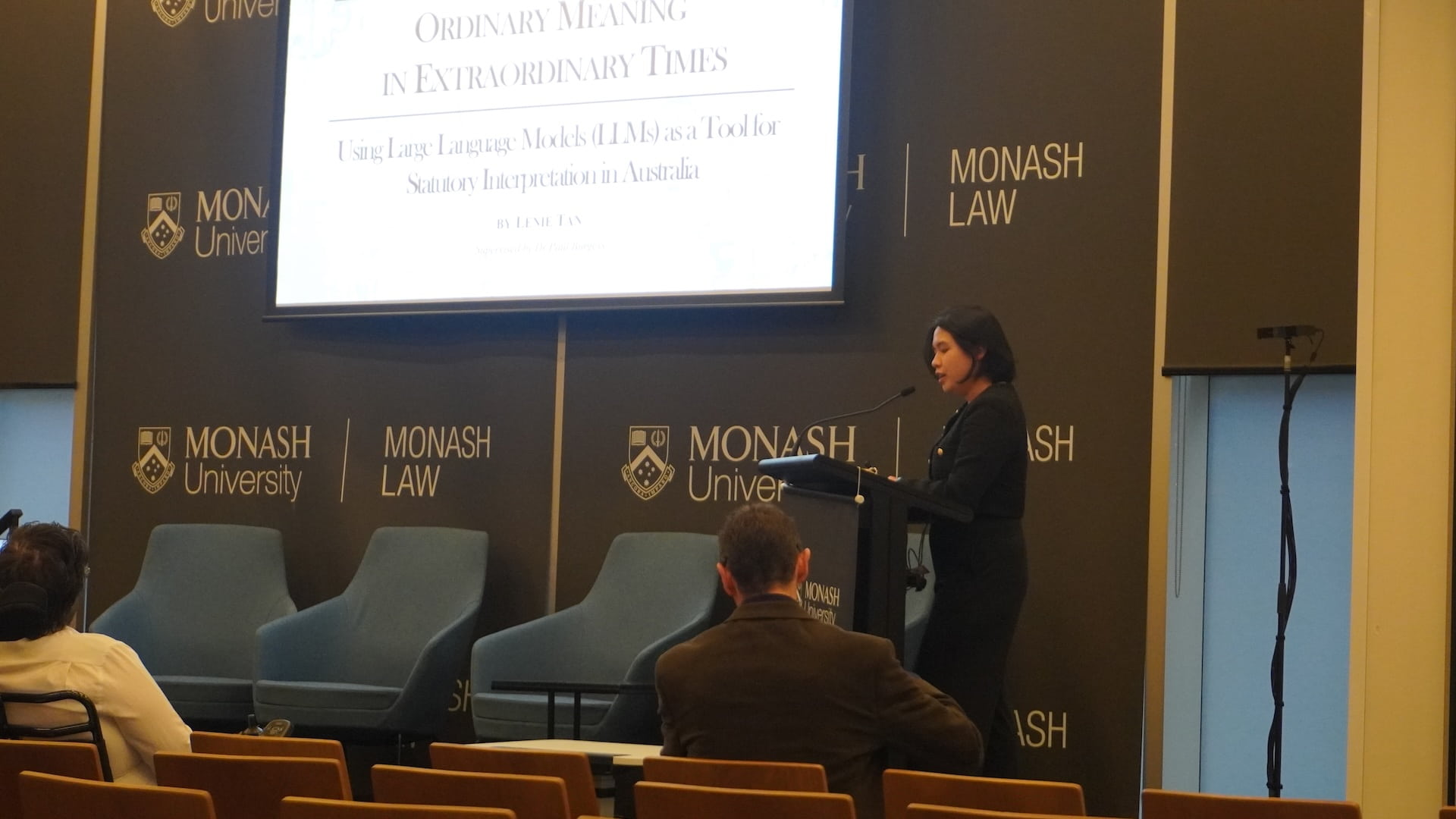
Lenie Tan presenting their research at the 2025 Honours Thesis Conference.
LENIE TAN
Lenie is a final-year Law and IT (Cybersecurity) student. She currently works at Monash University as a research assistant and software developer. Having spent her studies and work across three faculties at the university, she now looks forward to graduating and building on these experiences in her career ahead.
Supervisor: Dr Paul Burgess
ORDINARY MEANING IN EXTRAORDINARY TIMES: USING LLMS AS A TOOL FOR STATUTORY INTERPRETATION IN AUSTRALIA
Ordinary meaning is central to statutory interpretation in Australia, yet tools traditionally
available to courts tend to capture only fragments of meaning and leave much of the interpretive question unresolved. Large language models (‘LLMs’), trained on a vast corpus of natural language, now present an opportunity to generate empirical evidence of how terms are ordinarily understood. This thesis draws on Engel and McAdams’ prompt-based method for eliciting distributions of meaning from LLMs, to evaluate whether their outputs converge with established judicial reasoning. The High Court case Mansfield v The Queen was chosen because its outcome turned on the meaning of a single statutory term and the unanimous judgement provides a stable baseline for assessment. The study compares
OpenAI’s GPT-3.5-turbo, used in Engel and McAdams’ work, with the newer GPT-5 across
prompts modelled on their approach. Results show GPT-3.5-turbo reproduces the interpretive divisions noted by the Court, while GPT-5 converges on the construction ultimately adopted. Limitations remain in the method’s replicability, as results vary across
model versions and over time. Overall, the findings highlight both the promise and current limits of LLMs as evidence of ordinary meaning, underscoring their value as interpretive aids rather than substitutes for judicial judgement.
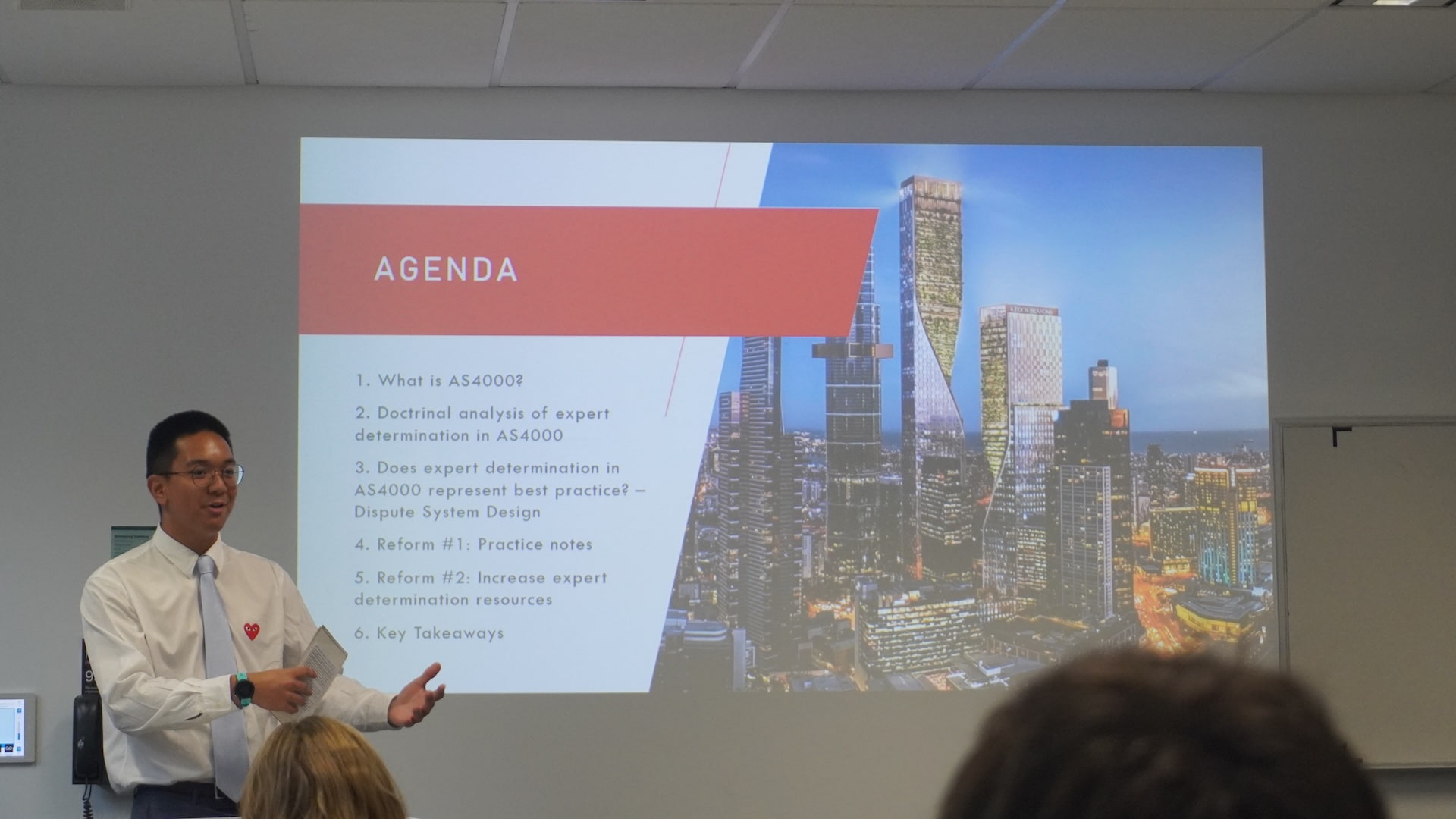
Lorenzo Borje presenting their research at the 2025 Honours Thesis Conference.
LORENZO BORJE
Lorenzo Borje is a final-year Bachelor of Laws and Biomedical Science student. He currently works as a paralegal at Wotton Kearney, a top-tier insurance law firm. Lorenzo has a strong passion for construction law, as demonstrated through his volunteer work at the Society of Construction Law Australia National Conference in Brisbane in May 2025.
Supervisor: Professor Paula Gerber
‘THE WIZARD OF AUS’: DO THE NEW EXPERT DETERMINATION PROVISIONS IN AS4000 REPRESENT BEST PRACTICE?
AS 4000:2025 is the long overdue update to the most widely used standard form construction contract in Australia, AS 4000:1997. One of the amendments is an expansion of the options for managing disputes. One of the notable changes is the introduction of alternative dispute resolution (‘ADR’) in the form of expert determination. This thesis analyses whether the way that expert determination has been included in AS4000 represents best practice. Applying a Dispute System Design lens, this thesis finds that expert determination delivers faster, more certain outcomes and has the potential to preserve working relationships. These outcomes are possible if the disputes are discrete and technical, and the contract contains a comprehensive and clearly drafted expert determination However, the way in which expert determination has been introduced into AS4000 falls short of international best practice. Standards Australia could improve the viability of expert determination in AS4000 by developing practice notes guiding the use of expert determination by the parties and support the development of a system for the training and accreditation of experts to provide this form of ADR to the construction sector.
Matthew Stefan presenting their research at the 2025 Honours Thesis Conference.
MATTHEW STEFAN
Matthew is a final year Law/Commerce student. He has a keen interest in majoritarian movements which shape the criminal law, and the ensuing harmful, discriminatory consequences for society’s most vulnerable, knowing firsthand the legal barriers they
face. He intends on pursuing postgraduate education in sexual justice from 2026.
Supervisor: Professor Liz Campbell
SUPPLY AND REMAND: THE SWIFT EROSION OF THE PRESUMPTION OF INNOCENCE IN VICTORIAN BAIL LAWS SINCE 2010
This paper explores the theoretical justifications for pretrial detention in the context of the presumption of innocence, through changes to Victorian bail laws since 2010. Examining academic perspectives about the scope of the presumption, it concludes that unless remand conditions are so dissimilar to prison as to make them incomparable, then pretrial
detention is a violation of the presumption by any definition. It finds that this is the case for Victorian bail laws, which have been significantly curtailed in the last fifteen years due to inaccurate community perceptions that individuals on bail are offending en masse. These changes place the onus on recently arrested individuals to prove their right to pre-trial release, substantially increasing remand rates amongst vulnerable groups, especially Indigenous people, homeless people, young people, women, and domestic violence victims. It explores the consequences of remand even for short periods, including homelessness, psychiatric distress, and social isolation, all of which increase recidivism and thus decrease community safety. Exploring the community attitudes, political pressures, and disinformation which have driven these laws, it proposes a theoretical framework for law reform to restore the presumption of innocence and the right to bail, and methods to gain community support for doing so.
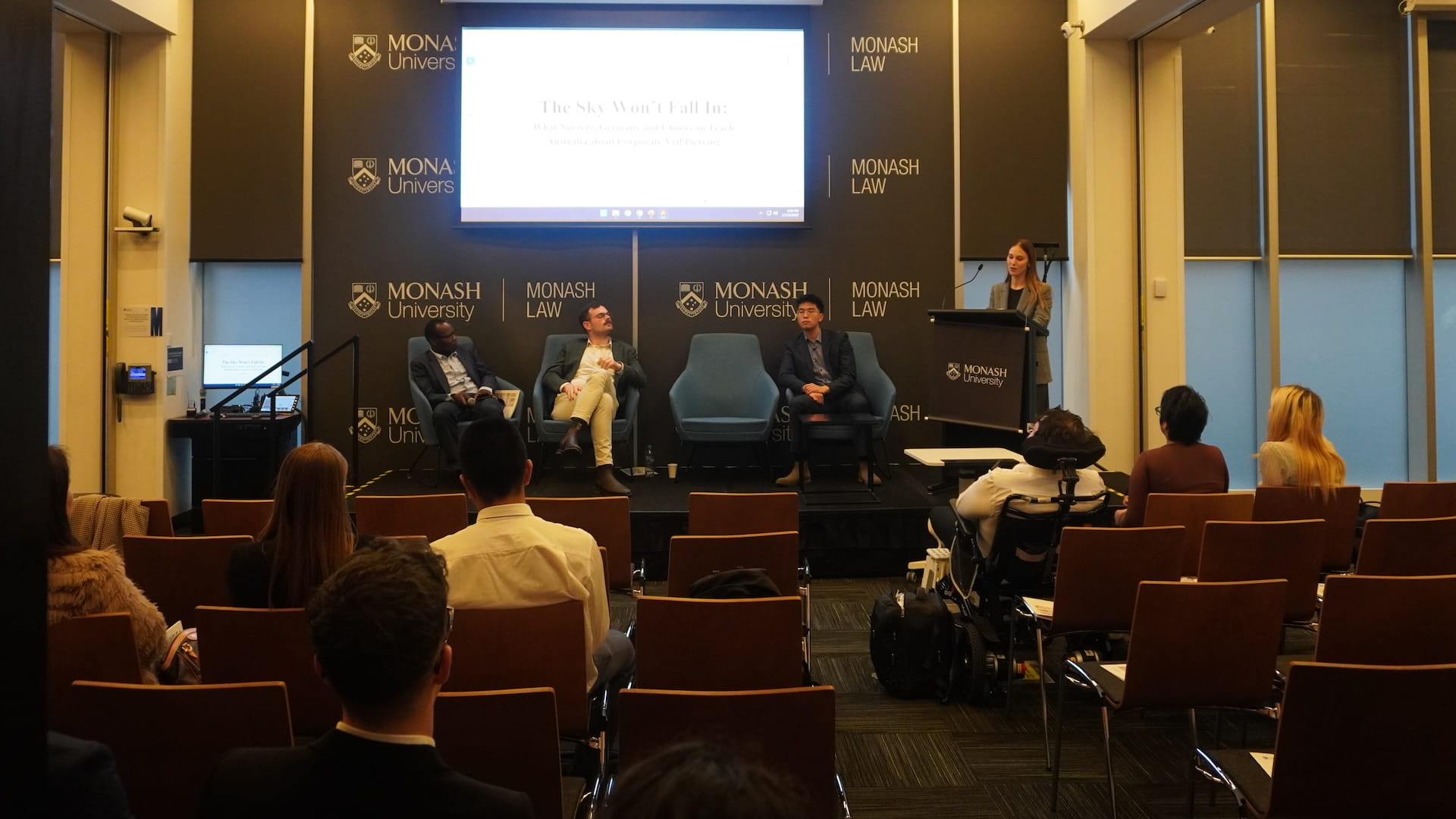
Paris Enten presenting their research at the 2025 Honours Thesis Conference.
PARIS ENTEN
Paris Enten is a final year Arts/Laws student currently working as a Legal Associate to The Honourable Justice Strum in Division 1 of the Federal Circuit and Family Court of Australia. She looks forward to commencing a graduate position at Arnold Bloch Leibler in 2027.
Supervisors: Associate Professor Steve Kourabas and Dr Duncan Wallace
THE SKY WON’T FALL IN: WHAT NORWAY, GERMANY, AND CHINA CAN TEACH AUSTRALIA ABOUT VEIL PIERCING
In Australia, tort creditors against corporate groups can face extreme hurdles in accessing compensation where the tortfeasor is made insolvent by their controlling shareholder. A variety of historical factors contribute to this fact. Most relevantly, the iron grip of
Salomon v A Salomon & Co Ltd [1897] AC 22 prevents the judiciary from making substantive
progress, leaving any prospect of reform to the legislature.
In 2000, the Companies and Securities Advisory Committee, established under the Australian Securities Commission Act 1989 (Cth), recommended that the status quo of limited liability be maintained in respect of tort creditors seeking compensation from corporate groups. Primarily, this was because of the potential economic harm that could accompany any liberalisation of veil piercing. These reasons are supported in a wide variety of literature on the subject.
However, this paper analyses three jurisdictions in which veil piercing is more accessible to tort claimants against corporate groups: Norway, Germany and China. These jurisdictions demonstrate that, notwithstanding liberal veil piercing policies, corporate groups remain strong and international investment is generally abundant. These findings should allay the worst fears of proponents for strict limited liability and open the door to future research by Australian legislatures, centring international best practice.
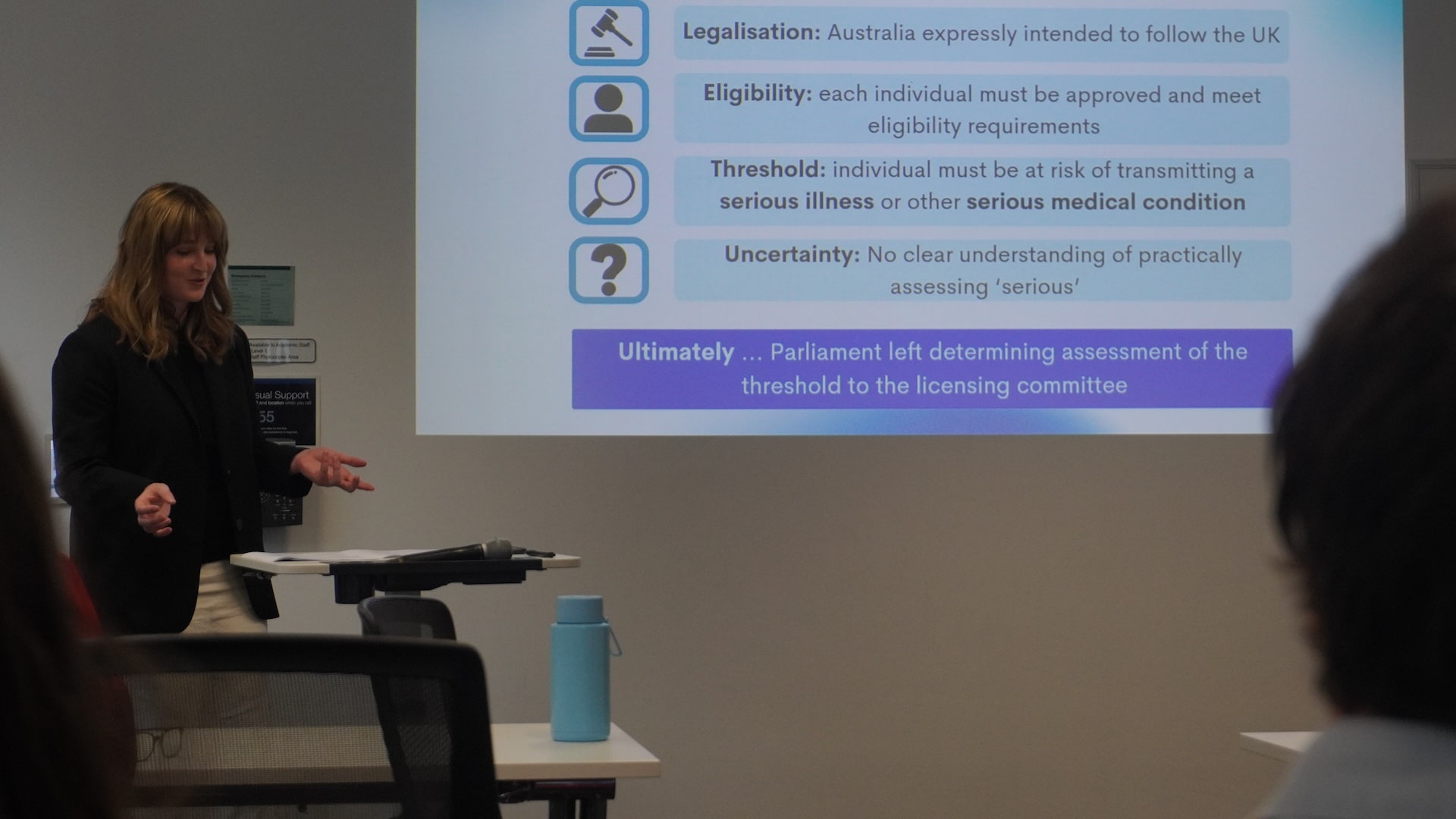
Sidney White presenting their research at the 2025 Honours Thesis Conference.
SIDNEY WHITE
Sidney is a penultimate year Bachelor of Laws (Honours)/Bachelor of Science (Chemistry) student hailing from regional NSW. Her thesis topic stems from her interest in how regulation shapes scientific innovation. Sidney’s 2026 plans involve long-overdue travel in Europe and Asia, and she plans to work in commercial law after graduating.
Supervisor: Associate Professor Karinne Ludlow
CROSSING THE THRESHOLD: LEGAL ACCESS TO MITOCHONDRIAL DONATION
In Australia, clinical use of mitochondrial donation is not possible unless the individual meets the threshold of being at a significant risk of transferring a ‘serious’ illness or other ‘serious’ medical condition to their offspring. The use and interpretation of this ‘serious’ threshold is a live issue across Australian and international biotechnology, and its meaning in relation to mitochondrial donation is underexplored. With recent successful births from the United Kingdom, and the Australian clinical trial imminent, clarification of what is meant by ‘serious’ is a matter of urgency. This thesis explores how ‘serious’ is likely to be understood within Australian mitochondrial donation regulation through the case study of Leber Hereditary Optic Neuropathy, to ascertain what factors and evidence can and should be considered in assessing the threshold in Australia. It does so by providing the first examination drawing upon Australia’s regulatory approach to mitochondrial donation and learnings gained from the approach in the United Kingdom. This thesis argues that Australia’s current assessment of the threshold is insufficient, as it lacks guidance, flexibility and emphasis on the individual’s and their family’s lived experience of mitochondrial disease.
STEFFIE PERERA
Steffie is a final year Bachelor of Laws (Honours) student with a strong passion for women’s rights. She is currently working as a Tribunal Officer at the Administrative Review Tribunal, meeting new people with different struggles every day. Steffie is looking forward to the possibility of undergoing further studies in Health and Community law.
Supervisors: Associate Professor Calvin Ho and Associate Professor Becky Batagol
“DOCTORS KNOW BEST”: A CRITICAL ANALYSIS OF GENDERED HARM IN TWO AUSTRALIAN JURISDICTIONS
The androcentrism of the legal system prevents it from recognising, protecting, and, where applicable, providing compensation to women harmed by medical misogyny. In this thesis, I draw on feminist legal theories to develop a notion of gendered harm.
I use this notion of gendered harm to explain why medical misogyny continues to harm women in Australia, and how tort law fails to adequately
address such harm.
Through empirical legal research, I apply this notion to identify legal judgments from the jurisdictions of Victoria and NSW over a period of 10 years where women have suffered gendered harm in addition to medical harm. Through content analysis of the identified judgments, my finding is consistent with those of recent studies, literature and personal
accounts; that medical misogyny continues to lead to poorer health outcomes, because the medical complaints of women are ignored or disbelieved, thereby leading to misdiagnosis or insufficient care. I further explain how tort law fails to address gendered harm by ignoring the epistemic deficiencies in health systems that have neglected female bodies, perspectives and ways of communication. In the light of my finding, I set out recommendations for tort law reform that could better protect women against medical misogyny.
Find out more about the LAW4327 Honours Thesis Research Unit
SUDHIDA RATTANASAKSIRI
Sudhida is a Law/Science student with experience working with neurodivergent clients and developing legal technology at a major ASX-listed company. These experiences have motivated her to examine how law, technology, and disability rights intersect, and question
whether current laws adequately protect the minorities in the workplace of the future.
Supervisor: Dr Paul Burgess
“EVERY MIND IS CODED DIFFERENTLY”: FROM ANTI-DISCRIMINATION LAW TO AI GUARDRAILS PROTECTING NEURODIVERGENT APPLICANTS IN AI-SCORED VIDEO INTERVIEWS
The adoption of asynchronous AI-scored video interview tools (‘ASVITs’) in Australian recruitment raises pressing questions about fairness for neurodivergent applicants, given their heavy reliance on neurotypical training data. This article argues that existing Australian anti-discrimination law is ill-equipped to address the complex, systemic biases that ASVITs can embed. It begins by tracing the operation of ASVITs, identifying multiple pathways through which bias can enter — from skewed training data to developers’ practices that further entrench bias that reinforce existing social prejudices. It then demonstrates how such biases manifest in disproportionate exclusionary impacts on
neurodivergent applicants. The article then assesses whether these exclusionary impacts constitute discrimination under anti-discrimination law, highlighting doctrinal gaps that render traditional legal remedies ineffective. Against this backdrop, the article evaluates Australia’s emerging mandatory AI guardrails framework, assessing both its potential to enhance applicant protections and its limitations in addressing disability-specific harms. The analysis reveals that while the guardrails offer a step towards filling the regulatory void, they remain insufficient on their own. The article concludes by proposing a suite of targeted reforms to strengthen the guardrails, complemented by broader legal and policy measures, with the aim of ensuring that recruitment technologies advance neuro-inclusivity rather than reinforce structural disadvantage.
TARA SCHWARZ
Tara is in her final year of a Bachelor of Laws and Arts, majoring in sociology. Tara is interested in criminal law, which she tutored for the past 3 years. Tara hopes to continue with a research degree after graduating and alongside her studies, she operates her own entertainment business.
Supervisor: Associate Professor Jacqui Horan
HOW TO HANDLE A SCANDAL: THE INTERSECTION OF MASCULINITY, CONTROL AND SEXUAL MISCONDUCT IN THE AUSTRALIAN DEFENCE FORCE
This thesis examines why reforms addressing sexual misconduct in the Australian Defence Force (‘ADF’) have largely failed in creating change, drawing in particular on the 2024 Royal Commission into Defence and Veteran Suicide as a recent evidence base. This thesis argues that persistence of sexual violence within the ADF is due to structural dynamics at the intersection of militarised masculinity, institutional exceptionalism, and the political economy of scandal. Drawing on theorists and case study, this thesis argues that the dynamics of military culture perpetuate gender hierarchies, within which sexual misconduct has historically operated to marginalise and exclude women in the Australian military. At the same time, the ADF’s unique justice system creates an accountability gap that shields the
institution from external scrutiny, leads to gaps in accurate reporting, and acts as a roadblock in access to justice. Efforts at reform have lacked a sustained commitment to enforceable accountability, driven by imperatives of scandal management and institutional
legitimacy. In this context, genuine reform requires adjustment to the balance between military autonomy, institutional interests, and measurable justice. By incorporating jurisdictional comparisons, this thesis highlights an alternative approach through which the ADF might move beyond cycles of reform, and toward substantive change.
THIDAS GAMMANPILA
Thidas is a final-year Bachelor of Laws student with a keen interest for constitutional law, both in Australia and the United States. As a dual citizen, this thesis holds a special personal significance. Next year, Thidas will be commencing work in the Australian Public Service,
while aspiring to undertake doctoral studies.
Supervisor: Associate Professor Yee-Fui Ng
DIVIDED AND DISQUALIFIED: DUAL CITIZENSHIP AND SECTION 44(I) OF THE AUSTRALIAN CONSTITUTION
The most prominent political crisis of 21st-century Australian politics, where an unprecedented number of parliamentarians were disqualified from office in 2017–
18, surrounded a historically dormant provision within the Australian Constitution — section 44(i). The constitutionally entrenched disqualification provision stipulates the eligibility requirements for Australian Members of Parliament to hold federal office, and this
thesis specifically examines the sub-section which disqualifies parliamentarians on the basis of foreign allegiance. Almost a decade after the dual citizenship crisis, it raises the question whether the profound tensions between the constitutional text, judicial interpretations and a multicultural Australia can be reconciled.
By situating the provision against the disqualification of dual citizens, the drafting, history and enforcement will be considered to understand its implications in a globalised society. Furthermore, this thesis undertakes a comparative constitutional analysis by juxtaposing the Australian provision against the models of the UK, the US and New Zealand. These jurisdictions demonstrate a spectrum of approaches, ranging from strict disqualification rules to more flexible and purposive frameworks which accommodate modern patterns of
migration and dual nationality. By contrast, the Australian provision is seemingly rigid and increasingly anachronistic. Ultimately, this analysis proposes reform for the constitutional provision by examining the most suitable and desirable avenue for the Australian polity.
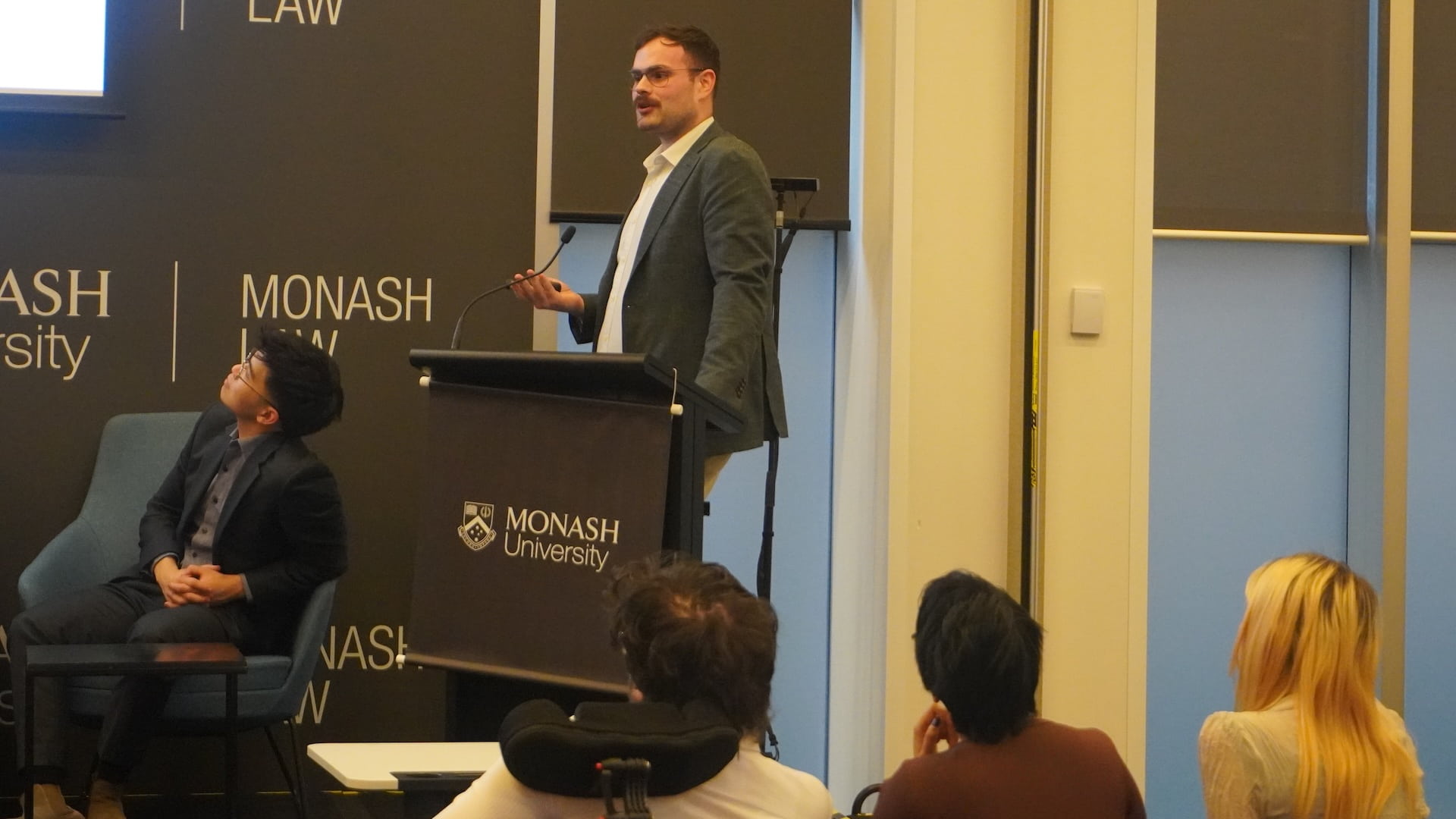
Thomas White presenting their research at the 2025 Honours Thesis Conference.
THOMAS WHITE
Thomas is a final-year law student and legal, risk & compliance professional at Eightcap, specialising in retail/institutional derivatives and digital assets. He leads cross-border licensing strategy and product-governance across the group, operating at the intersection of digital assets and traditional finance to deliver innovative financial products that embrace
consumer protection.
Supervisor: Associate Professor Emmanuel Laryea
REVIVING A COLD CORPSE: AN ATTEMPT AT RESURRECTING AUSTRALIA’S SIMPLE CORPORATE BOND REGIME
The Australian retail debt capital market is inaccessible to investors and issuers. In 2014, the Government enacted the Simple Corporate Bond (SCB) regime to, among other priorities, increase competition in the retail debt market. More than a decade on, only a handful of bond issuances have occurred under the regime. Characterised by narrow issuer and product eligibility, disproportionate liability settings and retail bond trustee constraints, the regime has failed to achieve its purpose.
In 2021, a House of Representatives Inquiry recommended proportionate reforms to revive the SCB regime. However, the government has declined to act, leaving a critical regulatory regime in a state of purgatory. This thesis provides a practical blueprint to revive the retail debt market. By re-evaluating issuer access, product features, the role of disclosure, and trustee duties, the government can enhance access to fixed income generating investments, while providing a reliable and accessible source of funding for businesses. Comparative analysis with the UK and the US reveals that risk-calibrated frameworks can expand access and participation while preserving investor safeguards. This thesis contends that regulation should preserve investor choice by widening market access for product issuers while striking a proportionate balance between risk and consumer protection.
Find out more about the LAW4327 Honours Thesis Research Unit