
Three years of the Monash University Law Indonesia Alliance: Reflections on AI, law, and collaboration
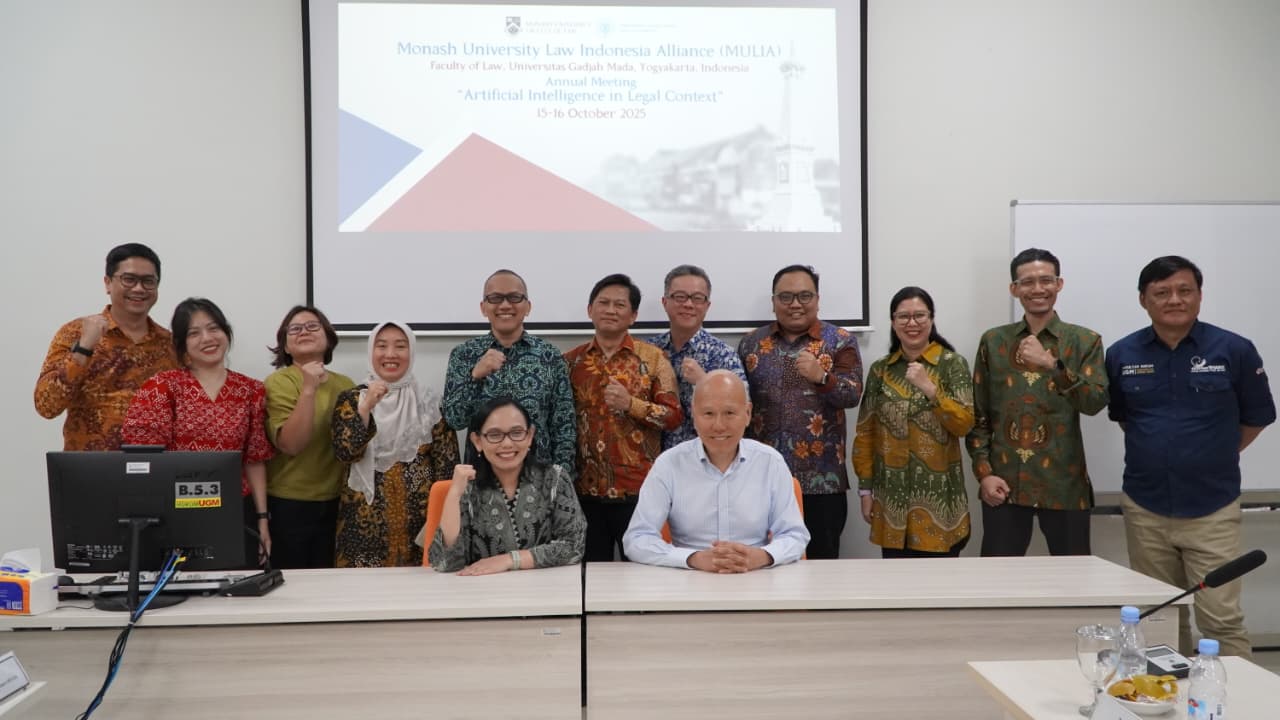
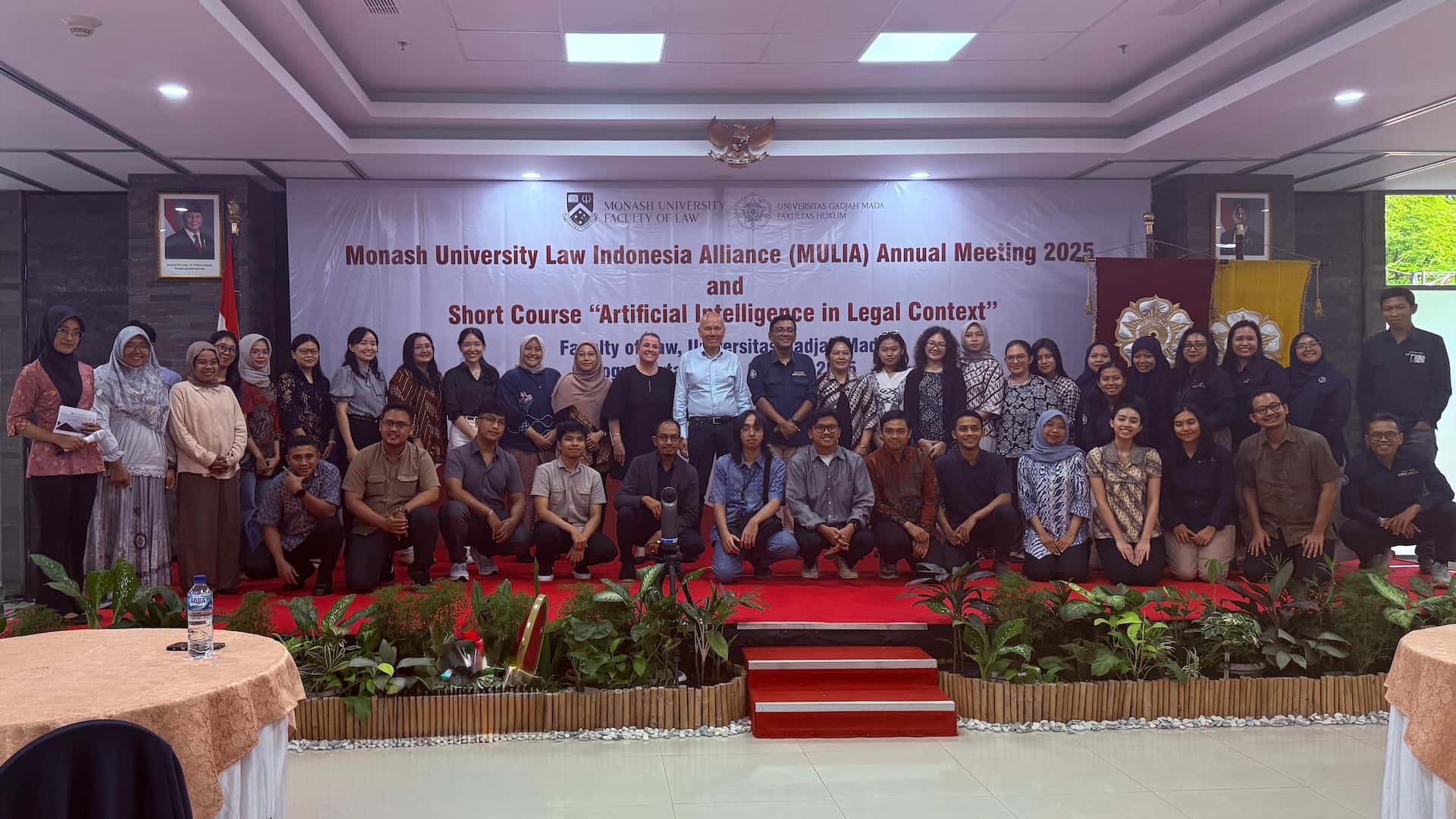
Monash Law has long been committed to building meaningful international partnerships. This year, that spirit of collaboration took shape through the Monash University Law Indonesia Alliance (MULIA), a joint initiative between Monash and seven leading Indonesian law faculties. I was grateful to be selected to join the MULIA workshop in Yogyakarta, hosted by the Faculty of Law at Universitas Gadjah Mada. With generous support from Monash Law, I participated in a two-day short course on AI in Legal Context (14–15 October 2025), followed by an excursion and the MULIA Annual Meeting, where Deans and Vice Deans gathered to explore future academic partnerships.
The program brought together legal scholars and students to discuss global legal challenges, share recent developments, and strengthen regional collaboration. For me, it was more than just an academic opportunity, it marked the beginning of meaningful engagement with Indonesia’s legal community and offered a foundation I hope to build on as I return home to contribute and serve.
Insights from MULIA: Learning, Connecting, and Growing Through Law and Technology
This experience also prompted deeper reflection, not just on what I learned, but on how I now see Indonesia after spending time abroad. Stepping back into familiar settings with new perspectives made me appreciate the richness we often take for granted: the cultural depth, the intellectual energy, and the potential for innovation rooted in local wisdom.

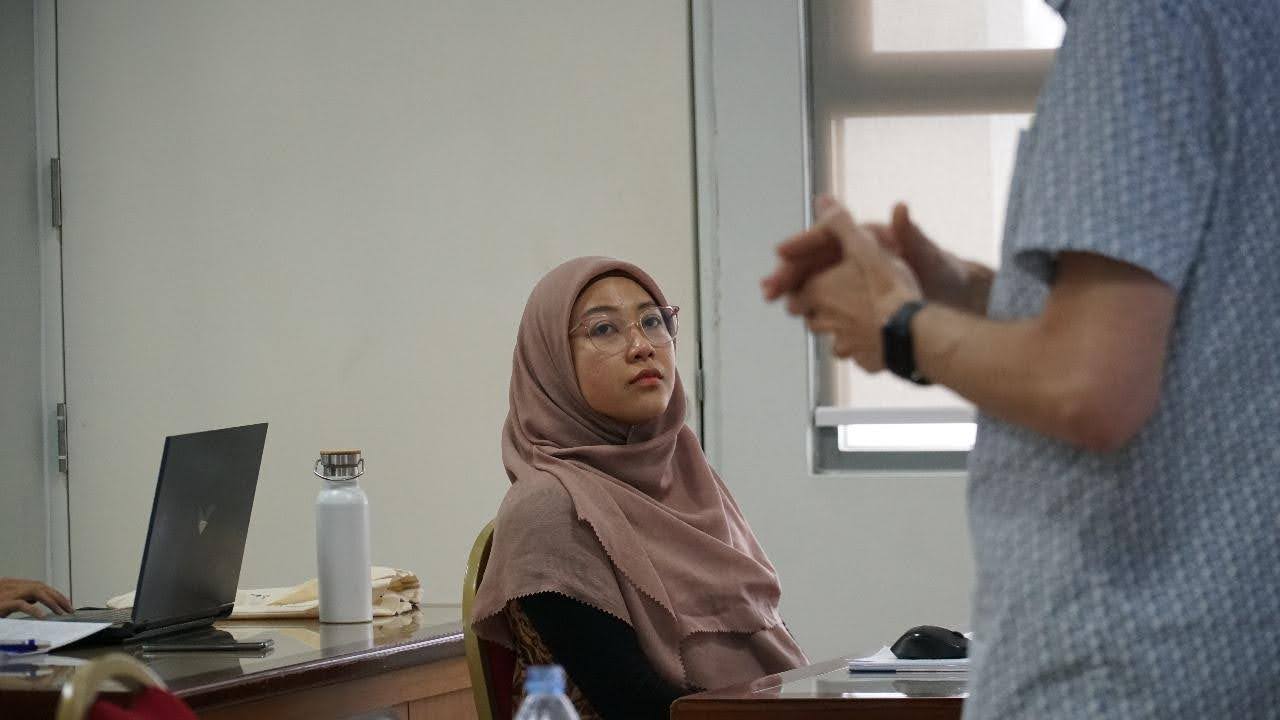
As highlighted in Dr Paul Burgess’s session on AI governance, where his comparison of Australian and Indonesian legal perspectives, enriched by personal reflections, offered valuable insight into the role scholars can play in shaping that journey.
A Moment of Homecoming Through MULIA
As someone who began her legal journey in Indonesia, walking through the familiar streets of Jogja stirred memories of early learning, community, and purpose. Yet this time, I returned with new perspectives shaped by my doctoral research at Monash Law, ready to reconnect and contribute. The MULIA short course and annual meeting created a space where past and present could meet, where I could engage with Indonesian legal scholars not only as a former student, but as a peer and collaborator.

There’s a saying in Indonesia that every corner of Yogyakarta is special. For many Indonesians, Jogja is more than a destination; it’s a place that must be visited at least once in a lifetime. The city carries a quiet magic: from the rhythmic clip-clop of horse-drawn carriages (delman) weaving through Malioboro, to the scent of freshly grilled satay and warm gudeg wafting from street-side stalls.

Batik shops line the alleys with vibrant patterns that speak of heritage and artistry, while the soft gamelan music playing in the background seems to slow time itself. Yogyakarta invites you to pause, reflect, and feel. For me, it wasn’t just a return to a familiar place, it was a gentle reminder of the richness of Indonesian culture, the warmth of its people, and the beauty of learning that happens when we allow ourselves to be fully present.

Looking Inward, Looking Forward: What MULIA Revealed
As a representative Monash Law Student, I learned that collaboration with Indonesian universities can become a normative laboratory for crafting inclusive digital legal models rooted in Southeast Asian contexts. The rise of AI challenges traditional legal boundaries, and in the spirit of Indonesia’s innovation, we must balance experimentation with ethical safeguards. This is where cross-border academic partnerships become essential, linking legal research, ethics, and technology to ensure that AI is not only efficient, but also fair and accountable.
For Monash, participating in forums like MULIA strengthens its position as a regional hub for legal education, one that not only studies global law, but also cultivates sensitivity to the complexities of the Global South. Through networks like MULIA, Indonesia holds the potential to act as a strategic bridge jurisdiction, connecting progressive legal frameworks from places like Australia with the regulatory needs of the developing world.