
Welcoming a new generation of legal scholars to Monash Law
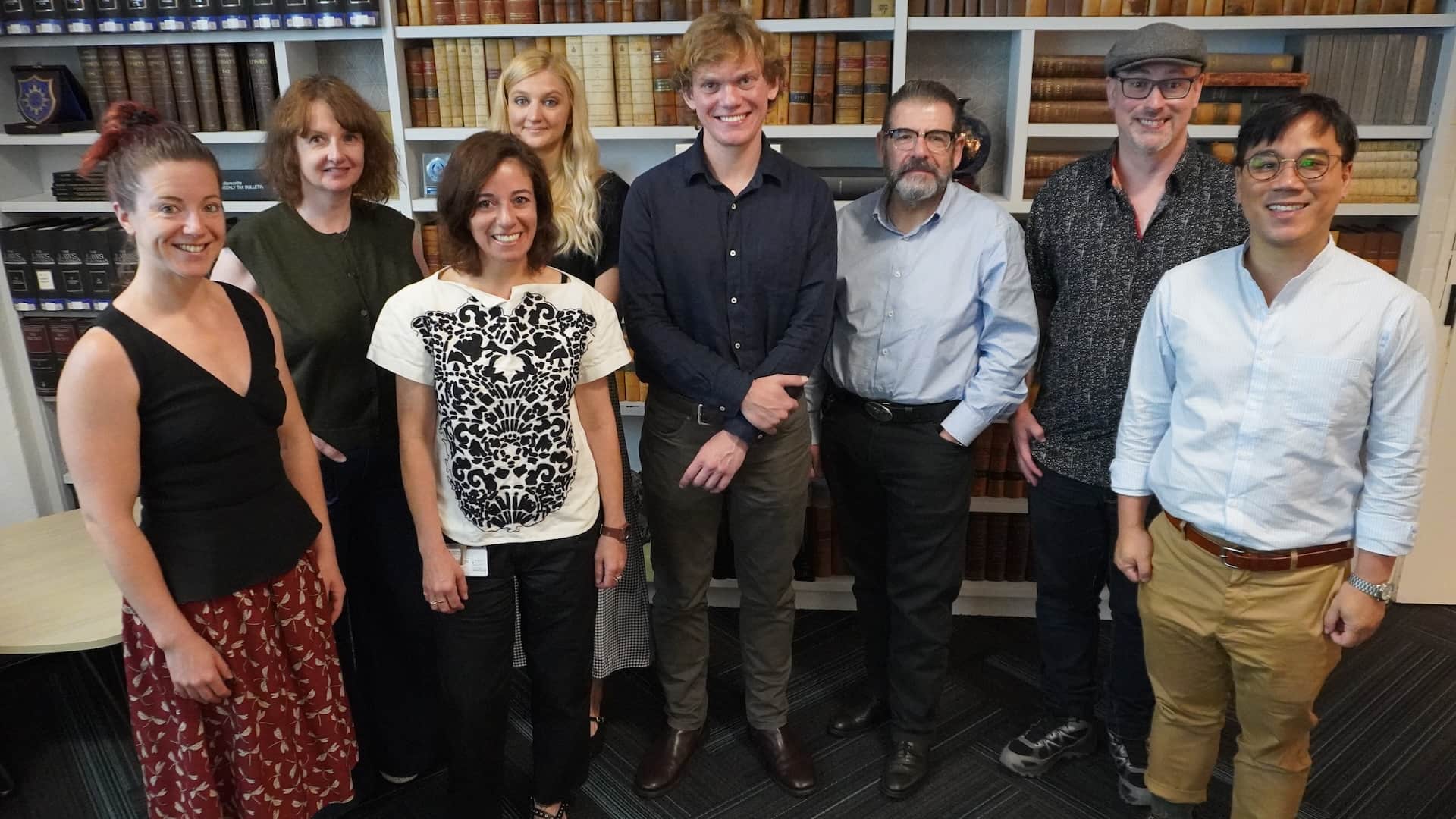
New Monash Law academics Dr Tanita Northcott, Dr Pascale Chifflet, Dr Naomi Burstyner, Dr Karin Frode, Dr Will Moisis, Mr Nicholas Calleja, Dr Lindsay Breach, and Dr Clement Ng.
For students and the wider Monash Law community, these appointments speak to the Faculty’s direction and ambition. They strengthen teaching, expand intellectual breadth, and reinforce a commitment to legal education that is rigorous, socially grounded and connected to the world graduates will enter.
Addressing new academics at the first induction event of the year, Dean of the Faculty of Law Professor Steven Vaughan described the moment as a fresh start, a new beginning and something bigger than all of us.
“We are so excited about this year. It is a phenomenal transformation of the faculty,” Professor Vaughan said.
“We have 19 new people joining us. It’s going to make such a big difference to who we are, what we want to do, and what we’re able to achieve”.
Academic recruitment shaped by values
From the outset, this recruitment round was guided by a clear sense of what Monash Law values. It’s not just about scholarly excellence, but how that excellence is exercised.
“You’ll have seen in the job adverts that we said we were looking for people who are excellent and kind, and that wasn’t just a throwaway line,” Professor Vaughan told new staff.
That framing, he explained, was purposeful and reflective of the Faculty’s culture.
“There are too many law faculties (and I’ve worked in some of them) who focus on excellence over kindness, and that’s not who we are,” he said.
For students, this emphasis matters. It signals a learning environment shaped by intellectual seriousness alongside generosity, care and respect. These qualities influence not only what is taught, but how students experience their legal education.

A faculty grounded in purpose
Monash Law’s approach to education and scholarship is shaped by its history and by the role it plays in society.
Professor Vaughan reminded new colleagues that Monash University was founded to respond to the challenges of its time.
“A review of the university sector in the late 1950s identified that the existing universities were primarily focused on academic matters and not enough on the big societal challenges of the time. Monash University was established to respond to some of those post‑war challenges,” he said.
Law was integral to that mission from the very beginning and that founding idea continues to shape the Faculty’s priorities today, particularly its understanding of law’s relationship to society.
“Law is deeply embedded in society,” he said, quoting the Faculty’s first Dean, Sir David Derham KBE CMG.
“Unless it’s working for society, it is missing the point”.
Welcoming the first cohort of new academics in 2026
The first group of new, ongoing academics commenced in January 2026 and were welcomed into a day of induction designed to give them an opportunity to meet the Law Faculty’s people, experience its culture and align with its direction.
Those welcomed included:
- Dr Karin Frode, Lecturer, whose expertise spans international human rights law and access to justice
- Dr Will Moisis, Lecturer, joining from Australian National University, with expertise in legal philosophy, climate ethics and public law
- Dr Naomi Burstyner, Lecturer, joining from Swinburne University, specialising in access to justice, dispute resolution and mediation
- Mr Nicholas Calleja, Lecturer, transitioning from a sessional employment role, with expertise in commercial law, company law, contract law and property law
- Dr Tanita Northcott, Lecturer, joining from Melbourne Law School, whose work focuses on complex food systems and socio‑ecological challenges
- Dr Lindsay Breach, Lecturer, joining from the University of Canterbury in New Zealand, specialising in wills, trusts and legal history
- Dr Clement Ng, Lecturer, joining from UNSW, with expertise in children’s rights, youth justice, criminal law and Indigenous justice
- Dr Pascale Chifflet, Senior Lecturer, joining from La Trobe University, specialising in international criminal law, evidence law and criminal procedure
Together, these academics reflect the Law Faculty’s breadth, which spans doctrinal, socio‑legal, theoretical, comparative and interdisciplinary approaches. They bring perspectives shaped by practice, research and teaching across jurisdictions.
Research and education that speak beyond the academy
For Professor Vaughan, the significance of new appointments lies not only in teaching capacity, but in the Law Faculty’s collective ability to contribute meaningfully to public and professional life.
“We have an obligation to tell society why we should exist,” he said.
“What is the point of universities, and what is the point of law faculties inside universities?”.
That obligation, he explained, is closely tied to the Faculty’s educational mission.
“Every year we are putting up to a thousand people into society who’ve had the benefit of our legal education,” Professor Vaughan said. “That is incredibly powerful”.
The newly appointed academics will contribute to this impact through teaching informed by active scholarship, and through research that engages with legal, social and ethical questions of contemporary significance.
“There are big social questions and we as experts can help society frame, shape, and be evidence-led when it comes to those conversations and debates. And maybe that will lead to change.”
The appointments made through this recruitment round form part of that longer‑term conversation. They are strengthening the Faculty’s ability to educate future lawyers, policymakers and leaders, and to contribute thoughtfully to debates about law’s role in society.
Looking ahead through the eyes of new colleagues
Further cohorts of new academics will join Monash Law throughout 2026, with additional commencements planned for May and July. Each group will be welcomed formally as they arrive and introduced to students and the wider Law Faculty community.
For students considering where to study law, and those already studying with Monash Law, these appointments reflect a Faculty investing in people, ideas and education with purpose.
As Professor Vaughan put it, returning to the Faculty’s origins and its future alike, the task is to ensure that law continues to work for society - and that legal education equips graduates to do the same.