
10 questions about the Voice - answered by 5 legal experts
The 14 October referendum on enshrining an Aboriginal and Torres Strait Islander Voice in the Constitution will ask one question of Australian voters that requires a ‘Yes’ or ‘No’ answer. Yet, there are some common questions about the Voice that can be helpfully answered before you cast your vote.
To answer these questions about a First Nations Voice, we brought together leading experts in constitutional law and Indigenous rights from around Australia in our recorded webinar, ‘Talking about the Voice: A conversation without the noise’.
‘Talking about the Voice: A conversation without the noise’ was a collaboration between Monash University’s Castan Centre for Human Rights Law, Griffith University, The University of Queensland and Australian Association of Constitutional Law.
Not only will these answers help you make a decision about the upcoming referendum, they’ll also help you speak with confidence in conversation with family, friends and colleagues in the lead up to the referendum.
What is the referendum on a Voice to parliament in a nutshell?
Associate Professor Kate Galloway, is a lawyer and academic at Griffith Law School who researches and teaches in property law.
“The referendum is proposing to establish a permanent committee, if you like, called an Aboriginal and Torres Strait Islander Voice,” explains Kate.
Kate’s work is particularly focussed on issues of land tenure and the law's effect on land rights principally for First Nations people in Australia. She says the Voice will be comprised of Aboriginal and Torres Strait Islander people, selected by Aboriginal and Torres Strait Islander people.
“And its purpose is to make representations to Government and the parliament on matters affecting First Nations people.”

Associate Professor Kate Galloway in the webinar Talking about the Voice: a conversation without the noise.
Where’s the detail on the Voice to Parliament?
Professor Melissa Castan is the Director of the Castan Centre for Human Rights Law at Monash University. She recently wrote the book Time to Listen - An Indigenous Voice to Parliament with Professor Lynette Russell.
Professor Castan points out that a lot of work has already been done on the detail of the Voice, including through the Indigenous Voice Co-Design Process led by Professors Marcia Langton AO and Tom Calma AO during the tenure of the previous government. As Professor Castan points out, you can find the Voice Co-Design principles in Professors Langton and Calma’s full final report and also in a summary document. This work, “gives us a model of what the Voice might look like”.
Why do we have to have a referendum for the Voice?
Professor AJ Brown AM is a professor of public law, public policy and law in the school of Government and International relations at Griffith University.
Professor Brown says a referendum is the only way we can change the Constitution, which is the foundational document setting out the rules and structure for the federal government of Australia.
“The way the Constitution came into being was by popular votes of the people of each of the mostly male, white Australians who had voting rights in the late 1890s,” describes AJ.
“That voting populace of each of the colonies voted in favour of joining the federation and that was the trigger that gave the Commonwealth Constitution its democratic force.”
Dr Dani Larkin from the University of Queensland is a Bundjalung and Kungarykany woman from Grafton, New South Wales, a public lawyer, and a senior lecturer in the University of Queensland. Dani's research interests include issues that surround constitutional recognition and electoral law and policy reform.
“Too often in Australia, us Indigenous people are advised by the Australian Government to go through truth telling type processes as a way of coming up with meaningful reform solutions to better our lives,” points out Dani.
Examples of this process include the Royal Commission into Aboriginal Deaths in Custody, the ‘Bringing them Home’ Report from the National Inquiry into the Separation of Aboriginal and Torres Strait Islander Children from their Families and the Royal Commission into the Protection and Detention of Children in the Northern Territory that exposed the abuse of Aboriginal children in Don Dale.
“And the thing is, at the end of these processes, guess what? Nothing happens.”
“At best, we get a report with hundreds of recommendations that provide sound, consulted-on, evidence-based reform options to overcome those issues. But the government does nothing about it.”
Having a referendum to include a First Nations Voice in the Constitution will help hold the government of the day accountable on policies that affect First Nations peoples.
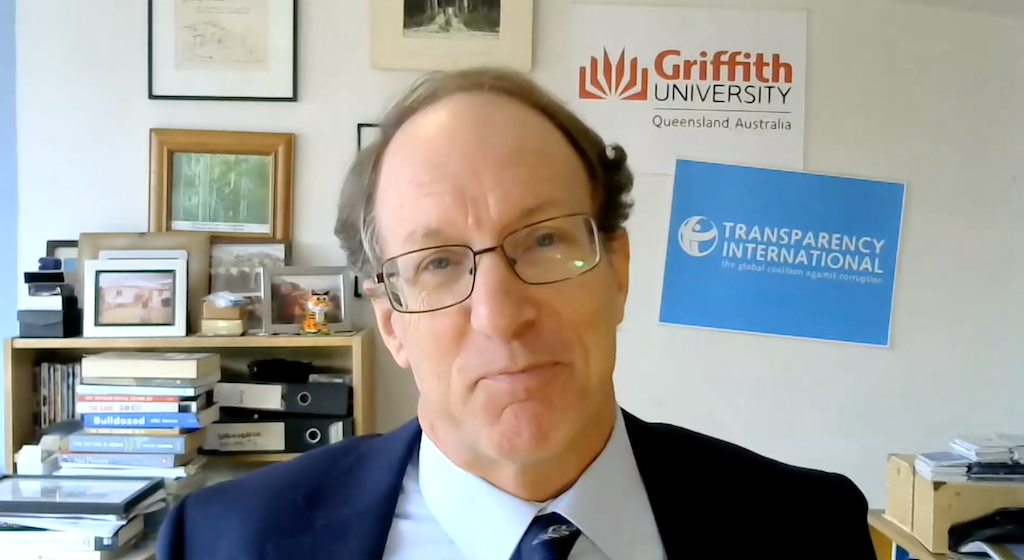
Professor A J Brown in the webinar Talking about the Voice: a conversation without the noise.
What are we voting on in the 2023 referendum?
“The regional dialogues which came together in the heart of Australia to produce the Uluru Statement [from the Heart] called for a Voice constitutionally enshrined first. And that's what's on the table, that's what's been asked for,” outlines Dani.
With a successful referendum, an Aboriginal and Torres Strait Islander Voice will be enshrined in the Constitution, which is the first step in a process towards meaningful reconciliation outlined in the Uluru Statement issued in 2017.
“It's always been about reforming the Constitution to recognise Aboriginal and Torres Strait Islander peoples’ place in this country as traditional custodians. The only thing that's ever shifted since 1999 was the form recognition should take.”
Australia’s last referendum in 1999 proposed recognition of Indigenous peoples in a preamble to the Constitution (as well as other constitutional reforms). That referendum was unsuccessful.
“Now the form has shifted from just a single line in the preamble of the Constitution that would do absolutely nothing, to a reform option that takes advantage to the nth degree of this opportunity, which is the Voice - an Indigenous advisory body to make representations to the government.”
Professor Luke Beck is a Professor of Constitutional Law at Monash University and an expert in religious freedom under the Australian Constitution, as well as misinformation in political advertising, referendum law and freedom of speech issues.
“We're voting on whether or not we should put in 90 something extra words into the Constitution,” simplifies Luke.
The reason the words are so few is because the Constitution is not a detailed policy document.
“The Constitution is basically the framework for how government in Australia operates. It says there'll be a system of courts, but it doesn't say how many courts and which court will do what.”
So the upcoming referendum is not a vote about the process of how a Voice to Parliament will work, we’re simply voting on whether or not to have a Voice to Parliament.
How can I sort facts from lies in the Yes and No campaigns?
Did you know that businesses are not allowed to lie about the products they sell in Australia? Australian Consumer Law says that any information a business provides about its products or services must be accurate, truthful and based on reasonable grounds.
Unfortunately, the same can’t be said of federal elections and referendums.
“It's perfectly legal to tell an outright deliberate lie,” explains Professor Beck.
“There's no law that says that you can't. And so we have a phenomenon where in the federal arena, you can deliberately try to trick and mislead people.”
The good news is that there are a number of resources available to help you sort facts from lies in the Yes and No campaigns. These include:
Australian Government Voice Website
Australian Electoral Commission (AEC) disinformation register
Castan Centre Voice to Parliament Resources
ABC Indigenous Voice to Parliament Referendum
The Guardian Voice to Parliament
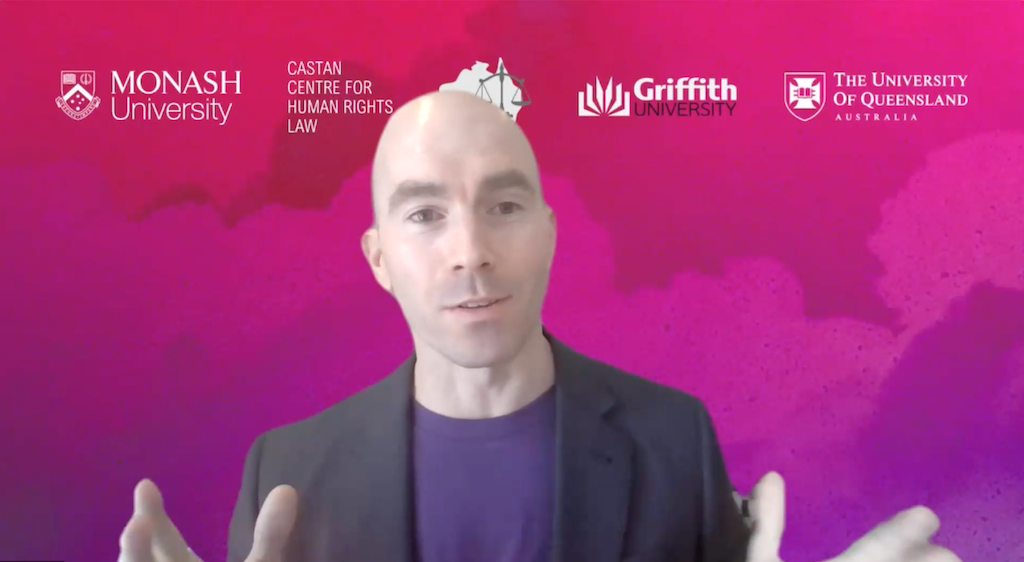
Professor Luke Beck in the webinar Talking about the Voice: a conversation without the noise.
Why do we need a Voice when we already have First Nations politicians in parliament?
The 47th Parliament of Australia includes 11 Indigenous members of parliament. The priority of these parliamentarians is not always Indigenous issues.
“Firstly, it's a cultural thing, which means a single Aboriginal person in Parliament cannot and really should not represent the collective Indigenous interests. While we have shared experiences with dispossession, injustice and colonisation, we differ culturally and geographically to what we want and what we need in terms of law reform,” points out Dr Dani Larkin.
“Secondly, when we elect Indigenous representatives at elections into federal parliament, they're typically members of a political party. And that means that they have to fall in line with their political party's policy interests and commitments.”
“Thirdly, those indigenous political representatives have been chosen by people in their electorate, which means that they are actually obliged to represent their constituency's interests.”
Why does the Voice have to be in the Constitution?
Australia has had several Indigenous advisory bodies and all have ultimately been defunded and disbanded.
“And that's because they've been made just by ordinary Australian Commonwealth legislation. And the moment those bodies disagree with the government of the day, their establishing legislation is repealed,” explains Dr Dani Larkin.
If we enshrine the Voice in the Australian Constitution, it means that a First Nations Voice must always exist, unless another referendum is held to amend the Constitution.
This would mean Aboriginal and Torres Strait Islander peoples will have a protected ability to speak to the government and parliament on issues that impact their communities.
“And that's how you address historical injustices faced by Aboriginal and Torres Strait Islander people. You give them a protected ability to have a say on law reform processes that positively impact them and their affairs.”
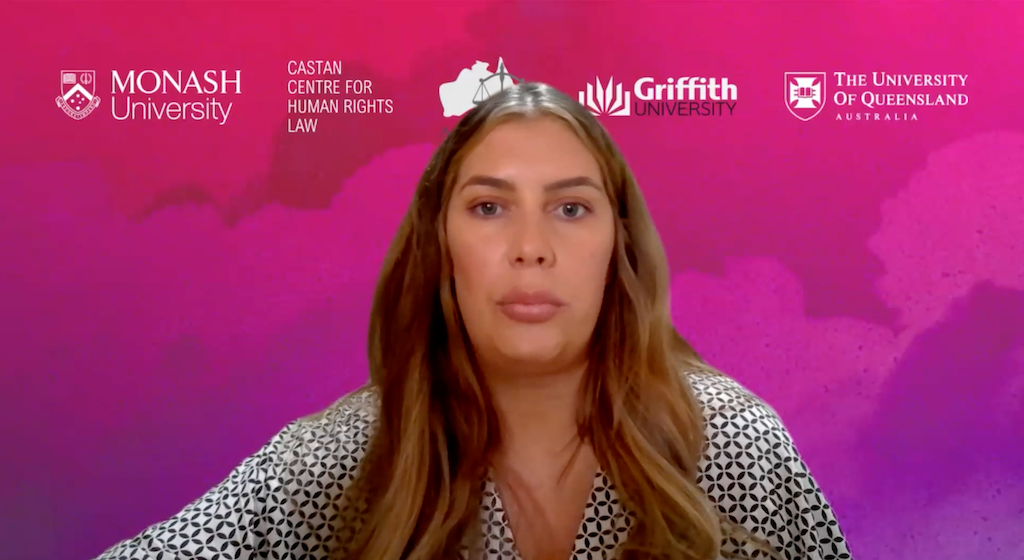
Dr Dani Larkin in the webinar Talking about the Voice: a conversation without the noise.
How will the Voice to Parliament work?
Because the proposed constitutional amendment will only create a framework for the Voice, it’s up to the Federal Parliament to determine how the Voice works. However, with the significant work that has been done so far, we already have a good idea of what the Voice might look like.
“The Indigenous Voice Co-Design process basically mapped out that there would be a national Voice enshrined in the Constitution, which is protected, and then there would be state and territory regional Voices,” explains Dr Dani Larkin.
“Each of those Voices will have a two-way interaction ability, so they can listen to and speak to one another, to come up with the best ideas for reform options that benefit Indigenous people.”
These principles also apply to how they speak to the parliament. The Voice can listen to the parliament, they can proactively make representations and they can advise.
“Where it gets even more interesting is that the Co-design Process thought about differing intersectional experiences that Indigenous people face with discrimination. And it came up with options for different subgroups of Indigenous committees to exist,which would give advice to the different levels of Voice bodies.
What are the benefits of the Voice to Parliament?
The focus of a Voice is naturally on positive outcomes for First Nations peoples, however, there’s another benefit that will have positive outcomes for all Australians.
The Voice will provide transparency and accountability over billions of dollars of Government spending - in a way that doesn’t already happen.
“I can say, as a Transparency International board member, that's the reason why we as a civil-society-organisation that’s concerned about corruption and accountability support the proposal,” confirms Professor Brown.
“The Voice will do that by making the core stakeholders involved, the ones who can actually monitor and tell us if this spending is achieving its goals or not.”
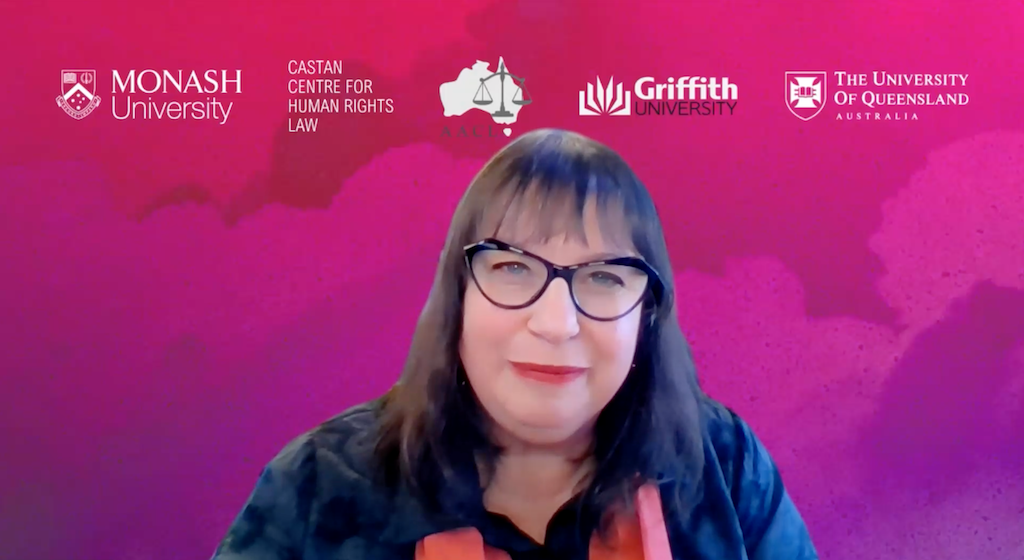
Professor Melissa Castan in the webinar Talking about the Voice: A conversation without the noise.
Why don’t other minority groups get a constitutionally recognised Voice to Parliament?
First Nations peoples did not choose, and were not even given the choice, to join the Commonwealth of Australia at Federation in 1901. The Voice recognises that Aboriginal and Torres Strait Islander peoples have an enduring connection to the land, waterways and sky of this place as Indigenous peoples.
“Migrants that have come to Australia since the formation of the Commonwealth Constitution, apart from quite a few convicts originally, have come here voluntarily to join a democratic society called the Commonwealth of Australia since 1901. So they've joined that political fabric,” explains Professor Brown.
“Indigenous people were never asked to join that fabric. They were here first and they had it imposed upon them. We need to heal that gap.”
The Voice resolves the problem that the Commonwealth makes laws and decisions about First Nations people, despite them never being asked whether they want this colonial system of government imposed on them.
“And the consequences of that are the ones that we are dealing with right through until today.”
It is also worth noting that migrant communities have never and do not seek a voice in the Constitution, and migrant and multicultural representative organisations have overwhelmingly declared their support for a First Nations Voice.
Where can I find answers to my other questions about the 2023 Referendum on the Voice to Parliament?
Professor Melissa Castan reminds us that there are great resources on the Castan Centre for Human Rights Law website. The First Nations Voice to Parliament Resource page has factsheets, official resources and more.
Other excellent resources include The Voice Legal Literacy Project and the Australian Human Rights Commission’s Aboriginal and Torres Strait Islander Social Justice page.
The most important thing we can do as individuals is to explore, ask questions and vote from the heart, as Dr Dani Larkin recommends.
“I think that we can do better in 2023, and I encourage you all to read, engage, learn, have discussions amongst yourselves, and hopefully vote yes,” says Dani.
Listen to the full webinar of Talking about the Voice: A conversation without the noise.