Scanning the eLearning Landscape #5
This month, MEI has been reading about practical instructional (learning) design, better use of video in learning and teaching, good practice tips for accessibility, new features coming soon to Microsoft Teams and software to build music videos from a simple text description.
1) The Journal of Applied Instructional Design from the Association for Educational Communications and Technology
While “instructional” design is a term more commonly used in North America for learning design, the ideas in this annual, open access journal are directly applicable to learning and teaching in Australian Higher Ed. Since discovering this journal recently, I’ve pored over the back issues with great interest. There is something worth exploring for people from any discipline, with articles including:
- Storytelling Strategies for the Design of Branching Virtual Patient Simulations
- Instructor Perceptions in the Assessment of Student Digital Voice Reflections
- Computer-Supported Collaborative Concept Mapping for Learning to Teach Mathematics
- Integrating Student Analysis of Error into the Design of Customized Online Modules for Teaching a Topic in Business Statistics
2) Five ways to increase the effectiveness of instructional video from Educational Technology Research and Development (Journal)
COVID-19 has led to a significant increase in the use of video in learning and teaching. This paper expands on five core ways, supported by research, to give it a greater educational impact.
| Principle | Description |
|---|---|
| Dynamic drawing | People learn better from a video lecture when the onscreen instructor draws graphics on a board while lecturing rather than referring to already drawn graphics |
| Gaze guidance | People learn better from a video lecture when the onscreen instructor shifts gaze between the audience and board while lecturing rather than looking only at the audience or board |
| Generative activity | People learn better from a video lecture when they are asked to engage in summarizing during learning |
| Perspective | People learn better from a video lecture that is filmed from a first person perspective than a third person perspective |
| Subtitle | People learn better from a video documentary or show in the learner's second language when printed subtitles are added or used to replace spoken words |
| Seductive details | People do not learn better from a multimedia lesson when extraneous video is added |
Reference: Springer Link, Design principles for instructional video
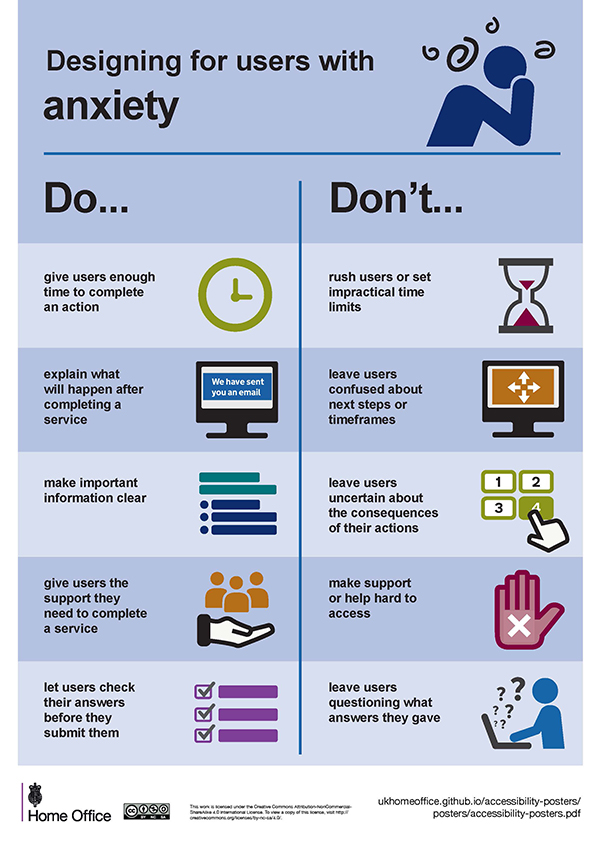
3) Dos and don’ts on designing for accessibility from the UK Govt
This series of six posters from the UK Govt capture some fundamental ideas around good design of online spaces and resources. While the focus is on accessibility, it’s important to remember that these principles provide everyone with a better and more equitable learning experience.
4) Microsoft Teams’ new Together Mode is designed for pandemic-era meetings from The Verge
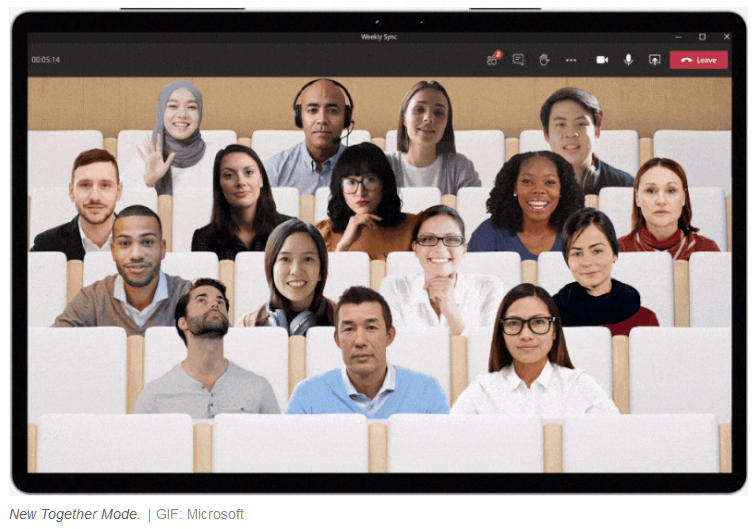
Something that we’d never really heard of six months ago was Zoom fatigue - the mental exhaustion that can come trying to communicate with large numbers of people in tiny boxes on your screen. Is it the lack of non-verbal cues, the two-dimensionality (*probably a word) or the cognitive load of processing people’s backgrounds? Nobody knows but with virtual meetings becoming ubiquitous, it’s unsurprising that the tech companies are looking for solutions.
Microsoft will soon release “Together mode” as a possible option to counter this modern malady. Read more about this and additional upcoming functionality - including a boost in virtual meeting numbers to 1000 in this post
Learn more about Microsoft Teams in MEI’s guides
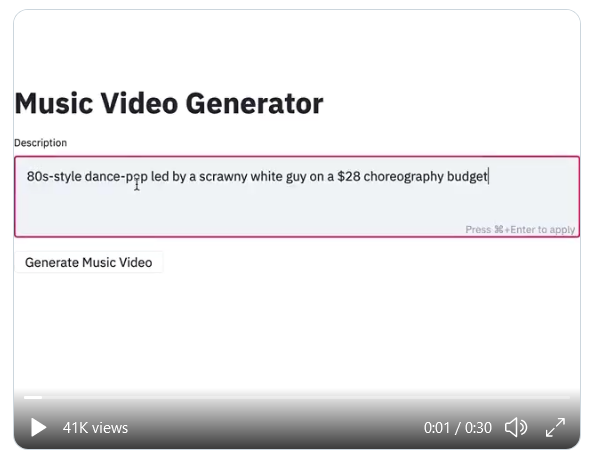
5) The future of music videos from Twitter
Finally, a taste of tomorrow. This data scientist has built a basic A.I engine that can create music videos from simple text descriptions.