
Meet Dr Sudha Mokkapati from the MIME MedTech Commercialisation Advancement Program (MCAP)
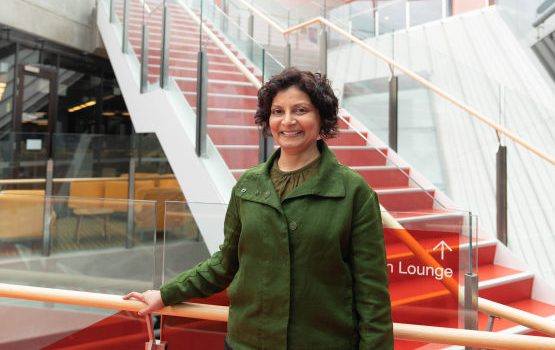
The MIME MedTech Commercialisation Advancement Program (MCAP) provides focused assistance to early stage technologies developed by teams of multidisciplinary medical technology innovators from universities and healthcare facilities. We spoke to Dr Sudha Mokkapati who was involved in the MIME MCAP program during 2024.
What is your background?
I have tertiary qualifications in Physics and Materials Science. I have a PhD in Physics.
Can you tell us about your main area of research and the projects you lead?
My expertise is in nanomaterials, specifically semiconducting nanomaterials. I am interested in the non-conventional properties of semiconductors in the nano regime. I leverage these properties to demonstrate applications/devices not possible with conventional/bulk materials.
I am currently leading the following projects:
- Gas sensors
- Biosensors
- 2D semiconducting materials for Optoelectronic and quantum applications.
Can you tell us about your involvement in the MIME MedTech Commercialisation Advancement Program (MCAP)?
I got into the MCAP 2024. I had applied for MIME seed funding before, but was not successful. I had applied for external funding programs as well, but was not successful.
I was not aware of the MCAP. In a conversation with one of my senior colleagues (Professor Adrian Nield), I talked about the gaps I see in my teams’ skills and the weak points in the applications I was putting together. My colleague then mentioned MCAP and gave me a quick overview of the program. It was immediately clear to me that the MCAP consultants complement my team’s research skills. They bring together all the expertise required to put together a narrative for a commercialisation project. I was very excited to go through the MCAP. Our project was then recommended to the MIME team.
The MIME team wrote to me and arranged to meet in person to talk about MCAP. The initial meeting (and, of course all of our subsequent meetings) was very productive/useful. The team talked me through what this program will entail, what is expected of us and what we can expect from the program. The program was intensive, however the team of consultants actually put in more effort than me and I am extremely pleased with what we got out of MCAP.
How did the MCAP help you in your translational research innovation journey?
MCAP brought together academics, clinicians and business professionals with complementary skills to assist me in developing a business plan for our platform sensing technology based on BioFETs. MCAP has supported us with aspects of business strategy, IP development, regulatory and product development. We also received directional guidance on the immediate next steps for translating our technology from lab to the market.
The MCAP team has equipped me with language and tools to better portray my story to potential investors/funders. They have also helped me identify an initial market sector to focus on – this was very difficult for me, considering we were working with a platform technology.
Who has influenced your research the most and why?
I can’t name one person. Nobody jumps to mind. All of my colleagues have influenced my work in some way. I have learnt how not to be and what not to do from some and how to be from some.
What is the most rewarding part of what you do?
I believe all science is useful for mankind. But not all scientists can communicate it to the public in a relatable way. This particular project I am working on (the one I work with MIME) is something that everyone can relate to. It has become easy (or easier) for me to communicate the impact of my teams’ research to public (because of the input from MCAP). The most rewarding aspect of my work is being able to see the public relate to, and appreciate what we do. A simple ‘good luck’ wish from someone I do not even know – means a lot. And I have received a lot of such wishes because the public relates to what we do. They see the benefit and impact of our research.
What has been the highlight of your career to date?
Seeing my students achieve bigger and greater things is what gives me the most satisfaction – I consider it the highlight of what I do. Knowing that I have influenced someone in a positive way is a good and satisfying feeling.
What advice would you give to students interested in your field of study?
My advice to any student is “Go for a PhD only if you cannot live without one. Don’t enrol in a PhD just to please your curious self and ‘explore’”.
Also “Choosing a supervisor/team is more important than choosing a project”. You will spend four years of your prime in a working relationship with your supervisor. This relationship is the key to a successful career. You will excel in any project/field if you and your supervisor share similar ethics, values, commitment and ideals and have a healthy working arrangement.
What are your future research plans?
We want to maximise the impact of our tool – biosensors with electronic read-outs. We will continue to seek niche applications where there is a need for accessible, easy to use, cost-effective, highly sensitive sensors. We will collaborate with clinicians/industry experts on our translational journey and hope to seek answers to fundamental questions that still remain un-answered due to lack of appropriate sensing tools.
Learn more on the MIME MedTech Commercialisation Advancement Program (MCAP) here.