
Digital platform aims to transform hospital experiences for autistic children
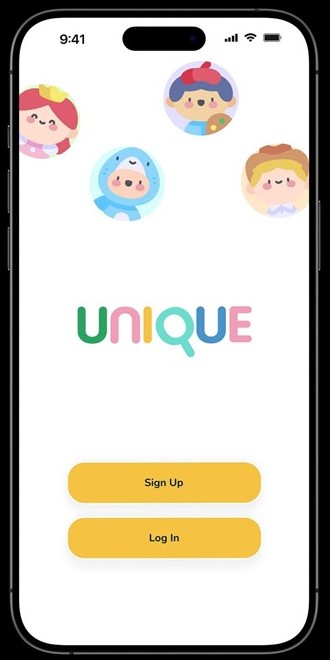
A new digital platform developed in partnership with the autistic community and health service providers with support from a Monash Institute of Medical Engineering (MIME) Invent Support grant is set to improve hospital experiences for autistic children and their families.
Known as UNIQUE, the practical digital tool enables families to share key information about a child’s strengths, needs, preferences and potential triggers before and during healthcare visits. At the same time, it provides clinicians with tailored guidance to build confidence and capability in adapting care to each individual child.
Addressing an urgent need
Hospital environments can be overwhelming for any child – but particularly for autistic children, who may experience heightened anxiety, sensory sensitivities and communication differences. Bright lights, loud noises, unfamiliar staff and unpredictable routines can lead to distress, prolonged or abandoned procedures, and in some cases, families avoiding hospital care altogether. The consequences can include delayed diagnoses, deferred treatment and poorer long-term health outcomes.
In Australia, around one in 40 children are autistic. They are four times more likely than their neurotypical peers to present to hospital, and associated healthcare costs are also four times higher – creating significant challenges for families and health services alike.
Lead researchers Dr Alexandra Ure and Cameron Lee Ure from Monash University, Faculty of Medicine, Nursing and Health Sciences said the project was shaped directly by lived experience.
“Families consistently told us they were exhausted from having to explain their child’s needs over and over again, particularly in high-stress situations,” Dr Ure and Mr Lee said.
“UNIQUE gives them a structured, strengths-based way to share what matters most about their child – in their own words.”
Dr Ure and Mr Lee said the tool was equally focused on supporting clinicians.
“Healthcare workers want to provide the best possible care, but they don’t always have the right information at the right time,” they said.
“UNIQUE bridges that gap by building confidence and capability, so care can be tailored to each child and family.”
From concept to prototype
UNIQUE has been several years in development. With early support from MIME and the Telematics Trust, the research team conducted interviews with parents and expert clinicians to identify gaps in care. These insights informed a series of co-design workshops with families, shaping the platform’s concept and functionality.
Researchers from Monash Art, Design and Architecture (MADA); Dr Myra Thiessen and Dr Indae Hwang, led the co-design process and user experience. Dr Thiessen emphasises this approach: "Using a co-design process is an extremely important foundation. It allows wants and needs to be clearly heard, giving people direct input into the systems designed for them. UNIQUE demonstrates the value of designing with neurodiverse communities, not for them."
Dr Thiessen and Dr Hwang acknowledge the strength of collaboration in the project's outcomes.
“Our aim is to improve healthcare experiences for children and their families through thoughtful, supportive design. The knowledge and lived experience shared by our healthcare partners throughout the co-design process have been invaluable in shaping the platform.”
Following user experience testing with parents and healthcare providers, an IT undergraduate developer progressed the software to a minimum viable product, now close to pilot testing. A second round of MIME funding will support the next phase of development throughout 2026.
In parallel, funding from the McNally Family Trust is enabling clinicians to develop training resources to help hospital staff, autistic children and families use UNIQUE effectively. The training includes practical strategies to optimise care, enhance communication and prevent or manage distress.
Testing in real-world hospital settings
An upcoming pilot and feasibility trial will take place in outpatient clinics at the Monash Children’s Hospital. The study will evaluate UNIQUE’s impact on children’s hospital experiences, refine the model and help attract future investment and policy support.
While initially developed for hospital settings, Dr Ure and Mr Lee said the broader vision extends further.
“Families have told us that UNIQUE’s simplicity and universal design could make it valuable in many settings – from schools to community programs and public spaces,” they said.
“We see enormous potential for UNIQUE to improve accessibility and inclusion far beyond healthcare.”
Powered by collaboration
UNIQUE is a collaborative project made possible through the contributions of families, clinicians, MedTech and commercialisation experts. The team acknowledges the support of partners including Monash Health, Amaze and Different Journeys, as well as funders MIME, the Telematics Trust, the McNally Family Trust and BioAutism.
In particular, MIME’s Invent Support funding has enabled the team to move from concept to prototype - turning an idea into a tangible solution ready to be tested in real clinical settings - supported by mentoring and participation in the MedTech Commercialisation Advancement Program (MCAP).
For more information on the MIME Invent Support grant, visit: https://www.monash.edu/mime/programs/invent-research-support
For more information on the MIME MedTech Commercialisation Advancement Program (MCAP) visit: MedTech Commercialisation Advancement Program - Monash Institute of Medical Engineering