
Ear Science and MIME: Innovating for stronger hearing health
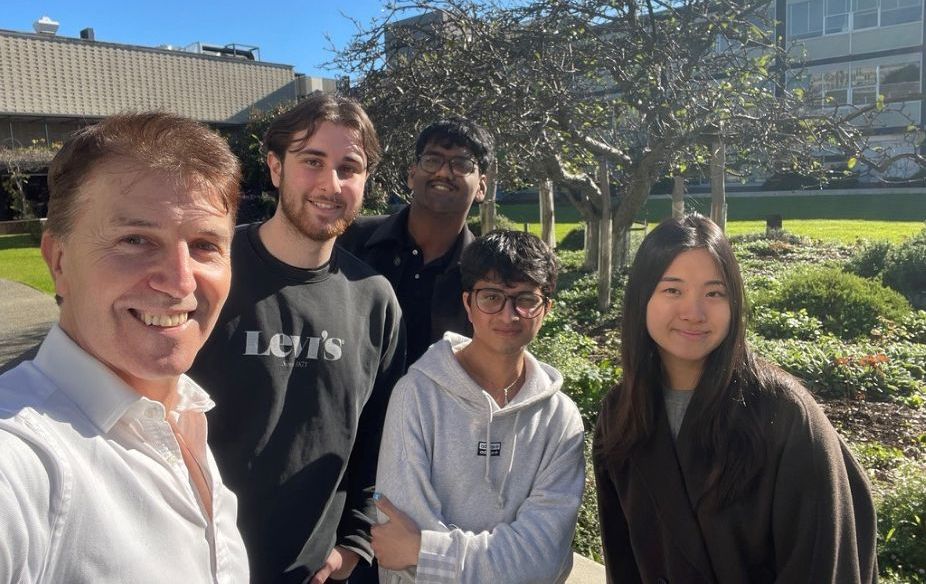
L-R: David Sly, Ear Science with MIME students (Jordan Vainer, Aditya Agrawal, Ammar Irfan and Chloe Shin).
For Ear Science Institute Australia (Ear Science), the path from research to real-world impact starts with a clear goal: improving the lives of people living with hearing loss.
A not-for-profit medical research institute headquartered in Perth, Ear Science has spent more than 25 years advancing research, education and clinical care focused on ear and hearing disorders. Its work spans hearing devices and implants, diagnostics, hearing therapeutics and community outreach programs, all aimed at improving prevention, diagnosis and treatment for people affected by hearing loss.
Now, its presence at Monash Innovation Labs (MIL) is creating new opportunities to connect that expertise with researchers, students and facilities across Monash University.
For Dr David Sly, Chief Operating Officer – Research at Ear Science, being embedded within the Monash ecosystem has already opened doors to new collaborations.
“Being based at Monash gives us access to an enormous range of resources, expertise and connections across different faculties, as well as fantastic facilities,” David says.
Proximity to students and researchers is particularly important. Being at Monash provides direct access to the university community and its capabilities.
“Being in close proximity to the students and the campus facilities is really helpful for the research,” he says.
That access is already supporting practical work. Ear Science researchers can tap into Monash's prototyping facilities, specialist equipment and collaborative spaces, while also drawing on expertise from across engineering, medicine, pharmaceutical science, health economics and other disciplines.
The team is also expanding its capabilities in electro-acoustics testing and calibration, supporting the development and evaluation of next-generation hearing technologies.
Building connections through Monash Innovation Labs
Ear Science’s relationship with Monash developed through an existing connection between David and Professor Patrick Kwan, Co-Director of the Monash Institute of Medical Engineering (MIME).
When David relocated from Western Australia to Victoria, conversations with Patrick opened the door to a deeper relationship with Monash and the opportunity to establish a presence within Monash Innovation Labs. Ear Science also had a Monash collaboration via the Soundsmiles project with Professor Chris Lawrence in Indigenous health and hearing research.
Since then, Ear Science has connected with researchers across multiple disciplines, including Professor James Whisstock (Faculty of Medicine, Nursing and Health Sciences), Professor Yan Wong (Faculty of Engineering) and collaborators working in engineering and biomedical research.
The relationship between Ear Science and Monash has also recently been formalised through an Affiliation Agreement, strengthening collaboration in medical research, education and training focused on hearing and ear health.
For Ear Science, the affiliation recognises a long-standing relationship and a shared commitment to advancing hearing research through collaboration.
That commitment is already creating new opportunities. Ear Science Institute Australia, Monash University and Yeungnam University have secured a 2026–27 Australia–Korea Foundation grant for Next-Generation Hearing Device Innovation, bringing together Australian hearing researchers and Korean sensor engineers to develop next-generation hearing technologies and strengthen long-term international research collaboration.
Connecting Ear Science with engineering talent
One of the recent collaborations to emerge from Ear Science’s presence at Monash has been its partnership with MIME Expert in Residence Associate Professor Khoa Cao through the Anita Castan Foundation Future MedTech Leaders Program.
The connection began when Khoa put out a call for clinicians and healthcare innovators interested in applying engineering and artificial intelligence to real-world medical challenges. Around the same time, MIME was seeking industry-led projects for the Future MedTech Leaders Program.
For David, the timing was ideal.
Ear Science had identified several opportunities where engineering expertise could help accelerate innovation, particularly in hearing technologies, but needed the right pathway to engage talented students.
Through Khoa and the Anita Castan Future MedTech Leaders Program, that opportunity quickly became reality.
Two Ear Science projects were selected for the program, with four Monash students working across multidisciplinary teams alongside Ear Science researchers, Professor Rob Eikelboom and Dr Christo Bester.
The students are working on hardware projects related to improving hearing aids and hearing diagnostics, with a focus on more discreet, capable devices and earlier, more accessible screening for hearing loss.
For David, the students have exceeded expectations.
“They have been brilliant – really, really good students,” he says.
“They’re disciplined, proactive, bright and communicative. They're really keen and interested in the work.”
Importantly, the students have not been working in isolation.
Throughout the program they have engaged directly with Ear Science researchers, audiologists and clinicians, gaining insights into how hearing devices are used in practice and where opportunities for improvement exist.
“They've met our clinicians, the audiologists in the clinic, and asked them about the current devices they use and what the limitations are,” David says.
“Getting that real-world feedback from not just the scientist, but the clinician who's actually fitting the devices, is really valuable.”
The projects have also provided students with exposure to the broader Ear Science research team, including presentations to researchers based in Perth and opportunities to see other technologies being developed within the organisation.
Research with the patient in mind
The collaboration reflects a broader philosophy shared by Ear Science and MIME: that meaningful healthcare innovation happens when researchers, clinicians and industry work together.
Research at Ear Science is driven by the goal of improving outcomes for people living with hearing loss, with researchers encouraged to consider the pathway to translation from the earliest stages of development.
“Most things that you develop, whether it's a drug, a gene therapy or a medical device, someone has to make it, fund it and get it to patients,” David says.
“A lot of research needs industry to translate it.”
That mindset makes collaboration essential.
For Ear Science, opportunities extend well beyond hearing science alone. The organisation regularly works across engineering, clinical medicine, biostatistics, health economics, design and data science to tackle complex healthcare challenges.
An open invitation to collaborate
For Monash researchers interested in partnering with Ear Science, David's message is simple: reach out.
“We would love to hear from anybody in research who has great ideas aligned with our research themes,” he says.
While hearing health remains the common focus, opportunities for collaboration are broad.
Developing new therapies and diagnostics requires expertise across multiple disciplines, from biomedical engineering and device design through to clinical trials, implementation science, data analytics and health economics.
“You can't just have everything focused on the biology of the ear,” David says.
“To develop therapeutics or devices that go to market, we need clinical trials, engineering, health economics and many other areas of expertise. It's almost across the board.”
For MIME researchers in particular, Ear Science offers a valuable pathway to apply engineering and technology expertise to real-world healthcare challenges with clear clinical needs.
Looking towards a future of stronger hearing health
Looking ahead, David is optimistic about the future of hearing research.
One area generating particular excitement is the emergence of biological therapies for hearing loss. Advances in gene therapy are beginning to demonstrate outcomes that would have seemed impossible only a generation ago.
“I think cures for hearing loss are definitely possible,” he says. “It’s actually a really exciting time in hearing research.”
Alongside breakthroughs in therapeutics, Ear Science is pursuing new hearing technologies, more accessible diagnostic tools and innovations that could make hearing assessment and treatment available to more people.
Its work within Monash Innovation Labs demonstrates the power of bringing researchers, clinicians, engineers and students together around a shared challenge.
The collaboration between Ear Science, MIME, Dr Khoa Cao and the Anita Castan Foundation Future MedTech Leaders Program is just one example of what can happen when those connections are made.
And for researchers across Monash, it highlights something Ear Science is eager to build on: the opportunity to turn great ideas into innovations that improve lives.
For more on Ear Science Institute Australia visit: www.earscience.org.au