
Anita Castan Foundation Future MedTech Leaders Program

Anita Castan Foundation Future MedTech Leaders Program
With generous support the Anita Castan Foundation, this program runs across Winter, Semester 2 and Summer terms. Scholarship recipients will receive a scholarship for participation throughout this period.
Anita Castan Foundation Future MedTech Leaders Program (FMLP), supported by the Anita Castan Foundation is a program that aims to support Monash's future MedTech leaders.
Anita Castan Foundation FMLP is a partnership between Monash Young MedTech Innovators (MYMI), Monash Institute of Medical Engineering (MIME) and Monash Partners Health Translation Network.
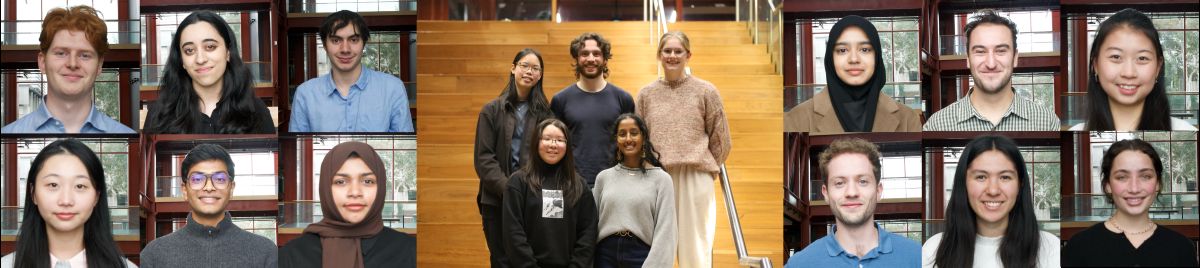
Students will have an opportunity to learn and apply the Stanford Biodesign process, including commercialisation, intellectual property, regulatory and reimbursement strategies. Students will also be able to upskill on technical skills required for their defined research project.
The purpose is to connect student innovators to projects that exist in the research and development stage, and engage them to assist in further research and development, as well as assisting in developing a commercialisation strategy for the project.
Winter scholarship recipients will receive $2,000 for participation in a full-time four-week research internship running from 30 June to 25 July. During this period, scholars will work in an assigned laboratory and attend upskilling workshops. Following the winter program, there is the opportunity to continue contributing to the lab one day per week during Semester 2, and beyond, alongside ongoing workshops.
Program Orientation: Friday 26 June
Workshop Themes
Week 1: Commercialisation of Digital Health Products
Week 2: Regulatory and IP Strategy
Week 3: Commercialisation of Medical Device Products
Week 4: Reimbursement and Operations Strategy and Entrepreneurship
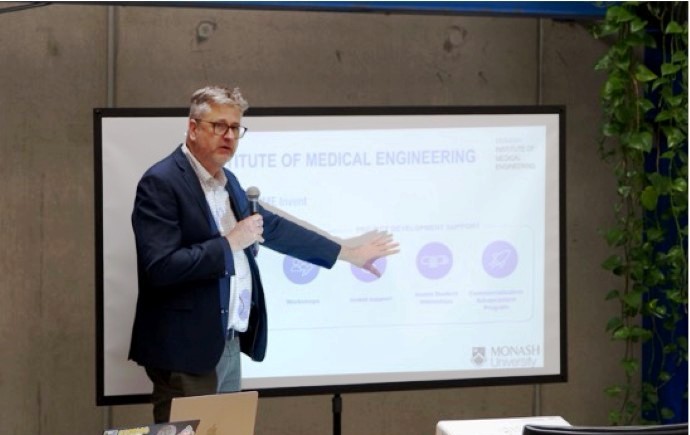
Anita Castan Foundation FMLP introduces undergraduate students from across the faculties at Monash to the biodesign innovation process and exposes them to key projects that will change how health is delivered globally. This program is taught by members of the MIME team and the greater medtech ecosystem.
Throughout the program, guest speakers from the medtech ecosystem will share perspectives and examples that illustrate critical steps in the biodesign process. Topics covered in class include pitching, regulatory strategy, intellectual property, commercialisation, reimbursement and operating strategy.
In parallel, students will work with their laboratory groups to address an unmet need, and determine its feasibility through prototyping.
During this period, scholars will work in an assigned laboratory and attend upskilling workshops.

In-ear digital hearing aid
Example deliverable: Assess the technical feasibility of the device, with a focus on power, electronics and design.
Student preferred expertise: Electrical and computer systems or mechanical or robotics and mechatronics engineering.

In-ear diagnostics diabetic hearing loss scanner
Example deliverable: Prototype working hardware and tablet-connecting screening system based on existing research and user requirements.
Student preferred expertise: Electrical and computer systems or mechanical or robotics and mechatronics engineering.

Pre-clinical evaluation of synthetic bone repair
Example deliverable: Perform bench-scale validation of material.
Student preferred expertise: Biomedical science, science, medical or any engineering specialisation is welcome (PC2 lab experience is ideal but not necessary).
AI-enabled assistive decision-making of epilepsy patient discharge in emergency departments
Example deliverable: Investigate capabilities of large language models (LLMs) in analysing ambulance notes and emergency department reports to assist in decision making.
Student preferred expertise: Software engineering and artificial intelligence (experience with Python and packages, NLP, LLMS ideal).
AI-driven conversational intelligence for clinical handover
Example deliverable: Integrate AI system with AR project glasses.
Student preferred expertise: Software engineering and artificial intelligence (experience with Python and packages, NLP, LLMS ideal).

Web-based gait and movement analysis tool
Example deliverable: Build a secure, browser‑based platform where users can upload standard biomechanics files and automatically analyse gait data.
Student preferred expertise: Software engineering, computer science and artificial intelligence (experience in data visualisation is preferred but not necessary).
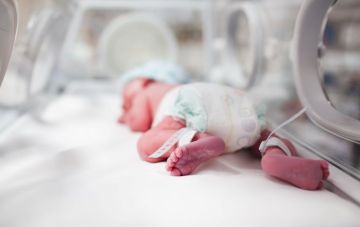
Neonatal bowel dysfunction device
Example deliverable: Assess an array of sensors and propose design specifications for a prototype.
Student preferred expertise: Electrical or biomedical engineering.

The PPP study - Personalised POI Prediction
Example deliverable: Scan global data sets that have relevant clinical, genetic biomarkers that are relevant for model development.
Student preferred expertise: Biomedical science, science (or relevant double degrees), data science or artificial intelligence (or relevant experience).
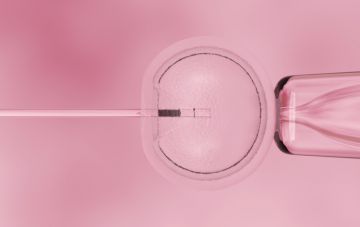
Next-generation technology for sperm selection in assisted reproduction
Example deliverable: Refine manufacturing process of device development.
Student preferred expertise: Biomedical or mechanical engineering.
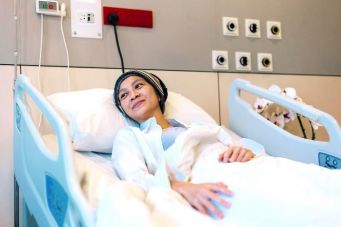
The Holy Grail: Non thrombogenic intravascular stents
Example deliverable: CFD modelling at bifurcations of the vascular anatomy.
Student preferred expertise: CFD analysis (relevant expertise and degree types).

Vehicle based mobile CT Scanner for rural healthcare
Example deliverable: Develop and iterate design directions for mechanical systems using CAD modelling; physical prototyping (including woodwork, 3D printing, CNC) and conduct iterative testing through both simulated and physical methodologies to meet performance requirements.
Student preferred expertise: Mechanical or Mechatronics Engineering with proficiency in CAD (SolidWorks), FEA simulation, and hands-on fabrication/prototyping.

A UNIQUE approach to autism
Example deliverable: Develop a patient-facing mobile software app which can be used in early clinical studies to test concept viability.
Student preferred expertise: UX/UI design skills for mobile app development, preferably in a relevant iOS language.
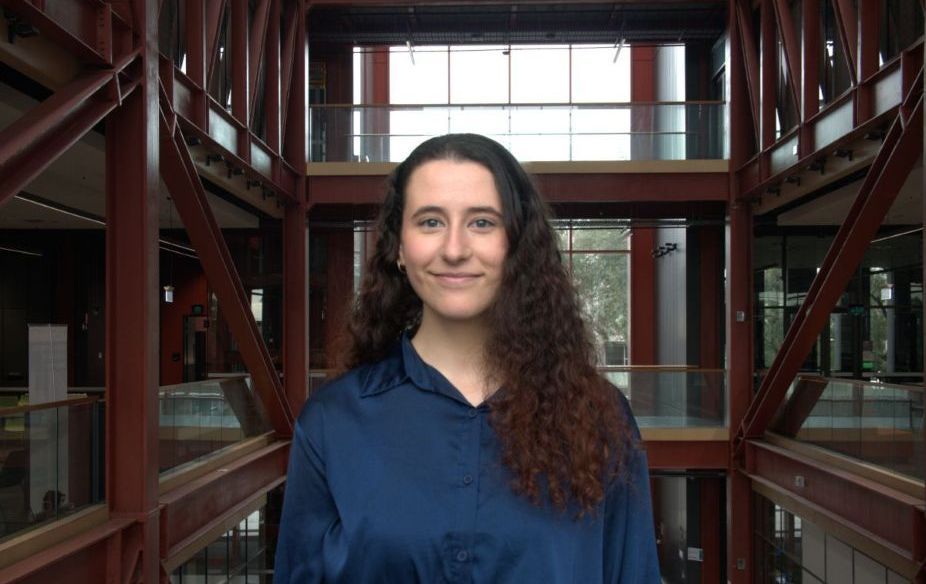
Meet Lauren Hermann, alumna of the Anita Castan Foundation Future MedTech Leaders Program (formerly the Invent Student Internship)
During 2025–2026, Lauren Hermann worked to help build a future without biofilm-associated infections.
Lauren joined the Program seeking hands-on experience that would deepen her understanding of medical device innovation and allow her to apply her passion for biomedical engineering in a real-world setting.
Drawn to an antibiotic microparticle hydrogel project, Lauren explored how antimicrobial materials could help tackle staphylococcal biofilm infections on implantable medical devices – an area with profound clinical relevance.
Working alongside researchers in the lab, she developed new technical and experimental skills, including creating cell culture media, conducting DNA recombination and investigating biofilm growth.
Through shadowing and independent lab work, Lauren strengthened her confidence in practical research while learning how scientific discovery intersects with market and regulatory considerations.
“The Program introduced me to key areas like regulatory strategy, intellectual property, and MedTech commercialisation, concepts I now apply across my studies and current work. The experience solidified my desire to pursue postgraduate study in medical device engineering and helped clarify the pathway from innovation to impact.”
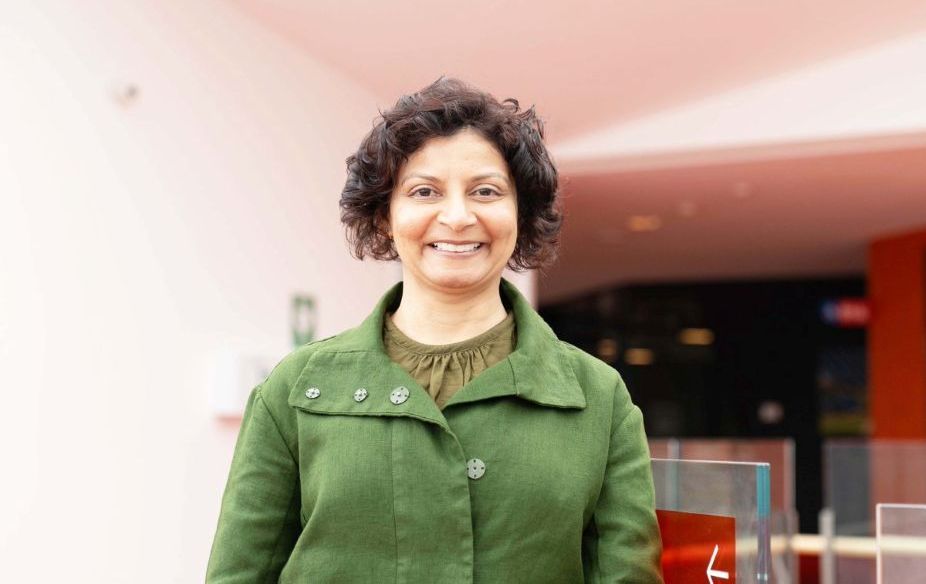
Meet Associate Professor Sudha Mokkapati, mentor in the Anita Castan Foundation Future MedTech Leaders Program (formerly the Invent Student Internship)
During her time in the Program, Associate Professor Sudha Mokkapati served as a Project Lead working to build a point-of-care device for Alzheimer’s disease.
From the Department of Materials Science and Engineering at Monash University, Sudha oversaw the BioFETs for Early Diagnosis of Alzheimer’s Disease project, working alongside fellow mentors to guide students at the intersection of engineering, biology and clinical need.
For Sudha, hosting undergraduate researchers was an invaluable opportunity – both for students and for her lab. It allowed her to introduce students to research early, giving them insight into the day-to-day work of PhD students and academics, and often encouraging them to continue with the team throughout their degree and into postgraduate study.
She also found that students brought fresh perspectives and ideas, enabling the team to explore concepts they may not otherwise have had the time to pursue. One notable contribution came from an intern who developed a compelling case for applying BioFET technology to mild traumatic brain injury, opening new opportunities for the project.
Through the internship, Sudha saw students gain authentic exposure to real-world challenges – an experience not typically available within an undergraduate degree.
“The Program is unique in that it helps interns build networks, work across disciplines, and address real-world problems very early in their careers.”
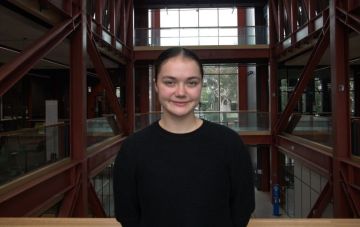
Meet Ruby van Beveren, alumna of the Anita Castan Foundation Future MedTech Leaders Program (formerly the Invent Student Internship)
During 2025-2026, Ruby van Beveren worked to develop a point-of-care device aimed at detecting early signs of Alzheimer's disease through a simple blood test.
A Mechanical Engineering and Biomedical Science student at Monash University, Ruby joined the Program seeking an opportunity to combine her interests in engineering, science and healthcare innovation while contributing to a project with the potential to improve patient outcomes.
Drawn to the BioFETs for Early Point-of-Care Applications project, Ruby explored how biosensing technologies could transform early disease detection and patient care, particularly for conditions such as Alzheimer's disease where early intervention can have a significant impact.
Working alongside researchers, clinicians and patients, Ruby gained valuable experience across both the technical and human-centred aspects of MedTech innovation. Through laboratory testing and stakeholder engagement, she developed a deeper understanding of the biodesign process and the importance of designing solutions that respond to real clinical needs.
The experience strengthened Ruby's skills in research, innovation and problem-solving while providing insight into the broader journey of translating healthcare technologies from concept to impact.
"From regulatory strategy to MedTech commercialisation, the depth of biodesign knowledge I gained was much more than I expected – and it's something I now apply across my studies, biodesign competitions and current work. The experience taught me the importance of challenging assumptions, engaging with end users and remaining flexible throughout the innovation process to develop stronger, evidence-based solutions."
2026
- Aafiyah Aaeshah - Faculty of Engineering, Next-generation technology for sperm selection in assisted reproduction
- Aditya Agawal - Faculty of Business and Economics, In-ear digital hearing aid / diagnostic diabetic hearing loss scanner
- Alice O'Brien - Faculty of Engineering, The Holy Grail: Non-thrombogenic intravascular stents
- Ammar Irfan - Faculty of Engineering, In-ear digital hearing aid / diagnostic diabetic hearing loss scanner
- Brodie Hamilton - Faculty of Engineering and Science, The Holy Grail: Non-thrombogenic intravascular stents
- Campbell Gregor - Faculty of Engineering and Business and Economics, Web-based gait and movement analysis tool
- Cass Whitehead - Faculty of Medicine, Nursing and Health Sciences and Faculty of Law, AI-driven conversational intelligence for clinical handover / AI-enabled assistive decision-making for epilepsy patient discharge in emergency departments
- Charlotte He - Faculty of Engineering and Medicine, Nursing and Health Sciences, Pre-clinical evaluation of synthetic bone repair
- Chloe Shin - Faculty of Engineering, In-ear digital hearing aid / diagnostic diabetic hearing loss scanner
- Ella Tedeschi - Faculty of Engineering, Neonatal bowel dysfunction device
- Hemakshi Gupta - Faculty of Engineering and Medicine, Nursing and Health Sciences, Vehicle-based mobile CT scanner for rural healthcare
- Isabella Casey - Faculty of Engineering, Next-generation technology for sperm selection in assisted reproduction
- James Smith - Faculty of Information Technology, AI-enabled assistive decision-making for epilepsy patient discharge in emergency departments
- Jasmine Crowe - Faculty of Engineering and Medicine, Nursing and Health Sciences, Neonatal bowel dysfunction device
- Jordan Vainer - Faculty of Engineering, In-ear digital hearing aid / diagnostic diabetic hearing loss scanner
- Julia Zhang - Faculty of Engineering, Next-generation technology for sperm selection in assisted reproduction
- Lavanya Sharma - Faculty of Medicine, Nursing and Health Sciences, Pre-clinical evaluation of synthetic bone repair
- Linh Nguyen - Faculty of Information Technology and Business and Economics, Project Unique: Digital platform aims to transform hospital experiences for autistic children
- Rohit Lal - Faculty of Engineering, Vehicle-based mobile CT scanner for rural healthcare
- Zuha Jan - Faculty of Science, The PPP study: Personalised POI prediction
2025
- Fathima Arattuthodika - Faculty of IT, Faculty of Business and Economics, Evidencea: Harnessing AI to embed evidence and improve outcomes in aged care
- Amber Dwivedi - Faculty of Law and Faculty of Medicine, Nursing and Health Sciences, Evidencea: Harnessing AI to embed evidence and improve outcomes in aged care
- Harshmay Prasad - Faculty of Information Technology, Evidencea: Harnessing AI to embed evidence and improve outcomes in aged care
- Hannah Blackney - Faculty of Engineering, Developing a novel antibiotic-microparticle-hydrogel for the successful treatment of biofilm infections
- Lauren Hermann - Faculty of Engineering, Developing a novel antibiotic-microparticle-hydrogel for the successful treatment of biofilm infections
- Isabella Casey - Faculty of Engineering, Next generation technology for sperm selection in assisted reproduction
- Sean Griffiths - Faculty of Engineering, Next generation technology for sperm selection in assisted reproduction
- Shaked Sommer - Faculty of Engineering, Next generation technology for sperm selection in assisted reproduction
- William Stamp - Faculty of Engineering, Next generation technology for sperm selection in assisted reproduction
- Keren Collins - Faculty of Engineering, Project Clarity: AI-powered guidelines for smarter and faster care
- Qiao Er Tee - Faculty of Information Technology, Project Clarity: AI-powered guidelines for smarter and faster care
- Ruhui Fu - Faculty of Engineering, BioFETS for early diagnosis of Alzheimer's disease
- Joel Kruger - Faculty of Engineering, BioFETS for early diagnosis of Alzheimer's disease
- Mark Sakr - Faculty of Engineering, BioFETS for early diagnosis of Alzheimer's disease
- Ruby van Beveren - Faculty of Engineering, BioFETS for early diagnosis of Alzheimer's disease
- Iris Nguyen - Faculty of Information Technology, Project Unique: Digital platform aims to transform hospital experiences for autistic children
- Dart Rinckes - Faculty of Engineering, AI-driven revolution in fetal monitoring towards preventing perinatal brain injury
- Noel Benson Swarna - Faculty of Information Technology, AI-driven revolution in fetal monitoring towards preventing perinatal brain injury
- Sinan Ummu - Faculty of Engineering, AI-driven revolution in fetal monitoring towards preventing perinatal brain injury
2024
- Hannah Tay – Faculty of Engineering, Next-generation AI-augmented EEG reporting
- Hashani Ekanayake – Faculty of Engineering, The Holy Grail: Non thrombogenic intravascular stents
- Melina Halford – Faculty of Engineering, Bringing personalised aneurysm rupture predictions to the patient - precision medicine
- Matthew Issko – Faculty of Engineering, Biocompatible and bioresorbable bone fixation devices
- Yen Tung Chin – Faculty of Information Technology, Digital tools for blind/low vision people for independent health management
Supporters and speakers






For further information on the Anita Castan Foundation Future MedTech Leaders Program process contact both Dr Andrew Carey, MIME Program Manager and isi@mymi.org.au.