
24th Australasian Centre for Social and Environmental Accounting Research (A-CSEAR) Conference 2025

Monash Business School looks forward to welcoming you to the 24th Australasian Centre for Social and Environmental Accounting Research (A-CSEAR) Conference and Emerging Scholars’ Colloquium here in Melbourne (Naarm), Australia.
The main conference will be held over three days from 3–5 December 2025, and the Emerging Scholars’ Colloquium will be held on Wednesday 3 December 2025.
Our theme for 2025 is Rewilding accounting research, education, and practice.
Important dates
Call for papers submission open | May 2025 |
Call for papers submission close | 25 August 2025 |
Decisions made to authors | 29 September 2025 |
Conference registrations open | Closed |
Conference registrations close | 17 November 2025 (Closed) |
The Australasian Centre for Social and Environmental Accounting Research (A-CSEAR) fosters a supportive and inclusive community of emerging and established scholars investigating research on the social and environmental aspects of accounting theory and practice. The annual A-CSEAR conference provides an international forum in which to showcase this work and to foster much needed interdisciplinary research in accounting.
The A-CSEAR community is a vibrant and diverse group committed to the free exchange of ideas, rigorous debate and support for the growing of research collaborations and opportunities within social and environmental accounting and governance.
Conference program
View

-
Please refer to your confirmation booking email to see which of the below sessions you have registered to attend.
We encourage everyone to attend the Rewilding Accounting Education workshop, CA ANZ Industry sustainability panel and welcome reception on Wednesday 3 December 2025.Emerging Scholars Colloquium
Time Session Location (Level 9) 9.00 - 9.20am Registration H9.21 9.20 - 10.45am Presentation one H9.21 10.45 - 11.15am Morning tea H9.01 11.15 - 12.00pm Research Panel H9.21 12.00 - 12.50pm Lunch H9.01 12.50 - 2.05pm Presentation two H9.21 2.05 - 2.35pm Afternoon tea H9.01 2.35 - 4.30pm Presentation three H9.21 Rewilding Accounting Education Workshop
Time Session Location (Level 9) 1.15 - 1.30pm Registration H9.14 1.30 - 4.20pm Rewilding Accounting Education Workshop commences led by Lisa Powell and Jill Aitkins H9.14 CA ANZ Industry sustainability panel session
Time Session Location
(Level 8)4.15 - 4.30pm Registration The Pavilion 4.30 - 5.30pm CA ANZ Industry sustainability panel session The Pavilion Welcome reception
Time Session Location (Level 8) 5.15 - 5.30pm Registration Level 8 reception area 5.30 - 7.00pm Welcome reception Level 8 reception area -
Time Session Location 8.45 - 9.00am Registration Level 8 reception area 9.00 - 10.30am Welcome and keynote presentation by Daniel Ramp The Pavilion (Level 8) 10.30 - 11.00am Morning tea Level 8 reception area 11.00 - 12.30pm Session 1.1 - Carbon Accounting
Chair: Charl de Villiers- Sustainable Careers in the Digital Era: Integrating Theory, Antecedents, Outcomes, and Future Research Directions
Authors: Jane Qin (La Trobe University)
Discussant: Matthew Egan - Evolving Approaches to Carbon Accounting in Companies in China into the mid 2020s
Authors: Boyang Liu, John Roberts and Matthew Egan (University of Sydney)
Discussant: Jane Qin
H9.01
(Level 9)Session 1.2 - New Accounts and Accountability
Chair: Dianne McGrath- Accounts of flourishing and prefigurative action: an analysis of the online accounts of farmed animal sanctuaries.
Authors: Lisa Powell (Monash University) and Eija Vinnari (Tampere University)
Discussant: Erin Twyford - Accountability, But Not for Us
Authors: Erin Twyford (University of Wollongong), Farzana Tanima (University of Sydney), Sendirella George (Victoria University) and Jane Andrew (University of Sydney)
Discussant: Dale Tweedie - An existential accounting? (Re)centring nature in critical research.
Author: Dale Tweedie (Macquarie University)
Discussant: Lisa Powell
H9.02
(Level 9)Session 1.3 - Power Relations
Chair: James Hazelton- Beyond Market Dynamics: Exploring the Influence of State Power on Environmental, Social and Governance (ESG) Practices in China.
Authors: Jimmy Gong (University of Sydney), Eagle Zhang (University of Sydney) and Yiru Yang (Guangzhou College of Commerce)
Discussant: Jane Andrew - Managerial ‘mindfulness’ as socio-ideological control.
Author: Jane Andrew and Max Baker (University of Sydney)
Discussant: Steven Burch - The potential for dialogic accounting – the rise of grassroots mechanisms for the otherwise powerless - when expectations of more formal mechanisms go unfulfilled.
Author: Steven Burch (University of Tasmania).
Discussant: Eagle Zhang
H9.14
(Level 9)12.30 - 1.30pm Lunch The Pavilion
(Level 8)1.30 - 3.00pm Session 2.1 - Social Governance
Chair: Alessandro Ghio- Accounting for Life: An examination of In Vitro Fertilisation (IVF) success rates and a test of legitimacy
theory?
Authors: Daniela Juric (Monash University), Sandra Van der Laan (University of Sydney), Craig Deegan (University of Tasmania) and Shannon Sidaway (RMIT) - Poverty alleviation disclosures: Automated data capture of Chinese companies' reporting
Authors: Muchen Yu and Geoff Frost (University of Sydney) - The Two Towers of Accountability in Faith Based Organisations: A Systemic Literature Review
Author: Rusina Kaitarawa (University of Canterbury) - Board Gender Diversity and ESG Disclosure Quality: A Comparative Study of AI and Non-AI Companies
Author: Na Ma (Monash University)
H9.01
(Level 9)Session 2.2 - Sustainability Education and Assurance
Chair: Carly Moulang- Rewilding Accounting Education in the Global South: Culture, Career, and Self-Efficacy in the Curriculum
Authors: Garima Sharma (Lyons College) and Moonsamy Naidoo (Victoria University) - How might a digital museum of modern slavery change the mindset of accounting students?
Authors: Awn Muhamamd, James Hazelton and Dale Tweedie (Macquarie University) - How auditors legitimize their professionalism: Finnish auditors’ views
Authors: Anna-Maija Lantto and Aino Kapanen (University of Jyväskylä) - The influence of cultural trust perceptions on sustainability assurance
Authors: Heba Ahmed, Richard Fisher and Markus Milne (University of Canterbury)
H9.02
(Level 9)Session 2.3 - ESG
Chair: Edward Tello- When B-Bbee Works: The Case of Kagiso Trust
Authors: Mbalenhle Khatlisi (University of South Africa), Mankodi Moitse (Kagiso Trust) and Zibusiso Moyo (University of South Africa) - Accounting and Accountability on Rewilding Concept: Empirical Evidence from Conservation Phenomenon
Author: Manchuna Shanmuganathan (University of Dundee) - Mapping the Road Ahead: A CIMO and SDG Approach to Advancing Biodiversity Finance Research
Authors: Raghukumari Ps (K J Somaiya Institute of Management) and Kinjal Manani (N L Dalmia Institute of Management) - Who Gains from Sustainability? Redistributing Corporate Value among Stakeholders in G20 Economies
Authors: Arika Artiningsih (Universitas Gadjah Mada), Choirunnisa Arifa (Universitas Gadjah Mada), Firdaus Kurniawan (Universitas Gadjah Mada) and Albertus Henri Listyanto Nugroho (Universitas Kristen Duta Wacana)
H9.14
(Level 9)3.00 - 3.30pm Afternoon tea Level 8 reception area 3.30 - 5.00pm Session 3.1 - Rewilding
Chair: Lisa Powell- Haecceity, Inscape and Sprung Rhythm in Aesthetic Accounts of Nature, Species and Spirituality: Exploring the Poetry of Gerard Manley Hopkins SJ
Author: Jill Atkins (Cardiff University)
Discussant: Alessandro Merendino - “Rewilding” Accounting Mindsets for De-extinction and Biodiversity Protection
Authors: Alessandro Merendino (Queen Mary University of London), Nick Mcguigan (Monash University), Maureen Meadows (Coventry University) and Nick Henry (Coventry University)
Discussant: Jill Atkins
H9.01
(Level 9)Session 3.2 - Diverse Contexts
Chair: Yinka Moses- From Awareness to Action: Organizational Capacity and Institutional Pressure in Vietnamese SMEs’ ESG Adoption
Authors: Thi Le Hang Truong (5ms Management Solutions Co.), Ngoc Thong Nguyen (Ho Chi Minh City Open University), Tan Tai Le (Novadreams Services) and Thi Phuong Hoa To (Hanoi University)
Discussant: Iki Uele - Challenges auditors face in conducting performance audits focused on organisational resilience in developing countries: The case of Samoa
Authors: Iki Uele (University of Otago), Folototo Seve (University of the South Pacific), Muliagatele Sesilia Lauano (National University of Samoa), Mary Petaia (National University of Samoa), Lupematasila Faato Sila (National University of Samoa) and Sara Walton (University of Otago)
Discussant: Sammy Ying - The Effects of Product Market Competition on ESG Disclosure: Evidence from the Gulf Countries
Authors: Faisal Alyala, Zhongtian Li and Sammy Ying (University of Newcastle)
Discussant: Thi Le Hang Truong
H9.02
(Level 9)Session 3.3 - Social
Chair: Farzana Tanima- Navigating the ‘pinnacles’ of accountancy: Oral histories from retirees
Authors: Lisa Baudot (HEC Paris), Alessandro Ghio (ESCP Business School) and Dana Wallace (University of Central Florida)
Discussant: Sendirella George - Challenging inequality through counter-accounting: Making corporate power visible, thinkable, and actionable
Authors: Sendirella George (Victoria University) and Farzana Aman Tanima (University of Sydney)
Discussant: Kinley Wangchuk - Accounting for happiness: A case study of Gross National Happiness in Bhutan
Authors: Kinley Wangchuk (University of Tasmania), Leanne Morrison, Glenn Finau (University of Tasmania) and Sonam Thakchoe (University of Tasmania)
Discussant: Alessandro Ghio
H9.14
(Level 9)5.00pm Conference concludes 6.30 - 10.30pm Conference dinner - Glasshaus Inside
Kindly note you must have selected 'yes' to attending the conference dinner at the time of registration.
Transport options at own expense:
Uber or Taxi
Train - Catch the train from Caulfield station (Flinders Street or City Loop train), get off at Richmond station (Exit via Swan Street) and walk 6 minutes
Car parking - is available on the street kindly check the street signs for timings44 Cremorne St, Cremorne VIC 3121 - Sustainable Careers in the Digital Era: Integrating Theory, Antecedents, Outcomes, and Future Research Directions
-
Time Session Location 8.45 - 9.00am Registration Level 8 reception area 9.00 - 10.30am Session 4.1 - Sustainability Education
Chair: Sandra Van Der Laan- Performativity of Perspective Transformation: Shaping Desirable Futures through Learning Interventions in Responsible Management Learning
Author: Annemarie Conrath (Monash University) and Alessandro Ghio (ESCP Business School)
Discussant: Erin Twyford - The pedagogy of becoming: Sensemaking and transformative learning in professional identity development
Authors: Erin Twyford and Bonnie Dean (University of Wollongong)
Discussant: Frederick Ng - The role of student co-creation in strengthening the accounting pipeline
Authors: Frederick Ng (University of Auckland), Daniela Juric (Monash University) and Janine Coupe (University of Sydney)
Discussant: Annemarie Conrath
H9.01
(Level 9)Session 4.2 - Sustainability Reporting
Chair: Thomas Kern- Biodiversity Management and Reporting for Sustaining Natural Resources – Standards Applicable for Public Sector
Authors: Nives Botica Redmayne, Fawad Ahmad and Dimu Ehalaiye (Massey University)
Discussant: Heba Ahmed - Stakeholders’ perceptions of sustainability reporting and assurance practices: Do they achieve stakeholder accountability?
Authors: Heba Ahmed, Markus Milne and Richard Fisher (University of Canterbury)
Discussant: Umesh Sharma - The Current Status of Voluntary Sustainability Reporting by New Zealand Companies
Authors: Umesh Sharma, Tejas Adhikari and Mary Low (University of Waikato)
Discussant: Dimu Ehalaiye
H9.02
(Level 9)Session 4.3 - Sustainability Reporting
Chair: John Dumay- The Effects of Political Connections on ESG Disclosure: Evidence from the Gulf Countries
Authors: Faisal Alyala, Zhongtian Li and Sammy Ying (University of Newcastle)
Discussant: Nicole Bena - The politics of grievances: a case of the African mining sector
Author: Nicole Bena (University of Guelph)
Discussant: Habtamu Woldeyohanes - Coercion and political machination through accounting and the public distrust and alienation
Authors: Habtamu Woldeyohanes (Federation University), Gordon Boyce (La Trobe University) and Robert Nyamori (University of Fujairah)
Discussant: Faisal Alyala
H9.14
(Level 9)10.30 - 11.00am Morning tea Level 8 reception area 11.00 - 12.00pm Keynote presentation by Jill Atkins The Pavilion
(Level 8)12.00 - 1.00pm Lunch The Pavilion
(Level 8)1.00 - 2.30pm Session 5.1 - Diverging Contexts
Chair: Annemarie Conrath- Does a data breach lead a firm’s managers to become integrated thinkers?
Authors: Charl de Villiers (University of Auckland), Jing Jia (University of Newcastle) and Zhongtian Li (University of Newcastle) - Dangerous U.S. Political communications and potential negative environmental impacts
Author: Tehmina Khan (RMIT) - Exploring the significance of integrating critical dialogical accounting and community based participatory research
Author: Nicole Bena (University of Guelph) - Sustainability Management Control Systems in Non-Western Contexts: Emerging Practices and Embedding Dynamics in Nigerian Organisations
Authors: Yinka Moses (Victoria University), Rebecca Kennedy (CPA Australia), Emmanuel Edache Michael (Victoria University) and Innocent Okwuosa (Pan African University)
H9.01
(Level 9)Session 5.2 - Sustainability Accounting
Chair: Michaela Rankin- From Ratios to Trajectories: A Dynamic Framework for Corporate Carbon Accounting
Authors: Shanxin Mao, Julie Harrison and Maryam Hasannasab (University of Auckland) - Evaluating Financial Resource Allocation for Sustainability-Focused Projects: Cognitive and Ecological Decision-Making in Accounting
Author: Harshani Dedunu (James Cook University) - Rhetorical Framing of Corporate Climate Change Issues in Earnings Conference Call
Authors: Mumtaheena Anwar, Elisabeth Sinnewe, Ellie Chapple and Annette Quayle (Queensland University of Technology) - Cultivating Capital: Bridging the Green Finance Gap in Sustainable Agriculture.
Authors: Josephine Mckenzie (Charles Sturt University), Nicholas Pawsey (Charles Sturt University), Alex Sas (Wine Australia) and Nicola Thomas (Charles Sturt University)
H9.02
(Level 9)Session 5.3 - ESG
Chair: Carol Tilt- Accountants: The unsung climate strategists with new IFRS climate change reporting requirements
Authors: Dinithi Dissanayake and Upekha Atupola (University of South Australia) - Advancing sustainability accounting research in a developing country context through Schatzki's practice theory-methodology bundle: Evidence from theoretical and empirical application
Authos: Upekha Atupola and Sanjaya Kuruppu (University of South Australia) - Assessment of Environment, Social, Governance impact on Company Performance and Stakeholder Investment
Authors: Jyoti Vidhani and Vikram Khangembam (RV University) - Analysing Public Perceptions and Attitudes Toward Recycling, Waste Management, and Sustainability: Insights from Behavioural and Demographic Data
Author:Alifa Firdhos Farheen Mohammad (Vishnu Institute of Technology)
H9.14
(Level 9)2.30 - 3.00pm Afternoon tea Level 8 reception area 3.00 - 4.30pm Session 6.1 - Indigenous Contexts
Chair: Nick McGuigan- Kia pakari tonu ai: how Māori NPOs conceptualise resilience
Authors: Ellie Norris (University of Canterbury) and Iki Mafi Uele (University of Otago)
Discussant: Sabrina Chong - From nīti to nyāya: a critical analysis of university sustainability reporting on underrepresented cohorts
Authors: Sabrina Chong and Irshad Ali (Auckland University of Technology)
Discussant: Discussant: Glenn Finau - “The land has eyes, the land has teeth”: Indigenous ontologies of the land as protector and punisher
Authors: Glenn Finau (University of Tasmania), Matelita Katamotu (Fijian Holdings Limited), Masilina Rotuivaqali (University of the South Pacific), Jason Titifanue (University of Melbourne), Matthew Scobie (University of Canterbury), Sivendra Michael (Ministry of Environment & Climate Change), Romitesh Kant (Australian National University) and Joeli Varo (University of the South Pacific)
Discussant: Iki Mafi Uele
H9.01
(Level 9)Session 6.2 - SDGs
Chair: Matt Egan- The role of sustainability orientation in influencing the achievement of Sustainable Development Goals (SDGs) and triple-bottom line performance
Authors: Vega Wafaretta, Rahat Munir and Kevin Baird (Macquarie University)
Discussant: Amanpreet Kaur - The uptake of Sustainable Development Goals (SDG) disclosures by Indian companies: A legitimacy perspective
Authors: Amanpreet Kaur (University of South Australia), Shilpa Vardia (Mohanlal Sukhadia University), Shilpa Lodha (Mohanlal Sukhadia University) and G. Soral (Mohanlal Sukhadia University).
Discussant: Irshad Ali - Interconnectedness between food security and climate change: insights from SDG reporting of a large primary industry company
Author: Irshad Ali and Sabrina Chong (Auckland University of Technology).
Discussant: Vega Wafaretta
H9.02
(Level 9)Session 6.3 - Social
Chair: Alessandro Merendino- Counter-Accounting Gendered Violence: Confronting Symbolic and Systemic Injustice for Social Change
Authors: Alia Alshamari (University of Tasmania), Roshni Narendran (University of Tasmania), Mitali Panchal (University of Tasmania) and Leanne Morrison
Discussant: Balbir Bassi - From Policy to Impact: How South African Companies Shape Social Change through Corporate Social Responsibility (CSR)
Author: Balbir Bassi, Aswini Yadlapalli and Suraiyah Akbar (RMIT).
Discussant: Zhongtian Li - Shareholder Activism, CSR Reporting Mandate, and Managers’ CSR Investment Decisions
Authors: Saad Alghamdi, Sammy Xiaoyan Ying and Zhongtian Li (University of Newcastle).
Discussant: Alia Alshamari
H9.14
(Level 9)Session 6.4 - Valuation Relevance
Chair: Menjie Yang- Value Relevance and Determinants of Japanese Firms Pro-Forma Conformance to the IFRS S2 Climate-Related Disclosures
Authors: Frendy Frendy (Nagoya University), Oshika Tomoki (Waseda University) and Chika Saka (Kwansei Gakuin University).
Discussant: Antares Firman - Understanding Digital Financial Innovation Adoption in Autonomous Universities: A Systematic Review Integrating Institutional Theory, Organizational Readiness, and UTAUT
Authors: Antares Firman (Universitas Terbuka), Mohamad Azmi Nias Ahmad (Universiti Teknologi MARA) and Eley Suzana Kasim (Universiti Teknologi MARA).
Discussant: Frendy Frendy
H9.21
(Level 9)4.30 - 5.00pm Conference closing speech The Pavilion
(Level 8)5.00pm Conference concludes - Performativity of Perspective Transformation: Shaping Desirable Futures through Learning Interventions in Responsible Management Learning
Travel and general Information
View
Transport
Monash University Caulfield campus is located directly opposite the Caulfield train station. For transport options, please see the Getting to campus information.
Please note that you must obtain and use a Myki card to travel on public transport. Read more on the PTV website.
Please see available transport options to and from Melbourne Airport.
Hotels
Please note that it is the responsibility of the attendee (ie: your own responsibility) to arrange accommodation. Please see our recommendations below:
Hotel name and address | Closest train station | Distance / time to Monash Caulfield |
|---|---|---|
The Sebel Melbourne Malvern | Walking distance from Monash Caulfield Campus | 600m / 10-minute walk to campus |
| Ovolo South Yarra 234 Toorak Road, South Yarra | South Yarra Train station (5 minute walk from hotel) | 20 minutes by train to Caulfield Railway Station |
| Punthill South Yarra Grand 7 Yarra Street, South Yarra | South Yarra Train station (4 minute walk from hotel) | 15 minutes by train to Caulfield Railway Station |
| Citadines on Bourke 131-135 Bourke St, Melbourne | Parliament train station (5-minute walk from hotel) | 25-30 minutes by train to Caulfield Railway Station |
Avani Melbourne Central Residences | Melbourne Central train station (4-minute walk from hotel) | 25-30 minutes by train to Caulfield Railway Station |
*To obtain Monash associated rates, please call or email the hotel and advise you are attending a Monash event. If the hotel requires you to provide evidence of your connection to Monash, you may use the registration confirmation from the event. Please note rates are subject to change at the time of booking and are not guaranteed rates obtained from Monash University, the above hotels are a guide and recommendation only.
Plenary speakers
View
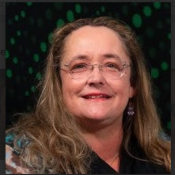 Professor Jill Atkins, Cardiff University, Wales
Dr Atkins is Professor in Accounting at Cardiff University, UK and also a Visiting Professor at the University of the Witwatersrand, South Africa. Her research focuses on corporate governance, responsible investment, sustainability, integrated reporting and extinction accounting. Prof Atkins has an interest in exploring the historical roots of environmental and ecological accounting. Accounting for biodiversity and financial mechanisms for the protection of biodiversity and species is an overriding theme across all her current projects. She is Series Editor for the de Gruyter Studies in Corporate Governance and her leading textbook, Corporate Governance and Accountability, is now in its 5th edition. Prof Atkins’ academic qualifications include a BA Hons (First Class) in European Economics with a Licence ès Sciences Economiques from the University of Nantes, an MSc in Corporate and International Finance from the University of Durham, and a PhD in Finance from the University of Manchester. Well-known throughout the ESG investment industry and governance area as a thought leader, Prof Atkins is regularly being invited to give keynotes at international practitioner and academic events.
 Associate Professor Daniel Ramp, University of Technology Sydney, Australia
A/Prof Ramp is the Founder and Director of the Centre for Compassionate Conservation at the University of Technology Sydney (UTS), where he is an Associate Professor in the Transdisciplinary School. He leads the development of research, teaching, and public outreach in the centre, where the goal is to stimulate innovation, novel research, and conservation practices that promote the flourishing of the more-than-human world. A/Prof Ramp conducts scientific research on human-wildlife interactions, wildlife trade, conservation practice, and wild animal welfare, while also collaborating widely across disciplines. He has led multiple ARC and CRC projects, working with government and industry to engage in evidenced-based policy transformation that promote multispecies coexistence and sustainability, particularly in production landscapes. He has published over 170 journal articles and book chapters and received over $12M in competitive funding. He was a founding member of THINKK – the think tank on kangaroos - is a Director of Voiceless, and a founding member of the Society for Compassionate Conservation.
Organising committee
View
Conference Co-Convenors
Professor Nick McGuigan
Dr Lisa Powell
Emerging Scholars Forum Co-Convenors
Professor Michaela Rankin
Associate Professor Carly Moulang
Dr Edward Tello
Scientific Technical Committee
Dr Annemarie Conrath-Hargreaves
Dr Prabanga Thoradeniya
Dr Menjie Yang
Thomas Kern
Dr Lisa Powell
Professor Nick McGuigan
Registration information
View
Conference and Early Scholars Colloquium registrations are now open and will close on 17 November 2025.
All rates include the conference dinner on Thursday 4 December 2025.
Not yet a member or need to renew your membership
If you are not already a member or need to renew your CSEAR membership we encourage you to take advantage of member benefits such as access to the SEA Journal, newsletters, research resources and bibliography and take advantage of the special member rates.
Main conference
| Earlybird fee (up to 31 October 2025) |
CSEAR member – $400 Non-CSEAR member – $600 |
|
Regular fee (after 31 October 2025) |
CSEAR member – $500 Non-CSEAR member – $600 |
|
Research students' earlybird fee (up to 31 October 2025) |
CSEAR member – $200 Non-CSEAR member – $300 |
|
Research students' regular fees (after 31 October 2025) |
CSEAR member – $300 Non-CSEAR member – $400 |
Early Scholars Colloquium
(Fees for research/doctoral students, including main conference attendance)
| Earlybird fee (up to 31 October 2025) | CSEAR member – $200 Non-CSEAR member – $300 |
| Regular fee (after 31 October 2025) | CSEAR member – $300 Non-CSEAR member – $400 |
Call for papers
View
The conference theme for 2025 is Rewilding accounting research, education, and practice. Rewilding is often conceived as a phenomenon confined to conservation biology, yet rewilding is increasingly seen as a broader, multi-faceted concept that involves embracing messiness, complexity, interconnectedness, curiosity, and compassion.
Drawing upon the concept of rewilding in its broadest sense, we encourage the widest possible array of understandings, applications, and interrogation of rewilding in the context of accounting. This may include themes related to (but not limited to) rewilding in the context of accounting and accountability research, including the research process itself; rewilding accounting knowledge and practices; rewilding accounting education including curriculum and pedagogy; and rewilding ourselves, academics, and the accounting profession.
The conference will hold space for diversity of perspectives, including the visible, invisible, and those that do not have a voice. We encourage interdisciplinarity, collaboration with those who think and do differently, to nurture imagination and craft collective insight into accounting’s role in addressing the challenges of our time.
Call for papers: Full conference submission process
We invite paper presentations on any aspect of social and environmental accounting. The deadline for submissions is 25 August 2025. Notification about the decision will be made by 29 September 2025.
Two types of submissions are encourages
- Full papers - Authors submitting full papers are expected to provide a complete manuscript by the submission deadline
- Work in progress - Authors submitting a work in progress are invited to submit a 250-word abstract.
To emerging scholars who would like to take part in the Emerging Scholars’ Colloquium - please refer to the Emerging Scholars Colloquium submission section below.
Please note that abstracts will be made available to all delegates prior to the conference.
Submissions will be subject to review by a scientific committee.
How to submit your paper
All papers should be submitted via the conference online submission system found by clicking on the button below:
Emerging Scholars Colloquium submission process
The focus of the colloquium will be on cultivating intensive research discussions.
A maximum of 16 places will be available for PhD students as well as Early Career Researchers (within the first five years of their PhD completion).
Applicants from Australia, New Zealand and other Pacific countries are particularly encouraged to apply.
Requirements
- Applicants should submit a two page (max) quantitative or qualitative pitch of their research study. Qualitative and quantitative pitching templates are provided in the submission document.
- Participants are required to submit a one-page (max) curriculum vitae, including their name, email, affiliation, years in the doctoral program to date or year of PhD completion, and PhD supervisor’s name (if applicable).
How to submit your paper
Please use the ESC 2025 CFP document to complete your application and submit via email to acsear2025@monash.edu
Download the ESC 2025 CFP document
Call for papers assistance
For more information or if you require any assistance, please contact the organisers via email at acsear2025@monash.edu
Sponsors



Contact us
For more information or if you require any assistance, please contact the organisers: acsear2025@monash.edu
Event Details
- Date:
- 3 December 2025 at 9:00 am – 5 December 2025 at 5:00 pm
- Venue:
- The Pavilion, Level 8, Building H Monash University Caulfield Campus 900 Dandenong Road, Caulfield East VIC 3145
- Campus:
- Open to:
- Cost:
- Categories:
- General
Description
Monash Business School looks forward to welcoming you to the 24th Australasian Centre for Social and Environmental Accounting Research (A-CSEAR) Conference and Emerging Scholars’ Colloquium here in Melbourne (Naarm), Australia.
The main conference will be held over three days from 3–5 December 2025, and the Emerging Scholars’ Colloquium will be held on Wednesday 3 December 2025.
Our theme for 2025 is Rewilding accounting research, education, and practice.
Important dates
Call for papers submission open | May 2025 |
Call for papers submission close | 25 August 2025 |
Decisions made to authors | 29 September 2025 |
Conference registrations open | Closed |
Conference registrations close | 17 November 2025 (Closed) |
The Australasian Centre for Social and Environmental Accounting Research (A-CSEAR) fosters a supportive and inclusive community of emerging and established scholars investigating research on the social and environmental aspects of accounting theory and practice. The annual A-CSEAR conference provides an international forum in which to showcase this work and to foster much needed interdisciplinary research in accounting.
The A-CSEAR community is a vibrant and diverse group committed to the free exchange of ideas, rigorous debate and support for the growing of research collaborations and opportunities within social and environmental accounting and governance.
Conference program
View
-
Please refer to your confirmation booking email to see which of the below sessions you have registered to attend.
We encourage everyone to attend the Rewilding Accounting Education workshop, CA ANZ Industry sustainability panel and welcome reception on Wednesday 3 December 2025.Emerging Scholars Colloquium
Time Session Location (Level 9) 9.00 - 9.20am Registration H9.21 9.20 - 10.45am Presentation one H9.21 10.45 - 11.15am Morning tea H9.01 11.15 - 12.00pm Research Panel H9.21 12.00 - 12.50pm Lunch H9.01 12.50 - 2.05pm Presentation two H9.21 2.05 - 2.35pm Afternoon tea H9.01 2.35 - 4.30pm Presentation three H9.21 Rewilding Accounting Education Workshop
Time Session Location (Level 9) 1.15 - 1.30pm Registration H9.14 1.30 - 4.20pm Rewilding Accounting Education Workshop commences led by Lisa Powell and Jill Aitkins H9.14 CA ANZ Industry sustainability panel session
Time Session Location
(Level 8)4.15 - 4.30pm Registration The Pavilion 4.30 - 5.30pm CA ANZ Industry sustainability panel session The Pavilion Welcome reception
Time Session Location (Level 8) 5.15 - 5.30pm Registration Level 8 reception area 5.30 - 7.00pm Welcome reception Level 8 reception area -
Time Session Location 8.45 - 9.00am Registration Level 8 reception area 9.00 - 10.30am Welcome and keynote presentation by Daniel Ramp The Pavilion (Level 8) 10.30 - 11.00am Morning tea Level 8 reception area 11.00 - 12.30pm Session 1.1 - Carbon Accounting
Chair: Charl de Villiers- Sustainable Careers in the Digital Era: Integrating Theory, Antecedents, Outcomes, and Future Research Directions
Authors: Jane Qin (La Trobe University)
Discussant: Matthew Egan - Evolving Approaches to Carbon Accounting in Companies in China into the mid 2020s
Authors: Boyang Liu, John Roberts and Matthew Egan (University of Sydney)
Discussant: Jane Qin
H9.01
(Level 9)Session 1.2 - New Accounts and Accountability
Chair: Dianne McGrath- Accounts of flourishing and prefigurative action: an analysis of the online accounts of farmed animal sanctuaries.
Authors: Lisa Powell (Monash University) and Eija Vinnari (Tampere University)
Discussant: Erin Twyford - Accountability, But Not for Us
Authors: Erin Twyford (University of Wollongong), Farzana Tanima (University of Sydney), Sendirella George (Victoria University) and Jane Andrew (University of Sydney)
Discussant: Dale Tweedie - An existential accounting? (Re)centring nature in critical research.
Author: Dale Tweedie (Macquarie University)
Discussant: Lisa Powell
H9.02
(Level 9)Session 1.3 - Power Relations
Chair: James Hazelton- Beyond Market Dynamics: Exploring the Influence of State Power on Environmental, Social and Governance (ESG) Practices in China.
Authors: Jimmy Gong (University of Sydney), Eagle Zhang (University of Sydney) and Yiru Yang (Guangzhou College of Commerce)
Discussant: Jane Andrew - Managerial ‘mindfulness’ as socio-ideological control.
Author: Jane Andrew and Max Baker (University of Sydney)
Discussant: Steven Burch - The potential for dialogic accounting – the rise of grassroots mechanisms for the otherwise powerless - when expectations of more formal mechanisms go unfulfilled.
Author: Steven Burch (University of Tasmania).
Discussant: Eagle Zhang
H9.14
(Level 9)12.30 - 1.30pm Lunch The Pavilion
(Level 8)1.30 - 3.00pm Session 2.1 - Social Governance
Chair: Alessandro Ghio- Accounting for Life: An examination of In Vitro Fertilisation (IVF) success rates and a test of legitimacy
theory?
Authors: Daniela Juric (Monash University), Sandra Van der Laan (University of Sydney), Craig Deegan (University of Tasmania) and Shannon Sidaway (RMIT) - Poverty alleviation disclosures: Automated data capture of Chinese companies' reporting
Authors: Muchen Yu and Geoff Frost (University of Sydney) - The Two Towers of Accountability in Faith Based Organisations: A Systemic Literature Review
Author: Rusina Kaitarawa (University of Canterbury) - Board Gender Diversity and ESG Disclosure Quality: A Comparative Study of AI and Non-AI Companies
Author: Na Ma (Monash University)
H9.01
(Level 9)Session 2.2 - Sustainability Education and Assurance
Chair: Carly Moulang- Rewilding Accounting Education in the Global South: Culture, Career, and Self-Efficacy in the Curriculum
Authors: Garima Sharma (Lyons College) and Moonsamy Naidoo (Victoria University) - How might a digital museum of modern slavery change the mindset of accounting students?
Authors: Awn Muhamamd, James Hazelton and Dale Tweedie (Macquarie University) - How auditors legitimize their professionalism: Finnish auditors’ views
Authors: Anna-Maija Lantto and Aino Kapanen (University of Jyväskylä) - The influence of cultural trust perceptions on sustainability assurance
Authors: Heba Ahmed, Richard Fisher and Markus Milne (University of Canterbury)
H9.02
(Level 9)Session 2.3 - ESG
Chair: Edward Tello- When B-Bbee Works: The Case of Kagiso Trust
Authors: Mbalenhle Khatlisi (University of South Africa), Mankodi Moitse (Kagiso Trust) and Zibusiso Moyo (University of South Africa) - Accounting and Accountability on Rewilding Concept: Empirical Evidence from Conservation Phenomenon
Author: Manchuna Shanmuganathan (University of Dundee) - Mapping the Road Ahead: A CIMO and SDG Approach to Advancing Biodiversity Finance Research
Authors: Raghukumari Ps (K J Somaiya Institute of Management) and Kinjal Manani (N L Dalmia Institute of Management) - Who Gains from Sustainability? Redistributing Corporate Value among Stakeholders in G20 Economies
Authors: Arika Artiningsih (Universitas Gadjah Mada), Choirunnisa Arifa (Universitas Gadjah Mada), Firdaus Kurniawan (Universitas Gadjah Mada) and Albertus Henri Listyanto Nugroho (Universitas Kristen Duta Wacana)
H9.14
(Level 9)3.00 - 3.30pm Afternoon tea Level 8 reception area 3.30 - 5.00pm Session 3.1 - Rewilding
Chair: Lisa Powell- Haecceity, Inscape and Sprung Rhythm in Aesthetic Accounts of Nature, Species and Spirituality: Exploring the Poetry of Gerard Manley Hopkins SJ
Author: Jill Atkins (Cardiff University)
Discussant: Alessandro Merendino - “Rewilding” Accounting Mindsets for De-extinction and Biodiversity Protection
Authors: Alessandro Merendino (Queen Mary University of London), Nick Mcguigan (Monash University), Maureen Meadows (Coventry University) and Nick Henry (Coventry University)
Discussant: Jill Atkins
H9.01
(Level 9)Session 3.2 - Diverse Contexts
Chair: Yinka Moses- From Awareness to Action: Organizational Capacity and Institutional Pressure in Vietnamese SMEs’ ESG Adoption
Authors: Thi Le Hang Truong (5ms Management Solutions Co.), Ngoc Thong Nguyen (Ho Chi Minh City Open University), Tan Tai Le (Novadreams Services) and Thi Phuong Hoa To (Hanoi University)
Discussant: Iki Uele - Challenges auditors face in conducting performance audits focused on organisational resilience in developing countries: The case of Samoa
Authors: Iki Uele (University of Otago), Folototo Seve (University of the South Pacific), Muliagatele Sesilia Lauano (National University of Samoa), Mary Petaia (National University of Samoa), Lupematasila Faato Sila (National University of Samoa) and Sara Walton (University of Otago)
Discussant: Sammy Ying - The Effects of Product Market Competition on ESG Disclosure: Evidence from the Gulf Countries
Authors: Faisal Alyala, Zhongtian Li and Sammy Ying (University of Newcastle)
Discussant: Thi Le Hang Truong
H9.02
(Level 9)Session 3.3 - Social
Chair: Farzana Tanima- Navigating the ‘pinnacles’ of accountancy: Oral histories from retirees
Authors: Lisa Baudot (HEC Paris), Alessandro Ghio (ESCP Business School) and Dana Wallace (University of Central Florida)
Discussant: Sendirella George - Challenging inequality through counter-accounting: Making corporate power visible, thinkable, and actionable
Authors: Sendirella George (Victoria University) and Farzana Aman Tanima (University of Sydney)
Discussant: Kinley Wangchuk - Accounting for happiness: A case study of Gross National Happiness in Bhutan
Authors: Kinley Wangchuk (University of Tasmania), Leanne Morrison, Glenn Finau (University of Tasmania) and Sonam Thakchoe (University of Tasmania)
Discussant: Alessandro Ghio
H9.14
(Level 9)5.00pm Conference concludes 6.30 - 10.30pm Conference dinner - Glasshaus Inside
Kindly note you must have selected 'yes' to attending the conference dinner at the time of registration.
Transport options at own expense:
Uber or Taxi
Train - Catch the train from Caulfield station (Flinders Street or City Loop train), get off at Richmond station (Exit via Swan Street) and walk 6 minutes
Car parking - is available on the street kindly check the street signs for timings44 Cremorne St, Cremorne VIC 3121 - Sustainable Careers in the Digital Era: Integrating Theory, Antecedents, Outcomes, and Future Research Directions
-
Time Session Location 8.45 - 9.00am Registration Level 8 reception area 9.00 - 10.30am Session 4.1 - Sustainability Education
Chair: Sandra Van Der Laan- Performativity of Perspective Transformation: Shaping Desirable Futures through Learning Interventions in Responsible Management Learning
Author: Annemarie Conrath (Monash University) and Alessandro Ghio (ESCP Business School)
Discussant: Erin Twyford - The pedagogy of becoming: Sensemaking and transformative learning in professional identity development
Authors: Erin Twyford and Bonnie Dean (University of Wollongong)
Discussant: Frederick Ng - The role of student co-creation in strengthening the accounting pipeline
Authors: Frederick Ng (University of Auckland), Daniela Juric (Monash University) and Janine Coupe (University of Sydney)
Discussant: Annemarie Conrath
H9.01
(Level 9)Session 4.2 - Sustainability Reporting
Chair: Thomas Kern- Biodiversity Management and Reporting for Sustaining Natural Resources – Standards Applicable for Public Sector
Authors: Nives Botica Redmayne, Fawad Ahmad and Dimu Ehalaiye (Massey University)
Discussant: Heba Ahmed - Stakeholders’ perceptions of sustainability reporting and assurance practices: Do they achieve stakeholder accountability?
Authors: Heba Ahmed, Markus Milne and Richard Fisher (University of Canterbury)
Discussant: Umesh Sharma - The Current Status of Voluntary Sustainability Reporting by New Zealand Companies
Authors: Umesh Sharma, Tejas Adhikari and Mary Low (University of Waikato)
Discussant: Dimu Ehalaiye
H9.02
(Level 9)Session 4.3 - Sustainability Reporting
Chair: John Dumay- The Effects of Political Connections on ESG Disclosure: Evidence from the Gulf Countries
Authors: Faisal Alyala, Zhongtian Li and Sammy Ying (University of Newcastle)
Discussant: Nicole Bena - The politics of grievances: a case of the African mining sector
Author: Nicole Bena (University of Guelph)
Discussant: Habtamu Woldeyohanes - Coercion and political machination through accounting and the public distrust and alienation
Authors: Habtamu Woldeyohanes (Federation University), Gordon Boyce (La Trobe University) and Robert Nyamori (University of Fujairah)
Discussant: Faisal Alyala
H9.14
(Level 9)10.30 - 11.00am Morning tea Level 8 reception area 11.00 - 12.00pm Keynote presentation by Jill Atkins The Pavilion
(Level 8)12.00 - 1.00pm Lunch The Pavilion
(Level 8)1.00 - 2.30pm Session 5.1 - Diverging Contexts
Chair: Annemarie Conrath- Does a data breach lead a firm’s managers to become integrated thinkers?
Authors: Charl de Villiers (University of Auckland), Jing Jia (University of Newcastle) and Zhongtian Li (University of Newcastle) - Dangerous U.S. Political communications and potential negative environmental impacts
Author: Tehmina Khan (RMIT) - Exploring the significance of integrating critical dialogical accounting and community based participatory research
Author: Nicole Bena (University of Guelph) - Sustainability Management Control Systems in Non-Western Contexts: Emerging Practices and Embedding Dynamics in Nigerian Organisations
Authors: Yinka Moses (Victoria University), Rebecca Kennedy (CPA Australia), Emmanuel Edache Michael (Victoria University) and Innocent Okwuosa (Pan African University)
H9.01
(Level 9)Session 5.2 - Sustainability Accounting
Chair: Michaela Rankin- From Ratios to Trajectories: A Dynamic Framework for Corporate Carbon Accounting
Authors: Shanxin Mao, Julie Harrison and Maryam Hasannasab (University of Auckland) - Evaluating Financial Resource Allocation for Sustainability-Focused Projects: Cognitive and Ecological Decision-Making in Accounting
Author: Harshani Dedunu (James Cook University) - Rhetorical Framing of Corporate Climate Change Issues in Earnings Conference Call
Authors: Mumtaheena Anwar, Elisabeth Sinnewe, Ellie Chapple and Annette Quayle (Queensland University of Technology) - Cultivating Capital: Bridging the Green Finance Gap in Sustainable Agriculture.
Authors: Josephine Mckenzie (Charles Sturt University), Nicholas Pawsey (Charles Sturt University), Alex Sas (Wine Australia) and Nicola Thomas (Charles Sturt University)
H9.02
(Level 9)Session 5.3 - ESG
Chair: Carol Tilt- Accountants: The unsung climate strategists with new IFRS climate change reporting requirements
Authors: Dinithi Dissanayake and Upekha Atupola (University of South Australia) - Advancing sustainability accounting research in a developing country context through Schatzki's practice theory-methodology bundle: Evidence from theoretical and empirical application
Authos: Upekha Atupola and Sanjaya Kuruppu (University of South Australia) - Assessment of Environment, Social, Governance impact on Company Performance and Stakeholder Investment
Authors: Jyoti Vidhani and Vikram Khangembam (RV University) - Analysing Public Perceptions and Attitudes Toward Recycling, Waste Management, and Sustainability: Insights from Behavioural and Demographic Data
Author:Alifa Firdhos Farheen Mohammad (Vishnu Institute of Technology)
H9.14
(Level 9)2.30 - 3.00pm Afternoon tea Level 8 reception area 3.00 - 4.30pm Session 6.1 - Indigenous Contexts
Chair: Nick McGuigan- Kia pakari tonu ai: how Māori NPOs conceptualise resilience
Authors: Ellie Norris (University of Canterbury) and Iki Mafi Uele (University of Otago)
Discussant: Sabrina Chong - From nīti to nyāya: a critical analysis of university sustainability reporting on underrepresented cohorts
Authors: Sabrina Chong and Irshad Ali (Auckland University of Technology)
Discussant: Discussant: Glenn Finau - “The land has eyes, the land has teeth”: Indigenous ontologies of the land as protector and punisher
Authors: Glenn Finau (University of Tasmania), Matelita Katamotu (Fijian Holdings Limited), Masilina Rotuivaqali (University of the South Pacific), Jason Titifanue (University of Melbourne), Matthew Scobie (University of Canterbury), Sivendra Michael (Ministry of Environment & Climate Change), Romitesh Kant (Australian National University) and Joeli Varo (University of the South Pacific)
Discussant: Iki Mafi Uele
H9.01
(Level 9)Session 6.2 - SDGs
Chair: Matt Egan- The role of sustainability orientation in influencing the achievement of Sustainable Development Goals (SDGs) and triple-bottom line performance
Authors: Vega Wafaretta, Rahat Munir and Kevin Baird (Macquarie University)
Discussant: Amanpreet Kaur - The uptake of Sustainable Development Goals (SDG) disclosures by Indian companies: A legitimacy perspective
Authors: Amanpreet Kaur (University of South Australia), Shilpa Vardia (Mohanlal Sukhadia University), Shilpa Lodha (Mohanlal Sukhadia University) and G. Soral (Mohanlal Sukhadia University).
Discussant: Irshad Ali - Interconnectedness between food security and climate change: insights from SDG reporting of a large primary industry company
Author: Irshad Ali and Sabrina Chong (Auckland University of Technology).
Discussant: Vega Wafaretta
H9.02
(Level 9)Session 6.3 - Social
Chair: Alessandro Merendino- Counter-Accounting Gendered Violence: Confronting Symbolic and Systemic Injustice for Social Change
Authors: Alia Alshamari (University of Tasmania), Roshni Narendran (University of Tasmania), Mitali Panchal (University of Tasmania) and Leanne Morrison
Discussant: Balbir Bassi - From Policy to Impact: How South African Companies Shape Social Change through Corporate Social Responsibility (CSR)
Author: Balbir Bassi, Aswini Yadlapalli and Suraiyah Akbar (RMIT).
Discussant: Zhongtian Li - Shareholder Activism, CSR Reporting Mandate, and Managers’ CSR Investment Decisions
Authors: Saad Alghamdi, Sammy Xiaoyan Ying and Zhongtian Li (University of Newcastle).
Discussant: Alia Alshamari
H9.14
(Level 9)Session 6.4 - Valuation Relevance
Chair: Menjie Yang- Value Relevance and Determinants of Japanese Firms Pro-Forma Conformance to the IFRS S2 Climate-Related Disclosures
Authors: Frendy Frendy (Nagoya University), Oshika Tomoki (Waseda University) and Chika Saka (Kwansei Gakuin University).
Discussant: Antares Firman - Understanding Digital Financial Innovation Adoption in Autonomous Universities: A Systematic Review Integrating Institutional Theory, Organizational Readiness, and UTAUT
Authors: Antares Firman (Universitas Terbuka), Mohamad Azmi Nias Ahmad (Universiti Teknologi MARA) and Eley Suzana Kasim (Universiti Teknologi MARA).
Discussant: Frendy Frendy
H9.21
(Level 9)4.30 - 5.00pm Conference closing speech The Pavilion
(Level 8)5.00pm Conference concludes - Performativity of Perspective Transformation: Shaping Desirable Futures through Learning Interventions in Responsible Management Learning
Travel and general Information
View
Transport
Monash University Caulfield campus is located directly opposite the Caulfield train station. For transport options, please see the Getting to campus information.
Please note that you must obtain and use a Myki card to travel on public transport. Read more on the PTV website.
Please see available transport options to and from Melbourne Airport.
Hotels
Please note that it is the responsibility of the attendee (ie: your own responsibility) to arrange accommodation. Please see our recommendations below:
Hotel name and address | Closest train station | Distance / time to Monash Caulfield |
|---|---|---|
The Sebel Melbourne Malvern | Walking distance from Monash Caulfield Campus | 600m / 10-minute walk to campus |
| Ovolo South Yarra 234 Toorak Road, South Yarra | South Yarra Train station (5 minute walk from hotel) | 20 minutes by train to Caulfield Railway Station |
| Punthill South Yarra Grand 7 Yarra Street, South Yarra | South Yarra Train station (4 minute walk from hotel) | 15 minutes by train to Caulfield Railway Station |
| Citadines on Bourke 131-135 Bourke St, Melbourne | Parliament train station (5-minute walk from hotel) | 25-30 minutes by train to Caulfield Railway Station |
Avani Melbourne Central Residences | Melbourne Central train station (4-minute walk from hotel) | 25-30 minutes by train to Caulfield Railway Station |
*To obtain Monash associated rates, please call or email the hotel and advise you are attending a Monash event. If the hotel requires you to provide evidence of your connection to Monash, you may use the registration confirmation from the event. Please note rates are subject to change at the time of booking and are not guaranteed rates obtained from Monash University, the above hotels are a guide and recommendation only.
Plenary speakers
View
Professor Jill Atkins, Cardiff University, Wales
Dr Atkins is Professor in Accounting at Cardiff University, UK and also a Visiting Professor at the University of the Witwatersrand, South Africa. Her research focuses on corporate governance, responsible investment, sustainability, integrated reporting and extinction accounting. Prof Atkins has an interest in exploring the historical roots of environmental and ecological accounting. Accounting for biodiversity and financial mechanisms for the protection of biodiversity and species is an overriding theme across all her current projects. She is Series Editor for the de Gruyter Studies in Corporate Governance and her leading textbook, Corporate Governance and Accountability, is now in its 5th edition. Prof Atkins’ academic qualifications include a BA Hons (First Class) in European Economics with a Licence ès Sciences Economiques from the University of Nantes, an MSc in Corporate and International Finance from the University of Durham, and a PhD in Finance from the University of Manchester. Well-known throughout the ESG investment industry and governance area as a thought leader, Prof Atkins is regularly being invited to give keynotes at international practitioner and academic events.
Associate Professor Daniel Ramp, University of Technology Sydney, Australia
A/Prof Ramp is the Founder and Director of the Centre for Compassionate Conservation at the University of Technology Sydney (UTS), where he is an Associate Professor in the Transdisciplinary School. He leads the development of research, teaching, and public outreach in the centre, where the goal is to stimulate innovation, novel research, and conservation practices that promote the flourishing of the more-than-human world. A/Prof Ramp conducts scientific research on human-wildlife interactions, wildlife trade, conservation practice, and wild animal welfare, while also collaborating widely across disciplines. He has led multiple ARC and CRC projects, working with government and industry to engage in evidenced-based policy transformation that promote multispecies coexistence and sustainability, particularly in production landscapes. He has published over 170 journal articles and book chapters and received over $12M in competitive funding. He was a founding member of THINKK – the think tank on kangaroos - is a Director of Voiceless, and a founding member of the Society for Compassionate Conservation.
Organising committee
View
Conference Co-Convenors
Professor Nick McGuigan
Dr Lisa Powell
Emerging Scholars Forum Co-Convenors
Professor Michaela Rankin
Associate Professor Carly Moulang
Dr Edward Tello
Scientific Technical Committee
Dr Annemarie Conrath-Hargreaves
Dr Prabanga Thoradeniya
Dr Menjie Yang
Thomas Kern
Dr Lisa Powell
Professor Nick McGuigan
Registration information
View
Conference and Early Scholars Colloquium registrations are now open and will close on 17 November 2025.
All rates include the conference dinner on Thursday 4 December 2025.
Not yet a member or need to renew your membership
If you are not already a member or need to renew your CSEAR membership we encourage you to take advantage of member benefits such as access to the SEA Journal, newsletters, research resources and bibliography and take advantage of the special member rates.
Main conference
| Earlybird fee (up to 31 October 2025) |
CSEAR member – $400 Non-CSEAR member – $600 |
|
Regular fee (after 31 October 2025) |
CSEAR member – $500 Non-CSEAR member – $600 |
|
Research students' earlybird fee (up to 31 October 2025) |
CSEAR member – $200 Non-CSEAR member – $300 |
|
Research students' regular fees (after 31 October 2025) |
CSEAR member – $300 Non-CSEAR member – $400 |
Early Scholars Colloquium
(Fees for research/doctoral students, including main conference attendance)
| Earlybird fee (up to 31 October 2025) | CSEAR member – $200 Non-CSEAR member – $300 |
| Regular fee (after 31 October 2025) | CSEAR member – $300 Non-CSEAR member – $400 |
Call for papers
View
The conference theme for 2025 is Rewilding accounting research, education, and practice. Rewilding is often conceived as a phenomenon confined to conservation biology, yet rewilding is increasingly seen as a broader, multi-faceted concept that involves embracing messiness, complexity, interconnectedness, curiosity, and compassion.
Drawing upon the concept of rewilding in its broadest sense, we encourage the widest possible array of understandings, applications, and interrogation of rewilding in the context of accounting. This may include themes related to (but not limited to) rewilding in the context of accounting and accountability research, including the research process itself; rewilding accounting knowledge and practices; rewilding accounting education including curriculum and pedagogy; and rewilding ourselves, academics, and the accounting profession.
The conference will hold space for diversity of perspectives, including the visible, invisible, and those that do not have a voice. We encourage interdisciplinarity, collaboration with those who think and do differently, to nurture imagination and craft collective insight into accounting’s role in addressing the challenges of our time.
Call for papers: Full conference submission process
We invite paper presentations on any aspect of social and environmental accounting. The deadline for submissions is 25 August 2025. Notification about the decision will be made by 29 September 2025.
Two types of submissions are encourages
- Full papers - Authors submitting full papers are expected to provide a complete manuscript by the submission deadline
- Work in progress - Authors submitting a work in progress are invited to submit a 250-word abstract.
To emerging scholars who would like to take part in the Emerging Scholars’ Colloquium - please refer to the Emerging Scholars Colloquium submission section below.
Please note that abstracts will be made available to all delegates prior to the conference.
Submissions will be subject to review by a scientific committee.
How to submit your paper
All papers should be submitted via the conference online submission system found by clicking on the button below:
Emerging Scholars Colloquium submission process
The focus of the colloquium will be on cultivating intensive research discussions.
A maximum of 16 places will be available for PhD students as well as Early Career Researchers (within the first five years of their PhD completion).
Applicants from Australia, New Zealand and other Pacific countries are particularly encouraged to apply.
Requirements
- Applicants should submit a two page (max) quantitative or qualitative pitch of their research study. Qualitative and quantitative pitching templates are provided in the submission document.
- Participants are required to submit a one-page (max) curriculum vitae, including their name, email, affiliation, years in the doctoral program to date or year of PhD completion, and PhD supervisor’s name (if applicable).
How to submit your paper
Please use the ESC 2025 CFP document to complete your application and submit via email to acsear2025@monash.edu
Download the ESC 2025 CFP document
Call for papers assistance
For more information or if you require any assistance, please contact the organisers via email at acsear2025@monash.edu
Sponsors
Contact us
For more information or if you require any assistance, please contact the organisers: acsear2025@monash.edu