
Breaking new ground in global disease control
August 19 2024
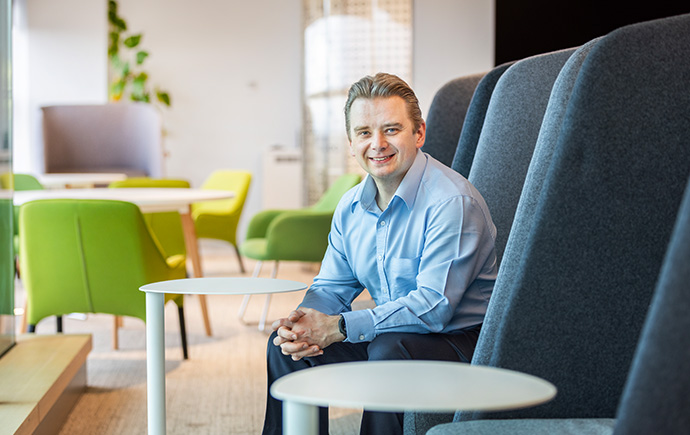
Global Executive MBA student, Zbigniew Mioduszewski.
Monash Global Executive MBA (GEMBA) student Zbigniew Mioduszewski jokingly refers to himself as a mosquito farmer.
But behind the light-hearted job title lies groundbreaking work.
The World Mosquito Program (WMP) is a not-for-profit group of companies owned by Monash University and headquartered at its Clayton campus. Its work is supported by government agencies, philanthropists and corporate partners.
As WMP’s Product Manager, he is at the forefront of the fight against mosquito-borne diseases.
Each week, WMP breeds millions of mosquitoes, introducing a common bacteria called Wolbachia to disrupt their ability to spread diseases to humans.
The mosquitoes are then released into the wild, where they breed with local populations and drastically reduce the spread of serious diseases including dengue fever, and the Zika and Chikungunya viruses.
The method is safe, self-sustaining, cost-effective and non-GMO, with the potential to help more than 650 million people affected each year.
“I bridge the production and IT teams to create digital tools that enable large-scale mosquito production,” Mr Mioduszewski said.
“What inspired me to join the program was the chance to protect so many lives from the terrible impact of these diseases.”
Combating disease on a global scale
Mosquito-borne diseases like dengue and Zika are driving an escalating global health crisis, Mr Mioduszewski said.
“Climate change, urbanisation, and increased global movement are expanding the reach of these diseases, and the World Health Organisation warns that about half of the world’s population is now at risk,” he said.
In response to this urgent threat, the WMP team has rolled out Wolbachia technology in 14 countries over the past decade, protecting 11.4 million people in the process. (March 2024).
“We did a clinical trial in Yogyakarta in Indonesia, and we’ve seen an 85 per cent reduction in dengue hospitalisations in Wolbachia-treated communities,” Mr Mioduszewski said.
“In our modeling in this region alone, we have averted 18,000 hospitalisations, 65 deaths, 140,000 missed work days, 100,000 missed school days and over 12 million in medical and social costs.”
Next, WMP is partnering with Instituto de Biologia Molecular do Paraná (IBMP), a subsidiary of FIOCRUZ, to build the world's largest mosquito factory.
“We hope this will become a model we can roll out worldwide,” he said.
“Ultimately, my hope is that one day the WMP won’t be needed anymore because our self-sustaining technology will have made dengue a problem of the past.”
Enhancing impact with GEMBA
Mr Mioduszewski said he pursued a Monash Global Executive MBA to amplify his impact at WMP “beyond the technical space”.
He said the leadership skills gained through the program would be instrumental to his efforts to support WMP’s mission.
“My goal is to integrate what I learn through the GEMBA into our projects so I can help support our reach and effectiveness,” he said.
He said the program’s global perspective and diverse cohort provided crucial insights.
“In our class of 26, there are students with experience from more than 20 different countries, which really enhances the learning environment,” he said.
While balancing the demands of a full-time job, family, and a rigorous academic program has been challenging, he already sees the benefits of his hard work.
"The intensity of the GEMBA experience pushes you to grow and learn in new ways, and I’m already seeing the benefits, which is really motivating,” he said.
“Learning to thrive in this environment is a valuable part of the experience - by leaning into it, you get more out of it.”