
Targeting the blind spots in Australia’s energy system
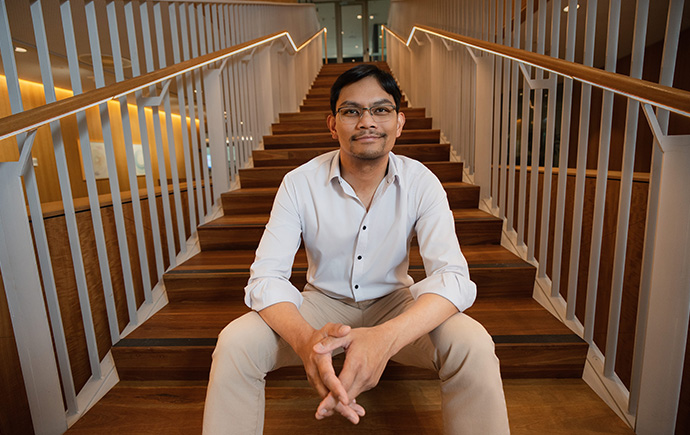
Monash Business School PhD candidate Frederick Madriaga.
29 April 2026
As more households and businesses adopt rooftop solar, home batteries and electric vehicles, Australia’s electricity grid is becoming more decentralised.
While this shift is central to the clean energy transition, it is also increasing the number of connection points, creating new pathways for cyber-attack and system disruption.
Monash Business School PhD candidate Frederick Madriaga is developing methods to help operators determine the cause of grid failures in real time.
“When something goes wrong, it can be hard to tell whether it’s a technical fault or a cyber issue,” Mr Madriaga said.
“As the grid modernises, we need to ensure security keeps pace - especially as more devices connect at the edge of the network.”
Detecting and interpreting system risk
Current monitoring systems can generate large volumes of alerts, but often without sufficient context for operators to quickly determine cause or severity.
Access to real operational data is also limited, making it difficult to test and develop reliable analytical tools.
To address this, Mr Madriaga’s research is structured around three components.
The first is the development of synthetic datasets that replicate Australian energy system conditions without exposing sensitive operational data.
The second is the design of AI methods that can detect unusual behaviour in the grid and distinguish between cyber incidents and physical faults, while also providing explanations for those events.
The third is the translation of these technical outputs into governance and reporting frameworks that can be applied in operational settings.
The aim is to improve detection and interpretation, enabling faster and more informed decision-making during incidents.
“I hope the outputs can inform better operational workflows, contribute to guidelines for secure use of AI tools, and encourage broader adoption of consistent cybersecurity practices across the energy sector,” Mr Madriaga said.
Professor of Economics and Deputy Dean (Research) Russell Smyth said the work would help address an emerging risk in Australia’s energy transition.
“Distributed energy resources are central to the clean energy transition and making Australia less vulnerable to relying on fossil fuels, but they also make the energy grid more vulnerable to cybersecurity attacks and potentially make the energy grid more difficult to maintain,”
Professor Smyth said. “Frederick's work is seeking to reduce that downside risk.”
Pursuing high-impact research
Mr Madriaga said the most valuable aspect of his PhD has been the opportunity to work across disciplines and focus on applied, real-world problems.
A recipient of the Zema Energy Studies Scholarship through the Monash Energy Institute, he said the scholarship provided both direction and momentum.
“It gave me the support and confidence to pursue a high-impact research problem and engage with industry,” he said.
“I would absolutely encourage others to apply - especially if they care about solving real problems and communicating their work clearly.”
2026 Zema Energy Studies Scholarship applications open on 31 May (Semester 1 commencement) and 31 October (Semester 2 commencement).