
Researcher focus: Dr Rezan Al-Jafary
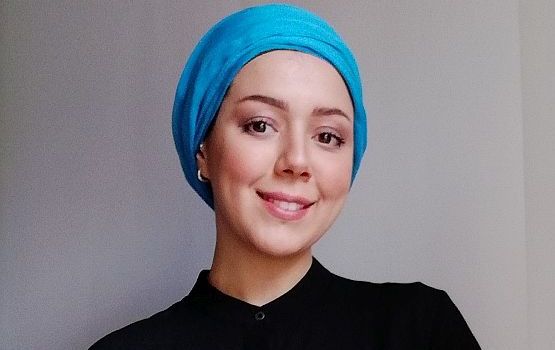
MIME recently spoke with Dr Rezan Al-Jafary, MIME Seed Funding recipient from the Department of Mechanical and Aerospace Engineering, Faculty of Engineering, Monash University. She provides us with insight into her research to provide simulation-based training models to trainee doctors to reduce the risk of complications and save lives in artificial heart and lung patients.
Learn more about Rezan’s MIME Seed Funding project here.
What is your background?
I am a biomedical engineer. I obtained my PhD earlier this year.
Can you tell us about your main area of research and the projects you lead?
I work on developing training tools for a number of medical diagnostic and procedural applications. The work involves using many engineering techniques (i.e. engineering design, additive manufacturing and 3D printing, materials processing and fabrication, casting and molding, materials characterization) to build realistic models for accurate simulation training. This ensures efficient learner engagement which is key for the ultimate goal of training; knowledge transfer. Therefore, our work also involves evaluation of training tools which assesses the educational aspects of the work.
What do you hope to achieve through your MIME/MedTech Commercialisation Advancement Program (MCAP)funded project?
I was involved in the MedTech Commercialisation Advancement Program (MCAP) which really opened my eyes, and the teams, to the industry's perspective on the work that we do. It helped steer the research in all the right directions to ensure a smooth translation of our models, deeming them viable for commercial consumption. Additional funding will help us implement the recommendations from the MCAP to achieve this goal.
Who has influenced your research the most and why?
Clinicians, as the end user, really influence and motivate my research, as they are always super thrilled and enthusiastic to try the models. They know how important training is and appreciate that having a good model really helps in acquiring the necessary skills to reach a mastery level.
What is the most rewarding part of what you do?
This will be a two-fold answer:
- When I see clinicians' eyes sparkle as they learn what I do and immediately ask if I can build them a model for their application, and
- When I see change in reality; that is to witness the real value of these models in improving clinical care and patient outcomes. I believe good practice leads to better performance and eventually better outcomes.
What has been the highlight of your career to date?
The translation of our cannulation models into clinical training at the Alfred Hospital in Melbourne Australia, but also potentially in Germany and the USA.
What advice would you give to students interested in your field of study?
I would advise students interested in cardiovascular research, and particularly simulation training, to choose the niche application they're interested in and start building their knowledge by enrolling in units that would help expand their theoretical knowledge.
I would also advise that they get involved in projects, either through a final year project or MIME’s Healthcare Innovation Summer Scholarship (HISS) program which would help expand their technical knowledge and build hands-on experience in the field.
I'm happy to discuss this further with anyone interested. Email: rezan.al-jafary1@monash.edu
What are your future research plans?
Expanding our applications and being able to tailor models and scenarios with the aid of our Augmented Reality and Virtual Reality modules, maybe even build a universal patient model that can be used for a good number of applications. Making the tech accessible and affordable is also important to us.