
Air Sensitive XPS Case Study: Characterising the electrode surface after lithium mediated reduction of N2

Figure 1. Nexsa XPS vacuum transfer module
Air-sensitive samples such as energy storage materials, deposits and catalysts are not only sensitive to air, but also to moisture. To safely and reliably transfer air-sensitive samples, a transfer vessel small enough to fit into the antechamber of a glove box and then transport the samples directly into the loading chamber of an XPS system, such as the Nexsa Vacuum Transfer Module (VTM) can be used. This transfer method ensures that the chemical composition of the sample surface has not been compromised through the prevention of unwanted surface oxidation reactions from that can be detrimental to the stability of air-sensitive surfaces including solids, powders, fibers, films, wires and porous materials.
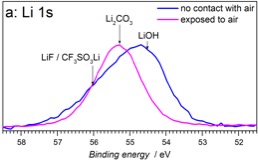
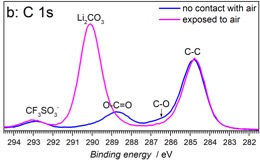

Figure 2. (a) Li 1s, (b) C 1s, and (c) F 1s spectra of the electrode surface exposed to air (magenta) and with no contact with air (blue). N2 electroreduction was undertaken in stirred LiOTf + C2H5OH tetrahydrofuran solutions on copper electrode.
The lithium mediated reduction of N2 is one of the only available approaches to electrochemical ammonia production at significant yields under ambient conditions. Strong interest in this process has emerged very recently in the context of the development of new technologies for the conversion of N2 to NH3 to replace the existing Haber-Bosch technology. The latter accounts for the consumption of around 2% of the world’s energy supply. The mediated nitrogen reduction reaction only occurs in non-aqueous media at potentials required to reduce Li ion to Li metal, therefore, the entire process of electrochemical NH3 ammonia generation is highly air and moisture sensitive. Undesirable exposure to air complicates understanding of the kinetics and mechanism of the electrochemical processes involved, including the electrolyte breakdown and formation of various compounds on the electrode surface. In the present example, data was collect using the VTM and without using the VTM on the Nexsa XPS system on the Monash X-ray Platform. The difference in the recorded X-ray photoelectron spectra of the electrode surface after and with no exposure to air is shown in figure 2.
Data courtesy of Dr. Pavel Cherepanov, School of Chemistry, Monash University