
Lunchtime Concert Series: Artistic Research Showcase
Lunchtime Concert Series

Artistic Research Showcase
About the Performance
Get a glimpse into the work of world-leading artistic researchers in music performance and composition. Features resident researcher Hollis Taylor, as well as staff member Martin Koszolko, PhD candidate Helen Svoboda, Masters candidate Po Goh.
Artistic Research provides us with a way of understanding music in, and through, the doing of it. It can also provide us with a different way to navigate complex issues of our time, beyond the constraints of words and images. In this program,visiting researcher Dr Hollis Taylor shares her work with the pied butcher bird and violin, Martin Koszolko presents an audio visual work created in regional victoria, Helen Svoboda showcases her ‘composer photograph’ concept and Po Goh presents masters research for two pianos with Reuben Johnson.
The concert will feature composers and performers introducing their work, explaining the artistic research component of each presentation.
Program
- Helen Svoboda Wormwood/SnowGrass (double bass and video)
- Martin Koszolko (aka iubar project) Daylesford Naturalix / Daylesford Reversalix (2025) audio visual work
- Po Goh and Reuben Johnson “Strauss Jr/Greg Anderson - A New Account of the Blue Danube Waltzes” (2010) (2 pianos)
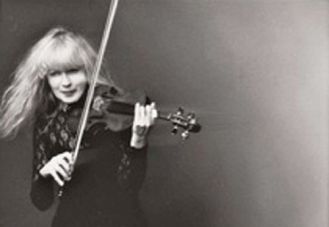
- Hollis Taylor “Pied Butcherbird Suite for violin and field recordings’(violin and playback)
Wormwood (2022) and Snowgrass (2023) explore the resonant possibilities of arco harmonics in the upper register of the double bass, allowing their overtones to blur and dissolve into one another. Wormwood emerged as the first solo work in my PhD candidature, as part of the composer–photograph framework, transforming a photograph of worm tracings in Tasmanian tree bark into an animated graphic score to inspire overtone improvisation (programmed by Ciaran Frame). The flowing, cursive markings in the bark suggested a sense of post-photographic movement in the image, which I translated into sound on the instrument. Snowgrass extends this exploration, inspired by the gradual melting of snow across grassy Finnish terrain on the island of Suomenlinna, and aims to evoke the subtle seasonal transformations from arctic winter to spring.
Daylesford Naturalixis a fixed media composition developed from environmental field recordings captured in 2021 in Daylesford, on unceded Dja Dja Wurrung Country (central Victoria, Australia). Recorded during COVID-19 lockdown and completed in 2025, the work forms part of a practice-led research project exploring mobile music technologies and ecological listening. Using only the original source material, birdsong, creeks, wind, and ambient textures, the composition reworks these sounds through granular synthesis and digital manipulation. The result retains a strong sense of place while extending its sonic possibilities through technological mediation. Framing the environment as both subject and co-composer, the work invites attentive listening and engagement with more-than-human rhythms, contributing to ecocritical sonic art. The project reflects on forms of mobility and change: the continuity of natural processes during human restriction, the portability of mobile recording and production tools, and the transformation of sound itself. The field recordings originate from the Wombat Forest and were first featured on the iubar project album Daylesford Naturalis: During Covid Lockdown #4. Daylesford Reversalix presents a reversed version of the composition. This version disrupts spatial and temporal familiarity, creating a dislocated listening experience. The audio is paired with mobile video recorded in 2025, reinterpreting the site visually and forming a shifting audio-visual narrative. iubar project is Kozsolko’s -roject with videographer Max Schleser. The work was premiered at Bio Assembly, New Annual Festival, Newcastle, 2025
"The kaleidoscopic Blue Danube Fantasy takes the elegance of the Viennese waltz as a point of departure and plunges headlong into the passions that undulate beneath the dance's restrained facade." These words by Anderson's duo partner Elizabeth Joy Roe hint at the culture of a bourgeoisie governed by social etiquette, manners and propriety. Piano four-hands - duets at one piano - enjoyed a burgeoning popularity in this time as a staple of domestic bourgeois life, but the limited repertoire that emerged is also governed by these social dynamics. My research seeks to explore how performing piano four-hands today requires an expanded and holistic musician, one that is ready to rearrange, recompose and choreograph as needed to serve the music they play. We endeavour to use this work as an avenue to explore the spatial and performative possibilities of piano four-hands in order to develop a vocabulary of ways to navigate the keyboard together.
Pied Butcherbird Suite for violin and field recordings. Thirteen million years ago, Australian pied butcherbirds (Cracticus nigrogularis) separated from a common Corvid ancestor and evolved a preference for song. The ancient lineage of the butcherbird reminds us that humans are new on the block vis-à-vis the invention and perception of melody. In spring, each bird performs nocturnal long songs of one to seven hours in duration. No two individuals sing alike, and songs transform annually with new variations and motifs. In my birdsong (re)compositions, human musicians play a detailed transcription (usually simplified) of a birdsong or complement the recorded birdsong with various strategies such as melodic inversion, augmentation, transposition, and counterpoint. My goal is to celebrate (not improve upon) birdsong.
Follow @monash_school_of_music on Instagram to learn more.
Event Details
- Date:
- 30 July 2026 at 1:00 pm – 2:00 pm
- Venue:
- Sir Zelman Cowen School of Music and Performance, Auditorium, 55 Scenic Boulevard
- Campus:
- Clayton
- Open to:
- Students, staff and the general public are welcome to attend this FREE event.
- Cost:
- Free. (Registration not required).
- Categories:
- Sir Zelman Cowen School of Music and Performance; Lunchtime concerts
Description
Lunchtime Concert Series
Artistic Research Showcase
About the Performance
Get a glimpse into the work of world-leading artistic researchers in music performance and composition. Features resident researcher Hollis Taylor, as well as staff member Martin Koszolko, PhD candidate Helen Svoboda, Masters candidate Po Goh.
Artistic Research provides us with a way of understanding music in, and through, the doing of it. It can also provide us with a different way to navigate complex issues of our time, beyond the constraints of words and images. In this program,visiting researcher Dr Hollis Taylor shares her work with the pied butcher bird and violin, Martin Koszolko presents an audio visual work created in regional victoria, Helen Svoboda showcases her ‘composer photograph’ concept and Po Goh presents masters research for two pianos with Reuben Johnson.
The concert will feature composers and performers introducing their work, explaining the artistic research component of each presentation.
Program
- Helen Svoboda Wormwood/SnowGrass (double bass and video)
- Martin Koszolko (aka iubar project) Daylesford Naturalix / Daylesford Reversalix (2025) audio visual work
- Po Goh and Reuben Johnson “Strauss Jr/Greg Anderson - A New Account of the Blue Danube Waltzes” (2010) (2 pianos)
- Hollis Taylor “Pied Butcherbird Suite for violin and field recordings’(violin and playback)
Wormwood (2022) and Snowgrass (2023) explore the resonant possibilities of arco harmonics in the upper register of the double bass, allowing their overtones to blur and dissolve into one another. Wormwood emerged as the first solo work in my PhD candidature, as part of the composer–photograph framework, transforming a photograph of worm tracings in Tasmanian tree bark into an animated graphic score to inspire overtone improvisation (programmed by Ciaran Frame). The flowing, cursive markings in the bark suggested a sense of post-photographic movement in the image, which I translated into sound on the instrument. Snowgrass extends this exploration, inspired by the gradual melting of snow across grassy Finnish terrain on the island of Suomenlinna, and aims to evoke the subtle seasonal transformations from arctic winter to spring.
Daylesford Naturalixis a fixed media composition developed from environmental field recordings captured in 2021 in Daylesford, on unceded Dja Dja Wurrung Country (central Victoria, Australia). Recorded during COVID-19 lockdown and completed in 2025, the work forms part of a practice-led research project exploring mobile music technologies and ecological listening. Using only the original source material, birdsong, creeks, wind, and ambient textures, the composition reworks these sounds through granular synthesis and digital manipulation. The result retains a strong sense of place while extending its sonic possibilities through technological mediation. Framing the environment as both subject and co-composer, the work invites attentive listening and engagement with more-than-human rhythms, contributing to ecocritical sonic art. The project reflects on forms of mobility and change: the continuity of natural processes during human restriction, the portability of mobile recording and production tools, and the transformation of sound itself. The field recordings originate from the Wombat Forest and were first featured on the iubar project album Daylesford Naturalis: During Covid Lockdown #4. Daylesford Reversalix presents a reversed version of the composition. This version disrupts spatial and temporal familiarity, creating a dislocated listening experience. The audio is paired with mobile video recorded in 2025, reinterpreting the site visually and forming a shifting audio-visual narrative. iubar project is Kozsolko’s -roject with videographer Max Schleser. The work was premiered at Bio Assembly, New Annual Festival, Newcastle, 2025
"The kaleidoscopic Blue Danube Fantasy takes the elegance of the Viennese waltz as a point of departure and plunges headlong into the passions that undulate beneath the dance's restrained facade." These words by Anderson's duo partner Elizabeth Joy Roe hint at the culture of a bourgeoisie governed by social etiquette, manners and propriety. Piano four-hands - duets at one piano - enjoyed a burgeoning popularity in this time as a staple of domestic bourgeois life, but the limited repertoire that emerged is also governed by these social dynamics. My research seeks to explore how performing piano four-hands today requires an expanded and holistic musician, one that is ready to rearrange, recompose and choreograph as needed to serve the music they play. We endeavour to use this work as an avenue to explore the spatial and performative possibilities of piano four-hands in order to develop a vocabulary of ways to navigate the keyboard together.
Pied Butcherbird Suite for violin and field recordings. Thirteen million years ago, Australian pied butcherbirds (Cracticus nigrogularis) separated from a common Corvid ancestor and evolved a preference for song. The ancient lineage of the butcherbird reminds us that humans are new on the block vis-à-vis the invention and perception of melody. In spring, each bird performs nocturnal long songs of one to seven hours in duration. No two individuals sing alike, and songs transform annually with new variations and motifs. In my birdsong (re)compositions, human musicians play a detailed transcription (usually simplified) of a birdsong or complement the recorded birdsong with various strategies such as melodic inversion, augmentation, transposition, and counterpoint. My goal is to celebrate (not improve upon) birdsong.
Follow @monash_school_of_music on Instagram to learn more.