
Why Associate Professor Shireen Moti chose Monash Law for her PhD

Associate Professor Shireen Moti is a respected legal academic specialising in constitutional law, comparative public law, and access to justice. So, her decision to begin a PhD at Monash Law was a deeply personal one. It was shaped by years of scholarship, frontline engagement, and a longstanding commitment to justice.
Moti has a bachelors in law from Jindal Global Law School, O.P. Jindal Global University and a Master in Law (LLM) degree from Queen Mary University of London. She has received multiple merit scholarships at JGLS and her Masters in Law at QMUL was supported by the Chevening scholarship, the U.K. Government's fully funded international scholarship programme.
She gained her legal training at O.P. Jindal Global University and was involved in Clinical Programmes under the mentorship of Prof. Ajay Pandey, Professor and Director (Clinical Programmes) at JGLS. Pandey made her believe that law is an instrument of social change and she grew passionate about making law and its processes accessible, fairer, and equal for the marginalized sections of society.
Moti also expresses her gratitude to: Professor (Dr.) C. Raj Kumar, Vice Chancellor, O.P. Jindal Global University & Dean, Jindal Global Law School; Professor (Dr) Shaun Star, Professor and Associate Dean; Director, Centre for India Australia Studies; Director Centre for Sports Law, Business and Governance; Prof. Dabiru Sridhar Patnaik, Registrar, O.P. Jindal Global University and Executive Director, Jindal Global Law School; Professor S.G. Sreejith, former Executive Dean, Jindal Global Law School, O.P. Jindal Global University; and, Professor (Dr.) Diplka Jain, Executive Dean, Jindal Global Law School, O.P. Jindal Global University.
“I was always interested in research. I joined academia in the year 2019, but I was always interested in doing research on access to justice” said Associate Professor Moti.
By then, she had already published more than ten articles in internationally peer‑reviewed journals, writing on legal education, clinical legal education, feminist legal theory, social rights, dignity, and public law. But she felt the next step required deeper, sustained inquiry.
“At some point I thought - I’ve been writing these journal articles, I need to dedicate myself to a project which would require a lot of intensive work in terms of dedicating myself to research,” she explained.
That project would become her PhD.
Discovering the right supervisor and the right home
Shireen’s path to Monash began with a simple, almost instinctive process.
“I went to the website, I looked at all the faculty profiles. I happened to see Professor Jeff Giddings’ profile, and that really resonated with what I was doing,” she recalls.
Professor Giddings is a global leader in clinical legal education and access to justice and his profile had publicly indicated that he was accepting PhD students. This detail proved pivotal.
“I thought to myself: I am somebody who wants to do a PhD. This esteemed professor sitting in Australia, operating out of Monash University, somebody who has done such extensive work on clinical legal education, access to justice, and is also looking at technology is someone who might be interested in my project. So I just simply wrote to him and he was kind enough to reply to me.”
Professor Jeff Giddings was Monash Law's Associate Dean (Experiential Education) from 2018 to 2025. His latest book ‘Global Clinical Legal Education’ is a culmination of decades of research that shines a light on the evolution and impact of clinical legal education worldwide.
“ I just simply wrote to him and he was kind enough to reply to me.”
What followed Shireen’s opening email was a period of rich academic conversation, encouragement, and the early development of her research proposal.
“He really encouraged me because he saw that I was trying to do something that’s challenging but doable. And he really gave me that focus,” she said.
Monash quickly became her first, and ultimately only choice.
A unique cross‑border PhD pathway
Shireen initially applied to the full‑time, on‑campus program at Monash. But a shift in her personal circumstances (expecting a baby), combined with an emerging partnership between Monash and her home institution, O.P. Jindal Global University, opened an unexpected door.
“There was an MOU between Monash and Jindal. That gave me real hope that I can pursue this without going to Australia,” she explained.
She became the first student in the Monash–Jindal PhD pathway, able to remain in India while completing a Monash doctorate (and delivering a baby!).
“I was asked whether I would like to become the first student within that pathway and remotely pursue my PhD. It aligned with my vision of being an academic and at the same time keeping my job and staying in India,” she said.
What could have been a logistical barrier instead became an academic opportunity. It was a model for future scholars navigating international commitments.
Building a strong supervisory relationship across borders
Some might assume that distance impedes the quality of supervision (even if it does make the heart grow fonder). For Shireen, the opposite was true (about the quality, not the heart).
“I have a very good rapport with my supervisor - it feels like we are sitting across the table and speaking to each other. Distance never compromised our discussions, it never compromised the progress of my PhD,” she said.
Shireen also had two more supervisors for my PhD thesis in Professor Jess Mant and Professor Jacqueline Weinberg.
The real challenge, she shares, lies not in geography but discipline and focus.
“The only thing that is challenging is being motivated enough and committed enough while you're pursuing a full-time job and while you're managing other commitments, because there are huge demands on your time.”
Her training as a lawyer has helped her keep on track.
“ Ultimately, what prevails is my own interest in doing it. So no matter what I'm doing, I'll always be on track.”
“That habit I developed in my undergraduate, then postgraduate years and applied to my career - I applied that habit to my PhD.”
Above it all sits the crucial relationship with her supervisor.
“ I don't think that remotely pursuing a PhD is a problem, but it comes with a caveat. The caveat is: how good is your supervisor?”
Exploring new frontiers in AI, criminal justice, and human rights
Shireen’s doctoral research addresses a profound legal and humanitarian problem, which is the staggering number of undertrial prisoners in India.
Her thesis, titled ‘Artificially Intelligent Justice for Undertrial Prisoners in India’, examines the possibility of introducing AI‑driven risk assessment tools into India’s pretrial decision‑making processes.
“We have a large number of undertrial prisoners languishing in Indian prisons. That's a huge problem because it's not only violating the individual rights of those people enshrined in international human rights law and constitutional law, but it speaks very poorly of the criminal justice system in India. The purpose of the criminal justice system is not to keep people behind bars, but to ensure that you are preventing crime.”
These delays and backlogs affect fundamental rights, from dignity to equality to fair trial standards.
Her research draws on comparative perspectives from the United States and Canada, where algorithmic tools are sometimes used to support bail decisions.
“ My whole thesis is about looking at the feasibility of employing risk assessment instruments in the criminal justice system in India, which means pretrial decision making when it comes to bail matters. And secondly, I’m looking at guidelines which would help me in designing a human rights compliant legal and regulatory framework for the usage of risk assessment instruments.”
This work is both doctrinal and empirical. She is interviewing sitting and former justices of India’s Supreme Court and High Courts, which is a rare undertaking for a doctoral project.
“Getting those views is very crucial to my project and its outcomes.”

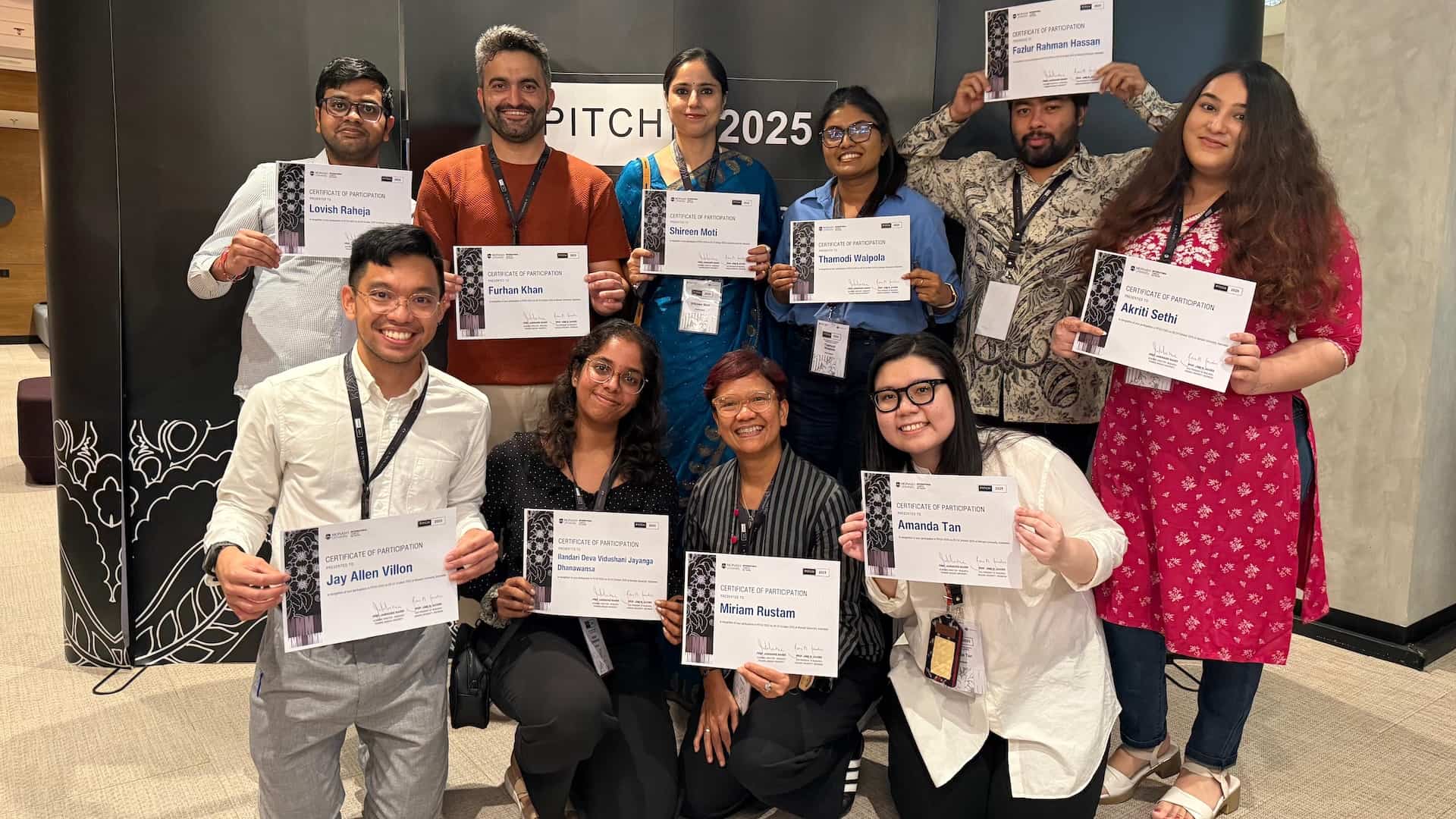
Watch Moti at Monash Univeristy's third PITCH (PhD Interdisciplinary Team Challenge) at the Jakarta campus.
Expanding horizons: the Monash Pitch Program in Indonesia
Beyond her core research, Shireen’s PhD experience has given her a chance to embrace new opportunities to build global skills, including the Monash Pitch Program in Indonesia, where she was the only law PhD student in her cohort.
“It seemed like a Shark Tank for research scholars. That thrill of the final presentation got me motivated,” she said.
Working in an interdisciplinary group, Shireen discovered not just the challenge of collaboration but the importance of translating legal expertise for non‑law audiences.
“ When I read the problem and I was the only lawyer in my group, I said, ‘oh, this is a legal and regulatory problem’. Now my challenge was to make my fellow research scholars and team members understand what a legal and regulatory problem is.”
“I might know my discipline, but nobody else knows my discipline. I had to be able to communicate to my group members that what I'm saying is making sense and is rooted in my discipline.”
Her team’s final presentation earned a special commendation.
“We knew we had done a good job,” she added.
Presenting at international conferences and finding her voice
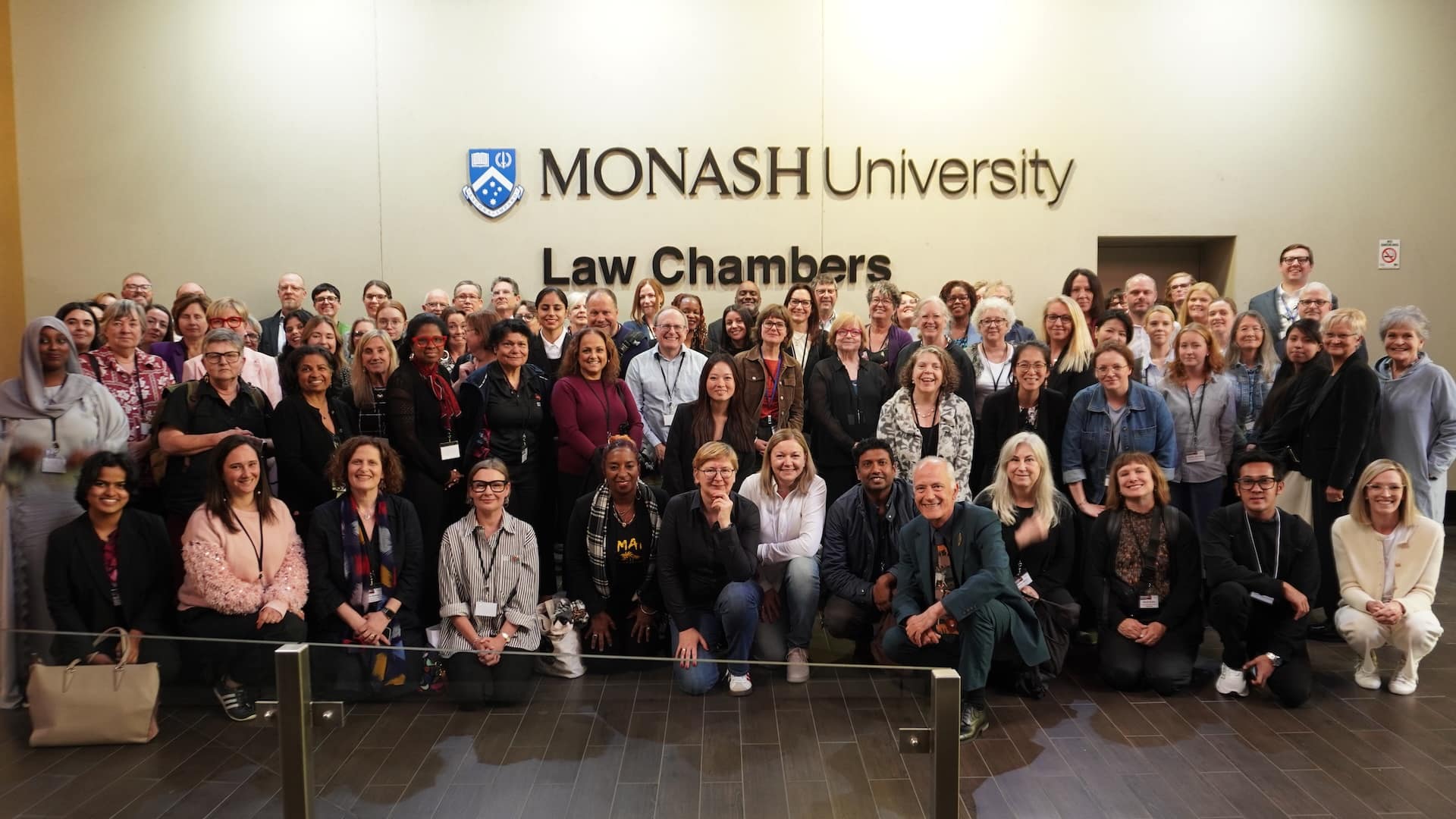
Shireen has also presented work at major global forums, including the 2025 International Journal for Clinical Legal Education Conference hosted at Monash Law Chambers.
“I was really excited because it was being organised at Monash and IJCLE is a journal that I refer to a lot,” she said
Collaborating with Professor Jacqueline Weinberg, Shireen co‑presented on AI and access to justice.
“Responding to those questions was a learning experience but I felt I did a good job,” she reflected
These experiences strengthened her confidence and reinforced the global relevance of her research.
What Shireen values most about the PhD program at Monash Law
Asked what she loves most about the Monash PhD experience, Associate Professor Moti’s answer is immediate:
“Intellectual freedom.”
She explained that her supervisor, Professor Jeff Giddings, never imposes ideas but encourages exploration.
“That makes me feel like my thoughts are valid, but maybe there's another way of looking at things or other things to look at.”
She also highlights that studying a PhD at Monash Law provides:
- Intellectual curiosity - learning from seasoned scholars
- Structured discipline - milestones that keep her work focused
- Supportive mentorship - critical, empathetic, motivating
Her message to anyone considering a PhD at Monash Law is straightforward:
“I would say go for it. They have really good structured programs, milestones, and great academics who are really interested in research and in mentoring you and guiding you.”
Becoming part of this network, Shireen said, is career‑changing.
“At the end of my career, I want to leave the world a little better in terms of access to justice for the marginalised,” she said.
It is this clarity of purpose, grounded in lived experience, refined through scholarship, and supported by Monash, that defines her PhD journey.