
ATLAS Finance Sydney Workshop examines directors’ duties
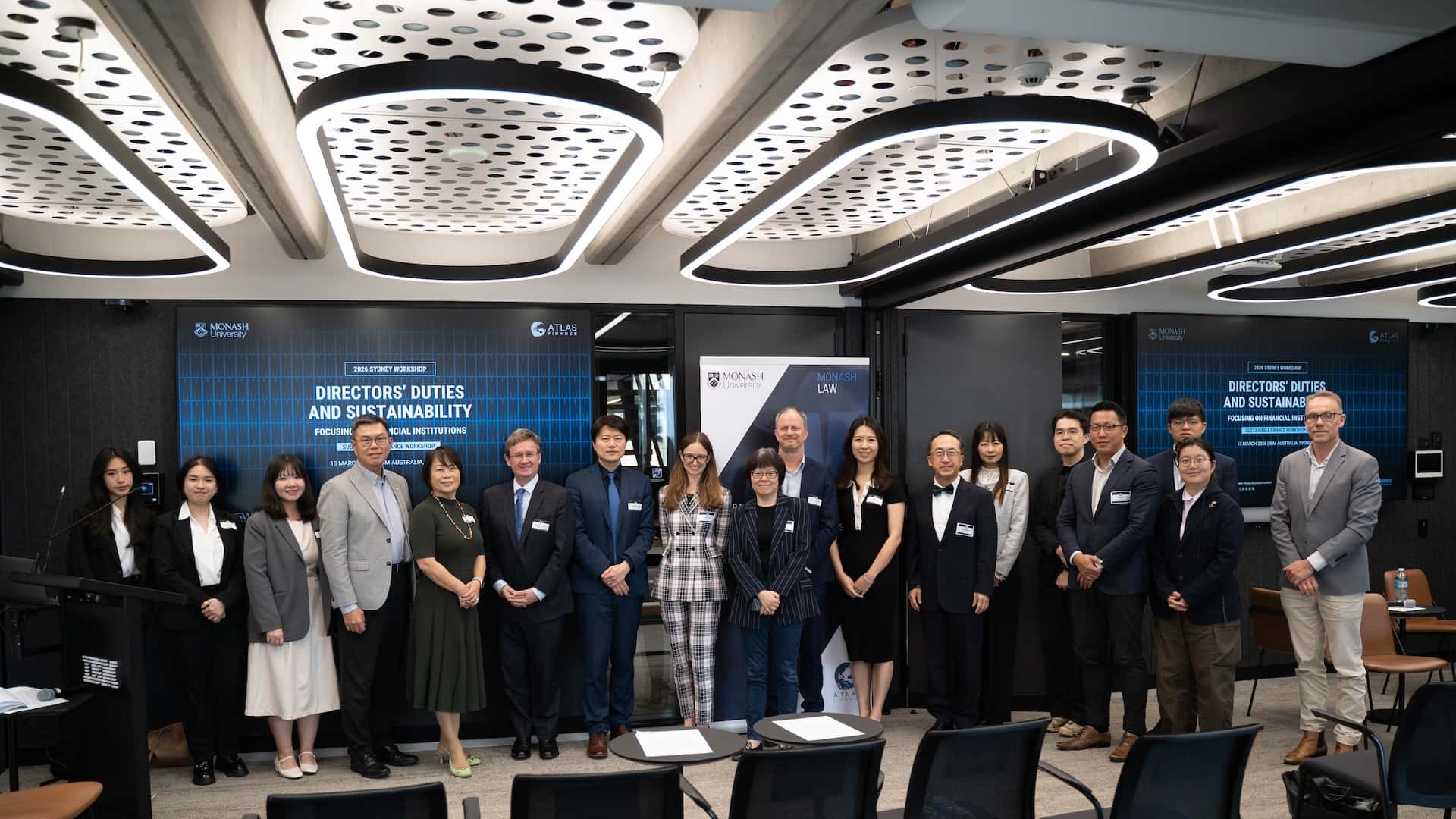
The Australia‑Taiwan Collaboration in Addressing Legal and Regulatory Challenges in Sustainable Finance project, known as the ATLAS Finance Project, recently convened leading academics, regulators, judges and industry practitioners in Sydney to examine how directors’ duties are evolving in response to sustainability, ESG and climate risk.
Held at IBM Promontory in Sydney, the workshop brought together participants from Australia and Taiwan for a candid, technical discussion about accountability, governance and enforcement in financial institutions. The session formed part of a two‑year bilateral research program focused on sustainable finance law and regulation. The successful event reflected the dedicated effort of the ATLAS Finance project team, led by Project Lead Associate Professor Cheng-Yun Tsang and Project Co-Lead Professor Gerry Nagtzaam from Monash Law, alongside our student Project Team Lenie Tan, Jerome Ho and Sudhida Rattanasaksiri, and Taiwan-Side Coordinator Aileen Chen.
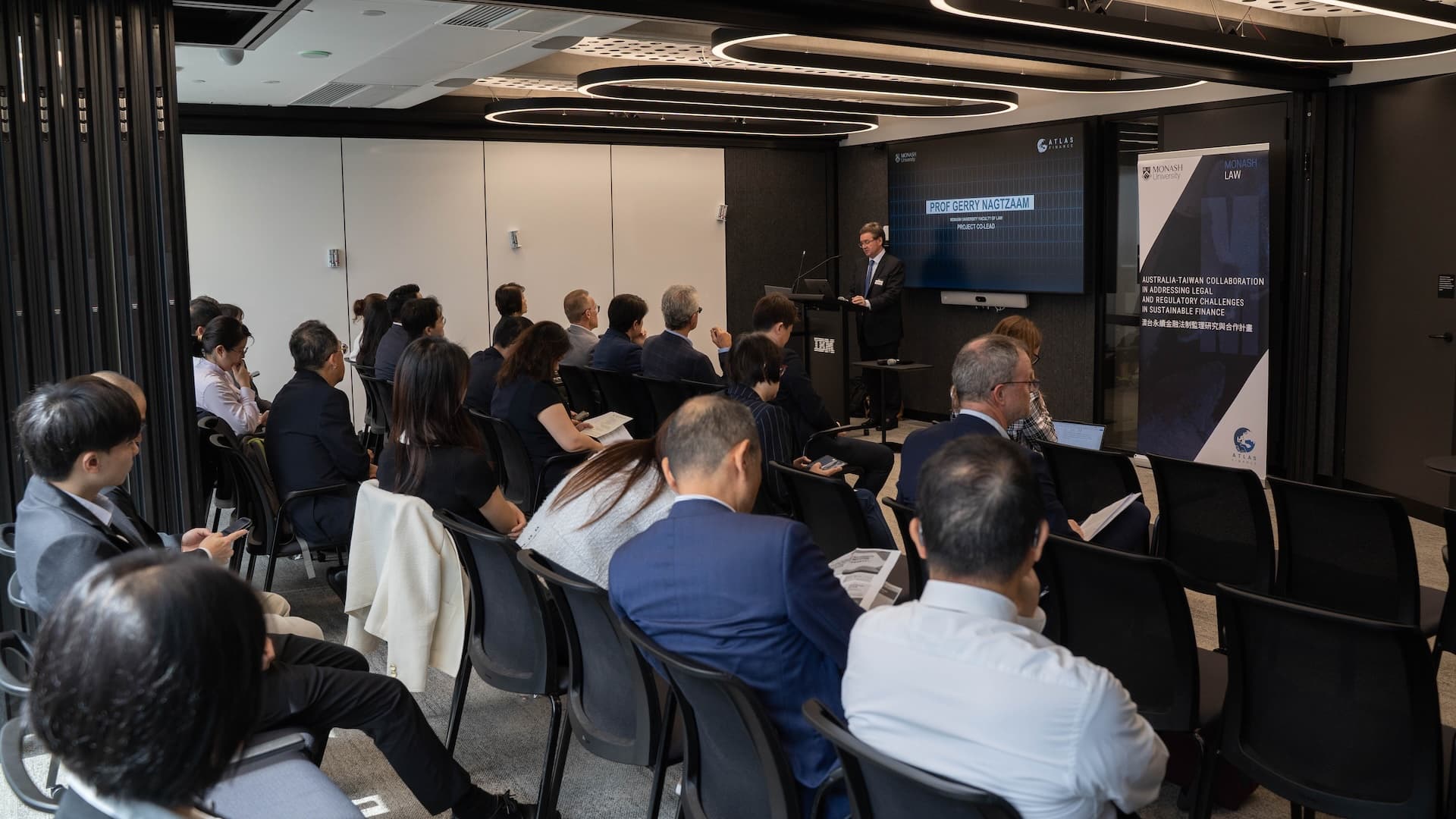
In their opening remarks, Professor Gerry Nagtzaam and Associate Professor Cheng-Yun Tsang noted that the timing of this workshop was deliberate and underscored the importance of cross-jurisdictional collaboration between Taiwan and Australia.
The workshop was supported by the Australian Department of Foreign Affairs and Trade through the National Foundation for Australia‑China Relations, in collaboration with the Sustainable Finance & Impact Investing Academy, the Australia-Taiwan Business Council, and universities and industry partners.
Why directors’ duties matter for sustainability
Professor Nagtzaam outlined several reasons directors’ duties matter for sustainability, grounding them in everyday boardroom responsibilities rather than idealism.
“Sustainability issues such as climate change, resource scarcity, and social responsibility affect long‑term business viability. So directors should consider them when making strategic decisions,” he said.
Risk management featured prominently, particularly where environmental and social factors intersect with legal and reputational exposure.
“Sustainability challenges create legal, financial and reputational risks. Directors have duties to exercise care, diligence and risk oversight, which means they have to identify and manage these types of things.” .
Accountability was another recurring theme.
“Boards are responsible for setting corporate policies, monitoring management, and ensuring compliance with laws and standards. This governance structure can help ensure sustainable commitments are actually implemented rather than merely public relations statements,” Professor Nagtzaam said.
Regulatory perspectives
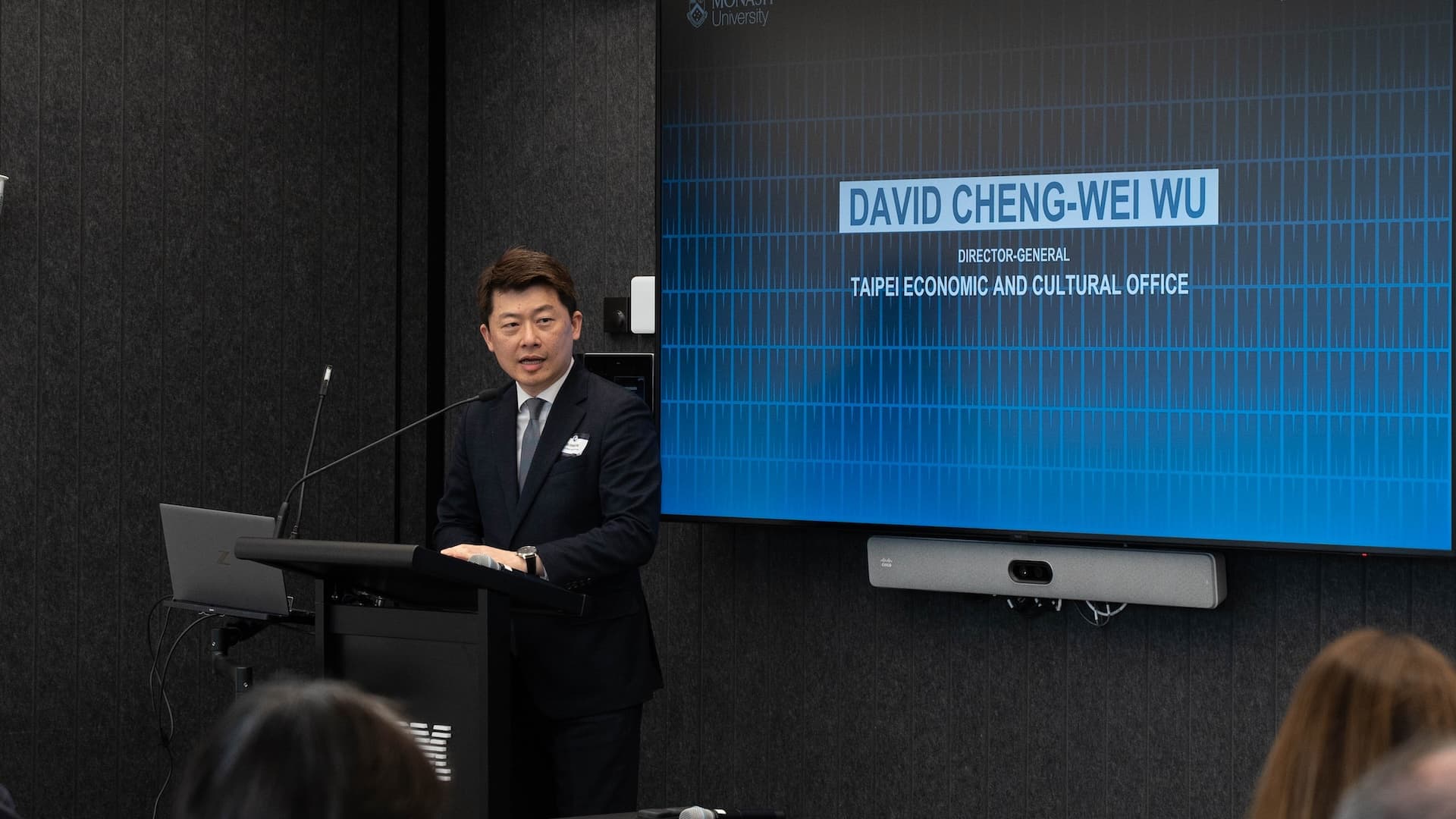
David Cheng-Wei Wu, Director‑General of the Taipei Economic and Cultural Office in Sydney, situated the workshop within the broader Australia–Taiwan relationship.
“As we gather in Sydney, we are reminded of the strong and growing partnership between Taiwan and Australia, especially in critical fields of ESG and sustainable finance,” Mr Wu said .
He described sustainable finance as central to Taiwan’s policy direction.
“Sustainable finance is the engine of this transformation,” he said, referring to Taiwan’s dual digital and green transition agenda.
Wu framed director accountability and market discipline as shared priorities.
“By addressing accountability and market discipline today, we are joining in building digital trust and green resilience”.

Financial inclusion and the sustainability system
Professor Ross Buckley of UNSW took a broader systems approach, linking sustainability to financial inclusion.
“Our future as a species depends on sustainability,” he said .
While acknowledging climate risk to financial assets, Professor Buckley urged participants to consider the social function of finance itself.
“If individuals don’t have access to financial services, they can’t really think and act long term,” he explained.
“The same for corporations. If they’re not well served with effective financial services, everything becomes short term”. Professor Buckley described Australia’s strong expectation of universal access to banking as a quiet but important governance norm.
“It’s easy to live somewhere like here and forget how important that is,” he said.
Industry insights from IBM Promontory
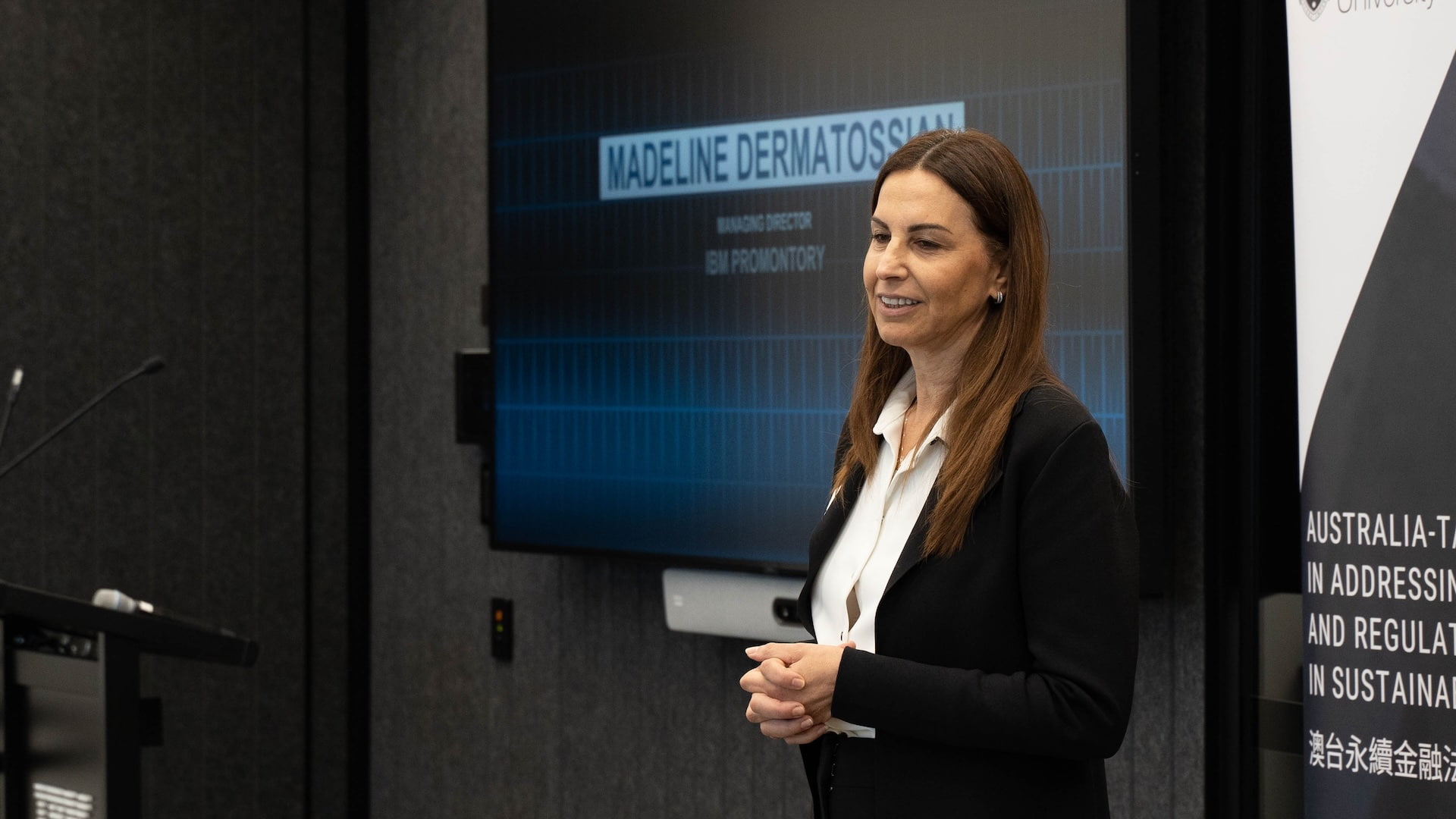
Madeline Dermatossian, Managing Director and Practice Leader at IBM Promontory Australia, grounded the discussion in regulatory practice.
“Regulators are very active in this space,” she said.
“Hopefully what I’ll bring today is live examples and practical examples of what industry is actually doing to respond to heightened financial reporting related to climate change risk.”
Dermatossian’s remarks underscored the operational burden sustainability regulation places on banks, insurers and superannuation funds, particularly around data, reporting and regulatory engagement.
The ATLAS Finance Project
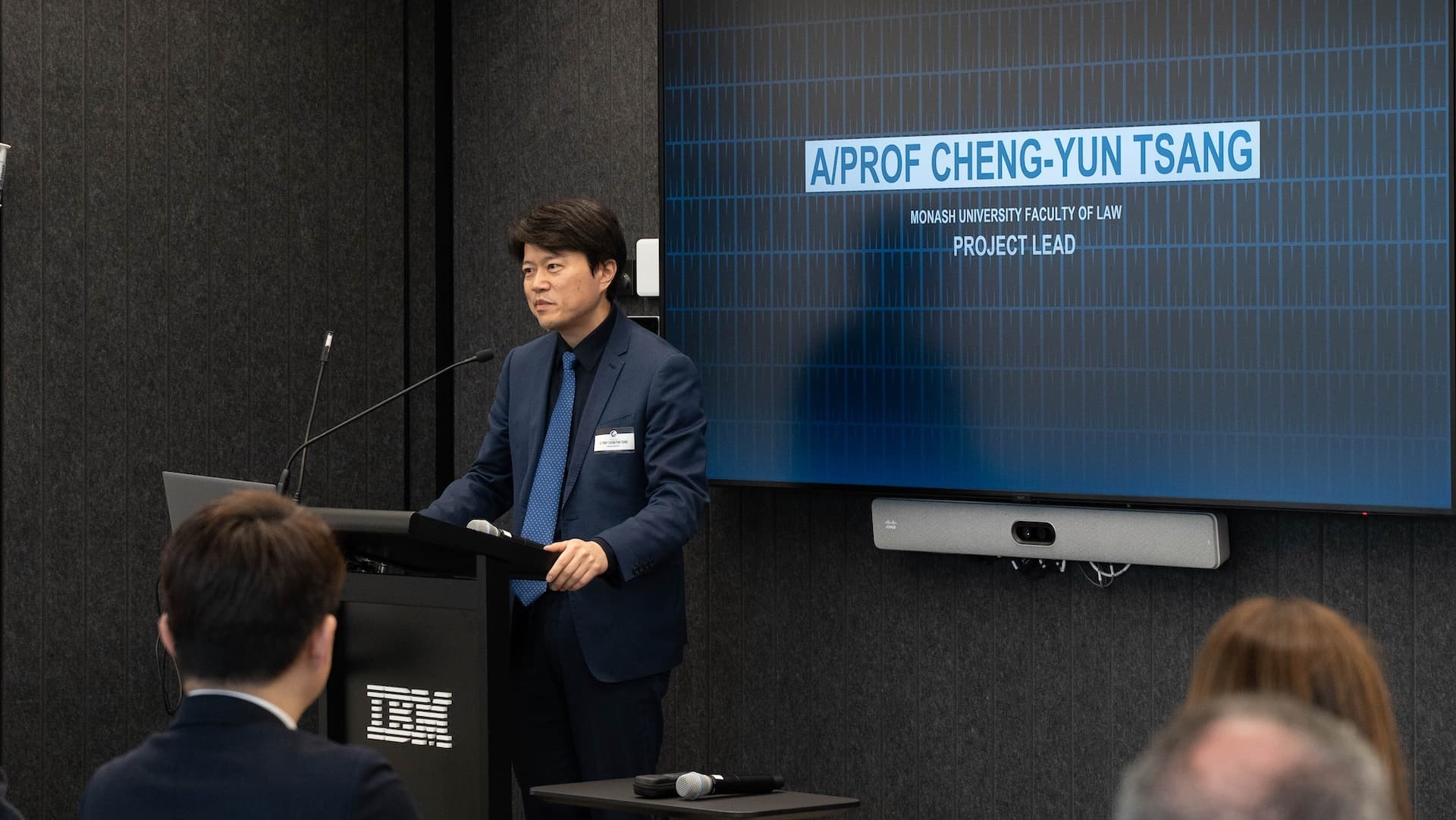
Associate Professor CY Tsang formally introduced the ATLAS Finance Project and its objectives to the workshop.
“The title of the project is Australian‑Taiwan collaboration in addressing legal and regulatory challenges in sustainable finance,” he said .
The project is supported over two years and aims to deepen bilateral dialogue through workshops, summits and an alumni network spanning academia, industry, the public sector and the legal profession.
“Our fundamental purpose is to build up a very strong bilateral network to further promote sustainable finance,” Associate Professor Tsang said.
He placed this workshop in a timeline that started with previous workshops in Melbourne and Taipei and an annual summit in Brisbane, with future events planned in Hsinchu and Canberra.

Taiwan’s regulatory landscape and director liability
The first keynote address, delivered by Professor Andrew Lin of National Taiwan University, provided a detailed overview of Taiwan’s sustainability reporting framework and director liability risks. Professor Lin discussed Taiwan’s green finance policy development, including the progression of its Green Finance Action Plan, and explained how sustainability-related financial information is expected to become increasingly embedded in corporate reporting obligations.
Professor Lin noted that from 2027, listed companies in Taiwan, including financial institutions, will be required to publish sustainability-related financial information in a dedicated section of their annual reports. He also examined the legal consequences that may arise from inaccurate or misleading sustainability disclosures, particularly in the context of greenwashing. This highlighted the potential exposure of directors where sustainability statements are found to be misleading or inadequately supported.
A key takeaway from the session was the importance of due diligence as a practical governance safeguard. Professor Lin emphasised that directors should take reasonable steps to understand, verify and oversee sustainability-related disclosures, particularly as regulatory expectations continue to develop.
Australian directors’ duties and nature risk
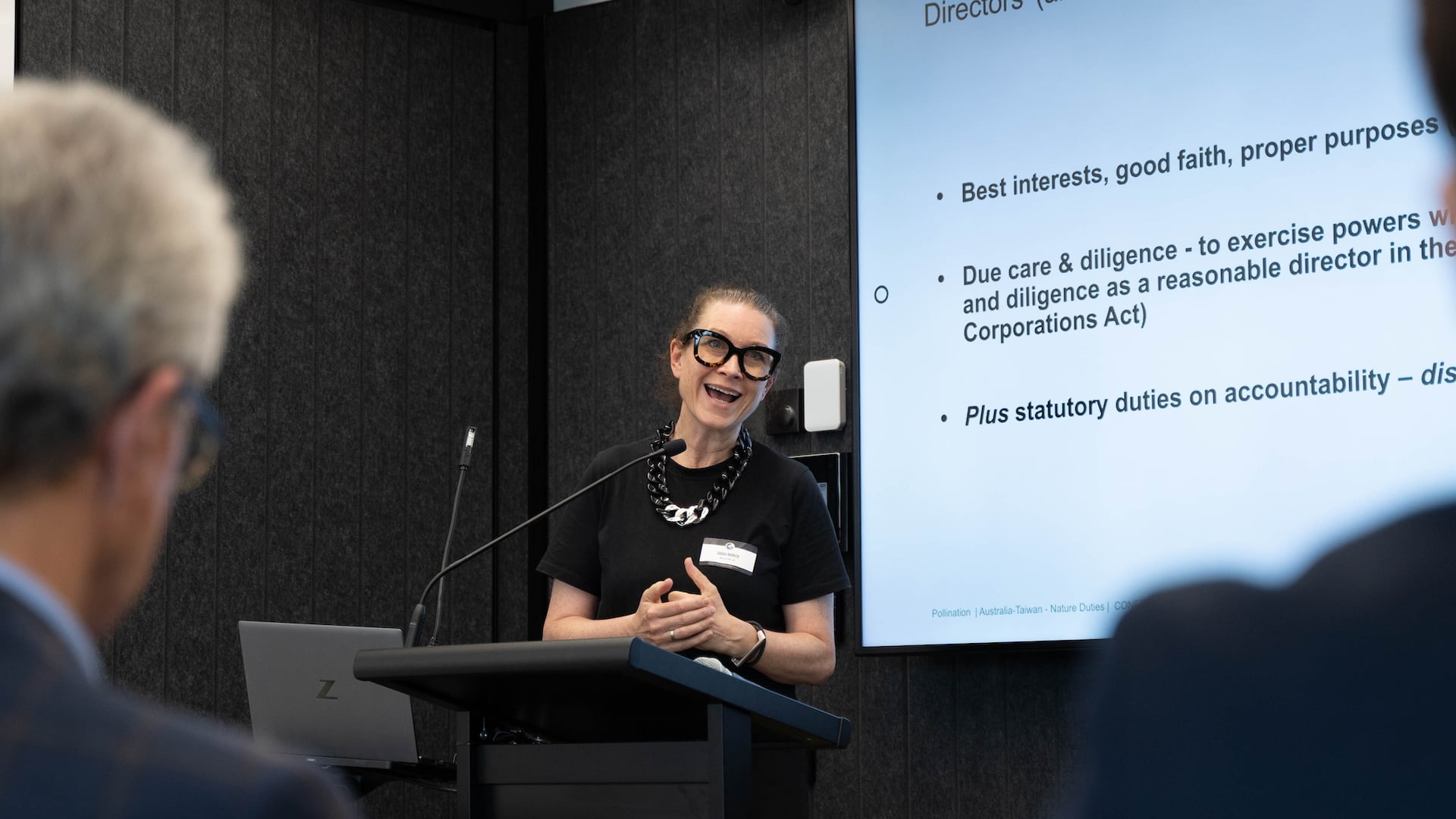
The second keynote, delivered by Sarah Barker, Managing Director at Pollination Law, focused on nature and biodiversity risk under Australian law. Barker examined how Australian directors’ duties may apply to nature-related financial risks, particularly through the duties of care and diligence and acting in the best interests of the company.
Barker explained that while nature and biodiversity are not expressly referenced in the Corporations Act, directors may still need to consider these issues where they present foreseeable and financially material risks to the company. The keynote also explored the broader legal and commercial relevance of nature risk, drawing parallels with other major systemic risks that boards have been required to manage. Her presentation highlighted that directors cannot treat nature and biodiversity as separate from financial governance where these risks may affect business operations, asset values, supply chains, financing, insurance or long-term corporate strategy.
A key takeaway from the session was that due care and diligence require more than passive awareness. Directors should actively inquire into relevant nature-related risks, critically assess the information before them, and ensure that board consideration of these issues is properly documented.
Panel discussions on governance and enforcement
Two panel sessions explored how these principles operate in boardrooms and enforcement settings. The two panels underscored that sustainability governance is no longer confined to disclosure compliance. It is increasingly connected to board accountability, risk management, market integrity and the evolving role of regulators in shaping responsible financial conduct.
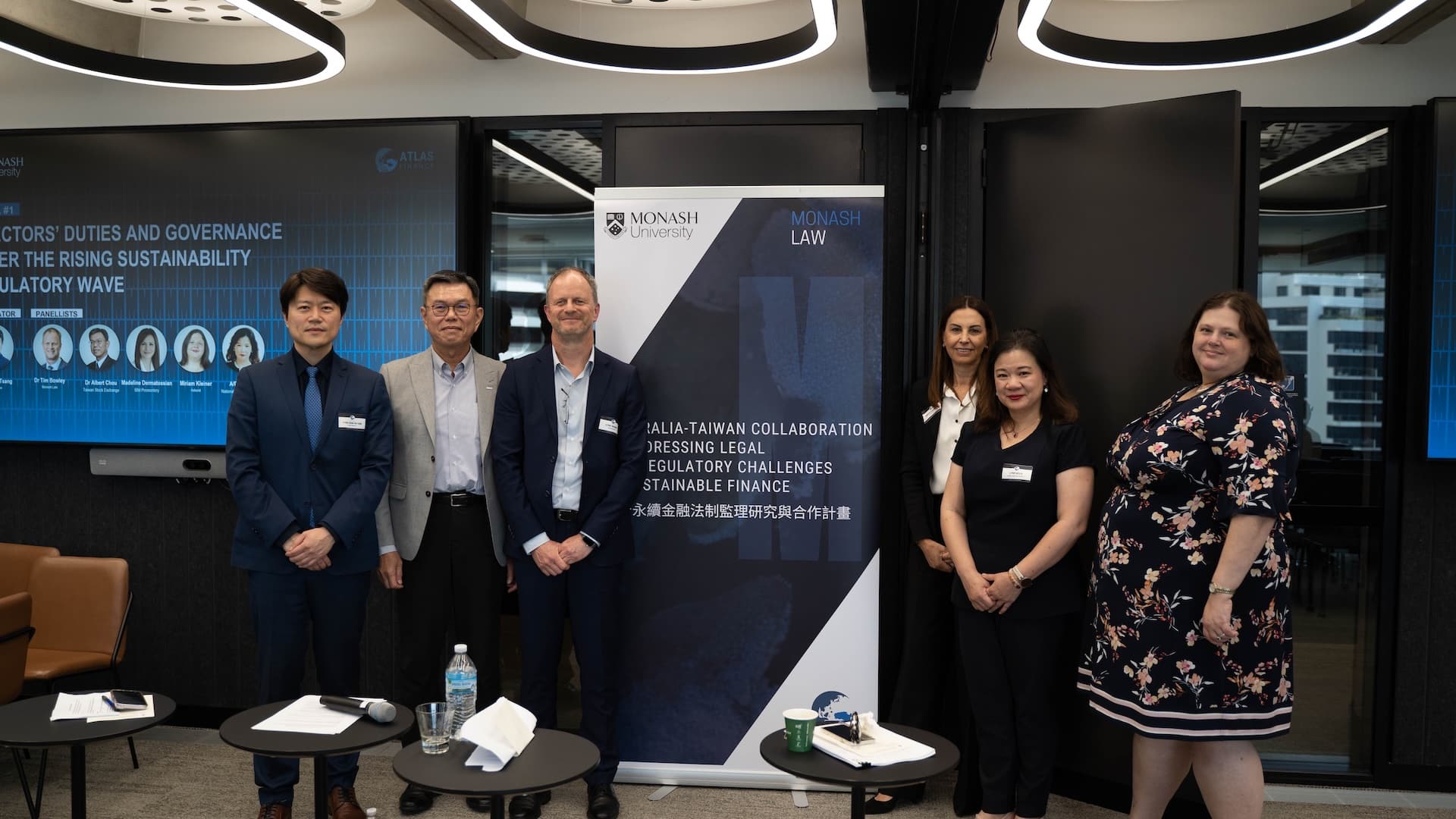
From Left to Right: Associate Professor Cheng-Yun Tsang (Moderator), Dr Albert Chou (Senior Vice President, Taiwan Stock Exchange), Dr Tim Bowley (Monash University, Faculty of Law), Madeline Dermatossian (Managing Director, Promontory Financial Group), Associate Professor Edith Su (National Chung Hsing University), Miriam Kleiner (Partner, Ashurst).
Panel 1: Directors’ Duties and Governance under the Rising Sustainability Regulatory Wave
The first panel examined whether sustainability has moved beyond a reporting exercise and become a core governance issue for financial institutions. Panellists discussed how boards are increasingly considering sustainability through existing risk categories, including credit risk, reputational risk, operational risk and strategic risk, rather than treating it as a standalone compliance matter.
A key theme was the growing significance of mandatory reporting and directors’ declarations. The panel observed that formal sign-off requirements have sharpened board attention, as directors are increasingly expected to understand, test and take responsibility for sustainability-related disclosures.
The discussion also highlighted practical governance challenges, particularly for smaller boards and institutions with limited internal capacity. Panellists noted that directors may face greater exposure where they lack access to specialist expertise, adequate data systems or sufficient internal resources to assess sustainability-related risks. This reinforced the importance of proportionate governance processes, active inquiry and clear documentation of board decision-making.

From Left to Right: Professor Gerry Nagtzaam (Moderator), Associate Professor Ting-Hsien Cheng (National Central University), Hannah Glass (Special Counsel, Ashurst), Professor Andrew Lin (National Taiwan University), I-Ching Tseng (Director, Tseng Consulting), Judge Wen-Ju Wu (Taiwan High Court).
Panel 2: From Regulation to Enforcement: Accountability and Market Discipline in Sustainable Finance
The second panel focused on enforcement, greenwashing and the legal challenges associated with sustainability-related claims. Panellists discussed the increasing regulatory scrutiny of sustainability disclosures and the risks that may arise where statements are inaccurate, overstated or inadequately substantiated.
A central issue was the difficulty of proving causation in sustainability litigation, particularly where alleged misstatements are linked to investor loss or market impact. The panel explored how complex market conditions, multiple contributing factors and forward-looking disclosures can make liability difficult to establish in practice.
The discussion also considered the appropriate balance between accountability and regulatory caution. Panellists noted that enforcement frameworks should deter misleading conduct while also allowing space for good-faith sustainability efforts, especially where disclosures involve emerging standards, uncertain data and forward-looking assessments.
Looking ahead
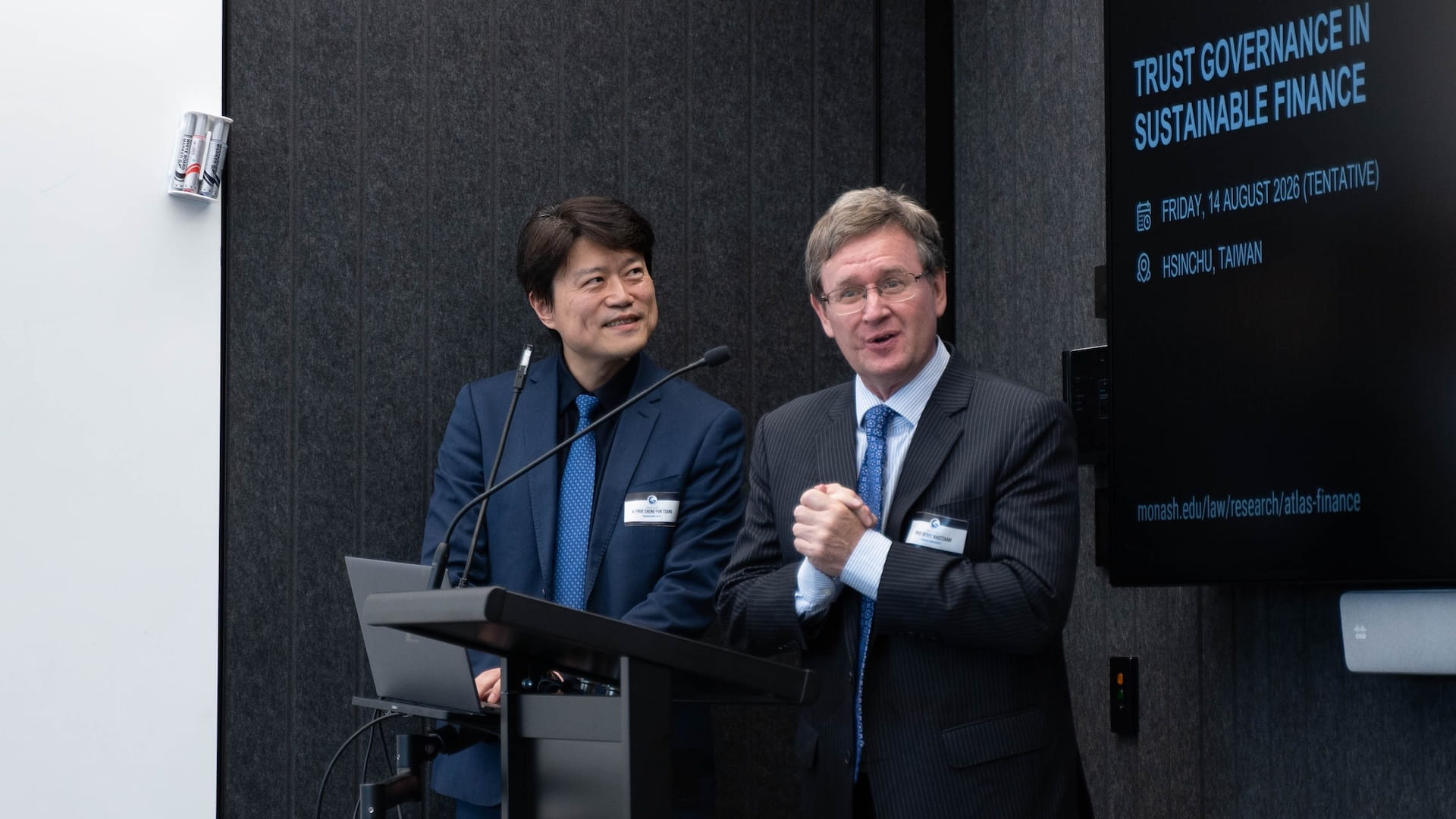
In their closing remarks, Associate Professor Cheng-Yun Tsang and Professor Gerry Nagtzaam returned to the challenge of changing board behaviour.
“To change behaviour, we need internal governance, corporate capacity, legal liability and regulatory enforcement working together,” Associate Professor Cheng-Yun Tsang summarised.
They both emphasised that board members are the directing mind and will of a company, and they are really at the centre of ensuring accountability in these sustainability efforts
The ATLAS Finance Project will continue this work through its next workshop in Hsinchu, Taiwan, on 14 August 2026, followed by the final summit in Canberra in early 2027. These upcoming sessions will further strengthen the project’s sustained Australia-Taiwan dialogue on sustainable finance regulation and practice.
As the Sydney workshop has demonstrated, directors’ duties are no longer a narrow corporate law issue. They are where sustainability, risk, accountability and long‑term value now meet.