
Monash Law Takes on The Hague: A Standout Run at the IBA ICC Moot Court Competition
Monash Law once again made its mark at the 2026 IBA ICC Moot Court Competition, placing 7th in the Preliminary Rounds and advancing to the Quarter-Finals. The competition drew 186 universities from 48 countries to the national rounds, with 94 teams progressing to the international rounds in The Hague.
After months of research, writing, revising and endless practice rounds, the Monash team travelled to the Netherlands to compete in the world’s leading moot in international criminal law. The team comprised Vanessa Marcon (Prosecution), Sara Scully (Government), Jasmine Millar (Defence) and Shailee Carmeli (Researcher), coached by Dr Monique Cormier, whose guidance was indispensable at every stage.
Find out more about mooting with Monash Law
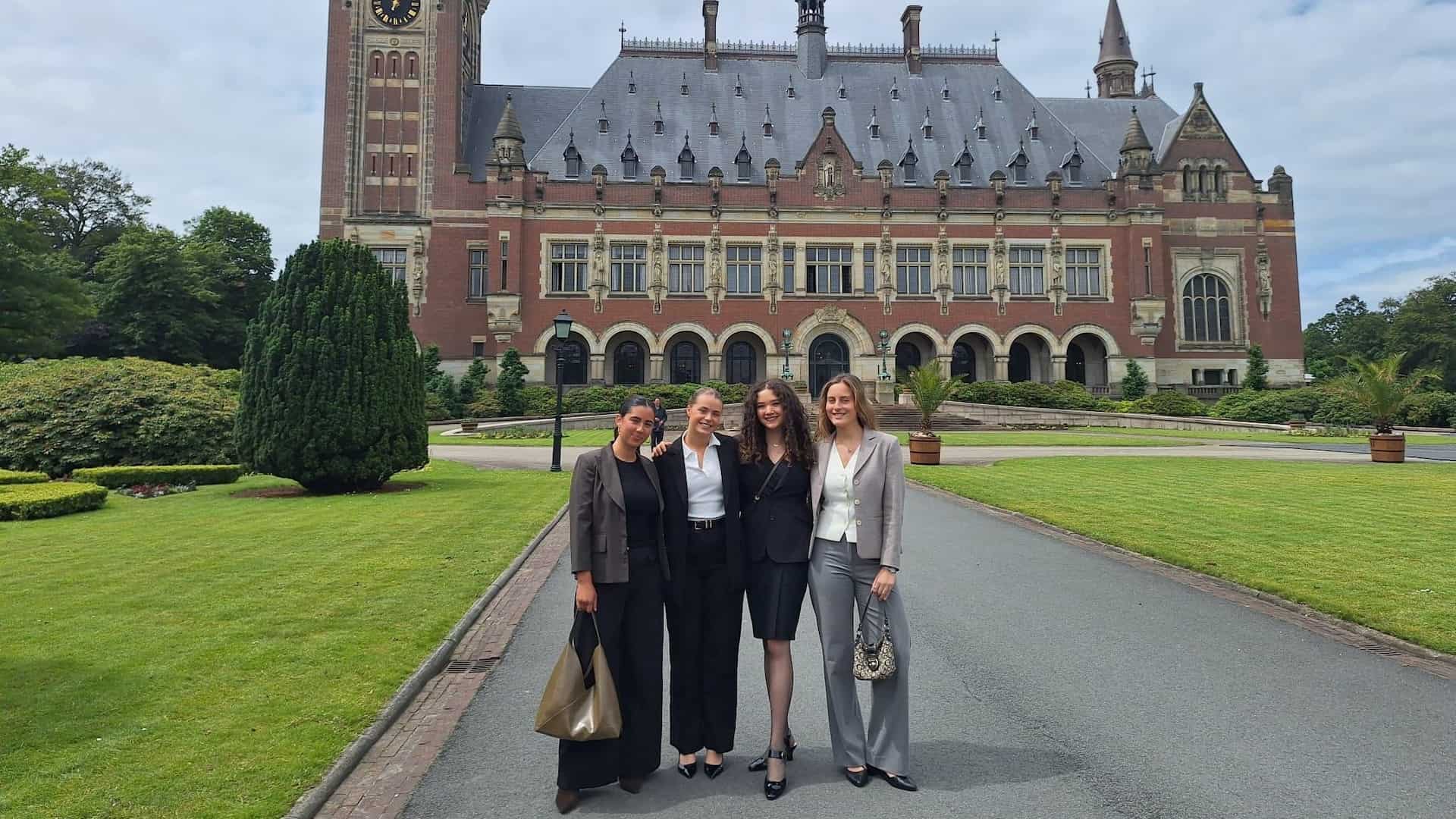
Shailee Carmeli, Jasmine Millar, Sara Scully, and Vanessa Marcon in front of the International Court of Justice (Peace Palace)
The Case of The Prosecutor v. Droganna Syrax
This year’s problem was as contentious as it was topical: a fictional naval blockade allegedly used to prevent humanitarian medical relief from reaching civilians. It pushed teams into unsettled territory in international law, across three difficult questions: whether the ICC had territorial jurisdiction under Article 12(2)(a) of the Rome Statute; whether Head of State immunity under Article 27 could shield a sitting Head of State from prosecution; and whether a suspect brought before the Court through irregular means of kidnapping could still be lawfully tried.
Find out more about mooting with Monash Law
From Melbourne to The Hague
Preparation began back in November 2025 and stretched over several months: extensive research, 10,000-word memorials drafted for each role in the case, and countless practice rounds in the Monash Moot Court.
None of it would have been possible without the extraordinary network of people who gave up their time to test, challenge and sharpen the team’s arguments in the lead-up to the competition.
The team is deeply grateful to international law specialists Dr Elizabeth Sheargold, Professor Jean Allain, Dora Velenczei and Dr Karin Frodé, and to Senior Legal Officer Mathias Marcussen, whose insight into the intricacies of international law proved invaluable. Particular thanks go to the alumni of this competition, Prudence Spencer, Gabriella Lennon, Serena Malatesta, Alec Miguel and Pimal Senanayaka, who knew exactly where the pressure points would be and made sure the team found them first. Finally, the team thanks practising lawyers William Liu, Felix Archibald and Jeremy Brown, whose advice and courtroom instincts sharpened the team's submissions before departure.
Thanks also to William Lye OAM KC for selecting the team, guiding us through LAW4805 and supporting our preparation for the competition.
The Oral Rounds
Once in The Hague, the team hit its stride. Across the Preliminary Rounds, Monash secured a 7th-place finish out of 94 competing teams, before advancing to the Quarter-Finals and coming within touching distance of the Semi-Finals in a tightly fought round. Monash was also awarded third best Defence Counsel Team internationally, recognising the quality of written and oral submissions made by Jasmine Millar.
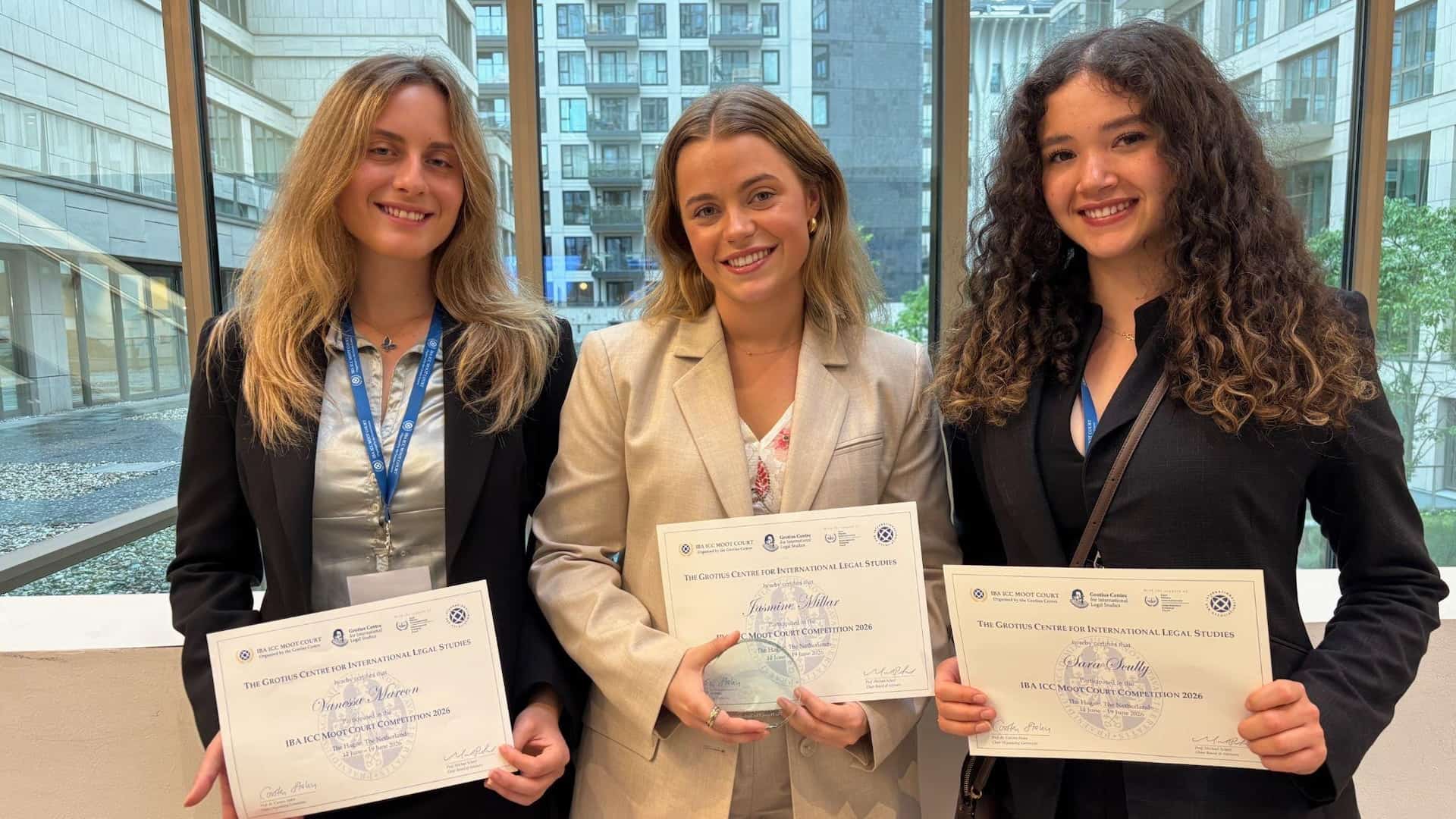
Vanessa Marcon, Jasmine Millar, and Sara Scully.
Every round was heard by a bench of practising international criminal and civil lawyers, professors, ICC staff and sitting international judges, which made every appearance high-stakes, challenging and very exciting. The team also relished the opportunity to face strong opposition from across the world, including teams from Brazil, Poland, Italy, the United States and the Philippines.
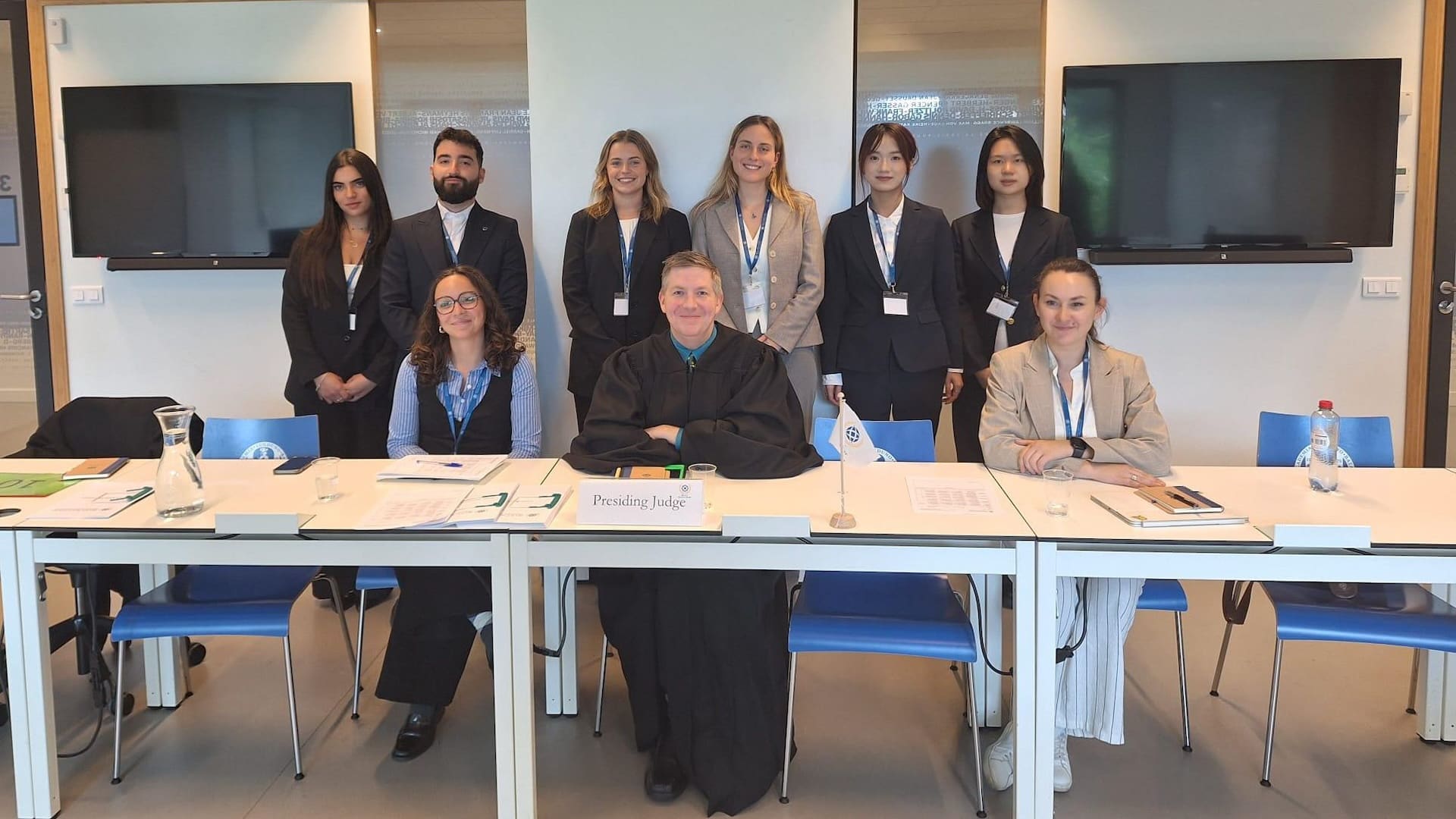
Jasmine Millar and Vanessa Marcon in the second preliminary oral round.
Beyond the Courtroom
The competition offered plenty beyond the courtroom itself. Across the week, the organisers ran a program built to bring competitors together, with academic panels, social events and site visits that turned a field of rivals into a genuine community. The team was welcomed at the Australian Ambassador’s residence in The Hague alongside teams from Bond University and the University of Sydney, and visited the International Court of Justice, where they had the rare opportunity to meet Judge Hilary Charlesworth and her associate, Rebecca McMenamin.
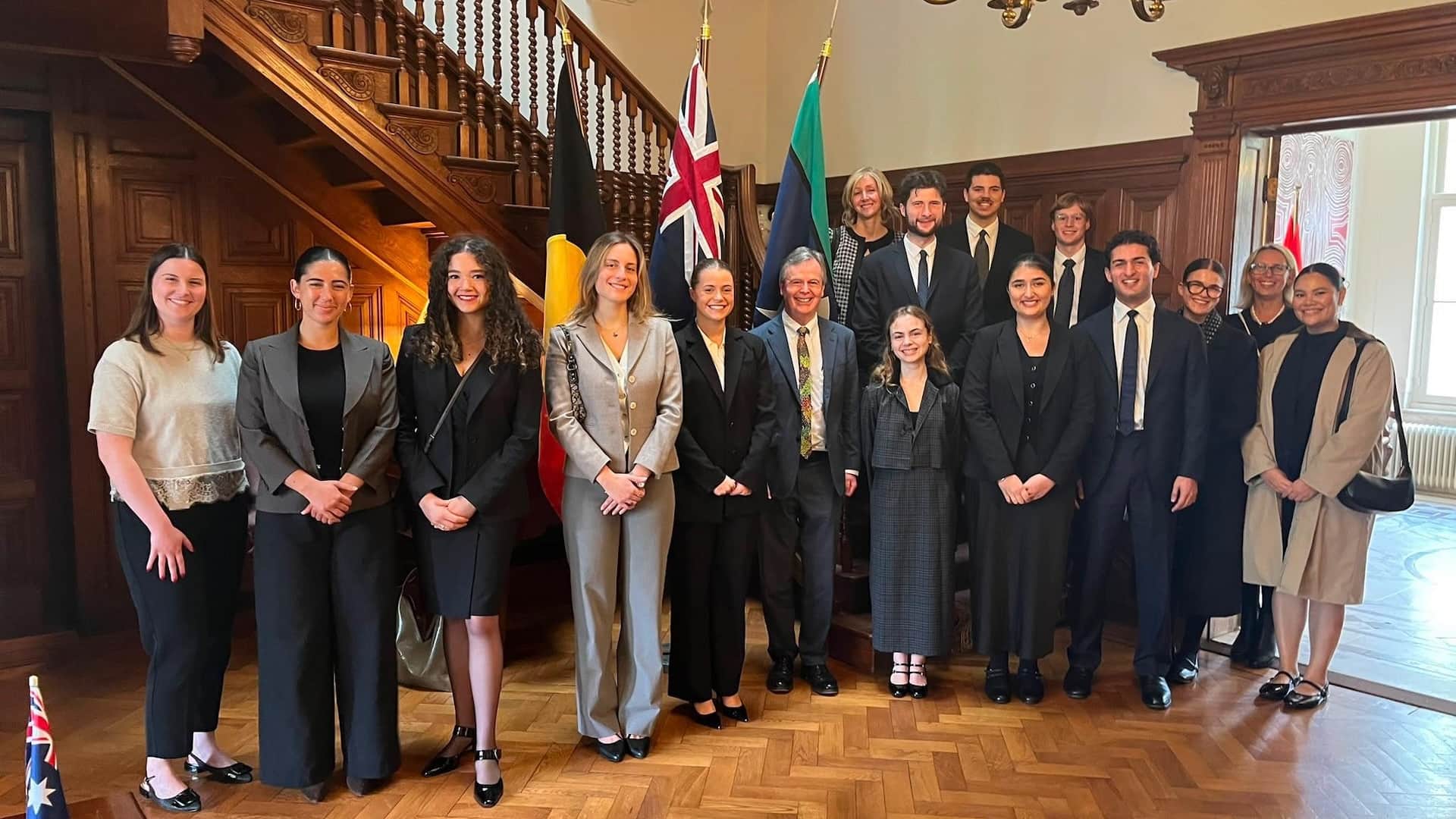
Shailee Carmeli, Sara Scully, Vanessa Marcon and Jasmine Millar at the Ambassador Dr. Greg French’s residence, alongside the University of Sydney and Bond University.
The week wrapped up with a beach party attended by judges, practitioners and legal professionals from across the field, giving competitors the chance to swap stories with the people shaping international law today. It was a fitting close to a week steeped in advocacy and international justice.
None of it would have run so smoothly without the competition’s organising committee, whose coordination of hundreds of students and judges across the week made an event of this scale feel seamless. The team extends its sincere thanks to everyone who made the competition possible.
Looking Ahead
The Monash Law team returns to Australia with new skills, new friendships spanning dozens of countries, and a renewed appreciation for the role advocacy plays in shaping international law. To the next cohort of Monash mooters eyeing off The Hague: the bar has been set, and we cannot wait to see you clear it.