
A new clinic steps onto the field for community sport at MLC
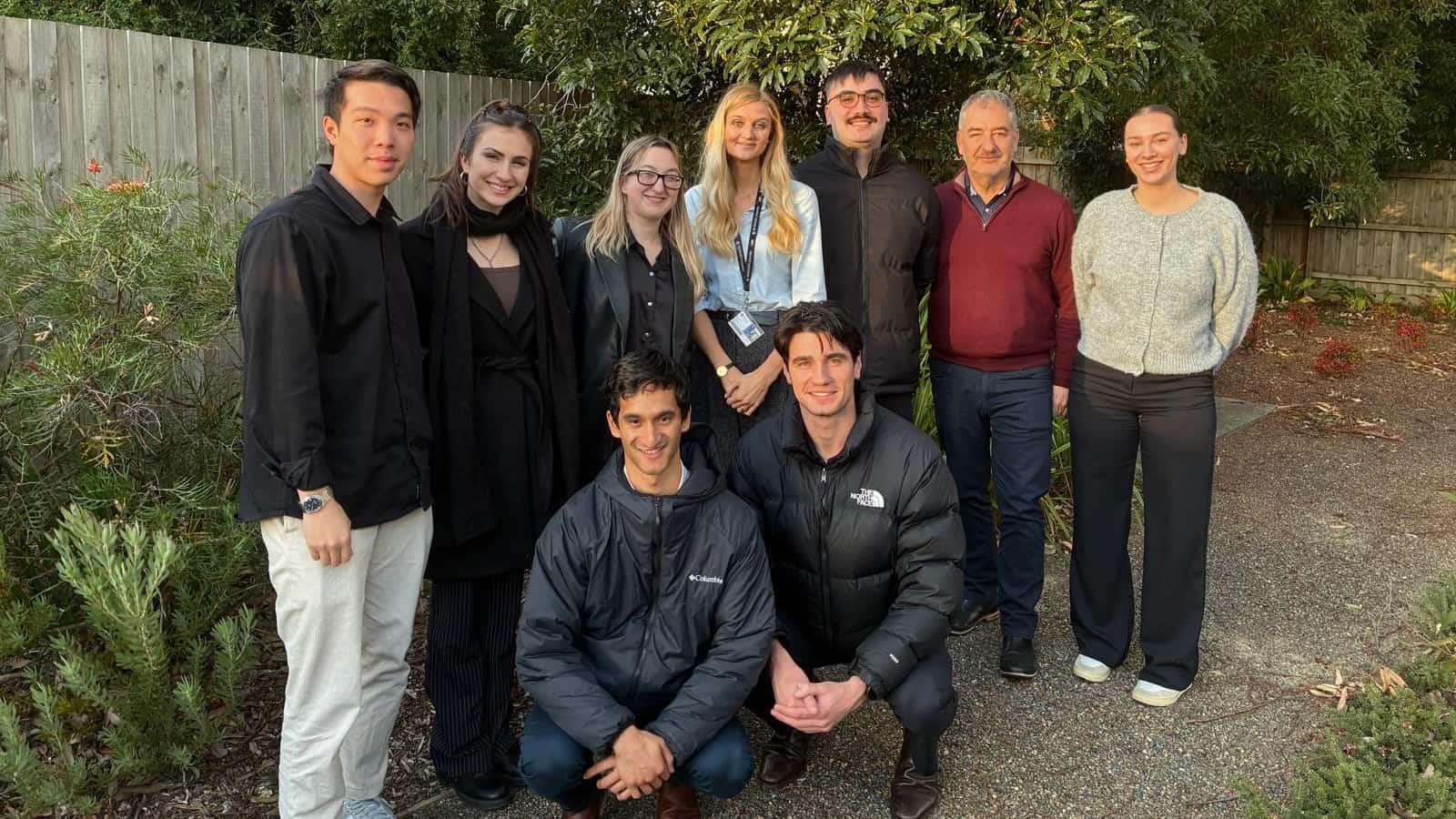
At Monash Law Clinics, a new initiative is quietly doing important work behind the scenes of community sport.
The Monash Law Sports Law Clinic was established last year by Dr Karin Frodé, Associate Professor Eric Windholz and Professor Joel Townsend to support Monash sporting clubs navigating growing legal and governance demands.
What emerged, even in its early weeks, is a model grounded in access to justice and practical student learning.
“The majority of sport is played at the community level,” Associate Professor Eric Windholz explained.
“They're voluntary organisations run by volunteers on goodwill”.
That goodwill, he said, is under pressure.
A community and sports system under strain
Community and amateur sporting clubs are increasingly expected to operate with the sophistication of small businesses.
“They have health and safety obligations, obligations to volunteers, obligations with children,” Windholz said.
“Sports increasingly are having to deal with diversity, equity and inclusion issues. There’s also challenges around responding to concussion.”
For volunteers, who are often balancing full-time work and family life, keeping up with these responsibilities can be overwhelming.
“They're doing it for the love of the game,” Windholz said.
“And they've got all these things on top of just the sports administration”.
Dr Karin Frodé sees this complexity every week in the clinic.
“At the higher level, there is such a web of obligations and responsibilities that interact, which is really tricky for them to comply with.” she said.
The result is a clear gap. Clubs need legal support. Many cannot access it.
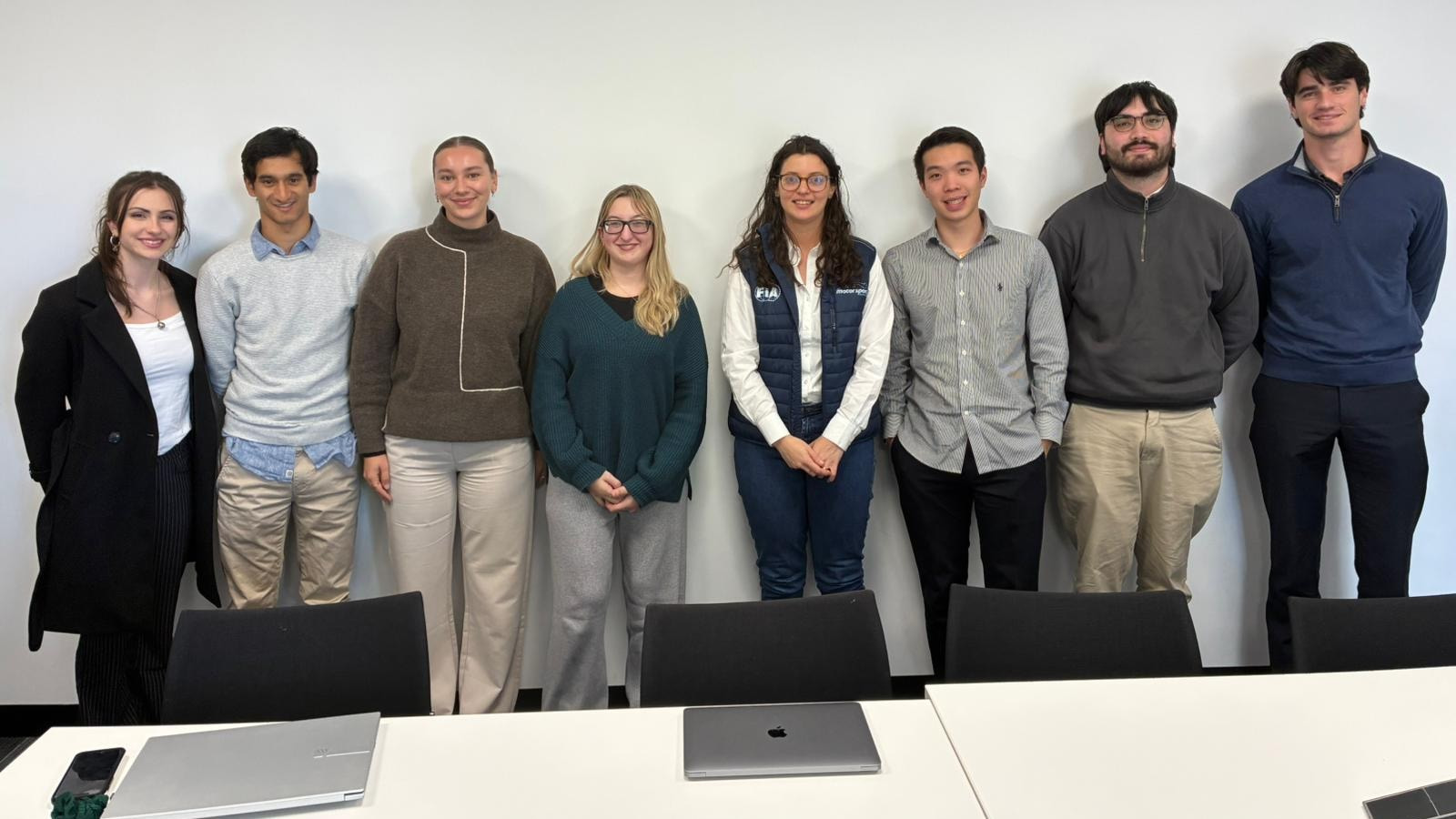
Sports Law Clinics students with guest speaker and Monash Law alum Gabriella Bornstein from Motorsport Australia.
A clinic built on access to justice
In the same way a goal emerges when players find a gap in the opposition, the Sports Law Clinic capitalised on an opportunity to fill that gap.
“We thought it would be good to set up a sports law clinic to support the clubs with their governance requirements and basic legal requirements,” Windholz said.
The clinic provides advice directly to sporting clubs, while also building tools that can benefit the broader community. Students meet with clients, produce letters of advice and work on real legal problems.
“It’s a client-facing clinic,” Frodé said.
“We have the client intake, we advise them and we provide letters of advice”.
Alongside this, students are helping to develop a library of governance templates that clubs can use.
”One of the things we're doing is auditing what clubs have in place right now, but also putting together a precedent library or a library of templates of what clubs should have,” she said.
The aim is practical and scalable. Instead of reinventing policy documents for each club, the clinic can provide accessible, adaptable resources to many.
For Frodé, the work is as much about prevention as it is about advice.
“Trying to be there to support and enhance and modernise some of the governing rules and provide clarity for the clubs at the start would be really helpful” Frodé said.
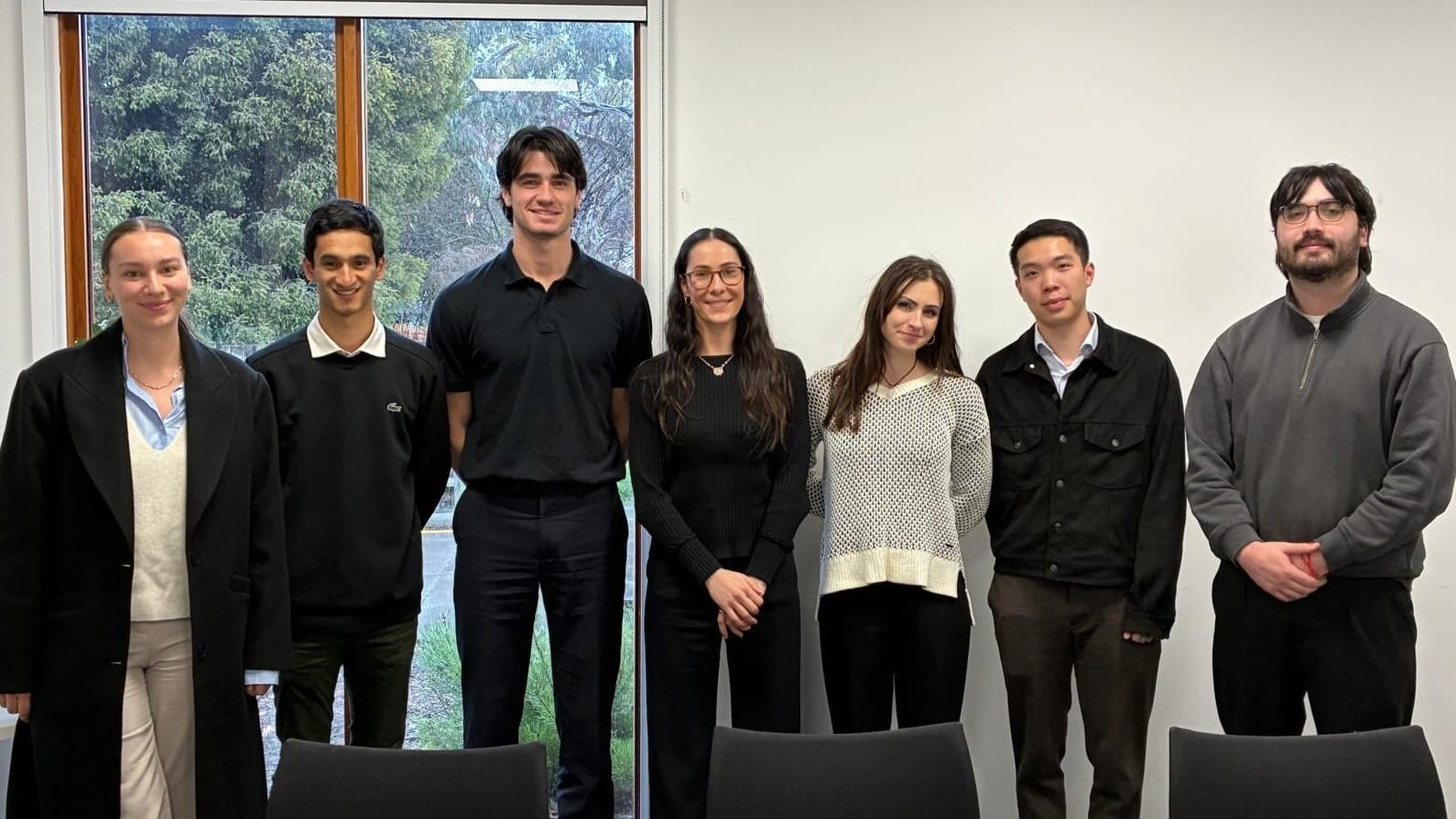
Sports Law Clinic students with guest speaker and Monash Law alum Loren Alderuccio from Hall & Willcox.
Learning law in real time
For Monash Law students, the experience is immediate and tangible. In its first four weeks, the clinic handled multiple matters and delivered its first formal advice.
“It was kind of overwhelming to think that we're giving actual advice to clients,” student Katarina reflected.
Unlike classroom learning, the clinic brings the law into everyday contexts.
“It's really interesting to see how it all runs. You're seeing it applied - how law functions in day-to-day activities,” Katarina said.
That includes working with a wide range of clubs.
“They're very interesting to talk to,” Katarina said.
“It seems like just a little thing, but then you kind of see that this is kind of important for the functioning of the clubs”.
For Katarina, the clinic offered a way to connect personal interests with legal training.
“I just thought it was a good way to combine my hobbies with my degree,” she said.
Her experience reflects a broader shift in how law students are imagining their future careers.
Pathways into a growing field
Sports law is not a single discipline. It sits at the intersection of many areas, from employment and contract law to discrimination and governance.
That complexity opens varied career pathways and Associate Professor Eric Windholz has identified three common routes into the field.
“The main pathway is somebody will go and do two to three years working in a law firm and then they'll apply for the job,” he said.
Others pursue sports law from the outset, while some enter the field unexpectedly.
“For some, the opportunity falls in their lap,” he said, pointing to a recent guest speaker who moved from international commercial law into a senior role at Motorsport Australia.
To help students explore these possibilities, the clinic has built a strong guest speaker program.
Lawyers from government, private practice, sporting bodies and the bar share their experiences.
“The idea was to open our students’ eyes to how the law and sport interact in a practical sense,” Windholz said.
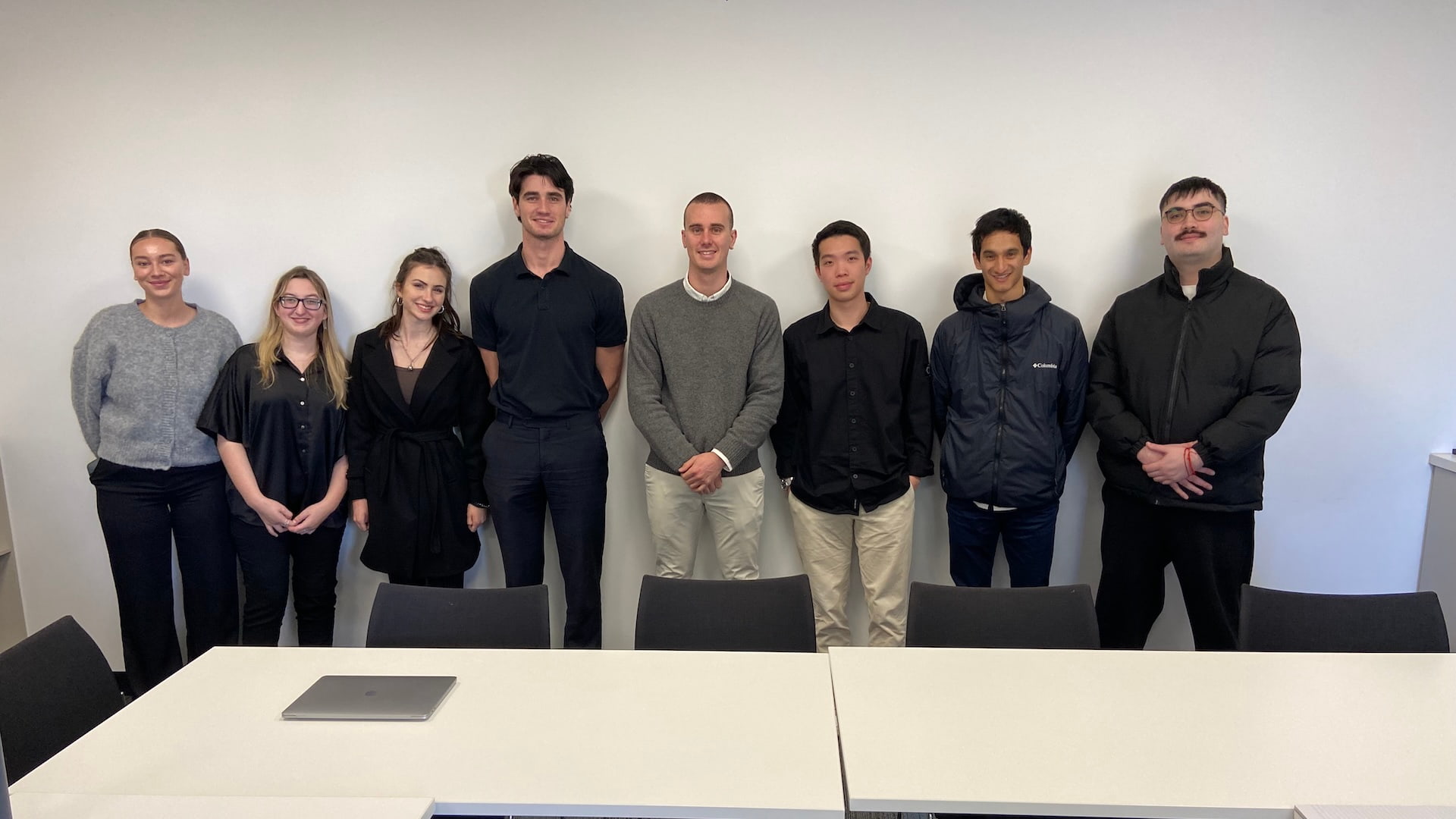
Sports Law Clinic students with guest speaker Jarrod Growse, Senior Integrity Lawyer from Tennis Australia.
Diverse and engaged students take up the sports clinic
The students themselves reflect the diversity of both the law school and the sporting community.
Many enter the clinic without prior experience in sports law. What they share is curiosity.
“I would say all of them have some sort of interest in sport,” Frodé said.
“But most of them didn’t have a background in sports law”.
That openness is central to the clinic’s learning environment. Students are not just applying knowledge. They are discovering new areas of law and new ways of working.
“It’s been eye-opening to see how law functions in day-to-day activities,” Katarina said.
“There’s so many things to consider within a sports club. You might have discrimination. There might be tort law. It’s interesting to see how it all combines.”
The sports law clinic supporting the sports clubs of the future
The clinic is now in its second year, with two more iterations planned for this year. But its early impact is clear.
Students are gaining practical experience. Clubs are receiving vital support. And the clinic is building a foundation for a broader community resource.
“We believe there’s a need out there,” Windholz said.
For Monash Law, the Sports Law Clinic represents a clear expression of its values. It sits at the intersection of education, service and opportunity.
It helps community organisations stay on their feet. It helps students find their path. And it reminds both that the law is not abstract. It lives in the everyday work of people who care about their communities and the sports that bring them together.