
Fifty years at the front of the room: Emeritus Professor Arie Freiberg
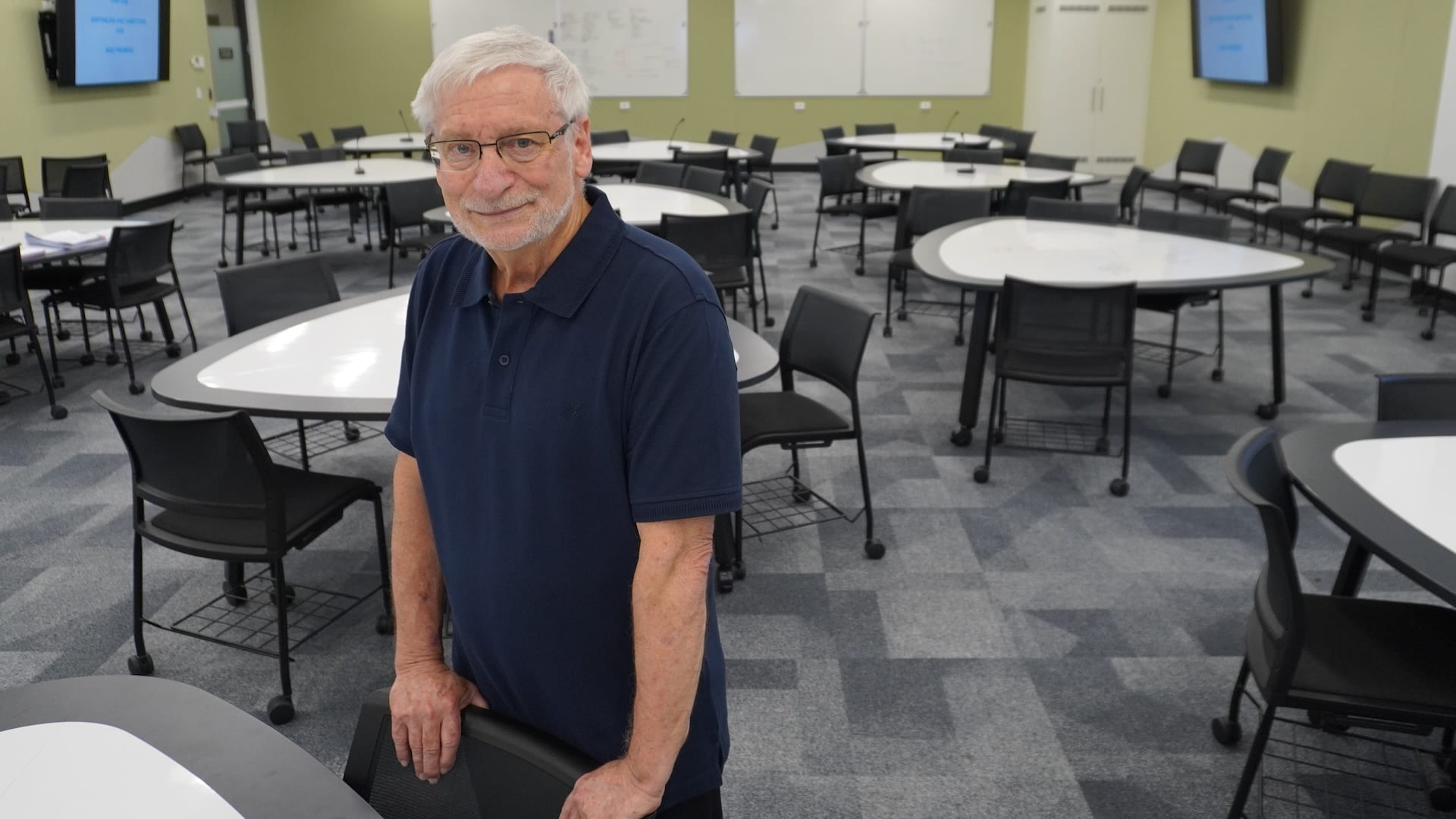
Monash Law celebrates 50 years of teaching by Emeritus Professor Arie Freiberg AM. His career has been defined by engagement, generosity and a belief that great teaching is part theatre, part scholarship, and always a catalyst for change.
Emeritus Professor Arie Freiberg is a long‑standing member of the Monash Law community. He has served as Dean of the Faculty of Law at Monash University (2004–2012) and Dean of the Faculty of Arts at the University of Melbourne (2003), and earlier as Foundation Chair of Criminology and Head of Department at the University of Melbourne (1991–2002). He holds an LLB (Hons) and Diploma in Criminology from the University of Melbourne, an LLM from Monash University, and a Doctor of Laws from Melbourne (2001).

Monash University Vice-Chancellor and President Professor Sharon Pickering, a former student of Arie's recently joined the Law Faculty for a surprise morning tea to celebrate Ari’s 50th anniversary of teaching. (Back row L-R) Law Dean, Professor Steven Vaughan, Professor Liz Campbell, Associate Professor Gaye Lansdell, Associate Professor Natalia Antolak-Saper, Professor Jonathan Clough, Paige Darby, Associate Professor Stephen Gray, (Front row L-R) Associate Professor Jacqui Horan, Professor Pickering, Emeritus Professor Arie Freiberg, Emeritus Professor Richard Fox.
He is a Fellow of the Academy of Social Sciences in Australia and the Australian Academy of Law.
His public service includes roles with the Victorian Environment Protection Authority (Interim Advisory Board, 2017–2018), the Agency Management Committee of the Australian Health Practitioner Regulation Agency (from 2020), Energy Safe Victoria’s Future Trends Advisory Committee (from 2021-2023) and the Judicial College of Victoria Board (from 2015).
To the thousands of students who have enjoyed the thrill of sitting in his classroom with the ever present potential to be publicly called on to answer a question, he is a very memorable teacher.
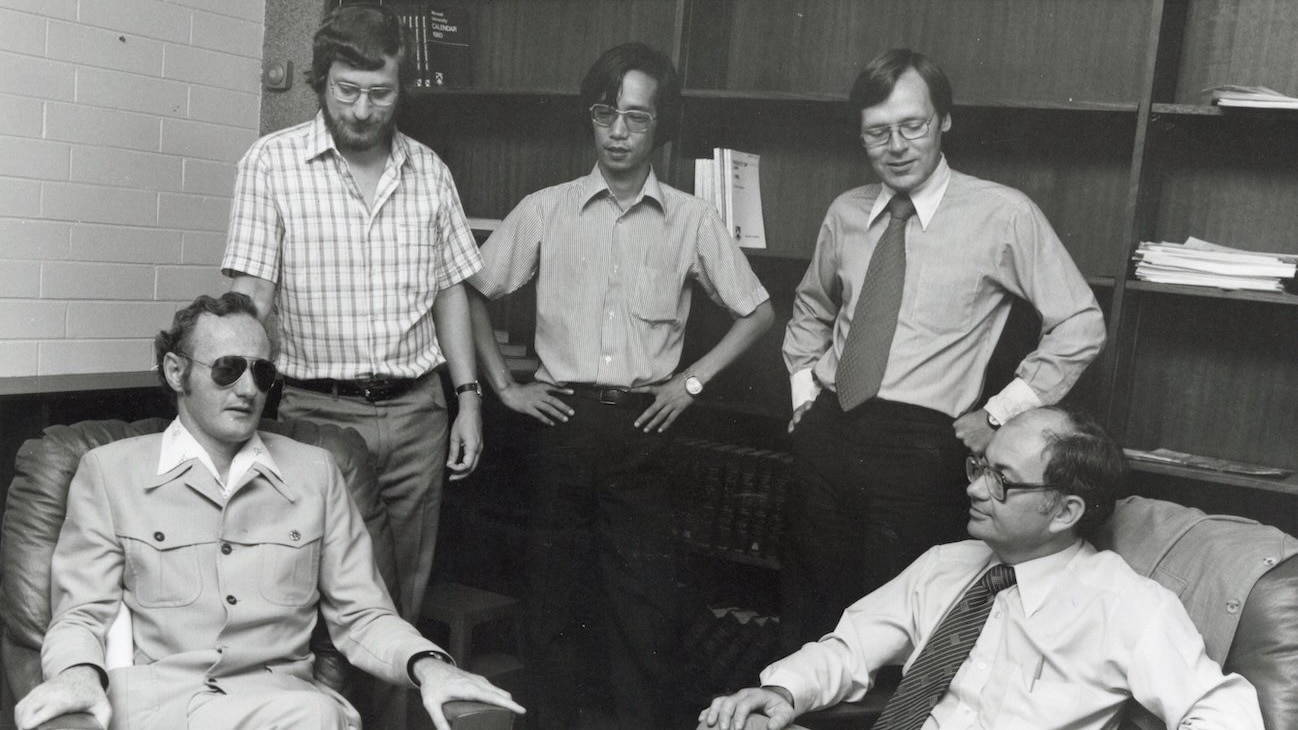
Ron McCallum (seated left), Arie Freiberg, Hisao Ishikawa, Professor Malcolm Smith and Professor Bob Baxt (seated right) in the Law Faculty, 1981.
A beginning shaped by curiosity and a classroom without a script
For those who have been taught by him, it may come as a surprise hear that Emeritus Professor Arie Freiberg didn’t set out to be a teacher.
“I started off as a criminology researcher and went to the newly established Australian Institute of Criminology in Canberra in 1974. The Whitlam government was active in law reform and Lionel Murphy was Attorney General. They were very exciting times”.
After two formative years in Canberra and seeking a change, he wrote to former teacher and future colleague Professor Richard Fox at Monash. The reply was simple and decisive.
“He spoke to the Dean, Professor David Allen, who said, yes, we've got a tutorship. Do you want to come and start off as a tutor? I came down in January or February of 76.”
What followed was a learning period with teacher as student in the deep end.
“They said, off you go, go and teach. Just go and do it. Sit in on the lectures, fill it in with your tutorials, and away I went.”
It was the beginning of a vocation that would span five decades, teaching subjects such as criminal law, criminology, legal process, tax compliance, regulation, a comparative perspective on crime and punishment and sentencing and sanctions.
In January of 2026, the classroom found a way to come full circle.
“I did my last class of the intensive unit ‘Sentencing and Sanctions’ and my last guest lecturer was Felicity Hampel.”
Felicity Hampel AM SC was a judge of the County Court of Victoria and is now Chair of the Post Sentence Authority. She has also served as adjunct professor of law at Monash Law.
“She was in my first year of teaching. She gave the very last formal class of my career.”
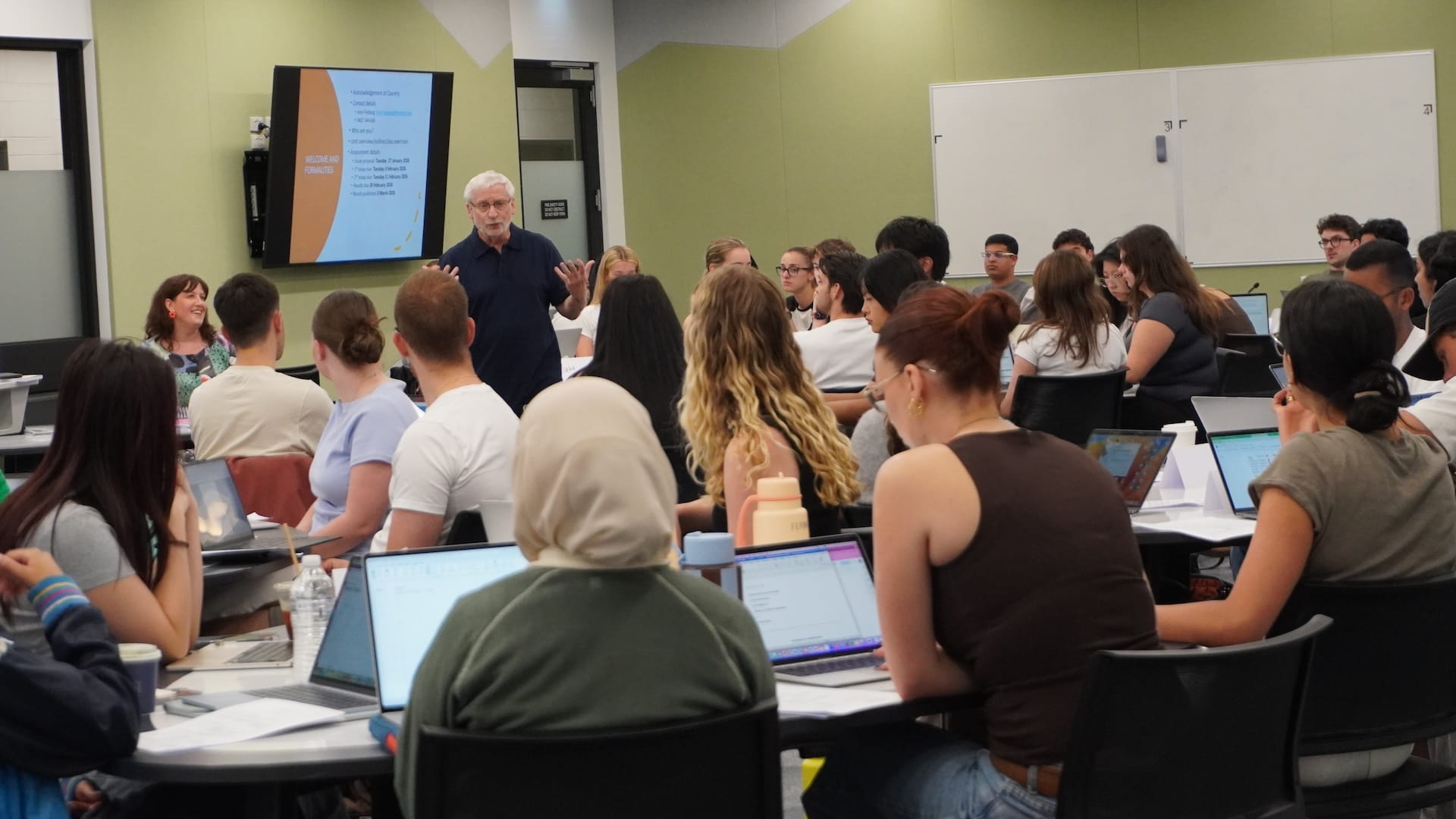
Emeritus Professor teaching without a script in 2026 to a class who would soon encounter his alum Felicity Hampel AM SC.
Research heart, teaching backbone
Throughout his career, Freiberg has managed a delicate balance between competing passions - teaching and research.
“My heart and soul is in research. I taught because that was what you did at a university. I enjoyed it enormously and still do, but my primary aim was to undertake research.”
He now has nearly 200 publications to his name.
“ I also did not want to spend any of my career in administration, but I ended up doing 20 years of administration as ahead of department at Melbourne University, as well as associate dean, deputy Dean, Dean of Arts and then Dean here at Monash Law,” laughed Freiberg..
Even while serving in demanding leadership roles he protected time for inquiry, and adapted his teaching to make it work.
“All of my teaching in recent years was in intensive mode so I could do that.”
“ I think that's a fantastic way of teaching. It enables engagement with the students, continuity every day and it's cumulative. So I think intensives are a terrific way of teaching.”
The teachers who taught the teacher
Freiberg credits his own teachers at University High School and the University of Melbourne with shaping his style.
“ I was at Melbourne University from 1968 to 1972. My criminology teachers were outstanding. Some of them led me on to my career.”
“ I had the Honourable Marcia Neave AO teach me ‘Introduction to law’. She was Victorian Law Reform Commissioner, Dean of Adelaide Law School, Professor at Monash Law - the most extraordinary person. The Honourable Ronald Sackville AO KC became a Federal Court judge, Gareth Evans, Attorney General for advanced constitutional law - I did not stay in that subject. There was also Peter Brett who wrote the original criminal law text book with the late Louis Waller on criminal law. I still remember those people.”
But it was way back in high school that he learned his most valuable teaching lessons, which he still uses today.
“ There were teachers who were theatrical, flamboyant and who had an approach to teaching which was enormously engaging. I remember one, and I've used that ever since, who never started the lecture in a place you expected him to start. It was always a surprise.”
From those classrooms, he learned three durable ingredients that make up a successful classroom recipe - engagement, theatricality, and humour.
“Teaching is about engagement, which for me is number one. It’s also about theatricality - it’s got to be interesting, have a narrative and include participation”.
In his own classroom, Freiberg always creates a classroom where students feel safe to try.
“No answer is wrong. There is absolutely no shame in participating. Everyone gets to talk”
A recent email from a student reflects much of the feedback Arie has received over the years.
“I would like to reiterate my gratitude for being taught by you at the end of what has been such a momentous and history-making career. I know you may cringe at the thought, but please know it is truly an honour to get to know and be taught by someone so deeply respected and widely admired in the legal world. I look forward to seeing your name pop up throughout my career in (hopefully) crime, and chat with many of your students from the past 50 years.”
“You reignited my faith in law school. I have always felt and been upset by the phrase 'the first thing you lose when you come to law school is the reason you came'. You have reminded me of the reason I came and, for that, I am so grateful. Your unit has been the first time I have really gotten my money's worth...and I really mean that. A dream!”
“Thank you for making us laugh, engaging us, reigniting the flame in many of us, and giving us an insight into the vast and ever-important world of sentencing.” - student Sophie Hodge, 2026.
Names on the desk, voices in the room
One small device tells you a lot about the way Emeritus Professor Arie Freiberg runs a class.
“Everyone has a card with their name on it in front of them, so I can say, ‘Okay James, what do you think?’. What I never do is ask the room, ‘Who can answer?’. And if you don’t have the answer, that’s fine, and everyone gets to speak”.
This captures his approach to inclusive participation. The goal isn’t to catch students out, rather it’s to bring them in.
This approach has influenced the careers of alumni across law, politics, policy and the bench. Many continue to have their names on their desk in front of them, but the desks have grown larger and more powerful.
“ I think from my very first year. There were four who went into politics. A number of people went onto the bench and many are now retired. Several have told me that I actually changed the course of their lives”.
From student feedback to national recognition
In 2009, Freiberg was appointed Member of the Order of Australia for services spanning criminology, sentencing reform, legal education and academic leadership. He received the honour, and continues to acknowledge it, with characteristic understatement.
“It’s always nice to be recognised when you’ve made a contribution over the years to various areas of the law. I was involved in writing the Sentencing Act in 1991, setting up the Sentencing Advisory Council, the establishment of the drug court in Victoria and other law reforms. So it's just a recognition, I suppose we all like to know somebody's noticed you.”
“You’ve lit the flame. That’s what we can do. Light the flame.”
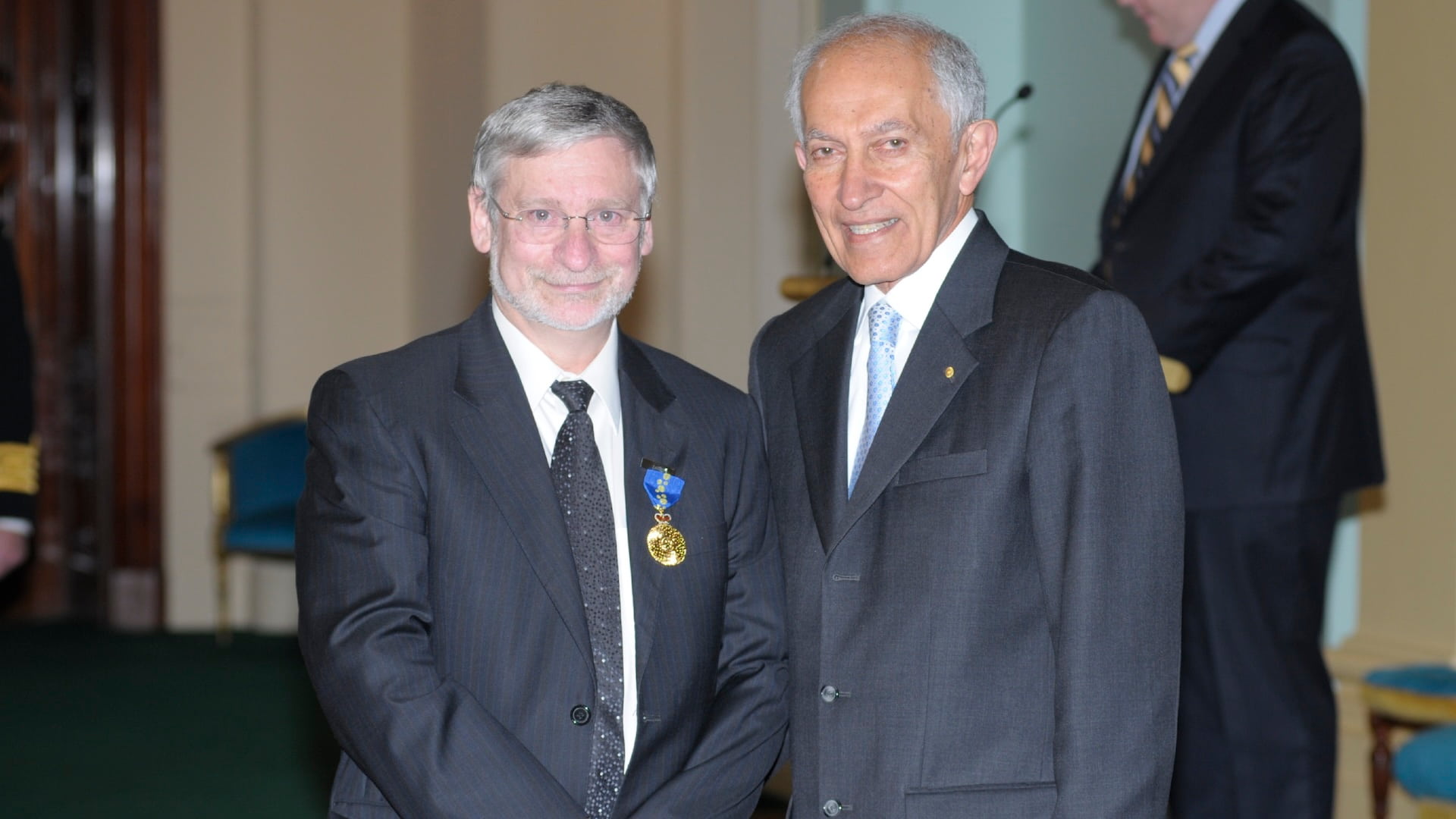
Professor the Honourable David de Kretser, AC presenting Professor Freiberg with the Member of the Order of Australia in 2009.
Advice to new colleagues: “Engage. Engage. Engage.”
As Monash welcomes several new academics to the Law Faculty in 2026, Freiberg’s counsel is simple and insistent.
“Engage. Engage, engage Even if teaching is not your number one priority, it’s the most important thing to the students”
Advice to students: choose passion, not noise
For the class of 2026 and all current students, Freiberg’s advice is as much about life as law.
“Choose the subjects that you really enjoy.”
“ I get every one of my guest presenters to talk about their life trajectory. They went in many directions, but they all said, ‘do what you're passionate about’. You may not be sure what the future holds, but do what you're passionate about now.”
His own career is evidence of how rich and fulfilling a life pursuing passion can be.
“I’ve been passionate as an academic and followed what I wanted to do, but being in front of the class - it’s a fantastic privilege.”
A legacy of generous rigour
Across five decades, Freiberg’s teaching was full of rigour with warmth, structure with spontaneity, and an unwavering commitment to amplifying the student voice. He has taught where he thinks and researched where he teaches. He has led institutions and built campuses. He has welcomed students into the hard questions of justice by asking them to answer first and then learn why.
For Monash Law, for his colleagues across the sector, and for thousands of students who learned to think aloud in his classes, his legacy is clear. Teaching, at its best, is serious play in service of public purpose. A good teacher leaves you curious, confident and changed.
“Light the flame,” he says and for fifty years, he has done just that.