
From Imaginary Parliament to Real Podcast: Feminist Acts launches
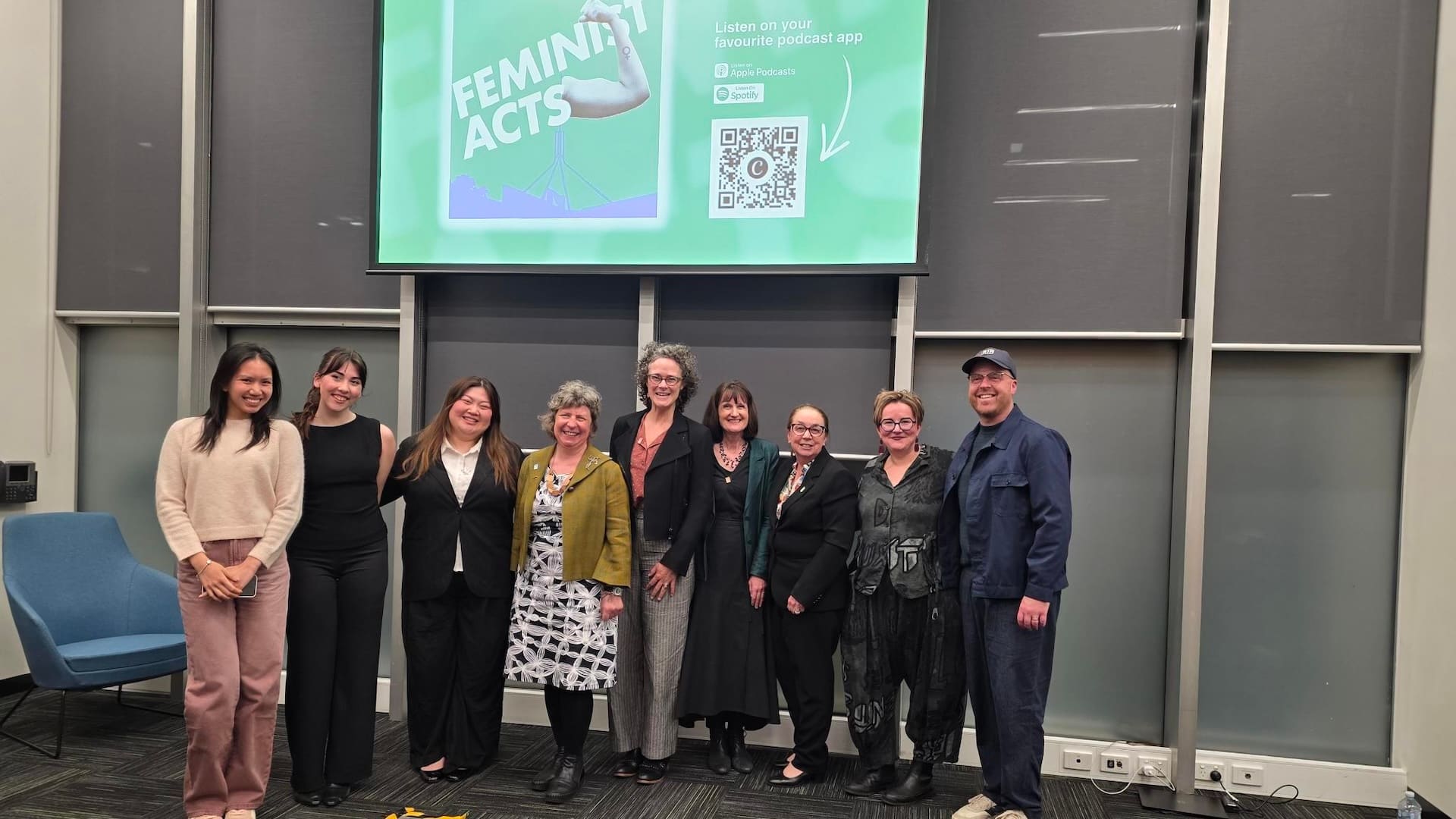
Monash Law students Anna, Phoebe and Laura, Associate Professor Becky Batagol, Professor Julie Debeljak, Associate Professor Tania Penovic, Kate Eastman SC, Professor Kate Seear and James Pattison.
There was excitement in the air as the audience gathered not simply to attend the launch of the Feminist Acts podcast, but to step inside an imagined parliament.
There were invitations to call out “hear, hear”, encouragement to challenge ideas, and a reminder that law is not something that happens somewhere else. It is debated, contested, gendered and, where it is unfair, can be reimagined.
That spirit sat at the heart of the launch of Feminist Acts, a new podcast created by Associate Professor Becky Batagol from Monash Law and Professor Kate Seear from Deakin University, produced by James Pattison of Miniature. The series translates years of feminist legal scholarship into accessible conversations about how laws shape lives, and how they might do better.
The event itself doubled as a live podcast recording, giving guests a front-row seat to the format listeners will hear throughout the series. It was an evening that mixed storytelling, legal expertise, public engagement and a healthy dose of humour.
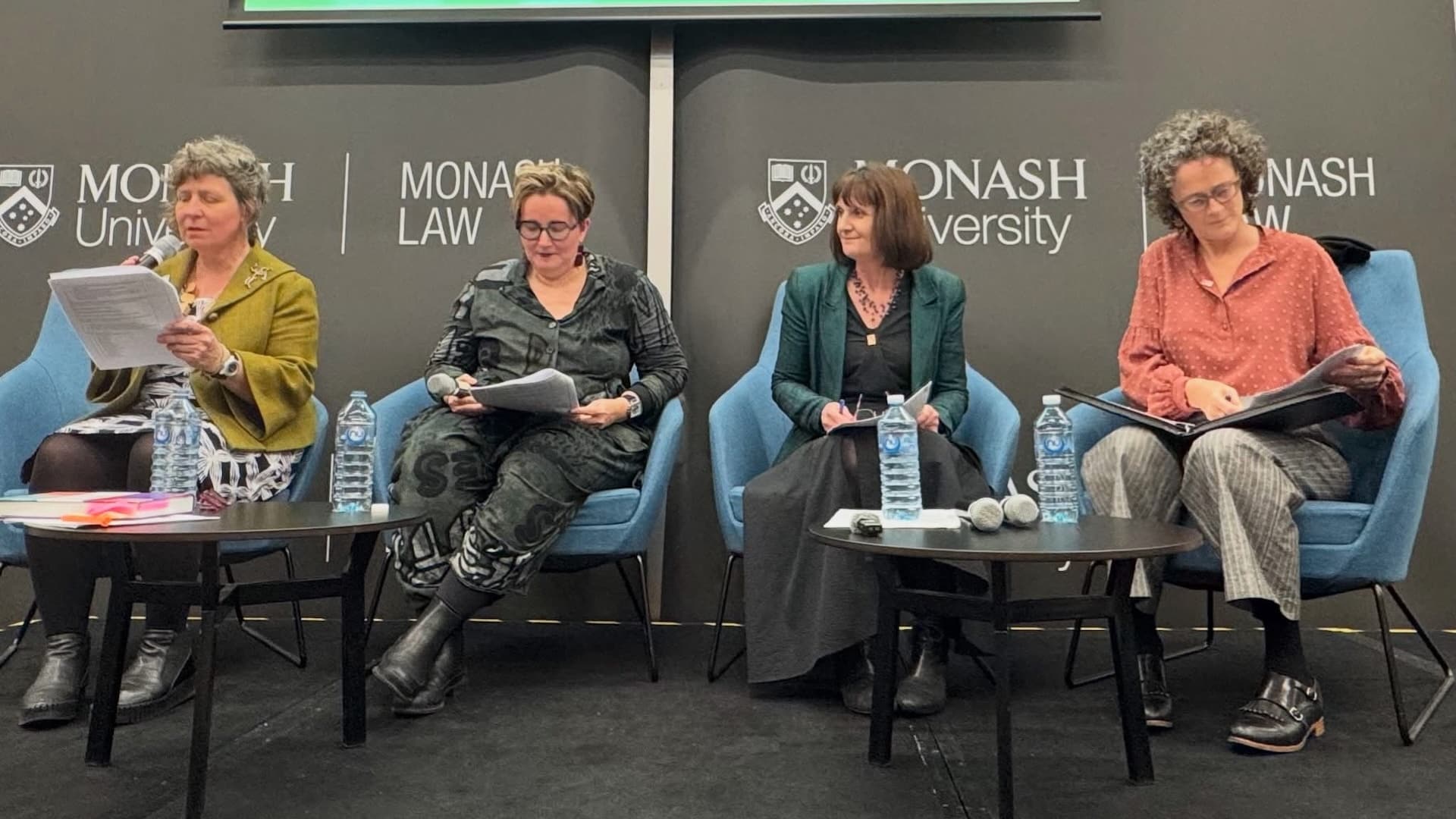
Associate Professor Becky Batagol, Professor Kate Seear, Associate Professor Tania Penovic and Professor Julie Debeljak.
Standing on the Shoulders of Giants
The evening opened with an Acknowledgement of Country and a recognition of the long and proud history of Wurundjeri women’s strength and activism over millenia.
Associate Professor Batagol singled out Wurundjeri Elder Aunty Alice Kolasa, as a lawmaker who has inspired her. Aunty Alice was the first Wurundjeri person to speak in Woi Wurrung language from the floor of the Victorian Parliament when she introduced the Yarra River Protection (Wilip-gin Birrarung murron) Bill in 2017. Aunty Alice Kolasa said, when introducing the Bill to the Victorian Parliament in 2017, “The journey to achieving this type of structural inclusion has been hard-won. It commenced from the moment of first contact and was the yiookgen dhan liwik-al: the dream of our ancestors.”
Batagol said, “Thank you for your law-making work, Aunty Alice.”
Feminist Acts: A podcast years in the making
Standing before a packed audience, Associate Professor Becky Batagol reflected on the long journey that led to the launch.
“You're here to be part of the launch of a podcast that took around 12 months to record,” she said.
“It's based on a book, The Feminist Legislation Project, which is a book that took seven years and 45 people to make. So in this podcast, there's a tremendous amount of knowledge and expertise packed in,” Batagol said.
The podcast and the book are a product of Monash Law. The book started in 2017 as a way of activist feminist scholars in the the Feminist Legal Studies Group at Monash Law to work together to contribute to enduring debates about the role of law in women’s lives. The podcast was funded by Monash University through the Office of the Deputy Vice-Chancellor (Research and Enterprise) as a way of sharing this world-first research with a wider audience.
The podcast emerged from that ambitious, world-leading collaborative Monash Law-led project, which brought together 46 academics, legal experts and advocates to rewrite legislation through a feminist lens. The project was led by Batagol and Seear alongside Monash Law’s own Associate Professor Heli Askola and Dr Jamie Walvisch from the University of Western Australia Law School. Rather than simply critiquing existing laws, contributors were invited to imagine what better laws could look like to support the needs and rights of women, non-binary, gender-diverse, intersex and transgender populations. The book, with sixteen proposals for law reform on key gender equality topics, is freely available online.
For Professor Kate Seear, podcasting offered a unique opportunity to bring those ideas to audiences beyond academia.
“Podcasting is a format that gives you quite a lot of creative freedom, freedom that conventional styles of academic writing often don't,” Seear said.
“ A lot of academic scholarship is, unfortunately, not read by the broader public or by parliamentarians and policymakers. Some of it is, of course, but this is another way of getting through to the audiences who you want to be engaging with.”
The result is a podcast designed not only for legal professionals, but for anyone interested in how laws shape everyday life.
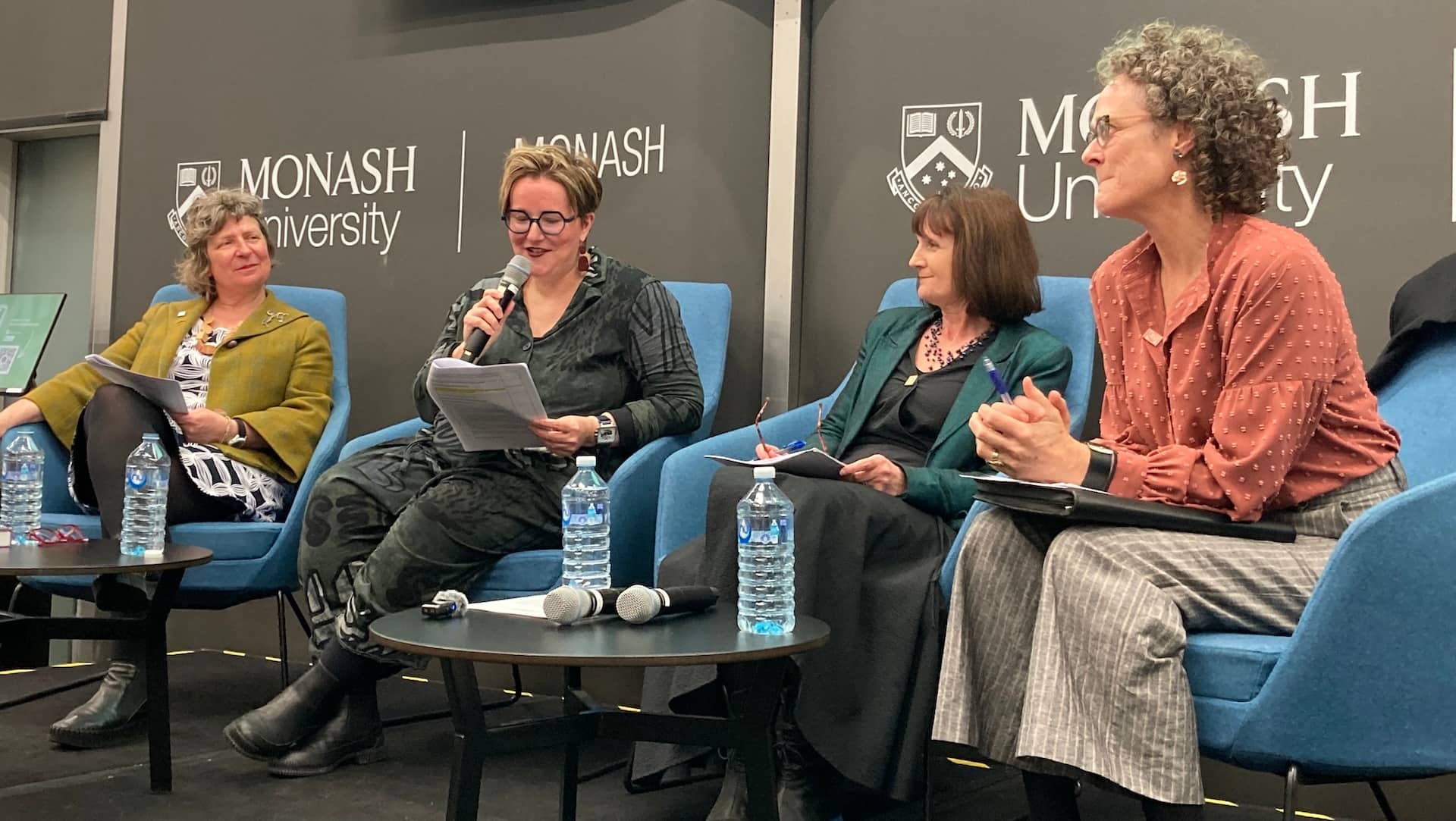
Associate Professor Becky Batagol, Professor Kate Seear, Associate Professor Tania Penovic and Professor Julie Debeljak.
Feminist Acts: Bringing legal ideas into public conversation
The launch event made clear that accessibility sits at the centre of the project. The podcast has been made for policy makers, parliamentarians, law reform experts and lawyers but also law students and also high school legal studies students. Three keen law students, Anna, Phoebe and Laura, demonstrated the relevance of the podcast for law students by generously volunteering their time to help run the launch event.
Each episode of Feminist Acts follows a distinctive structure. Listeners first hear a fictional parliamentary speech introducing a proposed reform. That is followed by an interview with the authors behind the legislation, and then a response from someone offering a different feminist perspective.
The approach is deliberate.
“We want to demonstrate that feminist disagreement doesn't have to be adversarial nor unkind,” Associate Professor Becky Batagol explained.
“There is quite strong disagreement in some of the episodes you'll hear. I think that's really important, but it's always kind, and it's always rigorous.”
That commitment to respectful debate was evident throughout the evening as guests explored questions of human rights, gender equality, justice and legal reform.
The discussion centred on a proposed reimagining of Victoria's Charter of Human Rights and Responsibilities, presented through the voices of Professor Julie Debeljak from Monash University and Associate Professor Tania Penovic from Deakin University. Adopting the role of parliamentarians, they delivered a parliamentary speech before discussing their law reform proposal in depth.
The Honourable Tania Penovic and The Hon Julie Debeljak presented a powerful second reading speech on their Bill to to repeal provisions which undermine equality in the Charter of Human Rights and Responsibilities Act 2006 while also introducing new rights to dismantle structural gender inequality, empower women and provide effective remedies for human rights violations.
Their appearance captured one of the podcast's central ideas, which is that law can be understood differently when people are invited into the conversation.
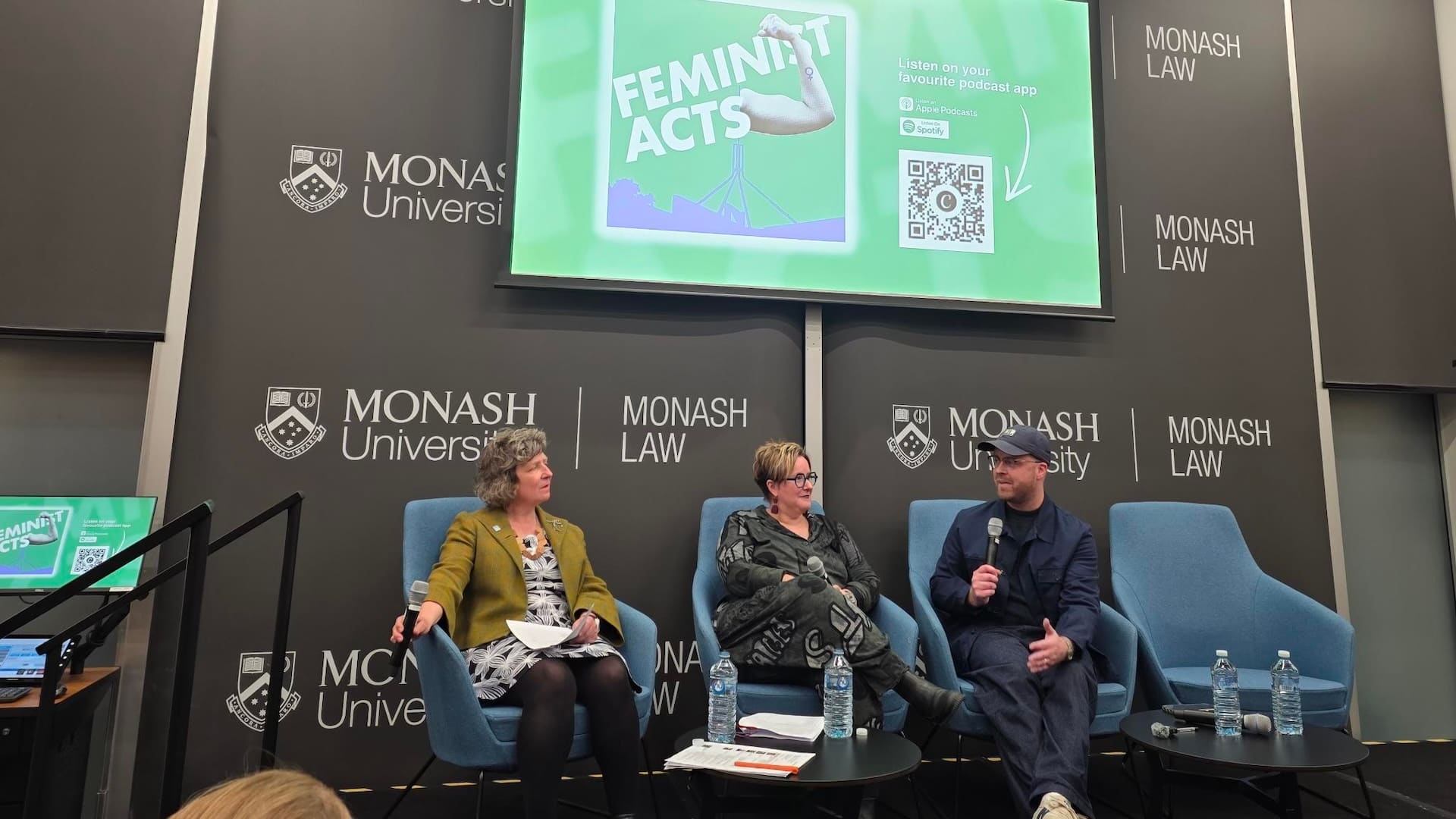
Associate Professor Becky Batagol, Professor Kate Seear and James Pattison.
Feminist Acts: Reimagining law through storytelling
While much legal scholarship is confined to scholarly journals and shared in university classrooms, the creators of Feminist Acts wanted something broader.
Throughout the launch, speakers repeatedly returned to the importance of storytelling and imagination in legal reform.
Professor Kate Seear described the project as an exercise in “radical imagination”, encouraging contributors to step into the role of lawmakers and ask what legislation might look like if gender and race equality were placed at its centre.
That challenge resonated with guest speaker Kate Eastman SC, one of Australia's leading human rights barristers.
Reflecting on the proposed reforms discussed during the episode, she praised the project's ambition.
“The easy thing in law reform is to take an existing law and just tinker around the edge,” Eastman said.
“But what they did is step back and said, "If we put women at the centre of how we translate international rights into Australian laws, can we better protect women's rights in practice? We don’t want women’s concerns just being an add-on to the usual male-centric law-writing perspective.”
She argued that placing women's experiences at the centre of legislative design changes the questions lawmakers ask and the outcomes they seek.
“What this Bill does is to recognise that inequality, and it either closes the gap or it recognises that different people with their life experience need different treatment to achieve equal outcomes. So that's what I love about this Bill, is that real recognition of intersectional experiences and what we would call in equality law substantive and transformative equality.”
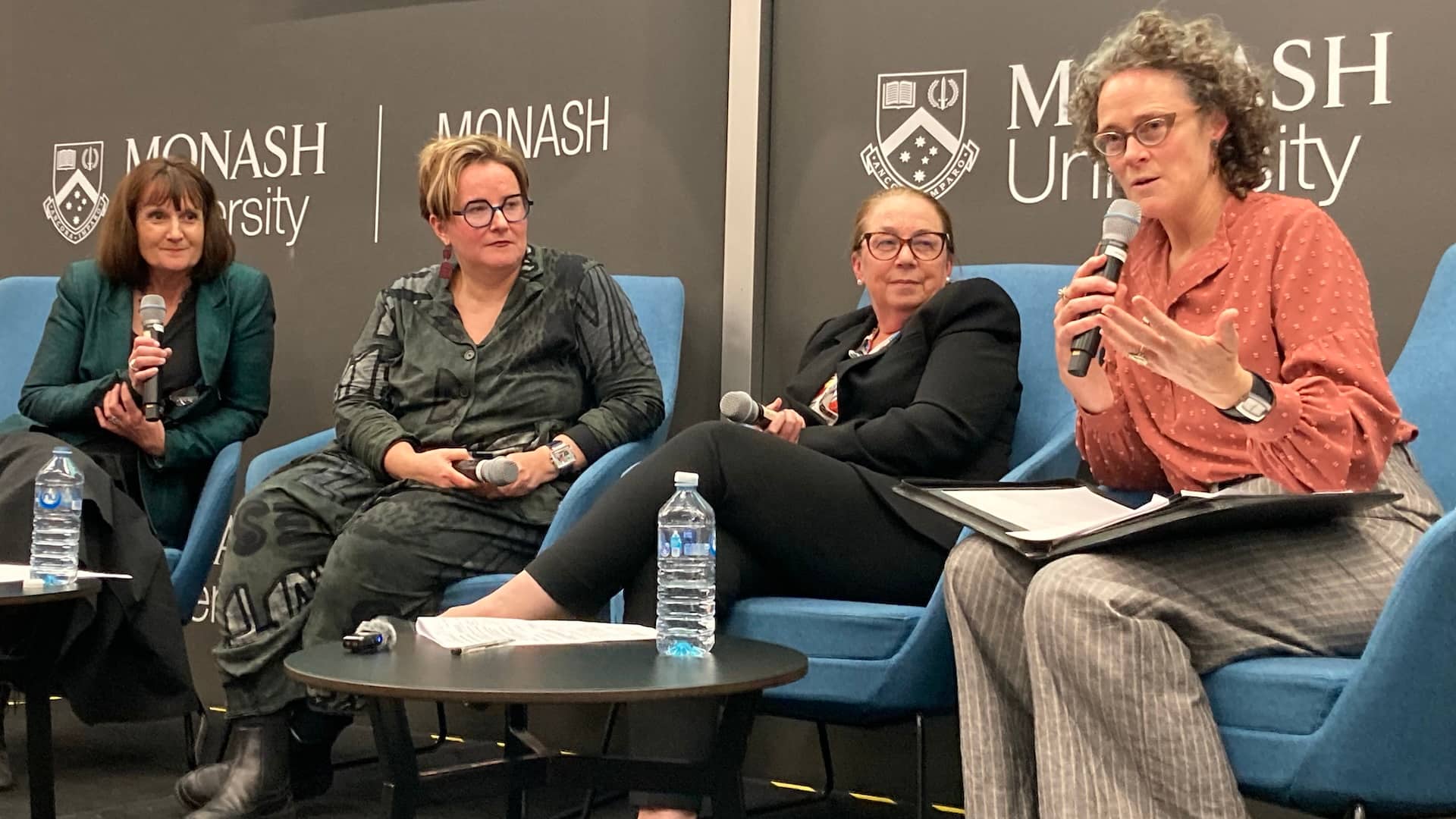
Associate Professor Becky Batagol, Professor Kate Seear, Associate Professor Tania Penovic and Professor Julie Debeljak.
Feminist Acts: A room full of expertise
One of the strengths of the launch was the range of voices involved. This event brought together leading academics, practising lawyers, researchers and law students. Speakers included specialists in human rights, gender equality and public law, while audience members contributed questions that ranged from human rights enforcement to anti-discrimination law and the cultural impact of legislation.
The event also highlighted the collaborative nature of the podcast itself.
According to Professor Kate Seear, contributors to the project come from an unusually broad range of disciplines and backgrounds.
“We don't just have law academics,” Seear said.
“We have architects and engineers, people with different perspectives, and there are people who are involved in the podcast and in the book who have lived experience of issues.”
The conversations tackle subjects that range from human rights law and victims' rights to construction regulation, toilet accessibility and public space design. Some topics are immediately recognised as feminist concerns. Others invite listeners to think differently about areas of law they may never have connected with gender and equality.
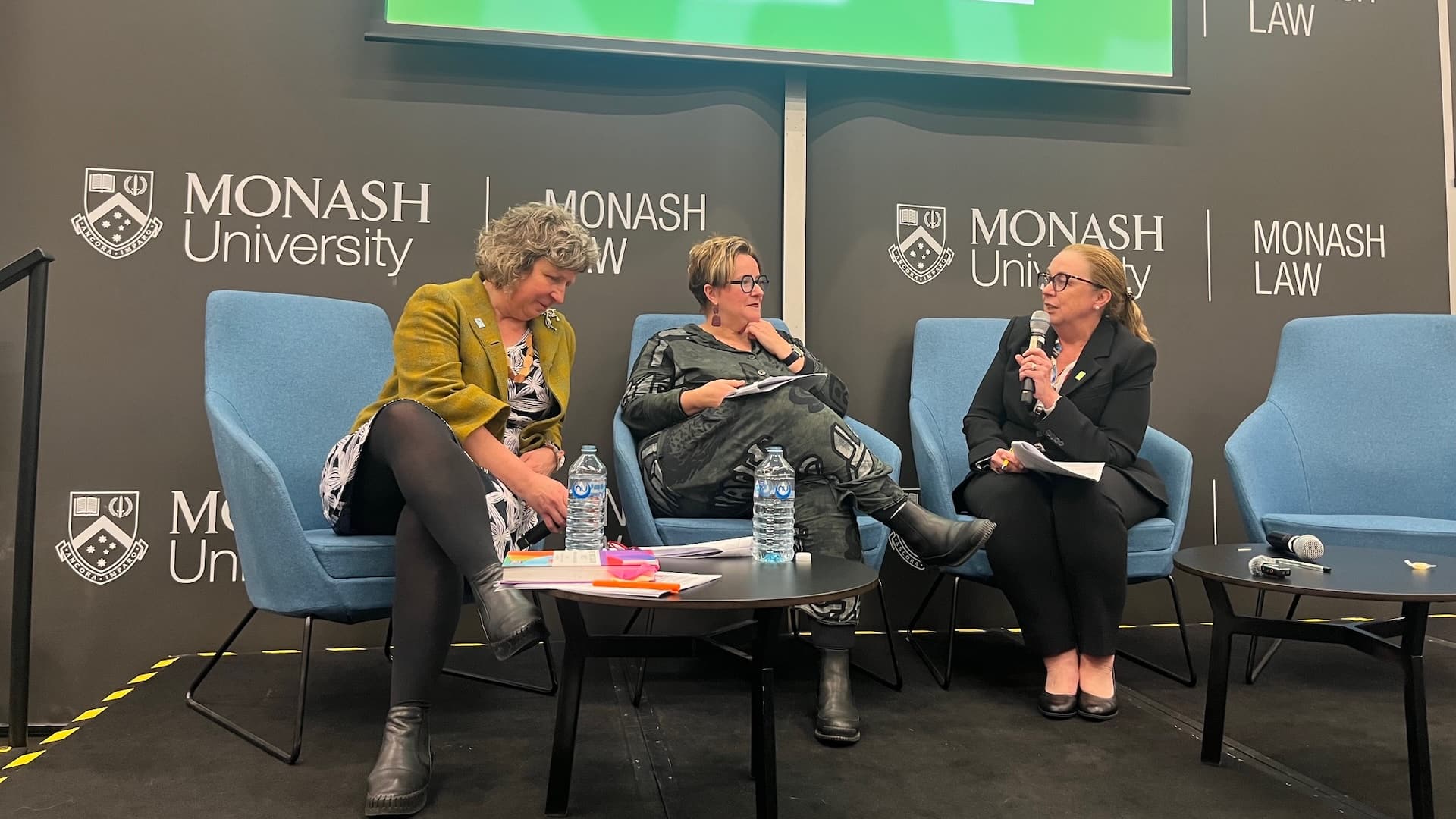
Associate Professor Becky Batagol, Professor Kate Seear and Kate Eastman SC.
Feminist Acts: Why podcasting matters
The launch of the Feminist Acts podcast is also a reflection on how universities share knowledge.
Research can influence public debate, policy and legal practice, but only if people can engage with it. Podcasting offers one extremely accessible pathway.
Associate Professor Becky Batagol spoke candidly about the challenges of stepping into a recording studio and learning a new medium. Despite her hesitations, she described the experience as one part of a larger commitment to public engagement.
“I am at university to make a difference to people’s lives,” Batagol said.
“ I'm first in my family to go to university. I have to write journal articles, but for me, this is what I love doing - it's about communicating,
“I want to make a difference to how our laws are made, and I think this is a good way of trying to do that.”
The launch of Feminist Acts demonstrated this philosophy in action. Rather than a traditional academic presentation, guests became participants in a conversation about law, rights and social change.
Feminist Acts: A call to listen, share and participate
From the outset, producer James Pattison had encouraged attendees to subscribe to the podcast and help spread the word. The light-hearted appeal reflected a serious goal, which is to reach audiences far beyond the lecture theatre.
The final message came from Professor Kate Seear, who urged listeners to continue the conversation.
“We want you to share this podcast series with your friends and family,” Seear said.
“Download the podcast, subscribe to the podcast.”
“This is a companion piece to our book, The Feminist Legislation Project, which took many years of hard work to put together, but which delves into these issues in a lot more detail. That book is freely available as, with great thanks to our publisher, Routledge.”
She also reminded the audience that democratic participation extends beyond listening. Whether engaging with human rights issues, gender equality reforms or other ideas raised throughout the series, listeners were encouraged to contact their local parliamentary representatives, share the proposals for reform and contribute to public debate.
The launch of Feminist Acts was more than the debut of a new podcast. It was an invitation to think critically about the laws that govern us, to imagine how they might work differently, and to join a conversation that stretches from university classrooms to parliament and beyond.
Feminist Acts is now available on all the usual podcast platforms. New episodes will be released regularly for the remainder of 2026.