Mutation
The genetic material of an organism is generally stable, usually passing unchanged from generation to generation.
However, it can change, often through a mutation altering the instructions encoded in the DNA. Mutations may create a new variant or version of a gene, which may or may not result in a new allele.
Mutations may be spontaneous or may be induced by exposure to mutagens. Mutation rates are not equal for all genes and can occur in somatic cells (normal body cells) or germline cells (gamete cells - sperm or egg cells).
For a mutation to affect future generations, the mutation must occur in the organism's germline cells.
Causes of mutation can be in the form of:
- Radiation
- Chemical mutagens
- Pathogenic mutagens
Check your understanding
View

Effects of Mutation
Germline mutations may create new alleles. While most mutations are deleterious and have negative effects, occasionally functional variants are created and a subset of these may benefit the individual. A new allele producing a dominant trait will be expressed in the next generation. If the new allele controls a recessive trait, it may take several generations before the trait is expressed in the population.
Change agents, such as natural selection , determine whether the allele is lost or established in the population. Some gene mutations disappear after a few generations due to strong selection pressure.
In small populations, even advantageous mutations may be lost through genetic drift , that is, due to chance events.
- point mutations,
- block mutations,
- chromosomal abnormalities.
Point Mutations
Point mutations involve a change to a single base in the DNA sequence. These mutations can result from errors in DNA replication or repair. Examples of point mutations are:
Block Mutations
Block mutations are chromosomal changes that significantly alter large segments of DNA within an organism.
These types of mutations can be caused by mobile genetic elements called transposons that alter the order or arrangement of genes on chromosomes, or via spontaneous errors during recombination in meiosis.
Block mutations can include:
- A deletion of part of a chromosome: This results in a portion of a chromosome being lost, along with any genes contained within this segment.
- A duplication or gain of part of chromosome: This results in duplicate segments and genes.
- A translocation of segments from one chromosome to another.
- An inversion where a segment of a chromosome is removed and then replaced in reverse order.
Check your understanding
View
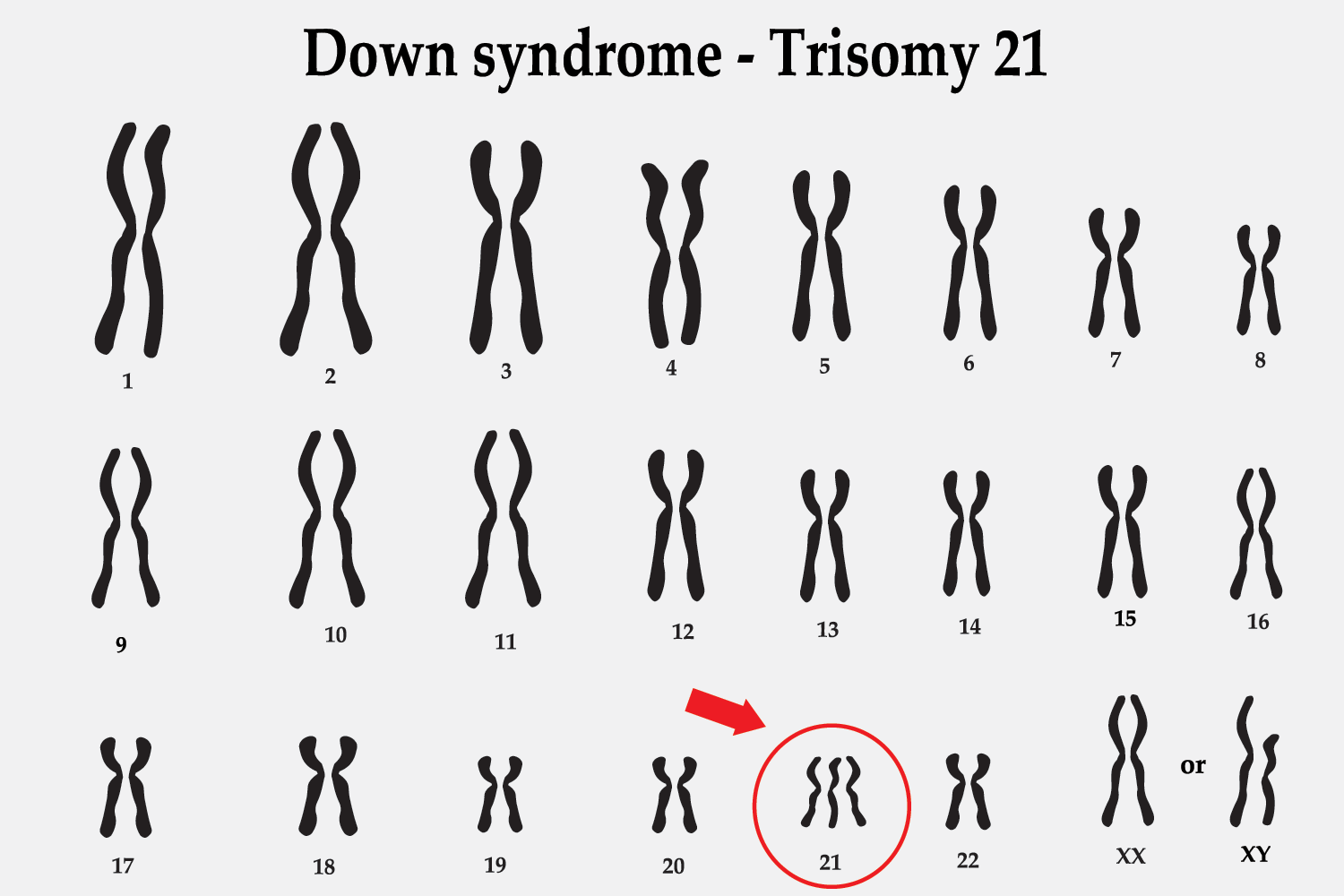
Chromosomal abnormalities
Chromosomal mutations involve changes to entire chromosomes or large segments of the chromosomal genome.