
Life as a graduate researcher

Create impact with Monash Arts Graduate Research
Monash Arts graduate researchers are driving groundbreaking and game-changing research. From creating an interdisciplinary approach to decarbonising cities, to exploring how energy experimentation can advance energy transitions in Australia, and understanding Aboriginal Histories and Cultures, together our work is transformative.
Why Monash?
Facts and figures
-
Ranked 44th globally
Times Higher Education World University Rankings 2023
#44 -
Group of Eight Australia
Founding member of an alliance of Australian universities recognised for leading research
-
Expert supervision
Access to researchers at the forefront of their fields from all over the world
-
State-of-the-art infrastructure
World-class facilities to support innovative and groundbreaking research projects
Facts and figures
-
International presence
International joint PhD degrees, mobility between Monash international campuses, research centres and partner universities -
Training and development
Including opportunities to participate in staff-led research projects competing for external funding
-
Cohort of peers
Meet, connect and exchange ideas with fellow peers
-
Scholarships and funding
Generous scholarships available to support your research and career ambitions
whitespace
Meet some of our graduate researchers
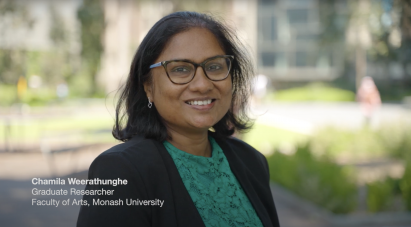
Chamila Weerathunghe
Hear from Monash Arts graduate research student Chamila Weerathunghe on how our facilities provide her with a cutting-edge launchpad to learn and hone new methodologies, and connect with a diverse community of experienced researchers. Working with the very best in her field, Chamila’s research explores policy solutions to support small and medium sized enterprises in taking up sustainability actions.
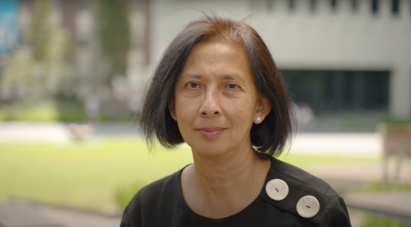
Delia Paul
Inspired by her very own diverse lived experiences, hear from Monash Arts graduate researcher Delia Paul on how our world-class platform, talent and facilities provide her with the opportunity to explore and transform sustainable water management in Johor, Malaysia. Propelled by an interdisciplinary mindset, Delia is striving to spark change and fuel innovation.
Find out more
What scholarships are available?
View

A wide range of scholarships are available for graduate research students at Monash University.
Centrally-awarded scholarships
Over 300 living allowance (stipend-paying) scholarships are offered at the central scholarship selection rounds each year to help both domestic and international research students realise their potential. There are four scholarship rounds per year. Please refer to the scholarship application deadlines to ensure you do not miss out. Approximately 70 international scholarship winners are also offered fee awards to meet their tuition costs. Under the Research Training Program (RTP) Fees Offset, Australian students are not required to pay research course tuition fees. Australian citizens, Australian permanent residents and New Zealand citizens need only apply for living allowance or stipend scholarships.
-
Name Scholarship type Eligibility Further information Research Training Program (RTP) Stipend Stipend/living allowance Australian citizens and Australian permanent residents only Funded by the Australian Government.
Further information regarding eligibility and the application process is available here.Monash Graduate Scholarship (MGS), including the Monash Silver Jubilee Scholarship Stipend/living allowance Australian citizens, Australian permanent residents and International students Other allowances eg relocation and thesis preparation. Further information regarding eligibility and the application process is available here. Sir James McNeill Postgraduate Research Scholarship Stipend/living allowance Australian citizens, Australian permanent residents and International students Only for doctoral degree students in Medicine, Engineering, Science and Music. Monash International Tuition Scholarships (MITS) Tuition fee International students only Overseas Student Health cover also paid May be held with MGS or other living allowance scholarship.
Further information regarding eligibility and the application process is available here.Monash Indigenous Research Award (MIRA) Stipend/living allowance Indigenous Australians only Cohort support including mentoring and academic and research skills development will be provided for recipients of these awards. Further information regarding eligibility and the application process is available here. Monash Equity Scholarship Stipend or lump sum for purchase of equipment Australian citizens, Permanent residents and New Zealand citizens whose academic career has been adversely affected or have a disability Further information and the application form is available here.
Faculty funded scholarships
The number of scholarships available under the Faculty of Arts Graduate Research Scholarship Scheme varies each year. The Faculty will consider high calibre applications at any time of the year.
-
Name Scholarship type Eligibility Further information Faculty of Arts Research Living Allowance (FARLA) Stipend/living allowance Australian citizens, Australian permanent residents; New Zealand citizens and International students Conditions mirror the Research Training Program (RTP) stipend, funded by the Faculty. Faculty of Arts Research Scholarship (FARS) Stipend/living allowance Australian citizens, Australian permanent residents; New Zealand citizens and International students Faculty funded stipend of up to 12 months. Faculty of Arts International Postgraduate Research Scholarship (FAIRPS) Tuition fee/Overseas Student Health Cover International students only. Students must be in receipt of a stipend-paying scholarship commensurate with the RTP stipend annual stipend rate, to be eligible for this award Students do not apply for this award separately. International students who apply for a stipend scholarship/living allowance will be automatically considered. -
Name Scholarship type Eligibility Further information Freda Freiberg Film and Screen Studies Library Grant One-off stipend Domestic and International students undertaking a Master of Arts (Research Training) in Film and Screen Studies The grant will be awarded to the most qualified applicant annually, in a given scholarship round.Enquiries: arts-agr-apply@monash.edu
PhD Scholarships in Climate and/or Environmental Change Stipend, tuition fees for International students may be covered in select cases Domestic and international students undertaking doctoral research in humanities, arts, and social sciences This scholarship is currently advertised on the Monash Jobs website. Enquiries: Refer to the advertisement on the Monash Jobs website for contact details.
Cecile Parrish Memorial Scholarship for Research Excellence Stipend, tuition fees for International students may be covered in select cases Domestic and international students undertaking doctoral research in English Literature This scholarship will be advertised on the Monash Jobs website and Artws Graduate Research home page when available.Enquiries: arts-agr-apply@monash.edu
Cecile Parrish Memorial Scholarship for Graduate Research Stipend, tuition fees for International students may be covered in select cases Domestic and international students undertaking doctoral research in English Literature The Scholarship for Graduate Research will be awarded to the most qualified applicant annually, in a given scholarship round.
Enquiries: arts-agr-apply@monash.eduPhD Scholarship in History Stipend, tuition fees for International students may be covered in select cases Domestic and international students undertaking doctoral research in History Studies The scholarship is currently advertised on the Monash Jobs website.Enquiries: julie.kalman@monash.edu
Francine V. McNiff PhD Scholarship in Criminology Stipend Domestic students undertaking doctoral research in Criminology The scholarship will be advertised on the Monash Jobs website and Arts Graduate Research home page when available.Enquiries: arts-agr-apply@monash.edu
The Monash Japanese Language Education Centre (MJLEC) Scholarship Stipend Domestic and International students undertaking masters or doctoral research related to Japanese
Language
AcquisitionApplicants will need to submit an Expression of Interest to the Arts Graduate Research Office.
Tuition fees for successful international students may be covered by the Faculty.Enquiries: arts-agr-apply@monash.edu
What professional development activities do you offer?
View
The following workshops and activities are open to all Monash Arts Graduate Research students.
-
Arts Advanced Methods
The Advanced Methods activity comprises a series of 1.5 - 2-hour workshops (min of 8 contact hours). These workshops provide HDR candidates predominantly, but not exclusively, with overviews of key discipline-specific research methodologies.Students must attend a minimum of 8 contact hours to receive credit. No partial credit will be given.For upcoming sessions, please contact your HDR Program Director.
-
Arts Reading groups
This reading group provides experience in reading and understanding published research papers; a critical aspect of productive research which is best developed through group discussions on published articles or book chapters. In addition to broadening knowledge, these discussions hone critical thinking skills, build familiarity with key approaches and debates in the field, develop comprehension with argument strategies, and help develop critique and communication skills.For upcoming sessions, please contact your Program Director.
-
Arts Masterclass
This activity consists of a series of workshops (min 8 contact hours) to provide an overview of some of the key research methodologies used in the chosen discipline. It brings together experts and practitioners working on cutting edge research and practice and by participating in this activity, students are provided with the opportunity to hear from and engage with leading international and national experts, learn more about their body of work, and learn to critically analyse and engage with scholarly feedback on work in progress. To receive 20 hours credit, students must attend all workshops; partial credit will not be given.For upcoming sessions, please check the Moodle announcem or contact your Program Director.
-
Australian Book Review Masterclass
Australian Book Review (ABR) – a partner of Monash University, and one of Australia’s leading cultural magazines – will present a month-long series of workshops covering every aspect of publishing in general magazines. Led by ABR Editor Peter Rose (a writing and leading publisher for more than 25 years), the three ABR editors will work closely with a group of 20 graduate students, two of whom will be offered publishing commissions by ABR at the completion of the seminar series.Upcoming sessions are advertised via Moodle.
-
Three Minute Thesis competition (3MT)
3MT is a competition requiring students to summarise the nature and relevance of their research to a general audience in no more than three minutes. It is designed to cultivate academic, presentation and research communication skills and is open to any graduate research student who has completed their confirmation milestone. 3MT competitions are conducted at the Arts Faculty level before proceeding to a University and international level.For upcoming sessions, please contact your Program Director.
-
Practice-based Research in Performing and Creative Arts
This activity provides focused training in research design, methods and modes of representation, exploring the key concepts and processes involved in practice-based research and examining a variety of methodologies and modes for representing research outcomes. It focuses on the process from design through to communicating outcomes, allowing students to develop skills in integrating creative practice and writing. Students will develop detailed proposals for their own practice-based research topic before embarking on the research component. Participating PhD researchers will focus on developing one component of their research as appropriate to their needs and progress.
-
Introduction to graduate research in historical studies
This seminar series is designed to introduce students into graduate research in the broad field of historical studies, including advanced readings in key texts, methodologies and sources in the disciplines and sub-disciplines covered by the program. The series consists of workshops, training sessions and feedback on readings and students’ writing. Students will be given weekly readings to evaluate and discuss, and they will be expected to actively engage in discussion, offering critical and constructive feedback on each other’s ideas and work. For upcoming sessions, please contact your Program Director.
-
Arts Writing Intensive
A sequence of at least four writing sessions (min 3 hours in duration each), offered in intensive mode. The intensive will provide 15-20 participants with concentrated writing time to work toward completion of a PhD research component or publication.Prior to commencement of the intensive, participants will be asked to:Identify a thesis element (a chapter, a milestone submission, thesis amendments) or a publication topic that is distinct from their thesis project to work onTo make a writing plan and complete any necessary research and readingObtain supervisor approval for their participationSuccessful applicants must attend all sessions. Partial credit will not be provided.Contact your Program Director for upcoming intensives or check Moodle announcements.
-
Prato Writing and Publishing Workshop – strategies for and insights into research publishing
The workshop’s aim is to mentor HDR candidates in the Faculty to enhance their skills in preparing, writing, and getting an article published in a major academic journal or a chapter published in a book released by a recognized quality commercial or university press publisher. The workshop is comprised of a three-day residency at the Monash University Prato Centre. Individual sessions address the various stages of the article/book chapter writing process from planning, to drafting, to writing abstracts and responding to referees’ reports and comments.For upcoming sessions, please contact your Program Director.
-
Editorial work for student-led research journals
Editorial work for these student-led journals is offered to the top students in the various Programs after stringent selection processes. Students will receive 10hrs for 12months commitment. Students can complete this activity twice (maximum 20hrs). Overall the editors are expected to spend more than 20 hours on each issue published and the number of issues may vary over a span of 3 years. The editors will not be receiving other financial remunerations.Please check with the LLCL and SoPHIS Program Directors for upcoming editorial opportunities.
-
Research Internships
Connecting Industry with high-performing graduate research students. The internship is a co-curricular activity providing an opportunity to apply knowledge and research skills to a professional context and improve work readiness of the high-skilled student. Turn your research theory into practice, build industry networks & enhance your CV, develop your soft skills to support & complement research expertise, explore tailored project arrangements and earn potential income over the internship period.
How do I find a research program and supervisor?
View

The Faculty of Arts hosts seven academic programs (listed below); these programs align with our research strengths and capacities. As graduate students, you will join a vibrant research culture, where we actively support you intellectually and to participate in a range of professional activities, including conferences and a range of professional activities.
You will be trained in critical and analytical thinking, and supported to develop innovative research designs and methodologies, while also undertaking relevant coursework. You will engage with peers and colleagues all across the Faculty.
Find a supervisor
Search by keyword below or, alternatively, click the subject area to find out more about related academic programs below, and the associated supervisors and research opportunities.
Academic programs
 Media, Film and Journalism
View
Media, Film and Journalism
View
The Media, Film and Journalism Graduate Research Program provides students with the opportunity to pursue postgraduate studies in the dynamic and rapidly changing fields of film and screen studies, media and communications, and journalism.
Supervised by some of the leading national and international scholars in these fields, our students address complex and pressing questions facing our media and cultural industries, providing new understandings of media practices, communities, and institutions.
Find a supervisor
Find a supervisor via name, program area, or keyword search.
-
Deb Anderson Environmental communication; media and disaster; rural cultural studies
Fay Anderson Media history, war, journalism, oral history, photography, genocide, crime, human rights, Australian history
Mark Andrejevic Big data, data mining, technology, social justice, personal Information, privacy, information management, information retrieval, surveillance, digital media, drone technologies, data processing, popular culture, interactive media
Paul Atkinson Visual culture; continental philosophy; aesthetics
Andrea Baker Media histories and mixed methods analysis; urban communication, technology and music; alternative media and arts journalism
Daniel Black Body studies; digital culture; Japanese popular culture; video games, interfaces, robotics, artificial intelligence.
Stephanie Brookes Political journalism; news media; news, identity and representation; US media and politics; Australian media and politics; celebrity politics and populism; political communication.
Earvin Cabalquinto Digital medi, (im)mobilities and migration
Maura Edmond Feminist media studies; popular music studies; cultural industries and policy; music and sound on screen
Ben Eltham The public policy of culture in Australia
Robbie Fordyce Interactive entertainment, media theory, media infrastructure and technologies, innovative methods projects
Xin Gu Cultural industries; creative industries; media cities; urban cultural policy; Chinese popular culture studies; civic media studies
Gil-Soo Han Minority media; intercultural communication; health, religion and ethnic studies
Shane Homan Cultural industries and policy; media industries and policy; popular music studies
Brett Hutchins Sports media and culture, Environmental media, Mobile media and communications, Online and digital media, News media and journalism
Andrew Johnson Media and cultural literacy; discourse analysis; literature and media
Olivia Khoo Asian media and cinema; women and film; transnational Chinese cinemas; Asian Australian cultural studies; gender and sexuality
Libby Lester Environmental communication, social change and politics
Nina Li Digital culture, global media industry, political economy and media history, Chinese media
Johan Lidberg Investigative journalism and information access; climate change and environmental issues from a journalism and media perspective; journalistic and media accountability; media ethics and regulation
Whitney Monaghan Gender, sexuality and media representation - television cultures - media and social change
Tony Moore Australian media and cultural history; activism and public broadcasting; bohemia, avant-gardes, subcultures and popular culture
Julian O'Shea Social Media, Creator Economy, sustainable transport
Claire Perkins American independent cinema; contemporary television studies; feminist media studies
Aneta Podkalicka Media and everyday life, Environmental communication and media for activism / social innovation
Mugdha Rai Strategic Communication, political communication and democracy
Lucy Richardson Australian and international climate change audiences and their responses to messaging
Andy Ruddock Media violence, media theory, media influence
Belinda Smaill Women in film and television, documentary studies, environment and media, ecocinema, animal studies.
Verity Trott Digital media
Emily van der Nagel Social media, anonymity, online identities, digital cultures
Julia Vassilieva Film history and theory; film philosophy and politics; world cinema; film narrative; cinema and the brain.
Con Verevis Film theory and criticism; media seriality; contemporary Hollywood cinema
Zala Volcic Media, digital cultures, nationalism, class and gender
Deane Williams Documentary film, realist film theory, Australian film and television, intertextuality and film and television, musicality and film and television
-
Key contacts
Research centres and hubs




Media, Education and Practices

Ready to apply?
Find out what steps are needed to apply for graduate research.
 Historical Studies
View
Historical Studies
View
The Monash Historical Studies Graduate Research Program offers a lively student research culture and expert research supervision in a broad range of History-related fields. The Program is particularly strong in social and cultural history, the history of medicine and the body, Jewish history, environmental and urban history, medieval and renaissance history, religious history and oral history, among other specialisations.
In terms of area studies, our internationally-renowned researchers welcome prospective MA and PhD students in American, Asian, Australian, European, and transnational histories. In addition, our disciplinary excellence in historically-informed fields including Archaeology and Ancient History, Indigenous Cultures, Jewish, Holocaust, and Genocide Studies, as well as Religious Studies contribute to a broad cross-disciplinary graduate program that is unique in Australia and one of the best in the world. The Program aims to build the knowledge, skills and abilities that will help graduates become world-class scholars and researchers with professional skills of value to prospective employers in academia, industry, government, and the broader community.
Find a supervisor
Find a supervisor via name, program area, or keyword search.
-
Fay Anderson Australian history
Jeremy Ash Aboriginal and Indigenous archaeology and history
Bain Attwood Aboriginal and Indigenous history; memory and oral history; museums and material culture
Jessie Birkett-Rees Archaeology and ancient history; museums and material culture
John Bradley Aboriginal and Indigenous history
Jeremy Breaden Japanese history of education
John Bradley Aboriginal and Indigenous history; Australian history; museums and material culture
Andrew Connor Archaeology and ancient history (History of Greece, Rome, Hellenistic and Roman Egypt)
Bruno David Aboriginal and Indigenous archaeology; museums and material culture
Xiaoping Fang Chinese history; history of medicine, health and epidemics; socio-political history
Axel Fliethmann German Renaissance
Guy Geltner Pre-industrial world; public health; health and environmental history; cities; mining, trans-regional history
Hilary Gopnik Archaeology and ancient history (Near East, Mediterranean, Persia); museums and material culture
Michael Hau Modern European history (Central Europe/Germany); history of medicine and the body; Holocaust and genocide studies
Jarrod Hayes American history (Americas and the Francophone World)
Dan Heller Modern European history (Eastern Europe); Jewish studies; Holocaust and genocide studies; Jewish history, Eastern Europe and Israel/Palestine; History of mental health
Koji Hirata Chinese and Japanese history
Rohan Howitt Environmental history; Australian history; global history; Antarctic history
Andrew David Jackson Korean history; history of rebellion
Julie Kalman Modern European history (France); Jewish studies; Jewish history
Aydogan Kars History of Islam; Medieval philosophy and theology
Samson Lim Modern Southeast Asian History (Thailand), Cities, Technology, Design, Material Culture
Rebecca Margolis Jewish studies; Yiddish; Jewish cultural studies; Jewish literature; screen studies
Ian McNiven Aboriginal and Indigenous archaeology; museums and material culture
Paula Michaels Modern European history (Eastern Europe/Russia); history of medicine; gender; trauma; Cold War history
Tony Moore Australian history; cultural, media and radical/labour history
Kate Murphy Australian history
Kathleen Neal Medieval history
Nathalie Nguyen Vietnamese history; memory and oral history
Seamus O’Hanlon Australian history; urban history
Gordon Pentland British history and British empire 1700-Present; European history; political history; popular politics, radicalism, revolution
Lynette Russell Aboriginal and Indigenous history; Australian history; museums and material culture
David Slucki The Holocaust, Jewish history, immigration, popular culture, television, humour, memory
Anna Stevens Archaeology and ancient history (Near East, Egypt); museums and material culture
Beatrice Trefalt Japanese history
Christina Twomey Australian history; history of medicine and trauma; history of humanitarianism, conflict and violence
Timothy Verhoeven United States history; French history; religious history; transatlantic history; history of masculinity
Christiane Weller Germany/travel
Ben Wellings Post-War British history; history of European integration; war memory
Nathan Wolski Jewish studies; Jewish theology and philosophy
-
Aboriginal and Indigenous History
Jeremy Ash
Bain Attwood
John Bradley
Lynette RussellArchaeology and Ancient History
Jessie Birkett-Rees (Landscape and environmental archaeology; GIS; archaeological theory and method)
Andrew Connor (History of Greece, Rome, Hellenistic and Roman Egypt)
Hilary Gopnik (Near East, Mediterranean, Persia)
Anna Stevens (Near East, Egypt)American History
Jarrod Hayes (Americas and the Francophone World)
Timothy Verhoeven (US)Asian History
Jeremy Breaden (Japanese History of Education)
Xiaoping Fang (Chinese History)
Koji Hirata (Chinese and Japanese History)
Andrew David Jackson (Korean History, history of Rebellion)
Samson Lim (Southeast Asian History)
Nathalie Nguyen (Vietnamese History)
Beatrice Trefalt (Japanese History)Australian History
Fay Anderson
Rohan Howitt
Tony Moore
Kate Murphy
Seamus O’Hanlon
Lynette Russell
Christina TwomeyHistory of the Body, Medicine, and Trauma
Xiaoping Fang (History of Medicine, Health and Epidemics)
Michael Hau (History of Medicine and the Body)
Paula Michaels (History of Medicine; Gender; Trauma)
Christina Twomey (History of Medicine and Trauma)Holocaust and Genocide Studies
Indigenous Archaeology and Material Culture
Jeremy Ash
John Bradley
Bruno David
Ian McNiven
Lynette RussellJewish Studies
Dan Heller
Julie Kalman
Rebecca Margolis
David Slucki
Nathan WolskiMemory and Oral History
Bain Attwood
Kate Murphy
Nathalie Nguyen
David SluckiMedieval and Renaissance Studies
Axel Fliethmann (German Renaissance)
Guy Geltner
Aydogan Kars (History of Islam/Medieval Philosophy and Theology)
Kathleen Neal (Medieval History)Modern European History
Michael Hau (Central Europe/Germany)
Dan Heller (Eastern Europe)
Julie Kalman (France)
Paula Michaels (Eastern Europe/Russia)
Gordon Pentland (Britain/Western Europe)
Ben Wellings (Post-War British History/history of European integration/war memory)Museums and Material Culture
Bain Attwood
Jessie Birkett-Rees
John Bradley
Bruno David
Hilary Gopnik
Ian McNiven
Lynette Russell
Anna Stevens
Religious History/Studies
Andrew Connor (Egypt/Ancient Religion)
Aydogan Kars (History of Islam/Medieval Philosophy and Theology)
Timothy Verhoeven (Religion and Secularism)
Nathan Wolski (Jewish Theology and Philosophy)Transnational History
Dan Heller (Jewish History, Eastern Europe and Israel/Palestine)
Koji Hirata (Japanese and Chinese History)
Julie Kalman (Jewish History)
Paula Michaels (Medical history; Cold War history)
Tony Moore (cultural, media and radical/labour history)
Seamus O’Hanlon (Urban History)
David Slucki (Jewish History)
Christina Twomey (History of humanitarianism, conflict and violence)
Timothy Verhoeven (Transatlantic History)
Christiane Weller (Germany/Travel) -
Key contacts
Research centres and hubs

Ready to apply?
Find out what steps are needed to apply for graduate research.
 Linguistics and Applied Linguistics
View
Linguistics and Applied Linguistics
View
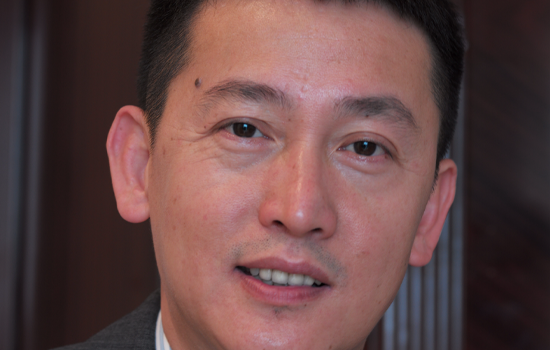
The Linguistic and Applied Linguistics Graduate Research Program works with our students to provide a deep, scientifically informed knowledge of how language is used and structured. The tools you'll acquire naturally augment those of anthropology, psychology, law, computer science and other complementary disciplines.
Find a supervisor
Find a supervisor via name, program area, or keyword search.
-
Lucien Brown Korean language; pragmatics; multimodality; sociocultural language learning
Kate Burridge Germanic languages; grammatical change; linguistic taboo
Alice Gaby Australian Aboriginal languages; language, culture and cognition; linguistic typology
Jim Hlavac Translation and interpreting studies; contact linguistics; sociolinguistics
Hui Huang Chinese Studies; sociolinguistics; second language acquisition
Shimako Iwasaki Japanese studies; conversation analysis; intercultural communication
Naomi Kurata Japanese studies; language and identity; language learning and teaching
Howard Manns Indonesian languages and cultures; language variation and change; language and identity
Anna Margetts Language documentation and description; narrative and reference tracking; valence and transitivity
Satoshi Nambu Language variation and change, sociolinguistics, syntax, psycholinguistics
Robyn Spence-Brown Japanese studies; second language acquisition and language teaching; language education policy
Louisa Willoughby Sign language linguistics; migrant languages; language and adolescence
Zhichang Xu World Englishes; English as a Lingua Franca; intercultural education
-
Language Acquisition and Multilingualism
Supervisors in our program specialise in topics which include language policy, second language acquisition and teaching, study abroad, out of class learning, second language pragmatics, language learners’ motivation and identity, and heritage language maintenance and transmission.
Lucien Brown
Jim Hlavac
Hui Huang
Naomi Kurata
Yacinta Kurniasih
Howard Manns
Satoshi Nambu
Robyn Spence-Brown
Louisa WilloughbyLanguage Maintenance, Endangerment and Reclamation, and/or Description and Typology
The LAL HDR Program specialises in the Indigenous languages of Australia and the region, particularly those of the Austronesian language family. Our supervisors are experienced in linguistic fieldwork, new methodologies for language elicitation, analysis and description, and the support of community language researchers wishing to reclaim their community’s language knowledge.
John Bradley
Alice Gaby
Yacinta Kurniasih
Anna MargettsLanguage and Globalisation
Our supervisors explore the consequences of globalisation for language, considering the dynamics of multilingualism, translanguaging, language contact and language shift in international and intercultural encounters.
Kate Burridge
Shimako Iwasaki
Howard Manns
Louisa Willoughby
Zhichang XuCorpus Linguistics and Digital Discourses
As with all areas of our lives, digital technology has had a huge impact on how we use language and how we study it. Digital discourse explores the situatedness of multimodal communication, including language, across online and offline spaces, with a core interest in how users navigate and negotiate technological and social affordances. Corpus linguistics uses the capabilities of computers to analyse large bodies of language data, looking for patterns which are not obvious to a human eye.
English as an International Language
Staff in our program explore the history, forms and use of Englishes around the world. They detail the ways in which English has been shaped by the lives and movements of its speakers, and the implications of the global spread of the English language for intercultural communication.
Kate Burridge
Howard Manns
Zhichang XuPragmatics and Multimodal Communication
LAL researchers study pragmatics within and between a wide variety of spoken and signed languages, and with a particular focus on multimodal communication. Our supervisors are experienced in a wide variety of methods, including Conversation Analysis, Interactional Sociolinguistics, Ethnomethodology, Linguistic Anthropology and Experimental Pragmatics and have expertise in the transcription and analysis and archiving of multimodal data.
Lucien Brown
Alice Gaby
Jim Hlavac
Shimako Iwasaki
Howard Manns
Louisa Willoughby
Zhichang XuMeaning and Culture
Our supervisors are interested in the cultural contexts within which languages are spoken. They explore the extent to which language is shaped by and / or replicates the culture of its speakers. They question how speakers draw on the structures provided by their language in order to create meaning and categorise the world around them.
-
Key contacts
Research centres and hubs

Ready to apply?
Find out what steps are needed to apply for graduate research.
 Literary and Cultural Studies
View
Literary and Cultural Studies
View
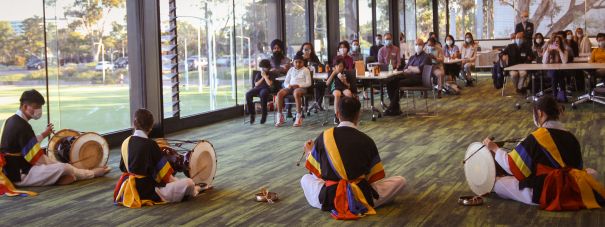
The Literary and Cultural Studies Graduate Research Program embraces the critical study of English-language, European and Asian literatures and cultures. It offers particular strengths in the diverse fields of transnationalism as well as both national and ‘world’ literatures; in cultural theory and history, and in digital as well as print cultures.
In addition to doctoral research across the full spectrum of literary genres, critical movements and themes, the Literary and Cultural Studies Program houses two practice-based PhDs: Doctor of Philosophy (Creative Writing) and Doctor of Philosophy (Translation Studies). Graduate students in the LCS program edit the open-access interdisciplinary journals Colloquy: text, theory, critique and Verge (creative writing).
Find a supervisor
Find a supervisor via name, program area, or keyword search.
-
Ali Alizadeh Creative writing; cultural and literary theory; literature and politics; Australian literature; transnational identities
Lijun Bi Chinese children's literature; Chinese moral education; literary and intellectual history and history of the book; violence and literary culture
Jonathan Benney Politics and political communication in modern China; Chinese culture, aesthetics and society; Chinese new media
Paul Bowker Spanish and Latin American Studies; Transatlantic Studies; cultural and literary theory; transnational identities
Jeremy Breaden Japanese/Asian studies; transnational and diasporic identity; translators and interpreters at work; translation studies and interpreting; transnational identities
Kevin Carrico Chinese/Sinophone studies; Hong Kong politics; nationalism; ethnic relations; Tibetan culture; cultural and political theory
Mridula Chakraborty Postcolonial/Nation and Diaspora Studies; Gender/Sexuality/Feminism and Identity formations; Cinema, Culinary and Composite cultures of South Asia; Asian literatures and cultural studies
Hyein Ellen Cho: Gender (particularly gender-based violence), migration, social inclusion, Asian-Australian studies, Korean diaspora in Australia
Gloria Davies Chinese Studies; Asian literatures and cultural studies; cultural and literary theory; literary and intellectual history and history of the book; media and literary culture
Sharyn Davies Indonesia; gender; sexuality; health; COVID-19; surveillance; policing
Xiaoping Fang Chinese studies; Chinese history and culture; 20th century; medical history; socio-political history; contemporary society and culture
Axel Fliethmann Literature and visual culture; literature and media theory; cultural and literary theory; literary and intellectual history and the history of the book
Kevin Foster War photography; war literature; war and media; literature, film and popular culture; media and literary culture; transnational identities; violence and literary culture
Leah Gerber Australian literature; literatures in translation; transnational identities
Melinda Harvey Contemporary literature, modernism, women's writing; American literature; creative writing; gender and literary culture; literary and intellectual history and history of the book
Dan Heller Culture in Eastern Europe; Israel studies; youth culture; gender studies and feminism
Andy Jackson Korean modern and premodern history, Korean cultural studies, popular culture, history of rebellionDaniel Pieper: Korean language and literary history, vernacularization in Korea and East Asia, language policy and language ideology, linguistic modernity, history of Korean education
Andrew Johnson Australian and US poetry; poetics; literary theory; Australian literature; cultural and literary theory; literature and religion
Jason Jones Asian literatures and cultural studies; Japanese studies
Stewart King Spanish and Catalan literature; crime fiction; world literature; creative writing; cultural and literary theory; literature, film and popular culture; transnational identities; violence and literary culture
Rivke Margolis Migrant literatures and cultures; foreign-language cinema; revitalization of lesser-used languages; Holocaust and genocide literature and film
Sarah McDonald Gender and literary culture; literature, film and popular culture; violence and literary culture
Julian Millie Indonesian studies
Sascha Morell American literature; literature, film and popular culture
Chris Murray British romanticism, Victorian literature; Orientalism; 19th century fiction and poetry; early and early modern literatures; creative non-fiction; Irish Studies
Simone Murray Publishing and print cultures; digital literary studies; adaptation; literary and intellectual history and history of the book; media and literary culture
Gabriel Garcia Ochoa Creative writing; literary translation (Spanish into English); cultural literacy; Latin American literature; literature and intercultural communication; translation and intercultural communication
Barbara Pezzotti Crime fiction (and television); literary geographies; historical narratives; media (especially print media)
Rick Qi Chinese literature in translation; Australian literature in China; sociological translation studies; translation and censorship; community translation
David Slucki Memoir and life-writing; contemporary Jewish culture; television and popular culture; memory studies, migration and diaspora studies
Patrick Spedding Early and early modern literatures; literary and intellectual history and history of the book; utopianism and dystopianism; 19th century fiction and poetry; literature and religion
Michelle Smith Children’s and young adult literature; fairy tales; Victorian literature and periodicals; Gothic fiction; Girlhood Studies; Colonial literature and imperialism
Carolyn Stevens Asian literatures and cultural studies
Shani Tobias Literatures in translation
Beatrice Trefalt Japanese studies; Japanese history, 20th century; conflict and its legacies in the Asia-Pacific region; transnational identities
Chris Watkin Modern French literature, modern French philosophy, philosophy of religion, atheism and the secular; cultural and literary theory; gender and literary culture; literary and intellectual history and history of the book; literature, film and popular culture; violence and literary culture
Christiane Weller Travel literature and exploration reports; contemporary (especially German) literature; psychoanalytic theory, psychosis and writing; cultural and literary theory; transnational identities
Rita Wilson Translation & migration; intercultural mediation; gender and cultural identities; gender and literary culture; literatures in translation; translation studies and interpreting; transnational identities; violence and literary culture
Nathan Wolski Classical Jewish texts; Biblical literature; mysticism; old Yiddish texts; modern Yiddish poetry
-
Book history
Melinda Harvey
Simone Murray
Michelle Smith
Patrick SpeddingChinese studies
Lijun Bi
Jonathan Benney
Kevin Carrico
Gloria Davies
Xiaoping Fang
Rick QiCreative writing
Ali Alizadeh
Melinda Harvey
Simone Murray
Michelle Smith
Click here for a list of more detailed specialisations in creative writingFrench studies
Gender studies and feminism
Susan Carland
Mridula Chakraborty
Melinda Harvey
Simone Murray
Michelle SmithGerman studies
Axel Fliethmann
Leah Gerber
Christiane WellerIndonesian studies
Italian studies
Annamaria Pagliaro
Barbara Pezzotti
Francesco Ricatti
Rita WilsonJapanese studies
Jeremy Breaden
Jason Jones
Carolyn Stevens
Shani Tobias
Beatrice TrefaltJewish studies
Daniella Doron
Jarrod Hayes
Dan Heller
Rivke Margolis
Noah Shenker
David Slucki
Nathan WolskiKorean studies
Lucien Brown
Hyein Cho
Andy Jackson
Daniel PieperLiteratures in English
Kevin Foster
Melinda Harvey
Andrew Johnson
Sascha Morrell
Chris Murray
Simone Murray
Patrick Spedding
Michelle SmithSpanish and Latin American Studies
Paul Bowker
Stewart King
Sarah McDonald
Gabriel Garcia OchoaTranslation and interpreting
-
Key contacts
Research centres and hubs

Ready to apply?
Find out what steps are needed to apply for graduate research.
 Philosophy
View
Philosophy
View
The Philosophy Graduate Research Program welcomes graduate research MA and PhD students and has notable strengths in philosophy and bioethics. The placement record of the Philosophy Graduate Program is excellent, with graduates pursuing careers in areas like finance, government, academic philosophy research and cognitive science.
We run two weekly events for graduate research students during the teaching semester: a work-in-progress seminar and a pre-seminar masterclass. The work-in-progress seminars mostly involve paper presentations from graduate students to their peers. The pre-seminar is a masterclass from whoever will be presenting at the staff seminar later in the afternoon. Other events are often student-led and include presentations from students and invited speakers, reading groups and other initiatives during teaching semester.
Find a supervisor
Find a supervisor via name, program area, or keyword search.
-
Linda Barclay Contemporary social and political philosophy; justice; egalitarianism; disability; dignity
Tim Bayne Philosophy of mind; cognitive science
Jacqueline Broad Women's political thought; feminism; history of early modern philosophy
Monima Chadha Indian and Buddhist philosophy
Stephanie Collins Social and political philosophy; normative ethics; collective responsibility; group agency; theories of justice
Sandra Field Political philosophy; early modern philosophy; social and political theory; history of political thought
Toby Handfield Ethical theory; philosophy of science; philosophy of Quantum mechanics; decision theory, philosophy of economics
Jakob Hohwy Philosophy of mind; cognitive science; contemplative neuroscience
Suzy Killmister Dignity; autonomy; human rights; social metaphysics
Julian Koplin Bioethics (including stem cell ethics and emerging technologies); ethics and moral philosophy (applied ethics)Catherine Mills Bioethics (esp reproductive and genomic technologies), contemporary European philosophy; biopolitics; feminism
Justin Oakley Ethical theory; virtue ethics; professional ethics; reproductive ethics
Graham Oppy Philosophy of religion; metaphysics; philosophy of science; epistemology
Ellie Ripley Philosophical logic; philosophy of logic
Alison Ross Aesthetics (especially Kant); critical theory; philosophical anthropology
Rob Sparrow Applied ethics; moral philosophy; anarchism; environmental ethics; ethics of artificial intelligence and robotics; human enhancement; ethics of technology; bioethics (especially reproductive and genomic technologies)
Jennifer Windt Philosophy of mind; cognitive science
-
Aesthetics
Alison Ross Kant; theories of meaning, image, sensation, judgment
Bioethics
Rob Sparrow including artificial intelligence
Catherine Mills including reproductive ethics
Justin Oakley including healthcare ethicsEthics and moral philosophy
Linda Barclay Political philosophy; dignity; disability; human rights; Applied ethics
Jacqueline Broad
Rob Sparrow Applied ethics; moral philosophy; environmental ethics
Toby Handfield Ethical theory
Justin Oakley Ethical theory; virtue ethics; professional ethics
Suzy Killmister Dignity; autonomy; human rights
Stephanie Collins Normative ethical theory; ethics of care
Sandra FieldEuropean philosophy
Catherine Mills Poststructuralism; biopolitics
Alison Ross Critical theory (Walter Benjamin, Jacques Rancière); philosophical anthropology (Hans Blumenberg)
Sandra Field Critical theory; SpinozismEpistemology
Monima Chadha
Tim Bayne
Graham Oppy
Jakob HohwyFeminist philosophy/gender studies
Linda Barclay Feminism; political philosophy
Jacqueline Broad Women's political thought; feminism
Catherine Mills FeminismHistory of philosophy/historical philosophy
Jacqueline Broad History of early modern philosophy
Sandra Field History of early modern philosophy; history of political thoughtHuman rights
Linda Barclay
Suzy Killmister
Rob Sparrow
Legal philosophy/philosophy of law
Toby Handfield
Stephanie Collins Normative legal theoryLogic
Dave Ripley Philosophical logic; philosophy of logic
Philosophy of language
Dave Ripley
Graham Oppy
Monima ChadhaPhilosophy of mind and cognitive science
Tim Bayne Philosophy of mind; cognitive science
Jennifer Windt Philosophy of mind; cognitive science
Jakob Hohwy Philosophy of mind; cognitive science
Monima Chadha Buddhist philosophy of mindMetaphysics
Toby Handfield
Graham Oppy
Tim Bayne
Dave RipleyPhilosophy of science and technology
Graham Oppy Philosophy of science
Toby Handfield Philosophy of science; philosophy of Quantum mechanics
Rob Sparrow Ethics of technologySocial and political philosophy
Alison Ross Political theory; theories of revolution
Linda Barclay Moral and political philosophy, liberalism
Jacqueline Broad
Rob Sparrow
Toby Handfield including decision theory, philosophy of economics
Suzy Killmister Dignity; autonomy; human rights; multiculturalism
Stephanie Collins Social ontology; theories of justice; normative political theory
Sandra Field Social and political theory; political philosophy; democracy; powerPhilosophy of religion
Graham Oppy
Tim Bayne
Monima Chadha Indian and Buddhist philosophy -
Key contacts
Research centres and hubs


Ready to apply?
Find out what steps are needed to apply for graduate research.
 Social and Political Sciences
View
Social and Political Sciences
View
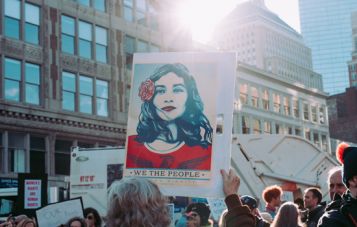
The Social and Political Sciences Graduate Research Program works with our students to better understand and respond to complex legal, political, social, cultural and economic problems, equipping you with the necessary skills and expertise to develop and progress the world in which we live, advancing knowledge for the public good and leading the next generation of social change.
Key contacts
Research centres and hubs

Ready to apply?
Find out what steps are needed to apply for graduate research.
Music
View
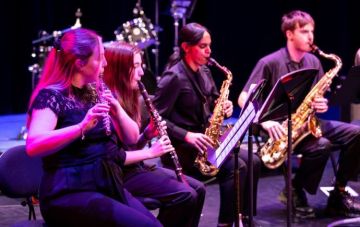
The Music Graduate Research Program at Monash offers one of the most comprehensive graduate research programs in the field of music and artistic research in Australia. The Program houses an Arts PhD (Music), practice-based doctoral program PhD (Practice-based Music), Master of Arts (Music), and Master of Arts (Research Training).
All of the graduate research courses in the Music Program are designed to inspire cutting-edge scholarship and provide students with opportunities to engage with academia, industry and community. We offer innovative, robust and socially engaged research and practice programs in theory and practice and are internationally recognised for our work in artistic research methods, gender, sexualities and performance, music technology, music education, collaborative creativity, adaptation and audience reception studies, mental health and performance, site-based performance, performance philosophy, and climate communication through music. Our progressive, holistic and culturally diverse music program excels in classical, jazz, improvisation, and popular music performance, composition and music technology and holds an internationally renowned reputation for research in practice-based research, ethnomusicology and musicology.
The music research groups at the School of Music and Performance sit under the Faculty of Arts Global research themes of Gender Politics and Social Inclusion; Knowledge History and Cultural Understanding; Community Creativity and Citizenship; and Environmental Health and Wellbeing.
Watch THIS video to discover more.
Find a supervisor
Find a supervisor via name, program area, or keyword search.
-
Margaret S. Barrett Creativity, pedagogies of creativity, collaboration, and expertise in music, music early learning and development, cultural psychology, narrative inquiry, participatory research methods, ecopolitics of music education, gender diversity in music, music education, artistic citizenship, creative health.
Cat Hope Digital music notation; graphic notation, electronic music; Australian music, gender diversity in music, improvisation, digital archiving, networked music, practice based research methods in music performance and composition.
Robert Burke Practice-based artistic research; improvisation; jazz; saxophone.
Nicole Canham Career development; precarious work; musician identity; music careers education; music education.
Rod Davies Popular music; studio coproduction; songwriting; performance; performer's rights; musical ecosystems.
Louise Devenish Performance; artistic research; interdisciplinary practice; collaborative creativity; new music; percussion; Australian music; environmental and climate communication in the arts; practice-based research methods.
Sam Gillies Practice-based and practice-led composition research; contemporary composition; improvisation; sonic art; electronic music; creative coding; electronic music musicology; digital archiving
Aura Go Piano; music performance; curation; collaborative performance; creativity; practice-led research.
Martin Koszolko Collaboration, Collaborative creativity, Networked music, Recording studio, Music Composition, Communication and media studies, Music business, Communities of practice.
Johannes Luebbers Composer collaboration; jazz composition; musical arrangement; musical theatre; music theory and ear training.
Anna McMichael Music performance; violin/string playing; artistic research; creative collaboration; early music through to contemporary/experimental styles; interdisciplinary; musicology.
Paul Williamson Jazz studies; improvisation; flow; trumpet.
-
Margaret S. Barrett Creativity, pedagogies of creativity, collaboration, and expertise in music, music early learning and development, cultural psychology, narrative inquiry, participatory research methods, ecopolitics of music education, gender diversity in music, music education, artistic citizenship, creative health.
Cat Hope Digital music notation; graphic notation, electronic music; Australian music, gender diversity in music, improvisation, digital archiving, networked music, practice based research methods in music performance and composition.
Robert Burke Practice-based artistic research; improvisation; jazz; saxophone.
Nicole Canham Career development; precarious work; musician identity; music careers education; music education.
Rod Davies Popular music; studio coproduction; songwriting; performance; performer's rights; musical ecosystems.
Louise Devenish Performance; artistic research; interdisciplinary practice; collaborative creativity; new music; percussion; Australian music; environmental and climate communication in the arts; practice-based research methods.
Sam Gillies Practice-based and practice-led composition research; contemporary composition; improvisation; sonic art; electronic music; creative coding; electronic music musicology; digital archiving
Aura Go Piano; music performance; curation; collaborative performance; creativity; practice-led research.
Martin Koszolko Collaboration, Collaborative creativity, Networked music, Recording studio, Music Composition, Communication and media studies, Music business, Communities of practice.
Johannes Luebbers Composer collaboration; jazz composition; musical arrangement; musical theatre; music theory and ear training.
Anna McMichael Music performance; violin/string playing; artistic research; creative collaboration; early music through to contemporary/experimental styles; interdisciplinary; musicology.
Paul Williamson Jazz studies; improvisation; flow; trumpet.
-
Key contacts
Research centres and hubs




Ready to apply?
Find out what steps are needed to apply for graduate research.
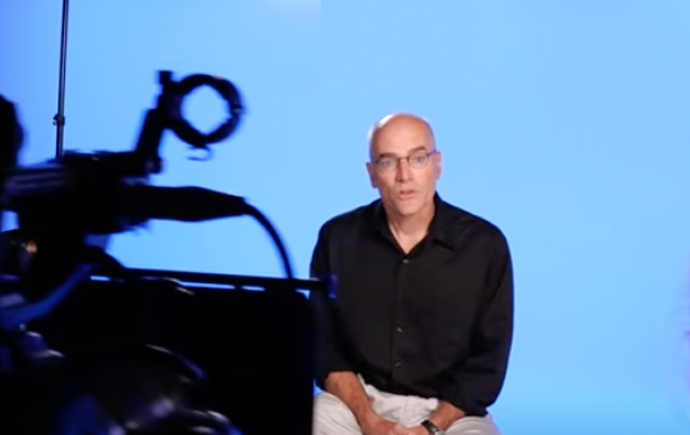
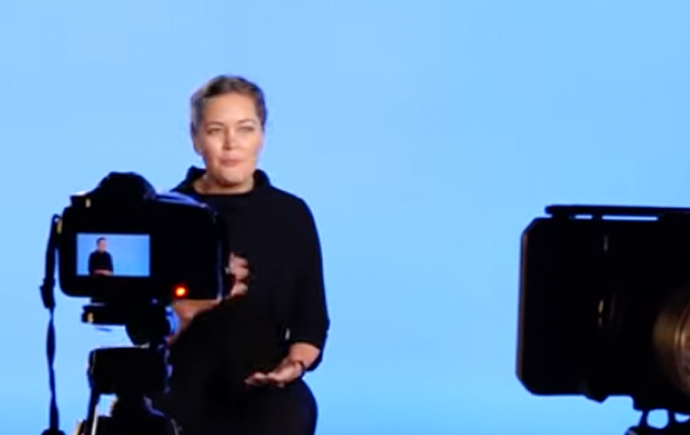
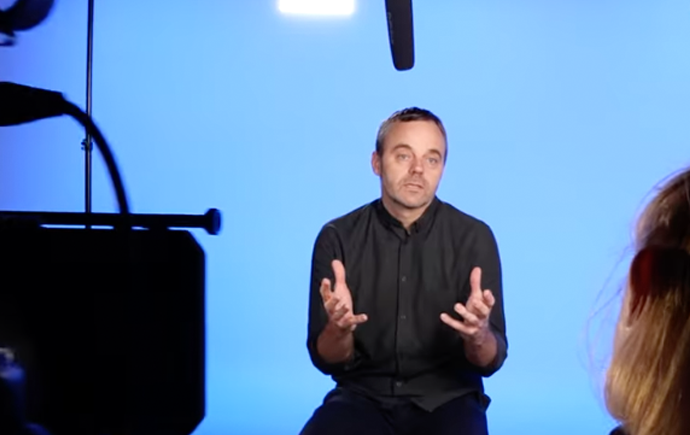
Meet some of your supervisors
Our Monash Arts PhD supervisors reveal why pursuing Higher Degree Research is your gateway to an exceptional educational experience and fulfilling and meaningful career.
whitespace