
Living With 2°C Plus: Slow Burn - The hidden costs of a warming planet
Not all impacts of climate change are dramatic or catastrophic, some are slow moving, almost invisible. These impacts don’t often grab headlines, but their consequences may be much more harmful than commonly realised. In his book, Slow Burn: The Hidden Costs of a Warming World (Princeton, 2024), Assistant Professor R. Jisung Park argues subtle setbacks of a warming world present major challenges including health risks spread across billions of people, cents off corporate profitability and threats to agricultural livelihoods. These impacts will not be equitable, but concentrated among those most vulnerable.
At the latest in our Living With 2°C Plus seminar, Asst/Prof Park will discuss his findings. He will be joined by a panel of practitioners working in the field to draw out the lessons and learning for policy and implementation.
Registration
Keynote Speaker
 Assistant Professor R. Jisung Park, University of Pennsylvania
Asst/Prof Park is an economist who earned his undergraduate degree at Columbia University, his Master’s at Oxford and his PhD at Harvard. He has pieced together a comprehensive narrative of slow-moving impacts of climate change from his own research, and an extensive survey of global research. His approach comprises a careful methodical analysis rather than bellicose catastrophising.
Discussants
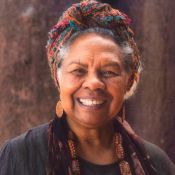 Professor Anne Poelina, Chair of Indigenous Knowledges and Senior Research Fellow, Nulungu Research Institute
Prof Poelina is a Nyikina Warrwa woman from the Kimberley region of Western Australia. She is an active community leader, human and earth rights advocate, filmmaker and respected academic researcher, with a second Doctor of Philosophy (First Law) titled Martuwarra First Law Multi-Species Justice Declaration of Interdependence: Wellbeing of Land, Living Waters, and Indigenous Australian People (Nulungu Institute of Research, University of Notre Dame, Broome, Western Australia).
Prof Poelina, who received the 2024 Geoethics Medal, is also the Murray Darling Basin (MDB) inaugural First Nations appointment to its independent Advisory Committee on Social, Economic and Environmental Sciences (2022), and member of Institute for Water Futures, Australian National University, Canberra.
Prof Poelina was awarded the Kailisa Budevi Earth and Environment Award on International Women’s Day (2022), in recognition of her global standing. She is also an ambassador for the Western Australian State Natural Rangelands Management (NRM) (2022).
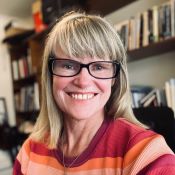 Carole Hammond, Executive Officer, Goulburn Murray Climate Alliance (GMCA)
Ms Hammond has more than 30 years’ experience in local government. The GMCA is one of eight local government and agency alliances that cover most of Victoria’s local government areas, and have been addressing climate mitigation and adaptation at scale for over 20 years.
Ms Hammond has Master’s degrees in environment, heritage, and urban planning, and another degree in commercial photography, and often ponders how this haphazard quest for knowledge led her to be working in such a fulfilling and consequential role leading the GMCA.
Co-Hosts
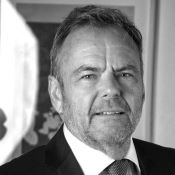 Dr Michael Spencer, Adjunct Senior Research Fellow, Green Lab, Impact Labs, Monash Business School
Dr Spencer teaches and researches at Monash Business School in sustainability regulation, international institutions, geopolitics and business globalisation. His PhD was in comparative environmental governance.
He spent 15 years in leadership positions with international multi-stakeholder standardisation and labelling organisations, and has held responsibility for leading CSR and stakeholder relations functions at major Australian companies BHP, NAB and BlueScope Steel.
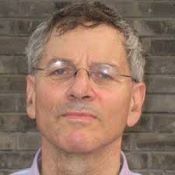 Professor Daniel Guttman, Co-chair, Standing Panel on International Affairs, National Academy of Public Administration
Prof Guttman is a professor at the Tianjin University Law School, an adjunct professor at the Fudan University - London School of Economics Institute for Global Public Policy, and fellow of the New York University US-Asia Law Institute. He will summarise and facilitate audience questions.
Organiser
Green Lab, Impact Labs, Monash Business School in collaboration with the U.S. National Academy of Public Administration (NAPA).
Living With 2°C Plus: Roundtable series
Our world will become at least 2.5°C warmer than pre-industrial levels, current indications show.
Following COP29, Monash Green Lab is hosting a roundtable series to discuss the challenges of implementing strategies to live in a significantly warmer world.
In cooperation with the US National Academy of Public Administration (NAPA), the Monash roundtables will bring together leading international and Australian thinkers from government, business and community sectors.
The roundtables will provide insights from current work on climate change adaptation and point to areas where further work is required.
Events in the series
| Where are we, why are we here and where do we want to go? | Thu 28 Nov 2024 |
| Extreme weather events, flood risk and stormwater systems | Thu 13 Feb 2025 |
| Managing risk, value and insurance protection | Fri 14 Mar 2025 |
| Living with wildfire | Thu 26 Jun 2025 |
| New perspectives on financing the adaptation challenge | Thu 31 July 2025 |
| Locally led adaptation; building on place-based approaches to adaptation | Thu 25 Sep 2025 |
| Slow Burn - The hidden costs of a warming planet | Thu 11 Dec 2025 |
Contact
Event Details
- Date:
- 11 December 2025 at 12:00 pm – 1:00 pm
- Venue:
- Online - Zoom
- Categories:
- Alumni; General; Green Lab
Description
Not all impacts of climate change are dramatic or catastrophic, some are slow moving, almost invisible. These impacts don’t often grab headlines, but their consequences may be much more harmful than commonly realised. In his book, Slow Burn: The Hidden Costs of a Warming World (Princeton, 2024), Assistant Professor R. Jisung Park argues subtle setbacks of a warming world present major challenges including health risks spread across billions of people, cents off corporate profitability and threats to agricultural livelihoods. These impacts will not be equitable, but concentrated among those most vulnerable.
At the latest in our Living With 2°C Plus seminar, Asst/Prof Park will discuss his findings. He will be joined by a panel of practitioners working in the field to draw out the lessons and learning for policy and implementation.
Registration
Keynote Speaker
Assistant Professor R. Jisung Park, University of Pennsylvania
Asst/Prof Park is an economist who earned his undergraduate degree at Columbia University, his Master’s at Oxford and his PhD at Harvard. He has pieced together a comprehensive narrative of slow-moving impacts of climate change from his own research, and an extensive survey of global research. His approach comprises a careful methodical analysis rather than bellicose catastrophising.
Discussants
Professor Anne Poelina, Chair of Indigenous Knowledges and Senior Research Fellow, Nulungu Research Institute
Prof Poelina is a Nyikina Warrwa woman from the Kimberley region of Western Australia. She is an active community leader, human and earth rights advocate, filmmaker and respected academic researcher, with a second Doctor of Philosophy (First Law) titled Martuwarra First Law Multi-Species Justice Declaration of Interdependence: Wellbeing of Land, Living Waters, and Indigenous Australian People (Nulungu Institute of Research, University of Notre Dame, Broome, Western Australia).
Prof Poelina, who received the 2024 Geoethics Medal, is also the Murray Darling Basin (MDB) inaugural First Nations appointment to its independent Advisory Committee on Social, Economic and Environmental Sciences (2022), and member of Institute for Water Futures, Australian National University, Canberra.
Prof Poelina was awarded the Kailisa Budevi Earth and Environment Award on International Women’s Day (2022), in recognition of her global standing. She is also an ambassador for the Western Australian State Natural Rangelands Management (NRM) (2022).
Carole Hammond, Executive Officer, Goulburn Murray Climate Alliance (GMCA)
Ms Hammond has more than 30 years’ experience in local government. The GMCA is one of eight local government and agency alliances that cover most of Victoria’s local government areas, and have been addressing climate mitigation and adaptation at scale for over 20 years.
Ms Hammond has Master’s degrees in environment, heritage, and urban planning, and another degree in commercial photography, and often ponders how this haphazard quest for knowledge led her to be working in such a fulfilling and consequential role leading the GMCA.
Co-Hosts
Dr Michael Spencer, Adjunct Senior Research Fellow, Green Lab, Impact Labs, Monash Business School
Dr Spencer teaches and researches at Monash Business School in sustainability regulation, international institutions, geopolitics and business globalisation. His PhD was in comparative environmental governance.
He spent 15 years in leadership positions with international multi-stakeholder standardisation and labelling organisations, and has held responsibility for leading CSR and stakeholder relations functions at major Australian companies BHP, NAB and BlueScope Steel.
Professor Daniel Guttman, Co-chair, Standing Panel on International Affairs, National Academy of Public Administration
Prof Guttman is a professor at the Tianjin University Law School, an adjunct professor at the Fudan University - London School of Economics Institute for Global Public Policy, and fellow of the New York University US-Asia Law Institute. He will summarise and facilitate audience questions.
Organiser
Green Lab, Impact Labs, Monash Business School in collaboration with the U.S. National Academy of Public Administration (NAPA).
Living With 2°C Plus: Roundtable series
Our world will become at least 2.5°C warmer than pre-industrial levels, current indications show.
Following COP29, Monash Green Lab is hosting a roundtable series to discuss the challenges of implementing strategies to live in a significantly warmer world.
In cooperation with the US National Academy of Public Administration (NAPA), the Monash roundtables will bring together leading international and Australian thinkers from government, business and community sectors.
The roundtables will provide insights from current work on climate change adaptation and point to areas where further work is required.
Events in the series
| Where are we, why are we here and where do we want to go? | Thu 28 Nov 2024 |
| Extreme weather events, flood risk and stormwater systems | Thu 13 Feb 2025 |
| Managing risk, value and insurance protection | Fri 14 Mar 2025 |
| Living with wildfire | Thu 26 Jun 2025 |
| New perspectives on financing the adaptation challenge | Thu 31 July 2025 |
| Locally led adaptation; building on place-based approaches to adaptation | Thu 25 Sep 2025 |
| Slow Burn - The hidden costs of a warming planet | Thu 11 Dec 2025 |