
Kate Bundrock: Using The Law as a Tool for Social Justice
50 Years / 50 Voices: Learning law and changing lives is a commemorative volume marking the 50th anniversary of the ongoing Monash Law Clinical Program, a pioneering initiative in clinical legal education undertaken by the Faculty of Law at Monash University. 50 alumni of the Monash Law Clinical Program shared their story with 50 current students of the same program. This is an excerpt from the book.

When Kate Bundrock undertook her clinical placement at Monash-Oakleigh Legal Service, a typical day consisted of meeting with clients, sorting through files and working with fellow students on real legal issues under the supervision of a clinic solicitor.
‘I really loved that program,’ she reflects, ‘and it was the first time that I thought that I actually wanted to be a lawyer.’
There was something about the direct connection with clients and the challenge of applying legal knowledge to help find real-world solutions that helped Bundrock gain clarity about the path she wanted to take after law school. ‘I liked the contact with people,’ Bundrock says. ‘Just being able to hear about people’s issues and think about how I might be able to help them … that was the thing that made me think maybe this is what I would like to do.’
Like many, Bundrock didn’t know what lay ahead of her after graduation. She came into Monash Law with a broad interest in social justice, but there wasn’t a clear roadmap for how to get there post–law school. ‘To be honest, I really wanted to work in criminal law when I was leaving law school, I just couldn’t work out how to get a job in that field.’
Instead, she pursued the conventional route. Bundrock started her career at King & Wood Mallesons, one of Melbourne’s major corporate law firms, completing her Articles (the then equivalent of Practical Legal Training). But she very quickly realised that it wasn’t the future she had imagined for herself. ‘It just wasn’t the work I wanted to do,’ she says.
Bundrock’s time at Monash-Oakleigh Legal Service had planted a seed that was ready to flourish. She can’t recall every client she worked with at the clinic, but she does remember feeling that the work she was doing truly mattered. Alongside the positive impact she was making and the friendships she built, her supervisor, Sue Campbell, played a big role in shaping her experience and mindset at the clinic. ‘She had really built that program and encouraged us to take it seriously,’ Bundrock says.
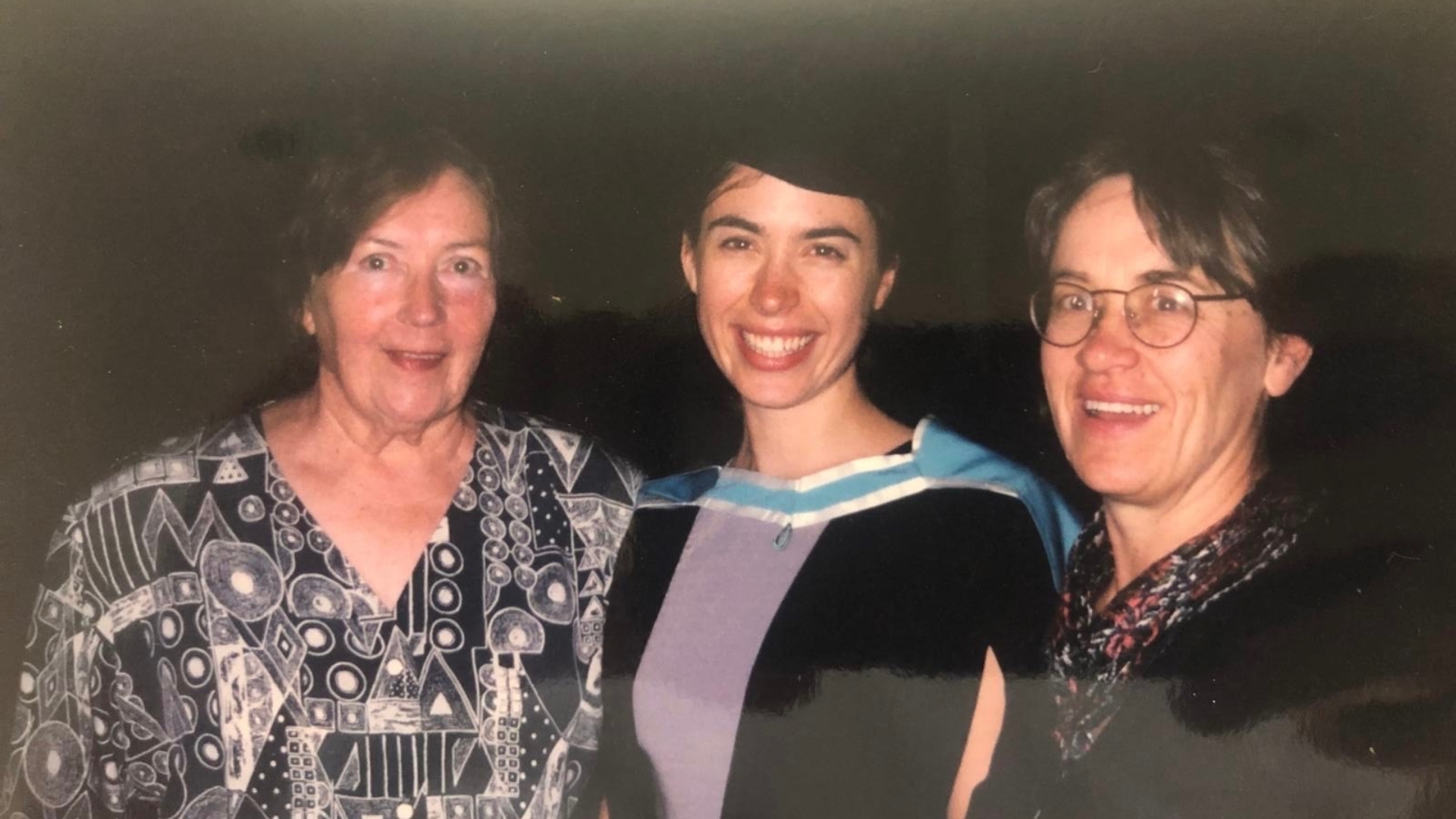
‘It was a fun environment, but also one where we were expected to work hard and show real respect and compassion for the people we were assisting.’
Bundrock recalls a moment when she was struggling to assist a client at the clinic who seemed reluctant to fill out some forms. Frustrated, she confided in a friend who gently suggested that the client might not have been able to read or write, hence their hesitation. ‘There was a lot of learning for me,’ Bundrock recalls. ‘It just hadn’t occurred to me that that would be the reason. And that people might not want to explain those kinds of things to a young lawyer they’ve just met.’ This quickly became a powerful lesson in empathy and awareness that has stuck with Bundrock throughout the entirety of her career.
Read more about 50 years of Monash Law Clinics and buy 50 Years / 50 Voices here
Upon finishing her Articles and being admitted as a solicitor, Bundrock went on to work at the Supreme Court as a judge’s associate, gaining valuable exposure across different divisions in the Supreme Court of Victoria. Bundrock recalls the significance of one murder trial that took place in Shepparton. As it happened, the trial coincided with a period where Bundrock was considering what her next career move would be. After the trial, Bundrock came across a job listing at Victoria Legal Aid (VLA) in Shepparton.
‘I’d applied to VLA before and never even got an interview,’ she says. However, having just visited Shepparton for the murder trial, the town felt a bit more familiar and welcoming. ‘I didn’t know anything else. I didn’t have any connection to the town, but I’d just been there for a murder trial. So I applied and I got the job. That’s how I got my first role at VLA.’ In 2010, Bundrock became a barrister, practising for two years. In 2013, she returned to Victoria Legal Aid, where she continues to work.
Today, Bundrock is the Executive Director of Criminal Law, overseeing all of VLA’s criminal law services across the state. Despite the scale of her role, her mission has remained steady: to use the law as a tool for social justice. ‘That’s always what I’ve wanted to do,’ she says. ‘And the clinic gave me a demonstration of what that might actually look like.’
More than two decades after her time at Monash-Oakleigh Legal Service, Bundrock still carries the experience with her. Her advice to current students? Use the clinical program experience as a way to work out what type of law you want to practise, but also use it as a great learning experience, to understand the practical impact the law has on people’s lives.
Bundrock is heartened to see that the clinical program remains a core part of Monash Law’s identity and is still run by passionate educators. ‘It’s great that it’s still going and that people still have the opportunity to do it,’ she says.
Read more about 50 years of Monash Law Clinics and buy 50 Years / 50 Voices here
Get involved with Monash Law Clinics
Monash Law Clinics combine legal education with real-world impact, supporting access to justice while equipping students with practical, ethical and professional skills.
If you are a student interested in undertaking a clinical unit as part of your studies, explore the available clinical placements and elective options.
Whether you’re an alum, practitioner or organisation keen to support the clinics through hosting placements, partnerships, volunteering or funding, there’s a way to be involved. To learn more, contact Emily Collard, Industry & Alumni Engagement Manager, at emily.collard@monash.edu.