
Lex Lasry AM: A commitment to hope
50 Years / 50 Voices: Learning law and changing lives is a commemorative volume marking the 50th anniversary of the ongoing Monash Law Clinical Program, a pioneering initiative in clinical legal education undertaken by the Faculty of Law at Monash University. 50 alumni of the Monash Law Clinical Program shared their story with 50 current students of the same program. This is an excerpt from the book.
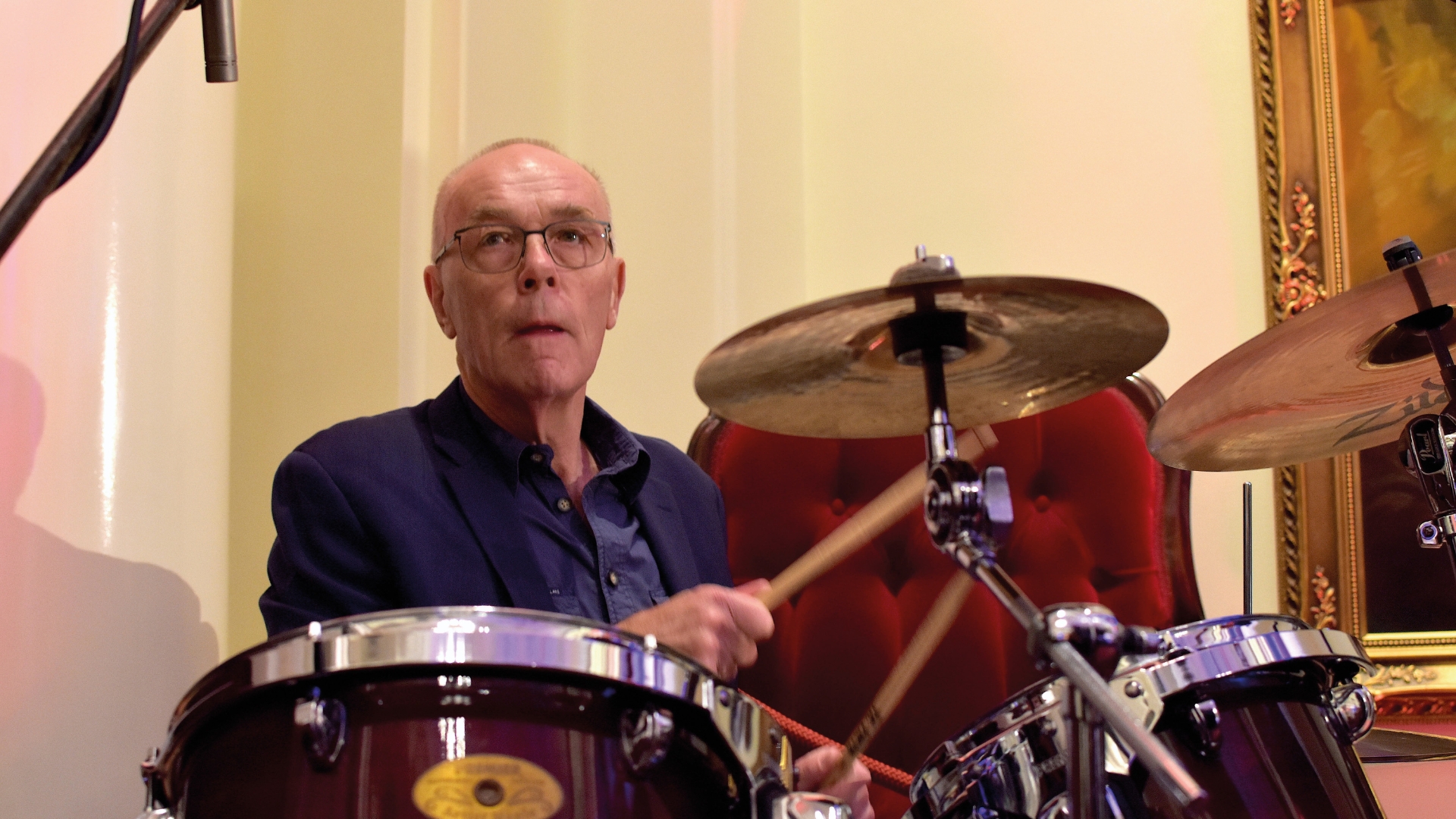
Acting Justice Lex Lasry AM as Drummer of The Lex Pistols.
From the bench of the Northern Territory Supreme Court, Acting Justice Lex Lasry AM continues the work that has defined his career: seeking justice in its most human manifestations. Known for his service as a Justice of the Supreme Court of Victoria and for his resolute opposition to the death penalty, Acting Justice Lasry remains deeply engaged in the law. Even in retirement, he is still presiding over criminal cases – now in the NT, where the criminal justice system is overshadowed by entrenched social inequality and the over-representation of Indigenous Australians in the criminal justice system.
Read more about 50 years of Monash Law Clinics and buy 50 Years / 50 Voices here
Acting Justice Lasry began his studies at Monash University in 1967, not out of a passion for law but as a pragmatic alternative to full-time work. ‘It was either that or get a job,’ he admits. ‘And I was too lazy to work.’
At the time, Monash Law had no formal clinical program. ‘The nearest we came to anything realistic were moot courts,’ he recalls. But something more radical was forming outside of the formal curriculum: a group of students, including Neil Rees and Phil Slade, had founded a legal advice service, the Springvale Free Legal Service.
This would later become known as Springvale Monash Legal Service, and today, South-East Monash Legal Service.
Acting Justice Lasry accepted the invitation to become involved shortly after graduation, supervising students at the fledgling clinic. ‘It was my first real exposure to what law meant outside textbooks,’ he says. ‘It was pretty shambolic.’ People would queue up outside an old house in Osborne Avenue for legal advice. Acting Justice Lasry would often provide that advice himself with students present to observe the lawyer–client dynamic. ‘It was free advice, so it was probably worth the cost,’ he says.
The issues ranged from minor police charges to family law disputes and civil debts. He describes the clients as ‘all the most important things in the world’. It was, he reflects, his first real encounter with the human impact of the law. Coming from a privileged life in Brighton, Acting Justice Lasry realised that there were people desperately in need of legal help.
Acting Justice Lasry went on to build a formidable career in criminal law. Called to the Bar in the early 1970s, he acted for both the prosecution and defence in criminal trials. His appointment as Queen’s Counsel in 1990 marked a significant milestone, followed by his elevation to the Supreme Court of Victoria in 2007.
Read more about 50 years of Monash Law Clinics and buy 50 Years / 50 Voices here
For 18 years, Acting Justice Lasry presided over some of Victoria’s most complex and high-profile murder trials – including those of prisoner Matthew Johnson for the killing of underworld figure Carl Williams in prison, and Victorian man Robert Farquharson for the murder of his three children. ‘Some were memorable,’ Acting Justice Lasry says. ‘But they all represented human catastrophe in one form or another … they were all important.’
But perhaps the most defining moments of his career came as an advocate for Australians facing execution abroad. In 2005, Acting Justice Lasry was appointed as independent counsel for Van Tuong Nguyen, an accused drug trafficker facing the death penalty in Singapore. Acting Justice Lasry observed the authoritarian nature of Singapore’s system and determination to kill someone who didn’t deserve to be killed. He also represented Andrew Chan and Myuran Sukumaran, two members of the ‘Bali Nine’ – a group of young Australians convicted of smuggling heroin out of Indonesia. Van Tuong Nguyen was executed by hanging at Changi Prison in Singapore, and Chan and Sukumaran by firing squad on the Indonesian prison island Nusakambangan. His clients’ deaths only deepened Acting Justice Lasry’s resolve to fight against the death penalty. ‘The more I thought about it, the more revolting I thought the death penalty was, and I’m still advocating in relation to that.’
Acting Justice Lasry credits those early evenings at Springvale with his realisation that law isn’t just theory – it is lived experience. ‘It was the first time I experienced the interaction between the law and the people who consume it … it made me understand that the law is not some intellectual, esoteric theory. It’s actually a system of rules that governs the way people live their lives. And it doesn’t always work as well as it should.’
He sees the Monash Law clinical program as a vital bridge between theory and practice. ‘You need to see the practical effect of what you’re learning to do … if you’re learning to be a lawyer, you need to understand … that the law is about the people who are forced to consume it.’
He acknowledges the emotional toll that comes with criminal law. ‘You lose a bit of your humanity when you’re constantly being exposed to the sort of things that criminal lawyers are constantly exposed to, it can be hard to maintain your compassion when you should.’
So how has he lasted? ‘Probably patience … and the ability to disconnect emotionally from the work that I’m doing. If you are caught up emotionally in the case that you’re doing – even in a case like Van [Nguyen]’s, then you’re not doing the client a service.’
Acting Justice Lasry says lawyers must be dogged in their application of the rule of law, and he calls out the United States for special mention.
'The fundamental role of lawyers is to ensure that the rule of law is applied properly … that the system is independent, impartial and fair,’ he says. ‘Even the wealthy commercial lawyers … their work is still involved in the application of laws, and the rule of law needs to be done in a way that’s consistent with our civilised community – as opposed to what’s happening in the United States, for example.’
His advice to students today is simple but powerful: ‘Get involved. Do the practical things that are offered to you. At least think about whether being involved in the sort of law that affects people’s rights is the right fit for you. It’s not for everybody – it takes a toll – but if you can, you should.’
Acting Justice Lasry’s continued service, advocacy and mentorship make clear that hope, for him, is a practice, not a sentiment.
Read more about 50 years of Monash Law Clinics and buy 50 Years / 50 Voices here
Get involved with Monash Law Clinics
Monash Law Clinics combine legal education with real-world impact, supporting access to justice while equipping students with practical, ethical and professional skills.
If you are a student interested in undertaking a clinical unit as part of your studies, explore the available clinical placements and elective options.
Whether you’re an alum, practitioner or organisation keen to support the clinics through hosting placements, partnerships, volunteering or funding, there’s a way to be involved. To learn more, contact Emily Collard, Industry & Alumni Engagement Manager, at emily.collard@monash.edu.