
Lily Polak: A clinic with a conscience
50 Years / 50 Voices: Learning law and changing lives is a commemorative volume marking the 50th anniversary of the ongoing Monash Law Clinical Program, a pioneering initiative in clinical legal education undertaken by the Faculty of Law at Monash University. 50 alumni of the Monash Law Clinical Program shared their story with 50 current students of the same program. This is an excerpt from the book.

Read more about 50 years of Monash Law Clinics and buy 50 Years / 50 Voices here
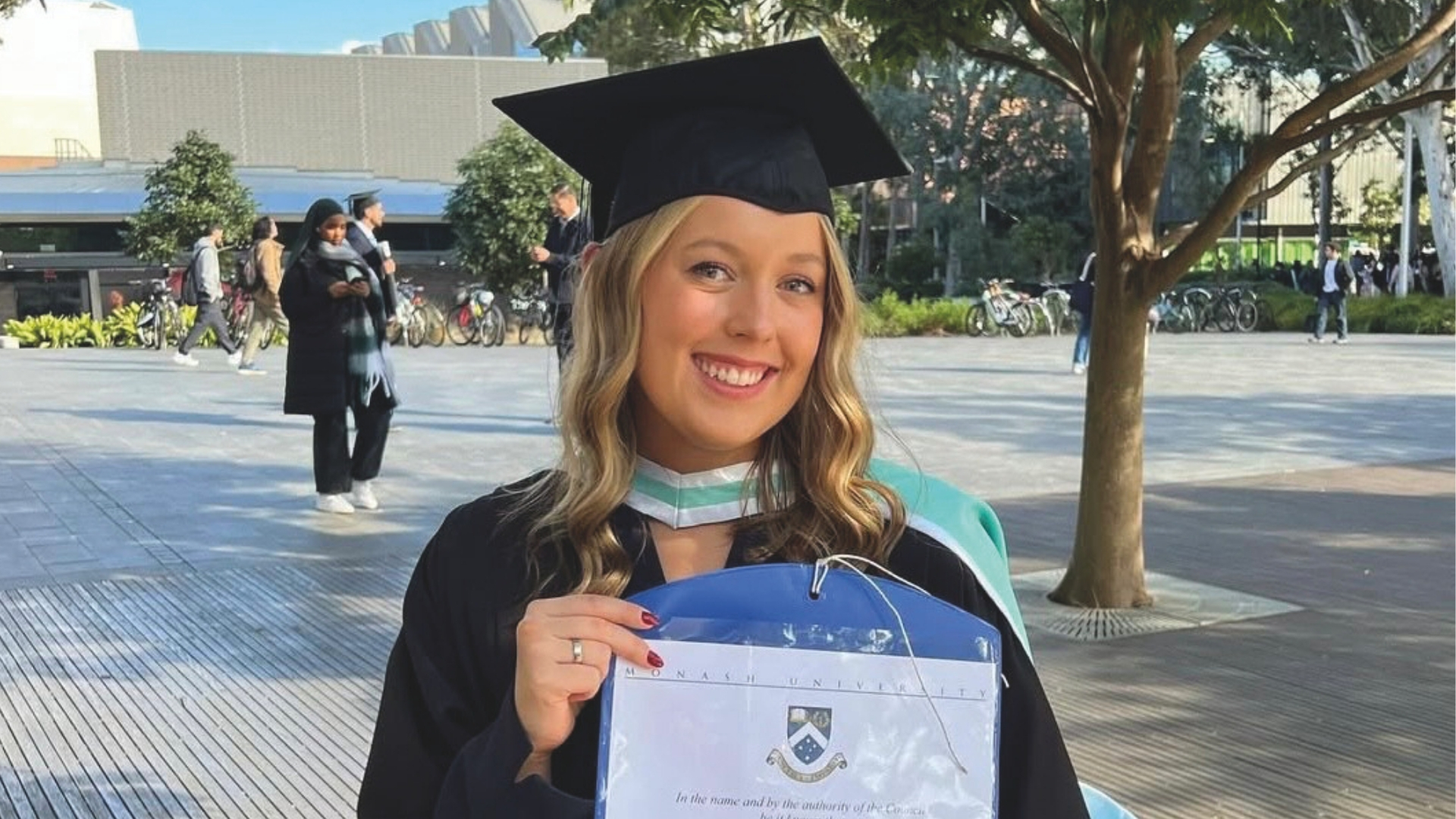
‘It felt very grown-up,’ Lily Polak says, recalling the first time she walked into Monash Law Clinics. ‘You’re still at university, but it felt so separate. You’re applying everything you’ve learned, but this time it’s real, these are people’s lives.’
Placement at Monash Law Clinics was the final subject of Polak’s degree. Her last day of university was spent at the clinic. She participated in a generalist stream of Professional Practice, managing a wide array of matters: intervention orders, tenancy issues, judgment debts and community fines.
‘I’ve always been passionate about the intersection between law and human rights,’ she says. ‘Access to justice shouldn’t depend on how much money you have. It’s a right and not a privilege.’
That conviction preceded Polak’s legal education, but it was deepened through clinical experience. Before the clinic, she had volunteered at various legal and human rights organisations, and worked as a part-time assistant to a children’s court lawyer.
But it wasn’t until she managed her own files and interviewed her own clients that theory truly met practice. ‘I was a little bit nervous,’ she admits. ‘I’d spent five years wanting to do this kind of work, but I thought … what if I’m not good at it? What if it’s not for me?’
Something clicked during those first few weeks. Guided by her supervisor, Emily Singh, Polak began to understand legal practice: not just the black letter law, but the listening and problem-solving it demands, in order to help people in precarious situations.
‘I learned so much from watching how Emily worked with clients,’ Polak says. ‘It helped me start forming my own sense of how I wanted to be a lawyer.’
She drew strength also from her peers. ‘We all got along really well, which mattered a lot,’ she says. ‘You’re dealing with clients who are vulnerable, and sometimes the situations can be stressful. It makes a big difference when you have a team you can rely on.’ This mutual support added another layer to the learning experience.
Read more about 50 years of Monash Law Clinics and buy 50 Years / 50 Voices here
Read more about 50 years of Monash Law Clinics and buy 50 Years / 50 Voices here
Polak describes her time at the clinic not in terms of a single defining moment but a series of significant experiences. The first time she led a client interview. The first time she drafted correspondence on behalf of someone. The first time she realised that law could, in some circumstances, repair the damage it too often reflects. ‘It reaffirmed everything,’ she says. ‘That this is what I want to do. That I would get so much personal and professional satisfaction out of this kind of work.’
Polak now works as an associate to Judge Fiona Todd at the County Court of Victoria, sitting in the Criminal Division. ‘It’s been an incredible experience,’ she says, reflecting on her daily exposure to courtroom advocacy and the inner workings of the judicial process. It’s also a role that has deepened her understanding of how addiction, poverty and trauma draw people into the criminal justice system.
She has had the chance to observe proceedings in the Drug and Alcohol Treatment Court under the Crimes (Mental Impairment and Unfitness to be Tried) Act and the County Koori Court. ‘You learn so much about the things that are outside a person’s control, and how those things can change the course of someone’s life,’ she notes.
Monash Law Clinics laid the foundation for what followed, not just by giving her skills, but by affirming her values. ‘You don’t just do tasks for solicitors,’ she says. ‘The files are yours. The responsibility is real.’ That responsibility, combined with plenty of support, is what makes clinical legal education distinct. ‘You’re encouraged, you’re guided, but you’re also trusted. And that trust gives you confidence,’ she says.
Get involved with Monash Law Clinics
Monash Law Clinics combine legal education with real-world impact, supporting access to justice while equipping students with practical, ethical and professional skills.
If you are a student interested in undertaking a clinical unit as part of your studies, explore the available clinical placements and elective options.
Whether you’re an alum, practitioner or organisation keen to support the clinics through hosting placements, partnerships, volunteering or funding, there’s a way to be involved. To learn more, contact Emily Collard, Industry & Alumni Engagement Manager, at emily.collard@monash.edu.