
Meghan Butterfield: A Legacy of Advocacy
50 Years / 50 Voices: Learning law and changing lives is a commemorative volume marking the 50th anniversary of the ongoing Monash Law Clinical Program, a pioneering initiative in clinical legal education undertaken by the Faculty of Law at Monash University. 50 alumni of the Monash Law Clinical Program shared their story with 50 current students of the same program. This is an excerpt from the book.
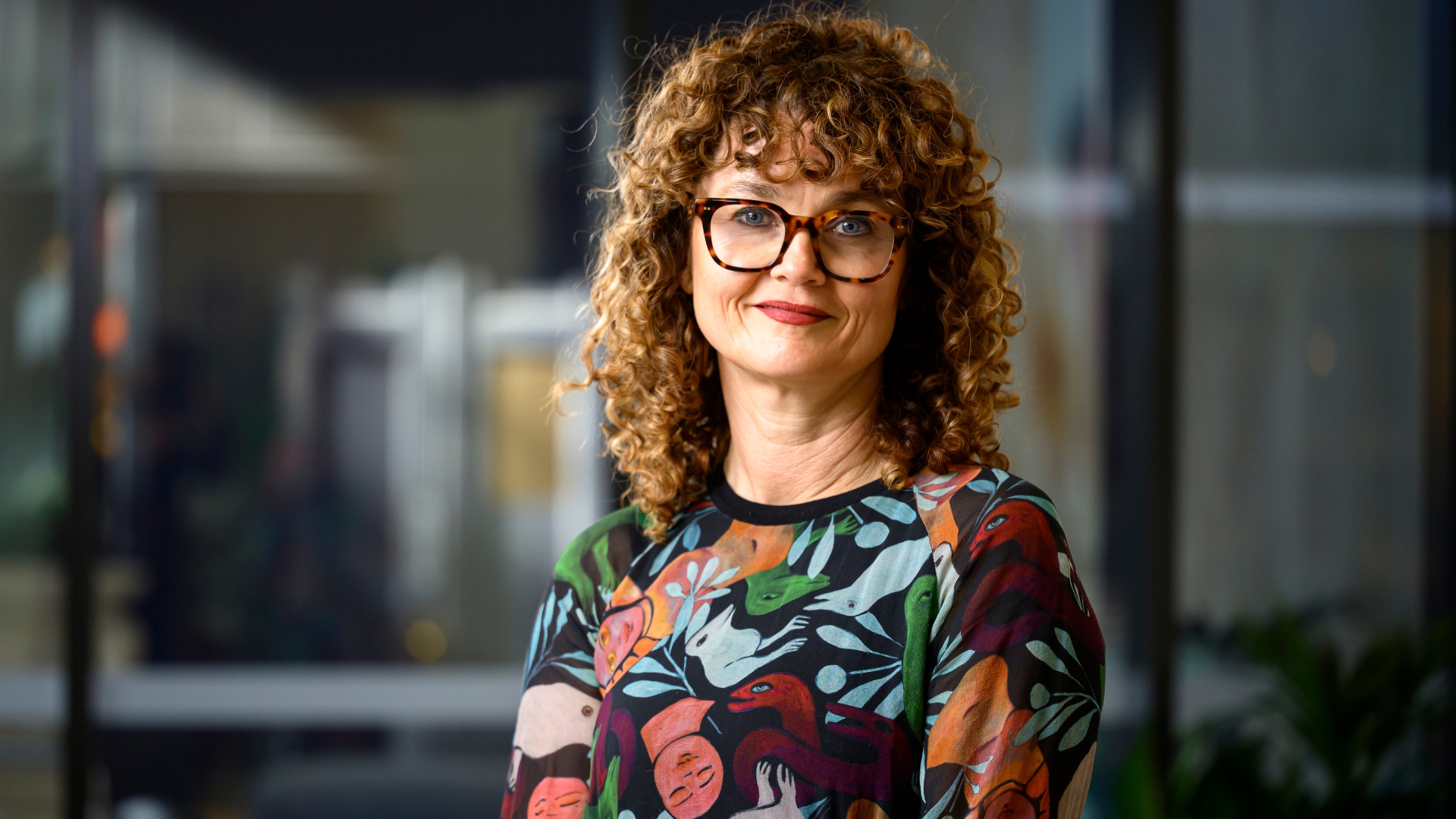
For more than three decades, Meghan Butterfield has dedicated her legal career to advocating for some of the most vulnerable members of our community. She spent five years as a legal member on the Mental Health Tribunal and now serves as a member of Victoria’s Post Sentence Authority, which makes decisions regarding serious sex offenders and serious violent offenders who have completed their prison terms but still present an unacceptable risk of re-offending.
Although Butterfield has moved to decision-making roles, her passion for justice, community safety and the rights of victim-survivors remains central to her work. Butterfield’s work reflects a career-long commitment to addressing harm, supporting those affected by trauma and contributing to systemic change in our society.
Butterfield’s connection to Monash Law Clinics began as a student, when after doing the Professional Practice unit, she volunteered at the newly formed Springvale Monash Legal Service (SMLS)/South Eastern Centre Against Sexual Assault (SECASA) Joint Clinical Legal Service, a collaboration between Monash Law and the SECASA. Even before her legal career officially began, Butterfield was drawn to issues of sexual abuse and justice, inspired in part by personal experiences supporting a dear friend who was a survivor of incest. That early exposure planted a seed that would guide her professional path.
When she returned to the clinic as supervising solicitor in 2000, Butterfield combined her legal expertise with a passion for mentoring students and building a service that could make a real difference. Reflecting on the clinic’s influence, she says: ‘The clinic gave students a window into lives less fortunately lived. This was transformative for many and helped them grow, not just as practitioners but as empathetic people.’
Over almost two decades leading the SMLS/SECASA Joint Clinical Legal Service, Butterfield helped the clinic evolve from a small, volunteer-led initiative to a comprehensive service that supported hundreds of clients each year. Under her leadership, the clinic grew from four student caseworkers to a team of 34, including junior lawyers and dedicated volunteers. Butterfield pioneered a holistic model where clients could access advice on compensation claims, criminal proceedings, intervention orders, wills and probate issues.
Read more about 50 years of Monash Law Clinics and buy 50 Years / 50 Voices here
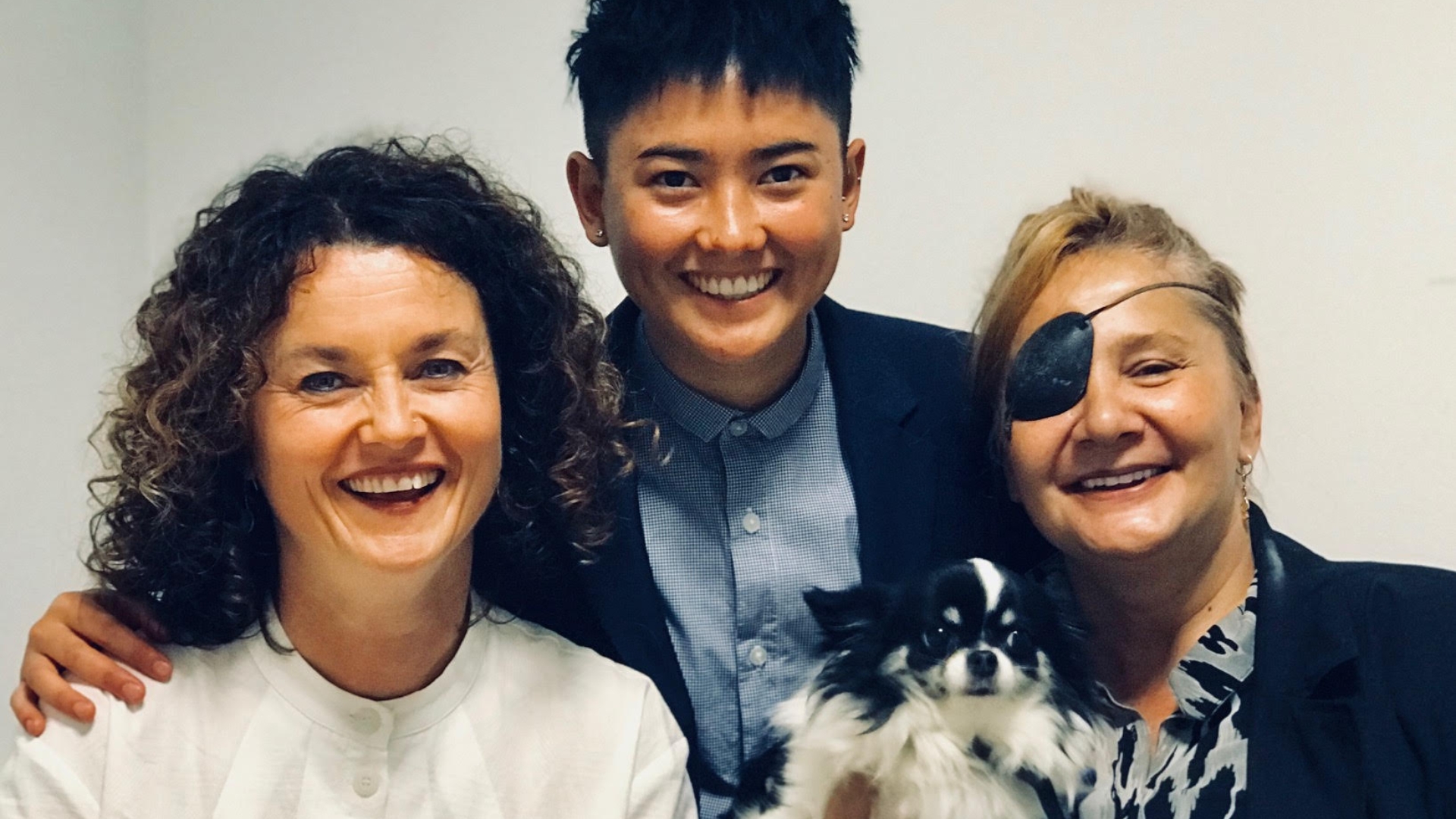
Meghan Butterfield, Holly Tan, Natasa Christidou and Natasa’s support dog, Josie, at the agistrates’ Court in the La Trobe Valley on 23 April 2023. Natasa was a longterm and very special client of the SMLS/SECASA Joint Legal Service. This photo was taken on the day Natasa’s case was finalised before the Victims of Crime Assistance Tribunal (VOCAT).
Among the many cases she guided, one stands out in Butterfield’s memory: a 10-year battle to secure recognition and compensation for a client who had endured horrific abuse by her father. The client’s self-worth was so diminished that she often felt undeserving of any assistance and would at times go missing for months so that caseworkers could not contact her. The criminal justice system had failed to act as no charges were ever laid against her father, but Butterfield and her team never gave up and eventually took the case to the Victims of Crime Assistance Tribunal (VOCAT).
‘We persisted with her and, after 10 years, we achieved an extraordinary result for her before VOCAT,’ Butterfield says. ‘When the criminal justice system let her down, she ultimately got an opportunity to tell her story before VOCAT and finally had her suffering acknowledged.’
Butterfield and her colleagues also provided referrals which helped the client pursue a successful common law claim against the State of Victoria for failing to protect her, as well as resolving complex wills and probate issues concerning her father. ‘She is an amazingly resilient woman who has left an indelible mark on my soul and the students and volunteers who worked with her,’ Butterfield says.
So too, Butterfield’s work has left its mark on clinical legal education. She created a culture of collaboration and mentorship, encouraging students and volunteers to learn from one another and to find their own voice as advocates. Butterfield aimed to ‘foster a culture of camaraderie and teamwork’, she says.
‘Our bread-and-butter work was VOCAT claims. The process was repetitive, but that was good as it meant it was easier for students to learn,’ she says. She also organised regular social events to strengthen bonds among the team and encouraged a sense of shared purpose in supporting clients with complex and sensitive matters.
The values Butterfield championed at SMLS/SECASA continue to guide her work. Her clinic experience taught her the importance of balancing compassion with capability, and she learned skills that have served her well in sensitive and complex roles. The emphasis on clear communication, client-centred practice and practical skills such as interviewing and legal writing shaped her approach to justice.
Butterfield believes that gentle but effective communication is imperative when working with people with a history of trauma. ‘These skills are best taught through practical application, not through listening to a lecture.’
Butterfield also remains a strong advocate for the role of clinics in legal education. She believes the Monash Law Clinics program provides future lawyers with crucial training to work with clients affected by trauma. Through her teaching and leadership, she helped ensure that students left the clinic not only with technical skills but with an appreciation for the power and responsibility of advocacy.
Looking back, Butterfield describes her time at SMLS/SECASA as one of the most meaningful chapters of her life. For her, the clinics were more than a place of learning – they were a community of purpose. ‘It gave me meaning and was deeply rewarding,’ she says.
Butterfield’s advice to today’s law students is to use their time at the clinics to not only learn the law, but also to develop the subtle skills to listen with empathy, support people affected by trauma and advocate for those who need it most. In doing so, students can become the next generation of advocates who, like Butterfield, leave a lasting impact on the profession and the community.
Read more about 50 years of Monash Law Clinics and buy 50 Years / 50 Voices here
Get involved with Monash Law Clinics
Monash Law Clinics combine legal education with real-world impact, supporting access to justice while equipping students with practical, ethical and professional skills.
If you are a student interested in undertaking a clinical unit as part of your studies, explore the available clinical placements and elective options.
Whether you’re an alum, practitioner or organisation keen to support the clinics through hosting placements, partnerships, volunteering or funding, there’s a way to be involved. To learn more, contact Emily Collard, Industry & Alumni Engagement Manager, at emily.collard@monash.edu.